Axios Macro

June 05, 2025

The sheer volatility of U.S. trade policy over the last four months is hard to convey in writing. So check out the chart below, which does the job better than words can.
- Plus, the European Central Bank cuts interest rates — even as the Federal Reserve appears set to leave them unchanged this month.
Situational awareness: Don't look now, but new claims for unemployment benefits are edging up. The Labor Department said this morning that 247,000 people filed for benefits last week, the highest since October. 😬
- That comes as Challenger, Gray & Christmas, which tracks corporate layoffs, reported May job cuts rose 47% over last year.
Today's newsletter, edited by Ben Berkowitz and copy edited by Katie Lewis, is 764 words, a 3-minute read.
1 big thing: Trade war volatility, in one chart
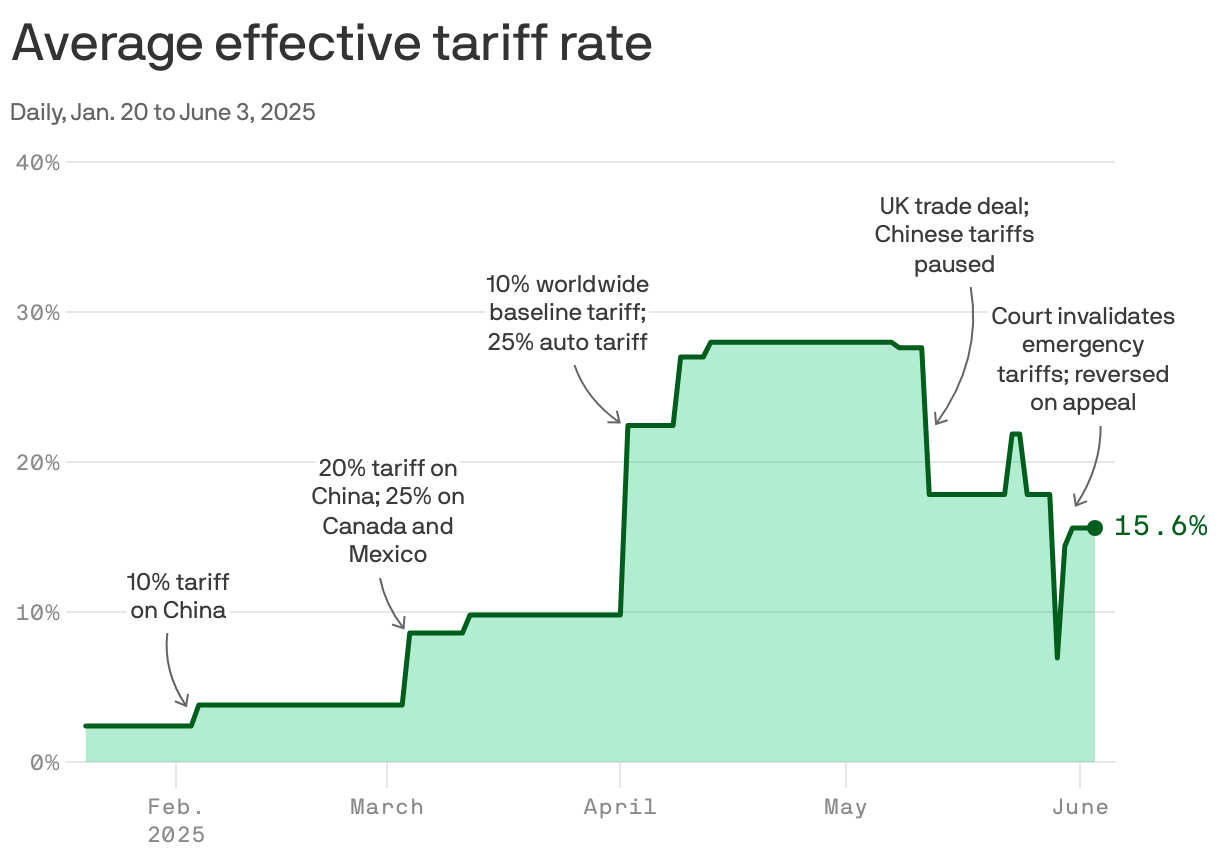
It's hard to overstate how rapidly President Trump has changed the very underpinnings of U.S. trade policy since the start of February. But this chart sums it up.
Why it matters: Trump is seeking to reset America's economic relationship with the rest of the world. But he has also introduced a trade policy landscape that changes by the day.
- Tariffs with major trading partners are not only higher than in decades, but they have also become far more volatile.
- There are two sets of economic risks from this new era of trade policy: one from the direct costs of higher import taxes, and the other from the sense that policy could change from minute to minute.
By the numbers: The weighted average tariff — the average import tax paid on an imported good — was 1.6% when Trump first took office in 2017. For all the attention that his first-term tariffs and some Biden-era expansions of them received, that was only up to 2.4% at the start of this year.
- Now, swings in the average tariff rate that dwarf those changes can occur within a single news cycle, according to Yale Budget Lab calculations shared first with Axios.
- In the last month alone, the weighted average tariff has been as low as 6.9% (after a trade court ruling that Trump overstepped his emergency authority) and as high as 28%, just before a de-escalation with China.
Between the lines: Corporate supply managers are used to adapting to changing circumstances, and can plug the details of any tariff regime into their calculations of where to source goods and how to price them.
- But the sheer unpredictability of this policy environment means it is less a one-time adjustment and more a constantly moving target.
What they're saying: "Nobody could argue that what's happened has been smooth or designed in a way for the private sector to kind of gradually adapt to it, right?" Evan Smith, CEO of supply chain technology company Altana, tells Axios.
- To adapt, he said, "it's less about trying to price in the exact current tariff schedule into their model or their forecasts, and more trying to be ready for whatever the world has in store."
- In the meantime, he said, that could mean lots of surges and shortages in the supply of goods for months to come, even if tariff policy stabilizes from here.
The bottom line: "Many of these announcements don't last months and some don't even last days," Yale's Natasha Sarin tells Axios.
- "That uncertainty, independently of where the tariffs ultimately land, does have costs and we're already seeing them in the economy."
2. Europe cuts rates again
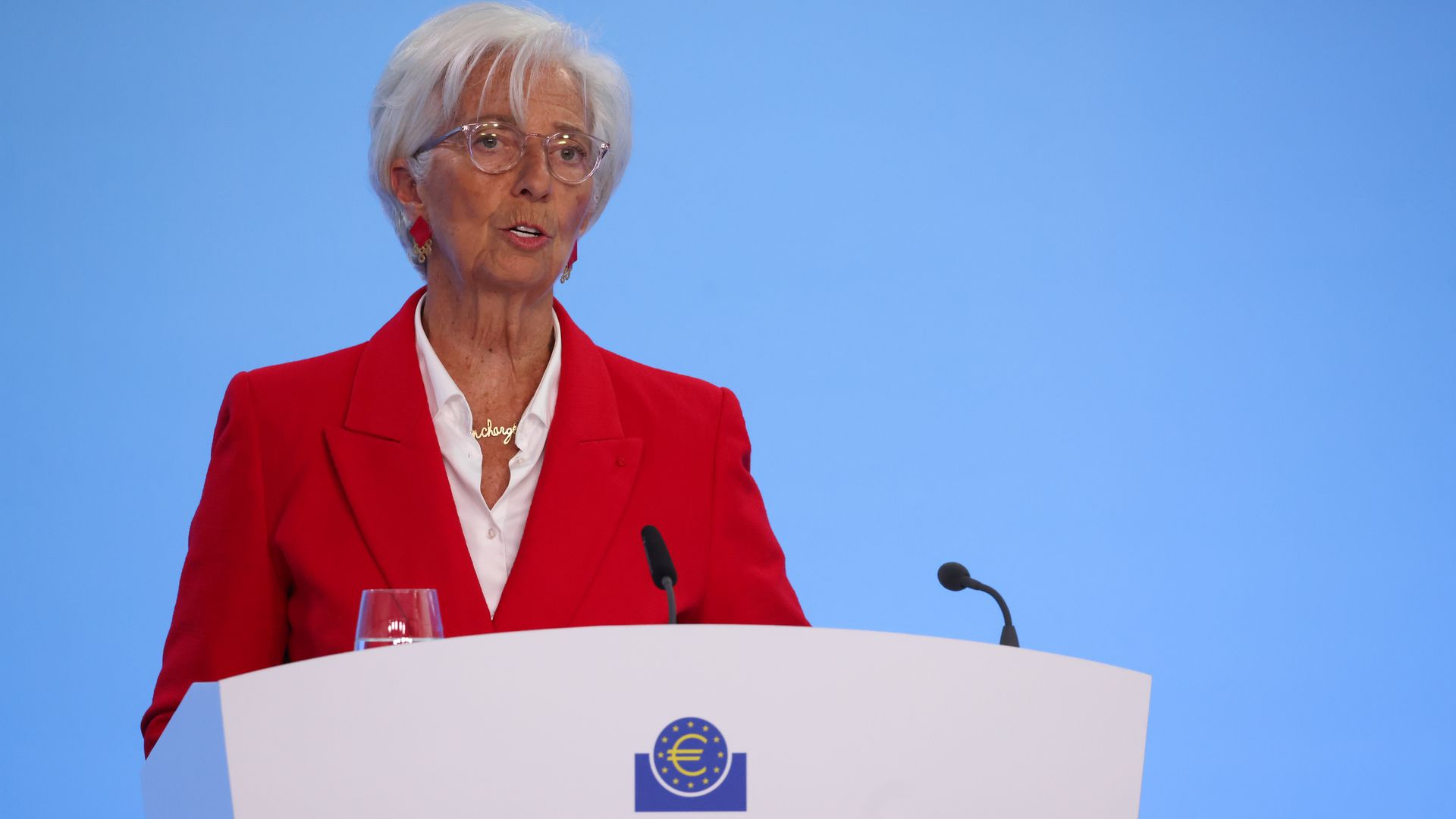
The European Central Bank today cut interest rates for the eighth time this cycle — easing monetary policy across the Atlantic while the Federal Reserve keeps its rate policy steady.
Why it matters: The U.S. economy has been resilient so far, while the Europeans deal with more obvious signs of weakness.
- Now the trade war risks another hit to Europe's economy.
- Trade negotiations with the U.S. have been rocky, with just weeks to go before each side unleashes higher tariffs.
Of note: At its policy meeting later this month, the Fed is expected to leave rates unchanged for the fourth consecutive meeting — to the consternation of Trump, who has argued the Fed is late to the rate-cutting party.
The intrigue: European Central Bank president Christine Lagarde said the eurozone economy faces two-sided risks from the trade war — higher inflation and weaker growth — like the Fed.
- But inflation is actually slightly below the 2% target in Europe, according to preliminary figures that showed inflation was 1.9% in the 12 months through May.
What they're saying: At a news conference this morning, Lagarde called the eurozone's inflation outlook "more uncertain than usual, as a result of the volatile global trade policy environment. Falling energy prices and a stronger euro could put further downward pressure on inflation."
- "This could be reinforced if higher tariffs led to lower demand for euro area exports and to countries with overcapacity rerouting their exports to the euro area," Lagarde added.
- But global supply chain shocks could raise import prices, alongside a boost in fiscal spending that could raise inflation in the medium term, she said.
The bottom line: Lagarde suggested the European Central Bank will adopt the Fed's "wait-and-see" approach in the months ahead, hinting that it might hold off on cutting rates further.
- "At the current level of interest rates, we believe that we are in a good position to navigate the uncertain conditions that will be coming up," Lagarde said.
Sign up for Axios Macro