
Axios Macro

March 25, 2025

Another month, another ugly reading on consumer confidence. More below.
- But first, a look at what might be driving some of that lack of confidence in the economy: beneath-the-surface evidence of strains on at least some Americans' household finances.
đź”® Courtenay will interview former House Speaker Paul Ryan this afternoon at Axios' fourth annual What's Next Summit, live from Washington, D.C. To watch that session, and more disruptors shaping what's next, livestream here starting at 2:30pm ET.
Today's newsletter, edited by Ben Berkowitz and copy edited by Katie Lewis, is 714 words, a 2½-minute read.
1 big thing: More cracks in household finances
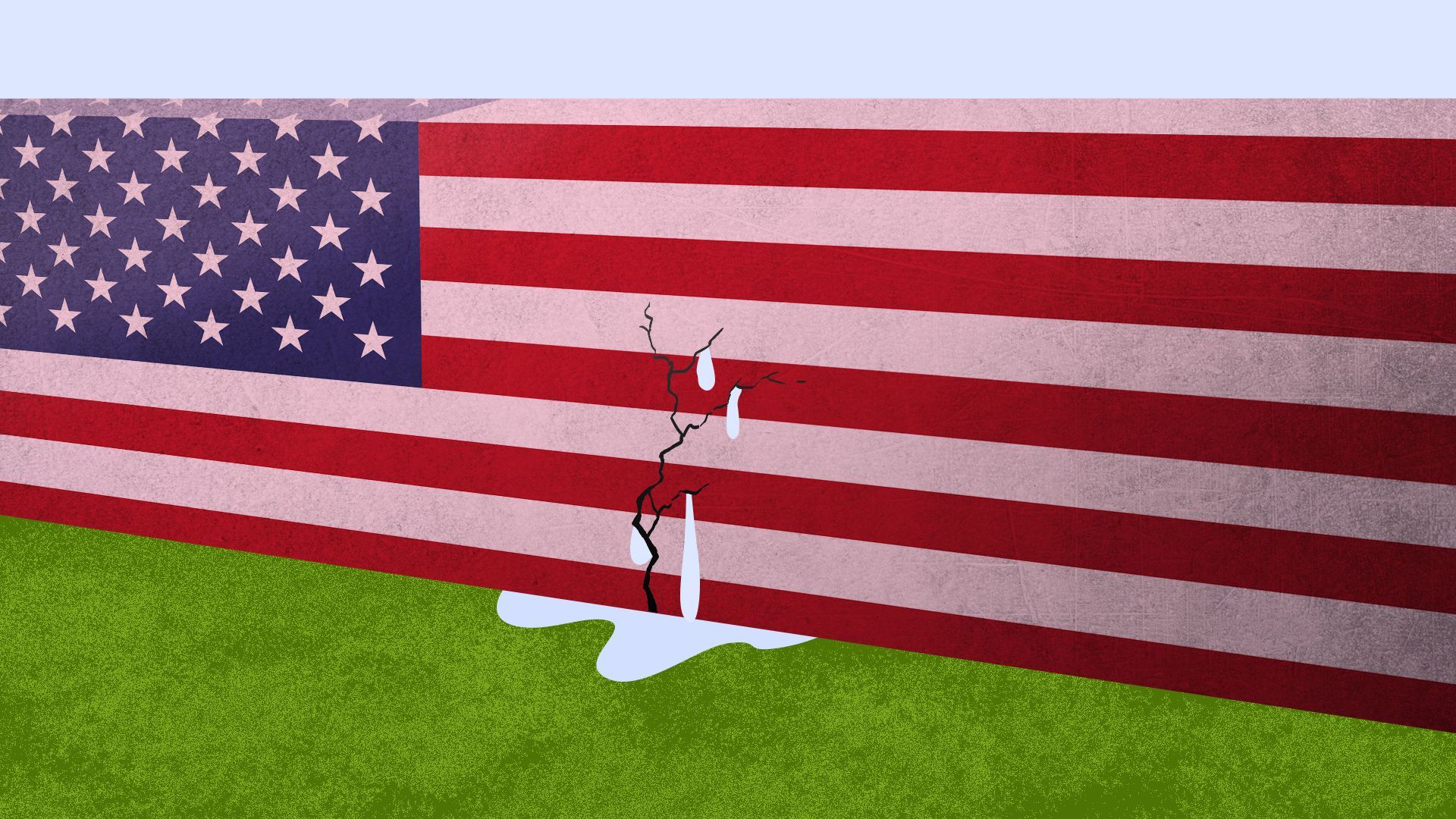
In the aggregate, American households' finances are looking just fine. But nobody lives in the aggregate, and there is evidence of rising financial strain for a meaningful slice of the population.
The big picture: Cracks have appeared in many household balance sheets over the last year and widened further in the final months of 2024, leaving some Americans more vulnerable to any disruptions that are to come.
- But it has not been obvious from top-line numbers, as disproportionately affluent families have benefited from a surging stock market, rising home prices, and fixed-rate mortgage debt held over from the low-interest environment of three years ago.
What they're saying: "The number of people falling behind on debt payments has risen sharply, even though households collectively built up their holdings of liquid assets" at the end of last year, wrote Samuel Tombs, chief U.S. economist at Pantheon Macro, in a new note.
By the numbers: The net worth of American households — the cumulative value of their assets minus debts — edged up to $160.3 trillion in the fourth quarter, up 9.3% from a year earlier.
- Household debt service as a share of disposable personal income was at 11.3% in Q4, below its pre-pandemic levels, per Federal Reserve data.
Yes, but: The share of outstanding credit card debt that is more than 90 days delinquent rose to 11.4% in the fourth quarter, per New York Fed data, the highest in 13 years (it hovered around 8% in the years before the pandemic).
- Indeed, in the last two decades, it has only been higher during and immediately following the 2008 Great Recession.
- Looking forward, consumers anticipate further difficulty handling their debts. The average odds people placed that they won't be able to make a minimum debt payment in the next three months rose to 14.6%, the highest since early in the pandemic and well above 2019 levels.
Between the lines: Those stresses for borrowers have occurred against a backdrop of rising asset prices and a strong job market. The numbers could shoot higher if federal cutbacks and trade wars generate higher unemployment or further wobbles in financial markets.
- The end of Biden-era student loan relief efforts could further stress some borrowers, Tombs argued.
- Further Fed interest rate cuts could ease some financial pressure on households straining under debts, but still-elevated inflation may constrain the central bank's room to maneuver.
The bottom line: If you carry stocks, own a house, and have a low-rate home mortgage, there's a good chance you've gotten richer over the last year. If you rent your home, live paycheck to paycheck, and have credit card debt, things look more worrisome.
2. The return of economic pessimism


For the fourth straight month, consumer confidence — as measured by the Conference Board's index — dropped, alongside rising fears about inflation and tariffs.
Why it matters: It is safe to say the receding number is no blip. President Trump now faces the same economic discontent that plagued the Biden administration.
- Consumers' pessimism is raising fears about the economy's health, even as official government indicators suggest healthy conditions.
By the numbers: The Conference Board's Consumer Confidence Index fell by more than 7 points in March to 92.9.
- A sub-index that measures confidence in the short-term outlook for income, business and employment conditions dropped almost 10 points to the lowest level in 12 years.
- Just one sub-index improved, though only slightly: Consumers' assessment of the current labor market ticked up.
The intrigue: Add this to the sign of weakening household balance sheets that we note above: For the first time in months, the group's survey showed weaker expectations about household income.
- "[C]onsumers' optimism about future income—which had held up quite strongly in the past few months—largely vanished, suggesting worries about the economy and labor market have started to spread into consumers' assessments of their personal situations," Stephanie Guichard, a senior economist at the Conference Board, wrote in a release.
The big picture: The Conference Board said consumers' write-in responses indicated that Trump policies, supportive or not, far outweighed other factors affecting Americans' view of the economy.
What to watch: Average inflation expectations for the year ahead rose again, to 6.2% from 5.8% the prior month, "as consumers remained concerned about high prices for key household staples like eggs and the impact of tariffs," Guichard wrote.
Sign up for Axios Macro