Axios Macro

October 10, 2025


Big week ahead, as the world's finance ministers and banking elite gather in Washington, D.C., for annual meetings of the International Monetary Fund and World Bank and countless sideline summits. We'll be on the scene with full coverage.
- But first, today, we look at China's efforts to throttle exports of rare earths minerals that is stoking new tension with President Trump.
- Plus, why one piece of key inflation data is forthcoming despite the government shutdown.
🏛 Speaking of big events next week, Axios will host a News Shapers event on Wednesday morning featuring Neil in conversation with White House National Economic Council director Kevin Hassett and more. RSVP here.
Today's newsletter, edited by Jeffrey Cane and copy edited by Katie Lewis, is 933 words, a 3½-minute read.
1 big thing: China's mineral gambit enrages Trump and shows trade war hazards
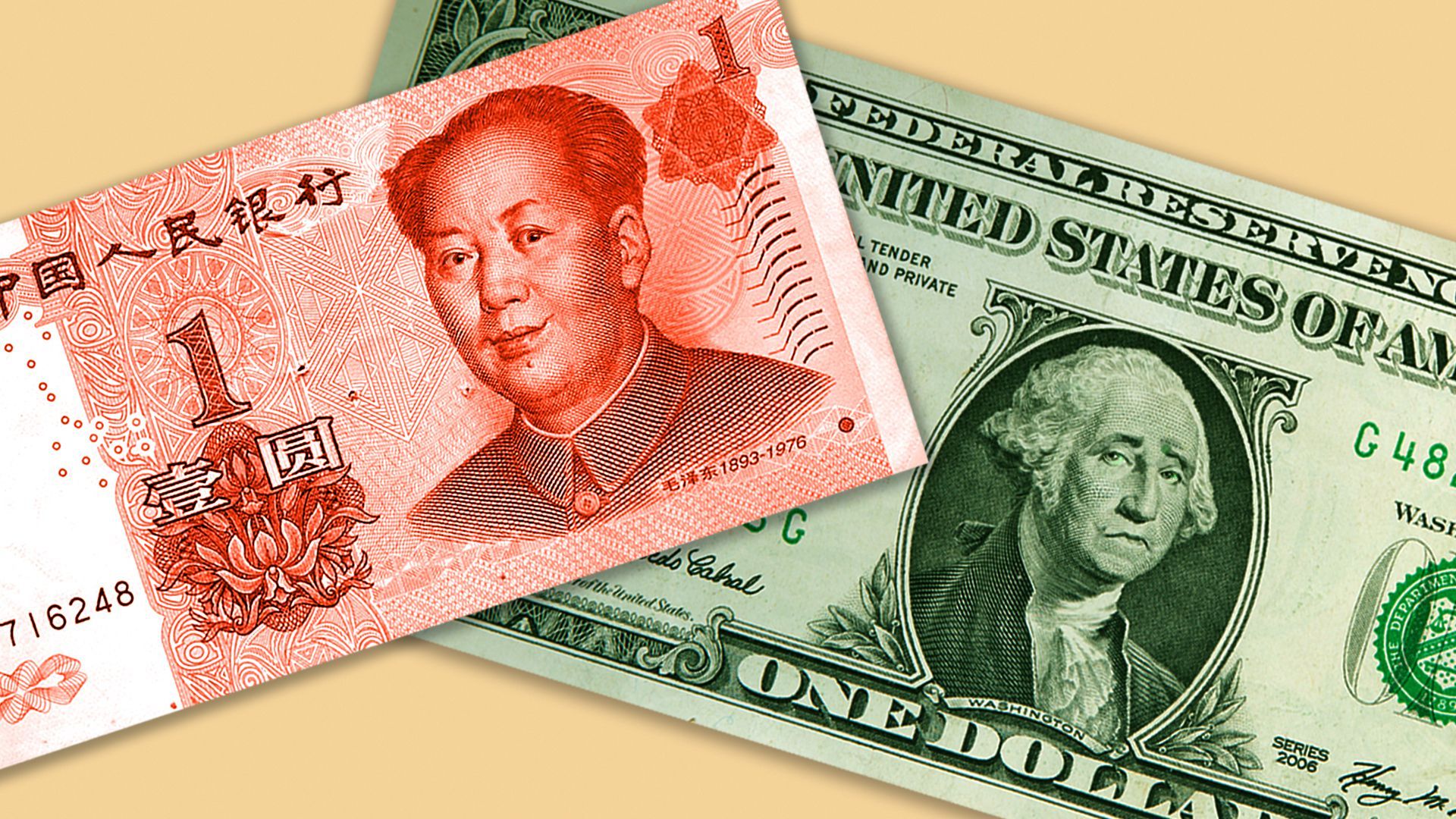
Chinese officials unleashed new plans to restrict access to minerals critical for America's most economically important industries — the latest area in which China is showing its unique sources of leverage in the trade war.
Why it matters: America's aggressive new tariff regime may not be doing quite the damage to the U.S. economy that some warned earlier in the year, but it is not without cost — and the Chinese in particular are using tools they have to apply pressure.
- The expanded export controls are a fresh threat to an already fragile U.S.-China trade truce. It comes as American farmers are reeling from China halting imports of U.S.-grown soybeans.
State of play: "There is no way that China should be allowed to hold the World 'captive,'" Trump posted on Truth Social today in response to the export controls.
- "But the U.S. has Monopoly positions also, much stronger and more far reaching than China's. I have just not chosen to use them, there was never a reason for me to do so — UNTIL NOW!," Trump added.
- Trump threatened to call off a planned meeting with President Xi Jinping of China that's expected later this month.
- Trump said he was "calculating ... a massive increase of Tariffs on Chinese products," among other countermeasures.
The big picture: The rare earths minerals measures have been widely seen as a way to gain leverage ahead of that meeting between Trump and Xi.
- But they also point to the new tension likely to define U.S.-China relations in the years ahead: access to inputs as the world's economic superpowers battle for dominance in key industries, especially AI.
- U.S. export controls that have been strengthened under Trump limit China's access to high-tech chips.
Driving the news: Beijing tightened its grip on rare earths on Thursday, with intentions to slap export controls on more key elements and any products that contain them.
- The announcement, which builds on other export controls introduced in April, is a blow to a slew of sectors, including the semiconductor and defense industries.
- No other country has more control over the production and processing of the world's rare earths supply.
- The issue came to a head earlier this year. A temporary trade truce nearly fell apart when Trump officials accused Beijing of withholding the minerals.
The intrigue: Some of China's export controls begin to take effect in November, before the latest 90-day extension of the U.S.-China trade truce is set to expire.
- "China is signaling 'we're willing to threaten your primary growth driver,'" which is AI, says Chris Miller, the author of "Chip War: The Fight for the World's Most Critical Technology."
- "I think people are looking to see whether the Trump administration builds alternative sources of leverage against China that forces them to back down," Miller tells Axios.
Context: Miller says China is in the "early stages" of testing how impactful its export licenses can be.
- "It's clear they can be impactful in the short run because it takes time to build up processing facilities for rare earths," he says.
- "I think we're going to see that, in the longer run, China is not going to have a durable monopoly on rare earth processing."
2. Shutdown won't stop CPI release
A Trump administration official told Axios' Emily Peck last night that the government is recalling some furloughed workers to compile a key inflation report.
Why it matters: The September Consumer Price Index is particularly critical because it is used to calculate the annual cost-of-living adjustment for Social Security recipients — and it will now be released on Oct. 24, despite the shutdown.
The big picture: The government shutdown lapsed funding for key agencies, including the Bureau of Labor Statistics, which is responsible for releasing CPI, the monthly jobs report and other economic indicators.
- That means all work on the price data was halted indefinitely.
Between the lines: The worker recall, first reported by the New York Times, means that economists will receive data on how quickly prices rose last month sooner than previously believed — though not in time for Oct. 15, when the report was originally scheduled to be released.
- The adjustment is based on the change in CPI for wage earners from the third quarter of 2024 through the third quarter of 2025.
The intrigue: The Federal Reserve will begin its two-day policy meeting on Oct. 28, meaning officials will have the September CPI report in hand before their interest rate decision.
- It's unclear how that could complicate decision-making for Fed officials worried that tariff-related price increases might result in stickier inflation.
- Minutes from the September policy meeting showed that a "few participants stated there was merit in keeping the federal funds rate unchanged at this meeting or that they could have supported such a decision."
🗓️ Programming note: Axios is off for the holiday on Monday. We'll be back in your inboxes with a new edition on Tuesday.
Sign up for Axios Macro