Axios Macro
April 14, 2023

The weekend is here, and the weather is warm (at least for those of us on the U.S. East Coast). Let's Macro.
- Today, a look at evidence consumer spending is finally starting to buckle, and reading between the lines of a new speech by a Federal Reserve governor.
Situational awareness: Overall consumer sentiment is unchanged so far in April, according to the University of Michigan, as "rising sentiment for lower-income consumers was offset by declines among those with higher incomes." Inflation expectations were higher in the short-run, but stable for the longer term.
Today's newsletter, edited by Javier E. David, is 668 words, a 2½-minute read.
1 big thing: New consumer warning sign
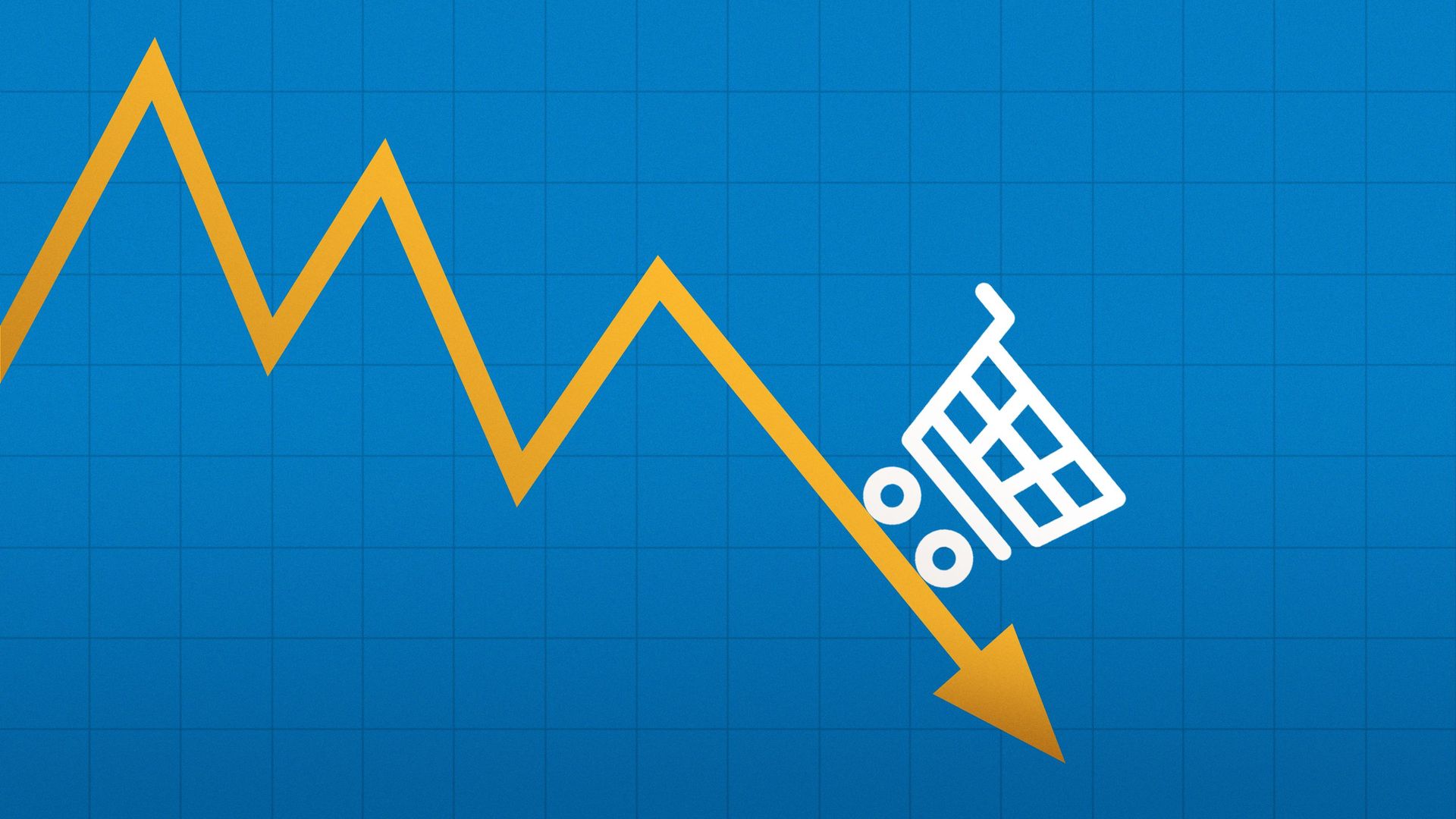
Illustration: Allie Carl/Axios
American consumers are pulling back — and that is the clearest sign yet that the rip-roaring economy of the past couple of years may be giving way to something else.
Why it matters: For all of the economic ups and downs within the past year, the consumer has largely been a consistent bright spot. But higher interest rates, persistent inflation and shrinking excess savings may finally be beginning to take hold and forcing consumers to cut back.
- If sustained, the implications for the economy are huge: Consumer spending accounts for about two-thirds of economic activity.
- And there are risks ahead, including a possible pullback in lending that would crunch consumers further.
Driving the news: Retail sales fell 1% in March, the Census Bureau said this morning, which followed a 0.2% drop in February. Even excluding gas stations affected by lower fuel prices, sales were down 0.6%.
- Declines included categories like general merchandise stores (-3%), electronics and appliances stores (-2.1%) and building materials and garden equipment retailers (-2.1%).
- In a marked deceleration, sales were up 7.6% on a year-over-year basis at the start of 2023, but that has now fallen to 2.9% — below the rate of inflation during that span, meaning that in real terms, spending has declined.
What they're saying: "While job and income gains remain strong, the cracks in the consumer sector are widening and a negative shift in hiring activity could be the final blow to place the economy in a recession," Ben Ayers, a senior economist at Nationwide, wrote in a note.
Between the lines: With more data coming in, it's looking like the spending surge that started the year was an outlier — with increasingly softer spending as the quarter progressed.
The big picture: Slower consumer spending is confirmed by private sector data, too. Spending on credit and debit cards per household at Bank of America rose just 0.1% year-over-year in March.
- That's the slowest pace since February 2021, owing in part to slower wage growth, smaller tax refunds and the expiration of a pandemic-era food assistance program, BofA says.
The other side: Early commentary from earnings calls suggests a more upbeat picture of the U.S. consumer.
- On spending, CFO Jeremy Barnum of JPMorgan, the nation's largest bank, said in an earnings call this morning that the bank has not "observed any notable pullback throughout the quarter."
2. Hawkishness, with an asterisk
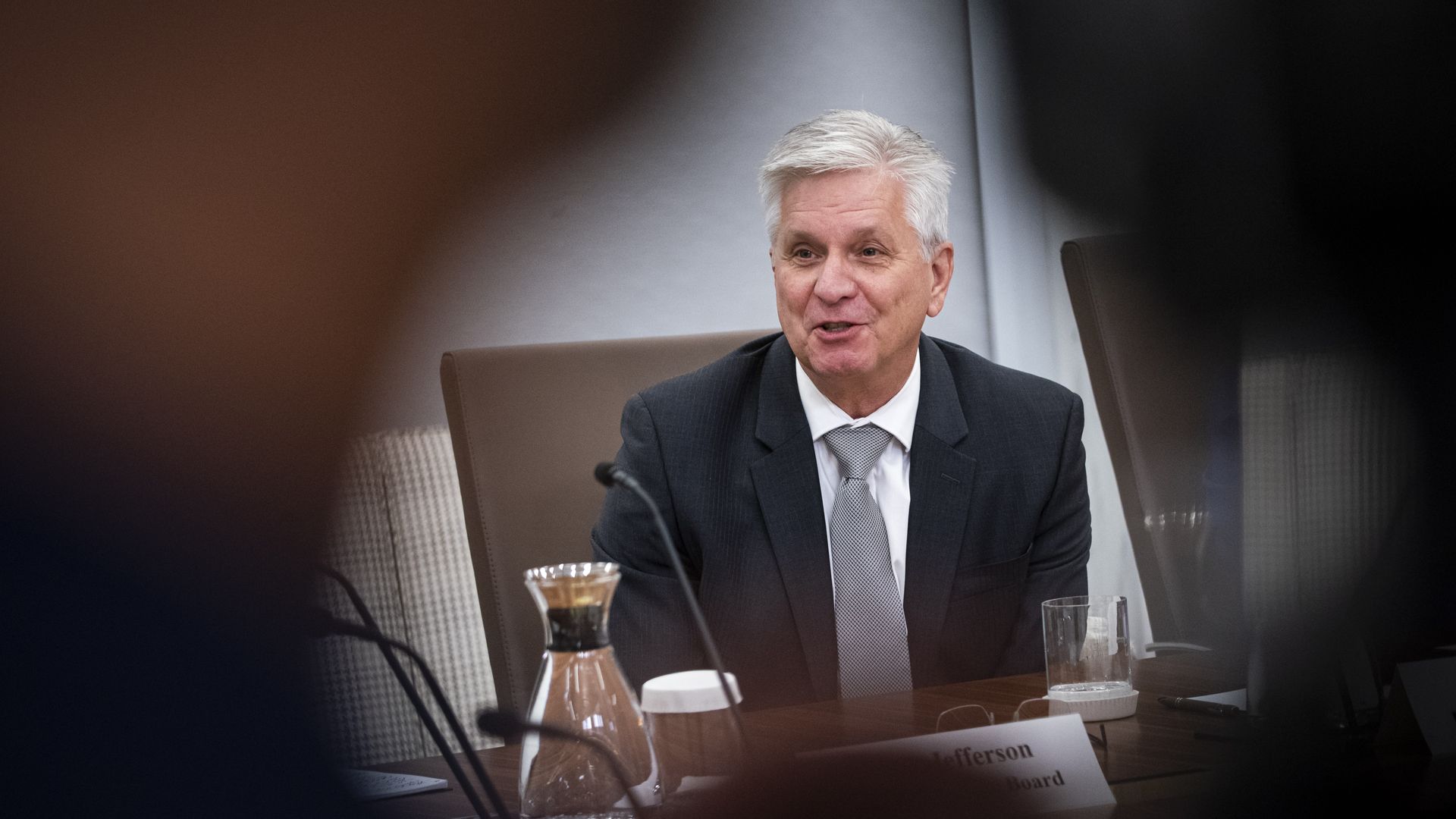
Fed governor Christopher Waller. Photo: Al Drago/Bloomberg via Getty Images
Over the last year, speeches by Federal Reserve governor Chris Waller have often acted as an earlier indicator of where sentiment among the central banks' leaders is headed.
Why it matters: He now looks raring to go for more interest rate hikes, though with a notable asterisk.
Driving the news: In a speech this morning, Waller said that "because financial conditions have not significantly tightened, the labor market continues to be strong and quite tight, and inflation is far above target, so monetary policy needs to be tightened further."
- Another implication of slow progress toward bringing inflation down, Waller said, "is that, as of now, monetary policy will need to remain tight for a substantial period of time, and longer than markets anticipate."
Yes, but: Markets (correctly) interpreted those comments as a hawkish sign that the Fed is likely to hike again at its early May meeting, and potentially again in June. But Waller's comments were more nuanced than they might seem at first glance.
- He also noted that there are still more than two weeks to go until the next policy meeting. "I stand ready to adjust my stance based on what we learn about the economy, including about lending conditions," he added.
- Earlier in the speech, he said that "perhaps even more closely than usual, I will be watching the data to evaluate the appropriate path of monetary policy."
Between the lines: Those comments seem to suggest that Waller and, in all likelihood, his colleagues are on more of an alert than usual to adjust their policy plans — but only if meaningful evidence emerges that credit conditions are tightening and demand is slowing.
Sign up for Axios Macro

Stay ahead of the curve on the most important economic developments with reporting and analysis on how business, policy, and markets collide.