Axios Macro

July 17, 2023

New data shows China's once rip-roaring economy is losing steam. Below, we dig into what a slowdown in the world's second-largest economy might mean for the rest of the globe. 🌎
- Plus, bank CEOs are the latest to join a chorus of optimism about U.S. recession odds.
Today's newsletter, edited by Javier E. David and copy edited by Katie Lewis, is 682 words, a 2½-minute read.
1 big thing: What China's slump means for the world
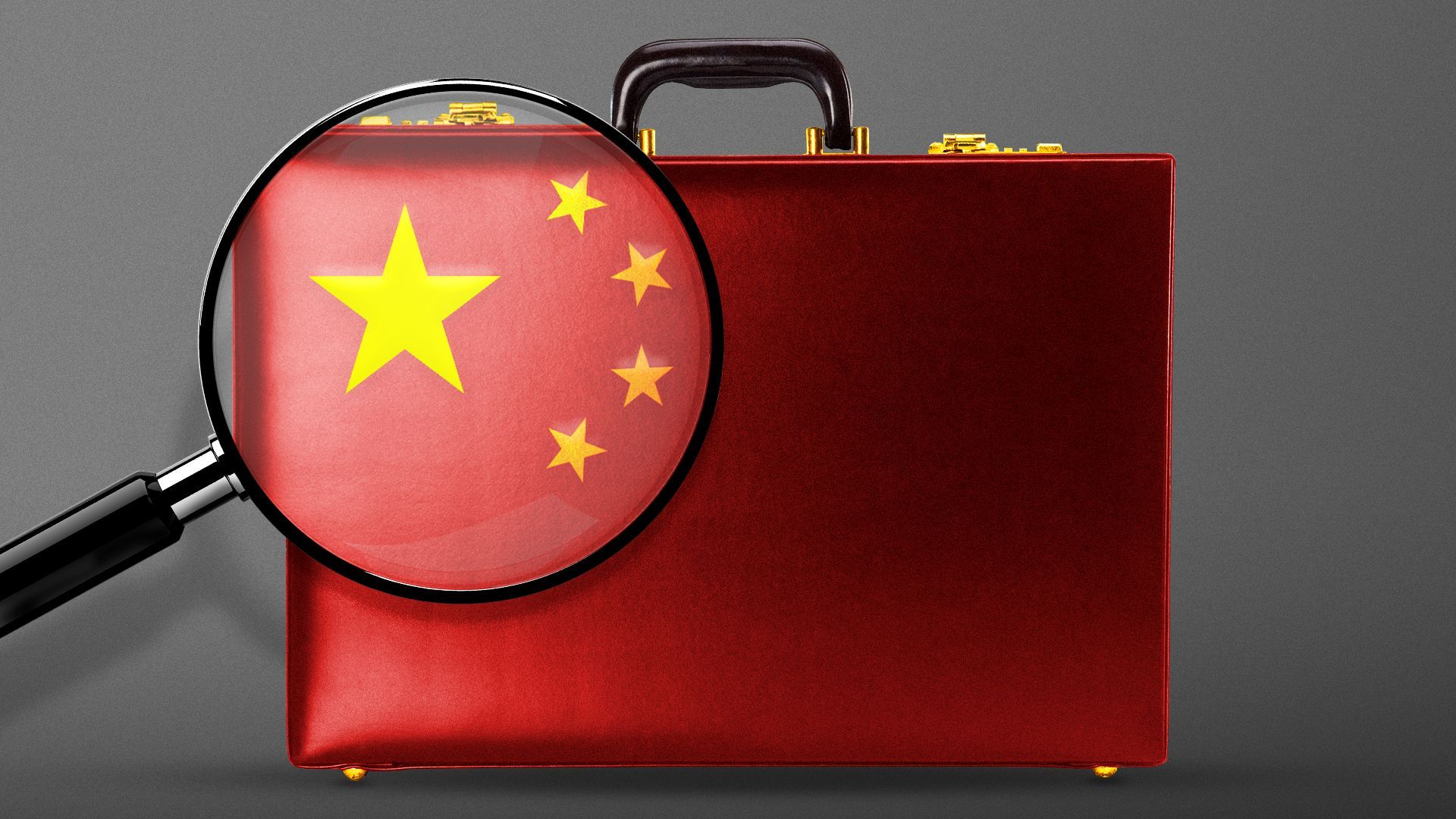
Illustration: Gabriella Turrisi/Axios
China's post-pandemic reopening isn't going so well. But the economic implications for the rest of the world, and especially the United States, are more limited — and two-sided — than they may seem.
Why it matters: The challenges facing the Chinese economy are real. But they appear less likely to spill over into major economies and financial markets than the nation's size and geopolitical importance might imply.
- It is the flip side of President Xi Jinping's focus on making China more of an economic and financial island. Compared to other nations, there are few pathways of interdependence through which, say, the popping of a property bubble there causes financial losses worldwide.
- And given the global inflationary situation, softer demand in China has some benefits for the rest of the world.
Driving the news: Chinese gross domestic product grew only 0.8% in the April through June quarter. Over the last year, China's GDP is up 6.3%, reflecting the emergence from its severe pandemic lockdowns. The latest number suggests the rebound is waning.
Between the lines: Chinese leaders face a knotty set of challenges. Their standard playbook to stimulate growth — loosen lending standards and spend big on infrastructure — would worsen the underlying challenges of debt overhang and large-scale malinvestment.
Yes, but: U.S. goods exports to China were $154 billion, about six-tenths of a percent of U.S. GDP. Exports to Mexico were more than twice that, and it's easy to put together a short list of mid-size countries that together drive more demand for American products.
- America's direct financial exposure to China is also limited. The Vanguard Total World Stock Index Fund has 3.1% of its assets in Chinese stocks; meanwhile, Chinese debt ownership is overwhelmingly domestic. The Vanguard Total International Bond ETF has only 1.2% of its assets in Chinese bonds.
What they're saying: "Many countries do depend on strong Chinese growth to promote growth in their own economies, particularly countries in Asia," Treasury Secretary Janet Yellen said in a Bloomberg interview at the G20 summit in India.
- She added that "slow growth in China can have some negative spillovers for the United States."
And slower growth in China likely means less demand for oil and other commodities on global markets. Crude oil prices were down 1.3% at noon today.
- It could mean more finished industrial products on a global market that has been supply-constrained in recent years. For example, every Chinese-made car that domestic consumers don't buy can be sold elsewhere.
2. Bank CEOs on soft landing prospects

Photo: Michael Nagle/Bloomberg via Getty Images
Big bank CEOs say the U.S. economy is chugging along. They are also optimistic the nation might just avoid a recession.
Why it matters: That near-universal macroeconomic sentiment comes as corporate earnings season gets underway.
What they're saying: "In the U.S., the tight labor market keeps pushing the timing of this elusive recession later into this year or 2024, with the robust demand for services providing a backstop for the economy," Citi CEO Jane Fraser told investors.
- On the health of the U.S. consumer, she added the bank is "seeing a more cautious consumer, but not necessarily a recessionary one."
That is reflected in private sector consumer spending figures. Card data from Bank of America shows that spending was "down but not out" — declining 0.2% in June from the same period a year ago, in line with the rate in May.
- Official government retail sales data for June is out tomorrow at 8:30am ET.
What to watch: JPMorgan CEO Jamie Dimon said "the consumer is in good shape. They're spending down their excess cash. That's all tailwinds."
- If there is a recession, the consumer is "going in with rather good conditions, low borrowings, good house price value still."
- But Dimon warned of severe economic risks, including the war in Ukraine, the Fed's quantitative tightening and the "unprecedented fiscal needs of governments."
The bottom line: Wells Fargo CEO Charlie Scharf said the economy "continues to perform better than many expected."
- "Although there will likely be continued economic slowing and uncertainty remains, it is quite possible the range of scenarios will narrow over the next few quarters," Scharf said.
Sign up for Axios Macro

Stay ahead of the curve on the most important economic developments with reporting and analysis on how business, policy, and markets collide.