Axios Login

September 23, 2022

Login will be here Monday, but I will be off for the Jewish New Year, so let me say Shana Tova to all who are celebrating.
🏈 Situational awareness: Apple Music is set to replace Pepsi as the sponsor of the Super Bowl halftime show, the New York Times reports.
Today's Login is 1,267 words, a 5-minute read.
1 big thing: Adobe thinks critics are getting its Figma deal wrong

Photo illustration: Annelise Capossela/Axios. Photo: Adobe
Adobe executives think there's a lot that critics of its $20 billion purchase of Figma are missing.
Driving the news: Investors have sent Adobe's shares down roughly 20% since it announced the deal to buy the maker of a highly popular collaborative tool for designers.
Between the lines: The Figma buy raised eyebrows the moment it was announced.
- Investors expressed shock at the sticker price — 50 times Figma's annual revenue run rate.
- Creative types worried that nimble, cloud-based Figma would lose what they love about it.
- And everyone wondered whether aggressive regulators might try to block the whole thing.
Catch up quick: Adobe is spending a not-so-small-fortune to buy Figma after seeing its own competing product, Adobe XD, largely flop in the market.
- On top of that, Adobe is also preparing a massive retention package to keep Figma CEO Dylan Field and other key employees on board.
- Investors want to understand why it's worth the high price tag and regulators are looking to ensure the combination won't hurt competition.
The latest: In a meeting with Axios, Adobe general counsel Dana Rao defended the deal's price tag and highlighted why Adobe believes it needs Figma to help shape the design-software giant's broader future.
Rao offered three key arguments.
1. Adobe XD just wasn't cutting it. It was a product designed for a single user sitting at a PC in a world that wants cloud-based tools for real-time multi-user collaboration.
- After seven years of investment, Adobe XD was bringing in just $15 million in annual recurring revenue on a standalone basis — a minuscule fraction of Figma's $400 million annual recurring revenue. (That, in turn, is a minuscule fraction of Adobe's overall annual revenue of $17 billion.)
- Adobe has essentially put XD on ice, assigning just 20 employees to the product in what it sees as "maintenance mode." Figma has more than 800 people.
2. Adobe needs a rethink for the cloud era. Its current efforts have been about bringing its existing tools to the web. The Figma deal offers help with the longer-term challenge of "reimagining the whole thing," in Rao's words.
- Rao said over time Figma customers will benefit from Adobe's other resources, including its troves of fonts and stock imagery.
3. Even though Figma has positioned XD as a key rival, Rao says the deal shouldn’t raise antitrust worries.
- Adobe, he says, is focused on creative tools and is only a small player in web-based design, with lots of companies offering digital whiteboarding and other services for collaboration.
- The acquisition price is far higher than other deals that have attracted scrutiny recently — most notably, Meta's plan to buy comparatively tiny VR firm Within, which the Federal Trade Commission has sued to block.
- But Adobe says the size of the deal isn't what regulators focus on. "Adobe and Figma today are not meaningful competitors," a spokesperson told Axios.
- "We think they [regulators] are going to take a look, and we feel good about the facts," Rao said.
Yes, but: Biden-era regulators have repeatedly emphasized their intent to be aggressive to restore tech competition. Adobe may find the ground rules have shifted.
Our thought bubble: Even if it gets its way, Adobe is clearly paying a lot for Figma, suggesting the company needs to make future build-vs.-buy choices faster.
2. Microsoft hands a win to game preservationists
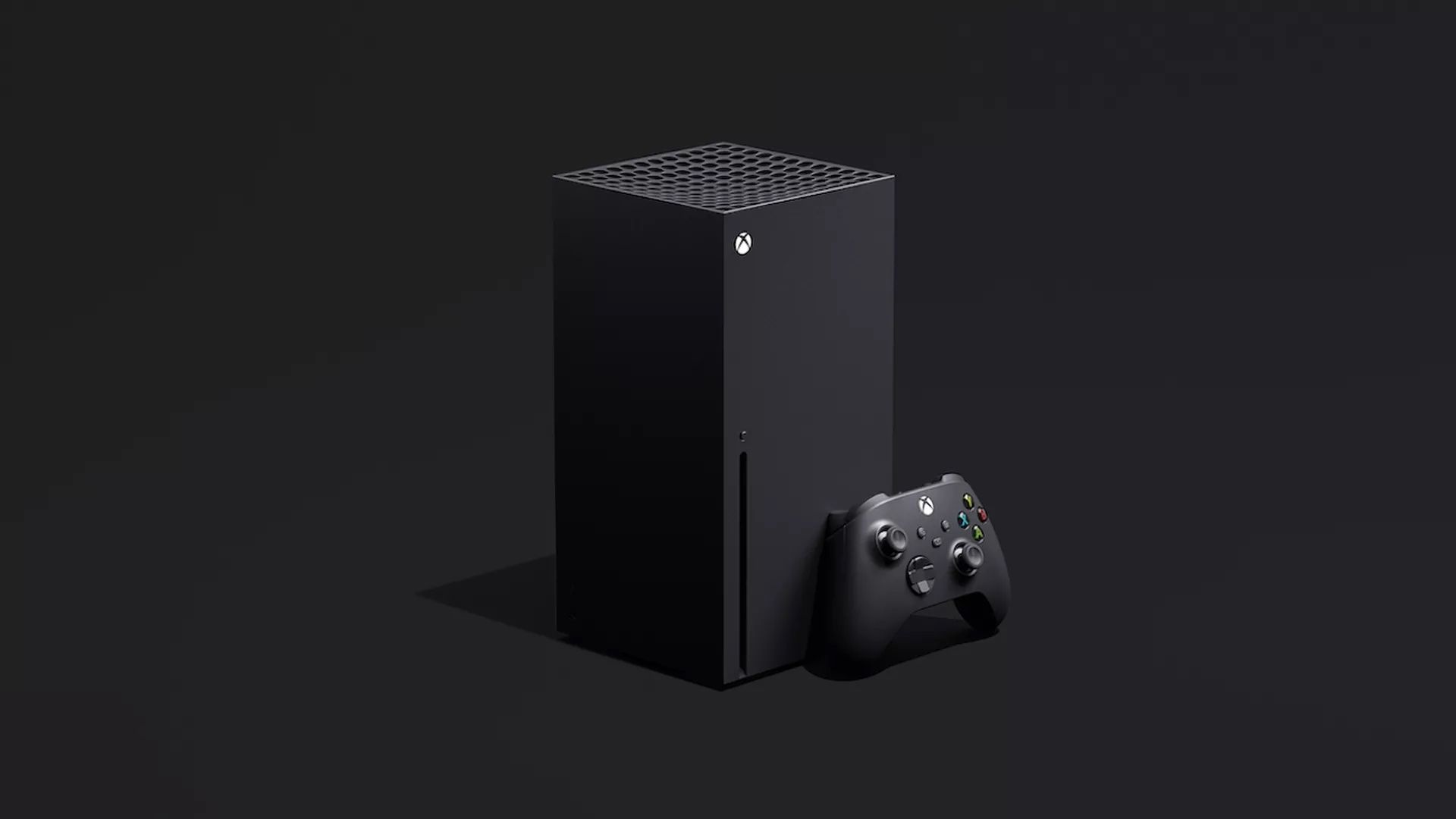
Xbox Series X. Image: Microsoft
Most of the Xbox games released in the past decade are at less risk of becoming unplayable in the future. That's thanks to a change Microsoft has quietly made to how its current consoles handle users' rights to their games, Axios Gaming's Stephen Totilo reports.
Why it matters: It's a win for video game preservationists and anyone else who imagined running recent Xbox games in the far future without worrying about the status of any remote servers.
- Microsoft is basically backing off an approach to digital rights management, or DRM, for select games.
Details: The change removes the requirement for the disc version of most Xbox One games to check for an internet connection before running on the newer Xbox Series X consoles.
- In "the vast majority of cases," the discs will simply install into the system and run the game, according to Microsoft engineer Eden Marie, who addressed the change on Twitter this week.
- Fans who have been passionate about this Microsoft DRM policy first noticed it this month and are now largely cheering the change.
Between the lines: The switch brings Microsoft more in line with rivals Nintendo and Sony, whose systems do not require an online check for disc- or cartridge-based games, according to data pooled for Axios by the operators of the Does It Play online advocacy account and some like-minded players.
- Previously, these gamers considered Microsoft an outlier, because Xbox One game discs wouldn’t work if they were inserted into an Xbox Series console that didn’t have an internet connection.
What they're saying: "Thanks Microsoft for something that should have been there from the beginning," YouTuber Hikikomori Media said in a video testing the update.
The big picture: Digital media can be stored and transferred with relative ease.
- But code requires a platform to run it, and is subject to whether those platforms will continue to function and will allow those games to keep running.
3. Trying out a "ghost kitchen"
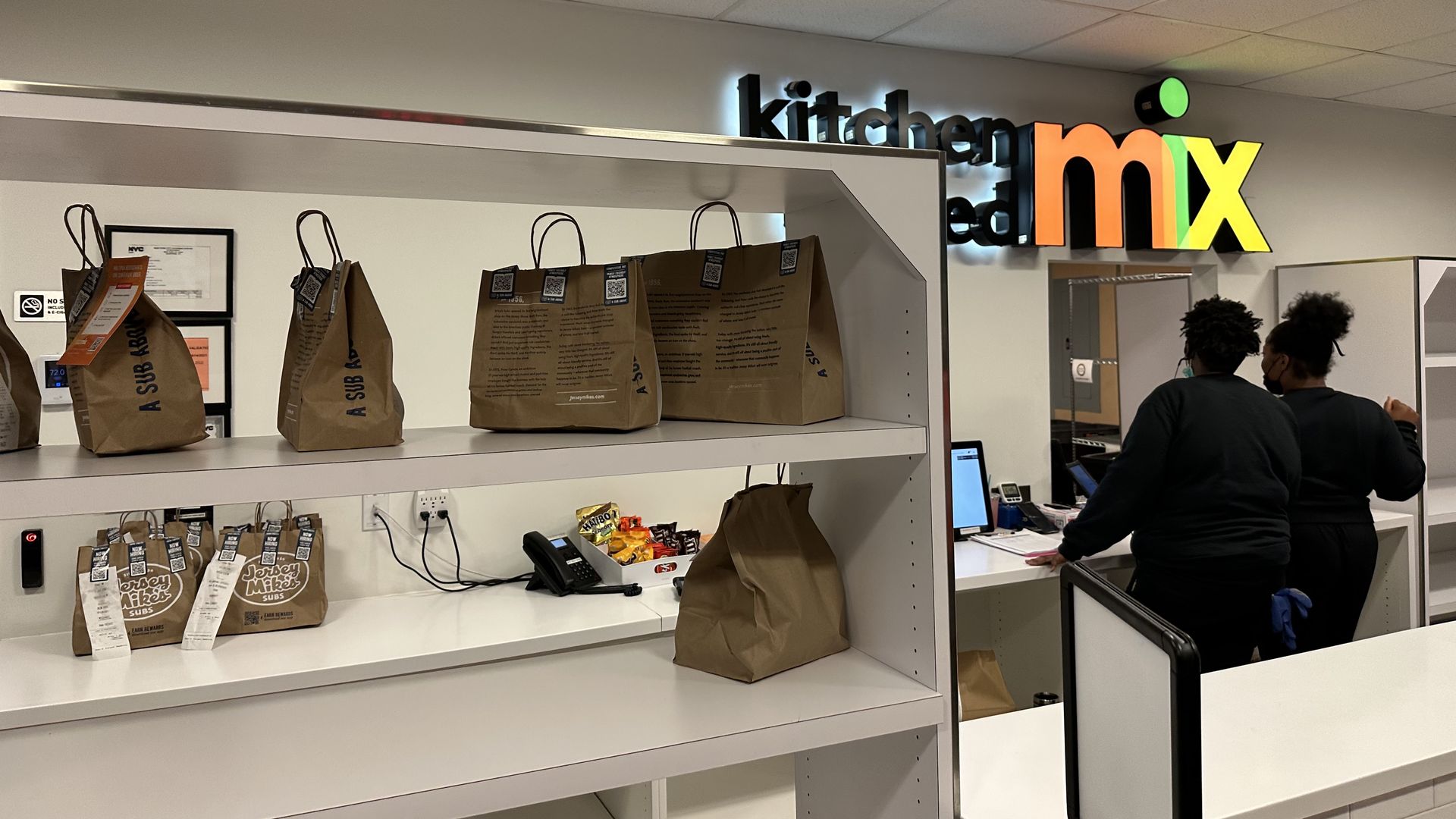
Photo: Ina Fried/Axios
As I was walking to my latest New York City hotel, a sign caught my eye for Kitchen United Mix, a storefront promising the ability to get food-to-go in a single order from more than 10 restaurants.
- Options included a range of cuisines from MrBeast Burgers to Han Dynasty Sichuan to Guy Fieri's Flavortown Kitchen.
The big picture: These "ghost kitchens," offering pickup and delivery orders exclusively, are on the rise. Most of the benefits are around efficiency for the restaurants. But mixing and matching dishes can be fun for families (and individuals) too.
Details: I mixed a cumin chicken sandwich with Guy Fieri's fried pickles and a side of spicy Indonesian tofu rice noodles (well, it was supposed to be rice noodles — I got rice instead). And I washed it all down with a nice white peach boba iced tea.
- The bill came to $33.48, including a tip for the kitchen staff.
Yes, but: It didn't come with the Tums I was sure I was going to need.
My thought bubble: It was an enjoyable novelty for me while traveling, but I think could work well for families where each member wants something different.
- However, in the handful of cities where Kitchen United operates, it tends to have a single location. That likely limits the number of customers who can benefit from the option to pick up, rather than pay a delivery service.
4. Take note
On Tap
- I'm moderating a panel on the ethics of the metaverse today at Unfinished Live.
Trading Places
- DocuSign has named Allan Thygesen as its next CEO, effective Oct. 10. Thygesen was previously president of Google's $100 billion advertising business in North and South America.
- Hewlett Packard Enterprise is adding former DARPA head and Google executive Regina E. Dugan to its board of directors.
- Author, researcher and former head of the Department of Homeland Security's suspended Disinformation Governance Board Nina Jankowicz told Axios she is joining the Centre for Information Resilience as vice president for U.S. operations.
ICYMI
- Meta and Facebook violated the human rights of Palestinian users during violence in Gaza last year, an independent report commissioned by the company found. (Associated Press)
- A barrage of more than 70 lawsuits aimed at Meta, Snap, TikTok and Google are using product liability laws to hold the platforms responsible for harms to young people. (Bloomberg)
5. After you Login
This is some A+ Twitter trolling by Amtrak.
Thanks to Scott Rosenberg and Peter Allen Clark for editing and Bryan McBournie for copy editing this newsletter.