Axios Login

November 07, 2018

After spending much of last night watching closely and crunching the numbers, the results are in. San Jose beat Minnesota 4-3. Oh, the election — yeah, we have some coverage of that too.
1 big thing: Glitches, but no breaches, in midterms
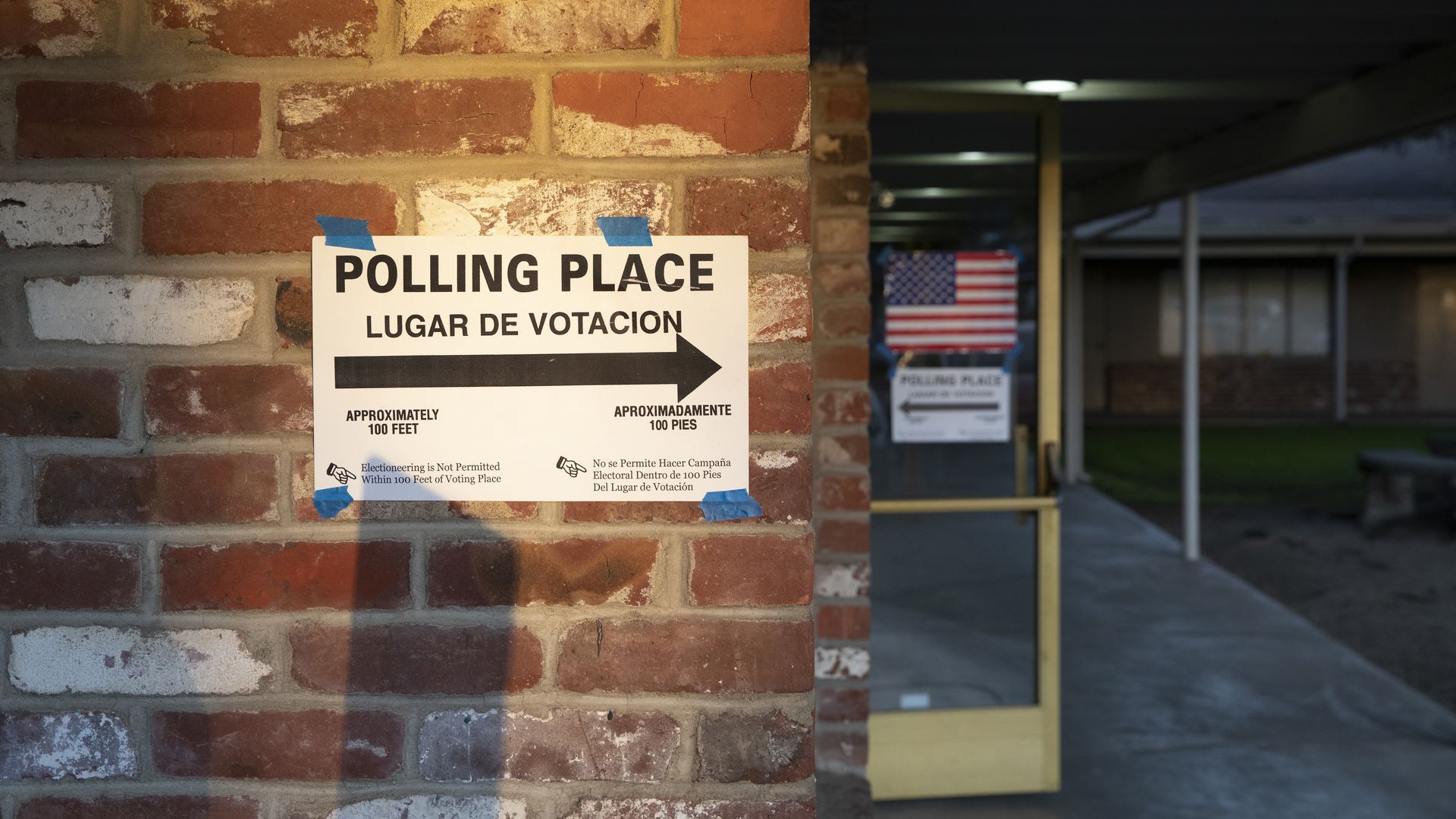
A polling place in California. Photo: Alex Edelman/Getty Images
While the U.S. seems to have survived the 2018 elections without a major security incident, there were enough problems with outside interference and election infrastructure to suggest more improvements are urgently needed.
Why it matters: After Russia's election interference efforts in 2016, policymakers and the major tech platforms have paid close attention to election protection — both on social media and at the ballot box.
Voting systems: A Department of Homeland Security official said early Wednesday morning that the agency was "not aware of any cybersecurity-related compromises of election infrastructure," per Axios' David McCabe and Shannon Vavra.
- That's not to say there weren't problems, because there definitely were.
- The U.S. remains a patchwork of different voting systems, with some areas using manual voting and others using electronic systems — in some cases without sufficient security or paper backups.
- Then there were reports of everything from jammed scanners to voting machines sent to precincts without power cords.
Social media: Facebook's head of cybersecurity policy Nathaniel Gleicher said in a Tuesday night statement that a website "claiming to be associated with" Russia's Internet Research Agency had posted a list of Instagram accounts it said it had created.
- Many of those were among accounts Facebook had already blocked Monday, and the platform has now blocked the rest, Gleicher added.
DHS officials declined to comment in detail throughout Tuesday on any misinformation operations aimed at the elections, deferring to the FBI. The FBI did not respond to a request for comment.
What's next? Experts worry it's possible bad actors could latch onto narratives that call into question the integrity of the election or fabricate false claims of meddling.
- "On election day, the focus is on process and results," said Graham Brookie, the director and managing editor of the Digital Forensic Research Lab at The Atlantic Council, which analyzes misinformation campaigns for Facebook and Twitter.
- "With the amount of extremely close and polarized races, we can expect disinformation focused on process and results to extend past election day. The goal is to call into question the election itself," Brookie added.
- Regarding election interference efforts, the DHS official said, "We anticipate them going forward."
The bottom line: Even if we escaped 2018 without a major election crisis, we should be focused on fixing some clear vulnerabilities rather than breathing a sigh of relief.
2. Samsung to show developers its flexible side
Though its mobile hardware is compatible with the broader Android ecosystem, Samsung is increasingly interested in convincing developers to build software uniquely tailored to its devices.
- At a San Francisco conference today, executives will make the case that developers should invest time in building products for both its Bixby voice assistant and its new foldable display device it plans to bring to market in the coming months.
Why it matters: Samsung is the biggest player in the Android ecosystem, but developers have a natural preference for software that works across devices versus features tuned for one company's products.
In an interview, DJ Koh, the CEO of Samsung Electronics' IT and mobile communications division, said that he believes both Bixby and the new hardware approach can be compelling provided Samsung makes it easy for developers and offers them ways to make money.
“I think Samsung Developer Conference 2018 is a big step forward in meaningful innovation and open collaboration with partners. One of my philosophies is to make our relationship with partners mutually respected in terms of collaboration.”— Samsung's DJ Koh
Bixby: Samsung's assistant isn't as well known or broadly capable as Google's Assistant, Amazon's Alexa or Apple's Siri, but Samsung is building it into everything from phones and tablets to TVs and refrigerators.
- At last year's developer conference, Samsung talked about opening up its Bixby voice assistant to third parties. Since then it has been privately testing tools with a small number of partners.
- At the conference, it's expected the company will open up Bixby widely to developers and show off the tools to do so.
Foldable displays: Samsung has been talking about flexible screens for a while now.
- While it's not expected to introduce a specific product at the event, it is going to talk more about its plans for such devices in hopes of getting developers to build apps for when the product is ready.
3. AMD's bid for the data center
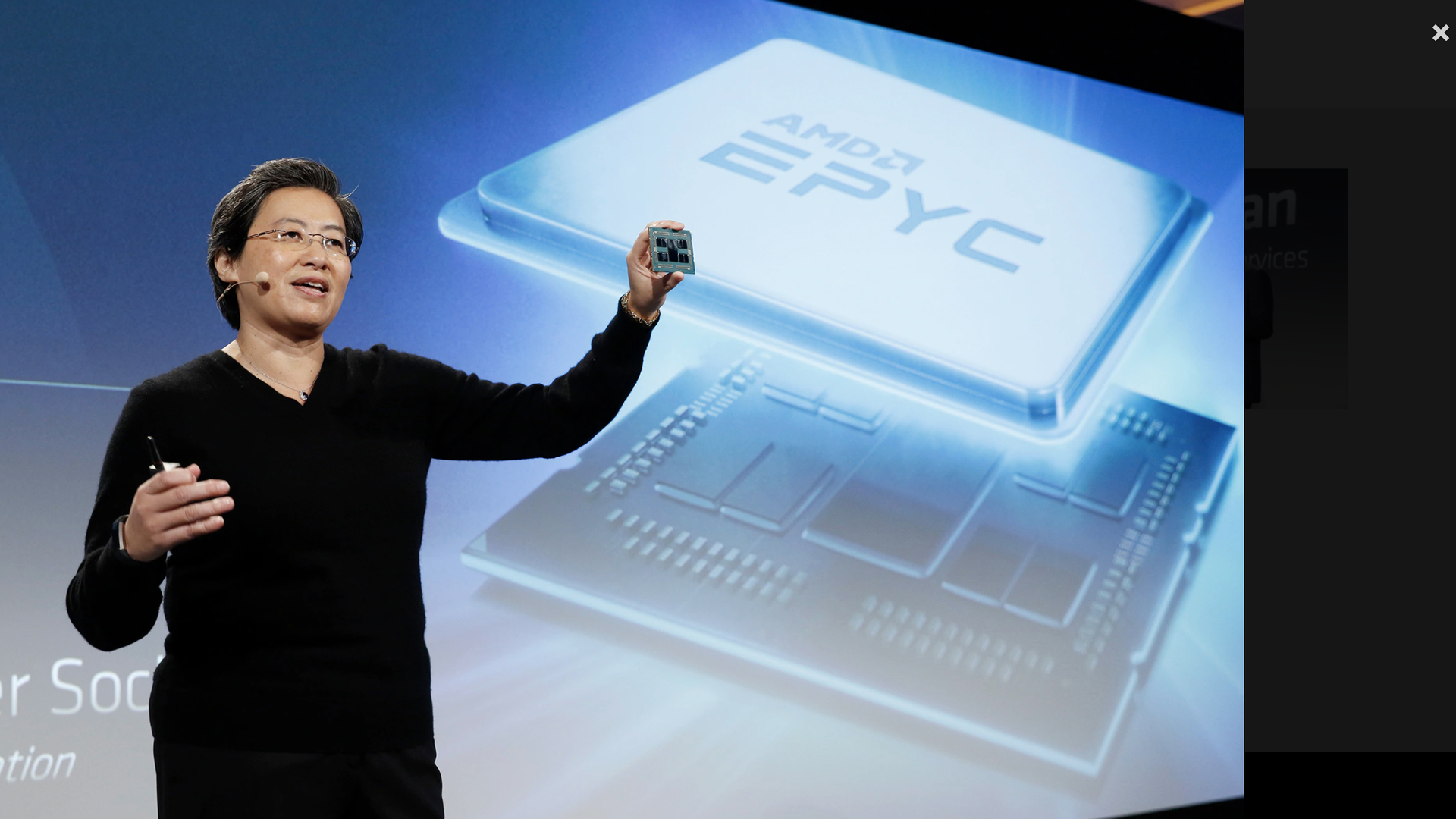
Lisa Su showing off the company's next-generation data center chip. Photo: AMD
AMD CEO Lisa Su has a lot of goals for the chip company she runs: Grab a larger share of the server market, expand graphics chips into new markets and help the company be seen as a true leader in the tech industry.
The big picture: Key to all of those goals is one over-arching one — convince the world that AMD is more than just a company that occasionally gives Intel a run for its money with a competitive chip.
"I want to break that particular mantra of AMD being the sometimes-successful company."— Lisa Su tells Axios in an interview
What's new: At an event Tuesday, AMD took several steps toward that first goal — expanding its share of the data center. Specifically, AMD announced...
- A new approach for its processors that will rely on small "chiplets" built using the latest and greatest chip process. The less-dynamic input-ouput parts of the chip would be on a central chip of their own, built using less aggressive chip wiring (which has cost benefits).
- Its first 7-nanometer graphics chip.
- Amazon's AWS is adding support for AMD processors for the first time.
Uphill battle: AMD still has a small share of the overall server market. Su acknowledges AMD faces significant challenges to win share in the most change-averse part of the computing market.
"Companies — their entire livelihood sits on these servers."— Lisa Su
More to come: I had a long conversation with Su and will include more tomorrow, including her thoughts on speaking at CES, how AMD has changed over the years, and the issues surrounding diversity in tech.
4. Benioff-backed homeless aid measure passes

Salesforce founder Marc Benioff scored a major victory in Tuesday's election as voters approved a bill he had strongly backed to help end homelessness in San Francisco.
Why it matters: The initiative, known as Proposition C, will require big businesses (including Salesforce) to pay for new services to help fight homelessness.
- Prop C had been opposed by some fellow techies including Twitter and Square CEO Jack Dorsey, Zynga co-founder Mark Pincus and Stripe CEO Patrick Collison as well as San Francisco Mayor London Breed.
How it works: Prop C raises the gross receipts tax on San Francisco-based businesses taking in more than $50 million. The additional tax varies between 0.175% to 0.69%, depending on the type of business. (The categories were a sore spot for some businesses that believe they were misclassified and over-taxed.)
What they're saying:
- Benioff: "Prop C’s victory means the homeless will have a home & the help they truly need! Let the city come together in Love for those who need it most! There is no finish line when it come to helping the homeless."
- Pincus (earlier this week): "Prop c is the dumbest, least thought out prop ever. Please get the facts and vote no. Then lets all focus on real solutions for sf."
The bottom line: Prop C will add much needed funding to help with San Francisco's increasing homelessness problem. Less clear is what impact the added tax might have on tech companies trying to decide where to locate.
5. Take Note
On Tap
- Samsung Developer Conference takes place in San Francisco. (See above)
- Earnings reports include Qualcomm, Square, IAC and Roku.
Trading Places
- Javier Soltero, who joined Microsoft when it bought his startup Acompli, is leaving the software giant after 4years to return to his entrepreneurial roots. He rose quickly at Microsoft, from running the mobile versions of Outlook to all of Outlook to his most recent post as head of Cortana.
- Scooter company Lime named GV partner Joe Kraus as its first COO. Kraus had already been on Lime's board.
ICYMI
- Dish has long been sitting on a ton of wireless spectrum. On Tuesday it announced Ericsson and tower company SBA Communications as its first partners to help build a network. (FierceWireless)
- SoftBank seeks to raise $18 billion in an IPO of its mobile communications business, sources say. (Bloomberg)
- Lyft is looking to design its own scooters and e-bikes and has hired Liam O'Connor, a former Tesla and Apple supply chain executive. (The Information)
- Google and Facebook raked in hundreds of millions of dollars in political ads this cycle. (Bloomberg)
- Boeing issued a global warning saying that a sensor in its 737 MAX could cause planes to nosedive, based on preliminary findings from a Lion Air crash that left 189 people dead off the coast of Indonesia last week. (Axios)
6. After you Login
Here's what Microsoft's campus looks like — in Minecraft.