Axios Login

October 29, 2021

I tried to get my avatar to write the intro for today's newsletter, but she said she was busy.
Today's newsletter is 1,132 words, a 4-minute read.
1 big thing: Facebook's long, bumpy road to the metaverse
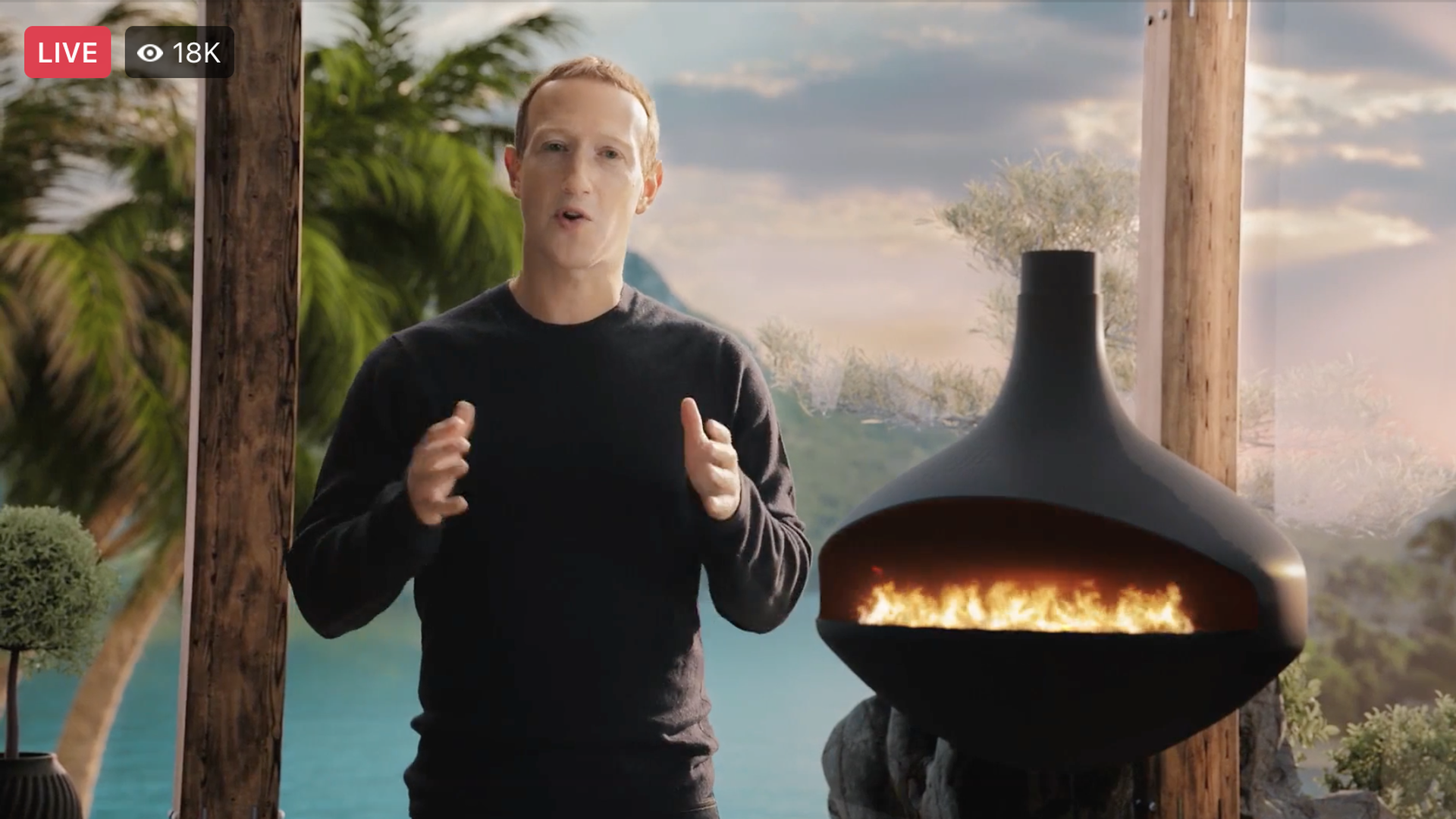
Screesnhot: Axios
Mark Zuckerberg painted an expansive view of the metaverse on Thursday, but the "embodied internet" he envisions is still years off, while the concerns about the company's present are both real and urgent.
Why it matters: Zuckerberg insists that his company can both chip away at its current problems and build toward its future vision. Critics, meanwhile, argue Facebook is trying to turn the page without shouldering responsibility for trouble it has already created.
Driving the news:
- Zuckerberg's keynote speech at a virtual developers' event Thursday focused largely on a far-off vision in which there is a single virtual world, known as the metaverse, which can be entered through a range of devices, many of which are not even technologically feasible yet.
- This embodied internet would allow people to live and work in virtual space using a mix of realistic and fantastic avatars, donning all manner of virtual clothes and accessories.
- Then there was the rebrand, with Zuckerberg announcing the company will henceforth be known as Meta, a move that he insists has nothing to do with current controversies.
The big picture: Facebook is embarking on a broad and ambitious future, but it's important to remember just how many thorny new questions we'll all face in a digital universe that puts physically distant people in close proximity.
- Among them: What types of speech and actions are permitted? And who polices a world that stretches beyond today's legal jurisdictions?
- It's also worth remembering that the company has talked about how many problems with its social network caught the company unawares.
Between the lines: There are other challenges beyond safety and privacy along the path to the metaverse — especially if there really is to be a single metaverse for everyone, rather than tons of different, incompatible digital universes.
Facebook says it wants to make sure that happens, working with the rest of the tech industry to ensure that digital goods will work across multiple companies' virtual fiefdoms.
- Technically, that isn't impossible, especially given how much 3D content is today created using one of a couple popular game engines, such as Unity and Unreal Engine.
- But getting Google, Apple, Microsoft and others to agree on the business terms that govern such a shared metaverse could be a tricky proposition.
Our thought bubble: Facebook (and society more broadly) has an opportunity to use the time it will take to build a metaverse to investigate all the ways the vision could go wrong, as well as to set norms and expectations.
2. Supply chain woes dent Apple, Amazon earnings
Even mighty Apple can't avoid the supply constraints brought about by the pandemic and the resulting chip shortage.
Driving the news: As part of a less-than-stellar earnings report Thursday, Apple said its quarterly revenue was $6 billion less than it could have been because of problems with supply.
- What's more, the iPhone maker forecast that the supply-demand mismatch will be even larger in the current quarter, which runs through December.
What they're saying: In an interview with CNBC, Apple CEO Tim Cook said that supply constraints cost the company $6 billion during the quarter.
- "The supply constraints were driven by the industry-wide chip shortages that have been talked about a lot, and COVID-related manufacturing disruptions in Southeast Asia," Cook told CNBC's Josh Lipton.
On a conference call with analysts, CFO Luca Maestri said the company expects supply chain issues will have an even larger financial impact in the coming quarter, but that Apple still expects "very solid year-over-year revenue growth."
Meanwhile: Amazon posted disappointing third-quarter results Thursday, with earnings and revenue lower than expected. Its shares dropped more than 4% in after-hours trading, Axios' Ashley Gold reports.
- Amazon's business, which has boomed over the last year, has slowed just ahead of the holiday season, dragged down by supply chain problems, labor shortages and higher costs for shipping and freight due to the pandemic.
3. Google expands skills certificate training
A few years ago, Google started offering a non-college certificate program to help teach basic IT skills to future workers. Now, the tech giant is working to make sure more people — including community college students — have access to the curriculum.
Why it matters: The labor market has a big skills mismatch, with companies saying they can't find enough qualified applicants, while plenty of job seekers struggle to find meaningful and lucrative work.
Details: As part of the expansion, Google will make the certificate program free for community colleges and vocational high schools across the nation.
- Connecticut will be the first state to offer Google Career Certificates across its state colleges and universities system.
- Google is also working with the American Council on Education to allow those who have achieved a certificate to also get college credit for the work.
What they're saying: Alphabet chief financial officer Ruth Porat says the program's expansion beyond Google has been critical to its impact.
"It can't be about one company," Porat said in an interview. She notes that there are now 150 companies that are accepting the certificate as qualification for various jobs, including Walmart and Verizon, as well as Google itself.
By the numbers: So far, more than 50,000 people have graduated from the program in the U.S., with 150 companies now accepting the certificates for certain jobs.
4. Activision Blizzard changes harassment policies
Activision Blizzard is adopting new policies around harassment and aggressively cutting the salary of its CEO, Bobby Kotick, to California's minimum wage as part of continued attempts to correct the company's toxic behavior, Axios' Megan Farokhmanesh reports.
Driving the news: In a post on Thursday, Kotick called the Equal Employment Opportunity Commission's investigation of the company "a catalyst" for change.
Details:
- Activision Blizzard is enacting a new "zero-tolerance" harassment policy across the company.
- Kotick said the company aims to have "the strictest harassment and non-retaliation policies of any employer."
Activision Blizzard has also announced it will waive forced arbitration for sexual harassment and discrimination, a win for employees who walked out in protest earlier this year.
The big picture: Activision Blizzard's plans to course correct are its most aggressive yet, months after employees formed a collective called ABK Alliance and was slapped with several lawsuits over bombshell reports that it had enabled a sexist and racist culture.
5. Take note
On Tap
- Shares of Udemy are set to begin trading on Nasdaq following its IPO.
Errata
- In a story in yesterday's Login about Github's Copilot, we should have said that the percentage of newly written code being suggested by Copilot is 30% for some programming languages, not all.
Trading Places
- Facebook's Brian Fishman, who works on the company's efforts to track dangerous organizations, said Thursday that he plans to leave the company.
ICYMI
- TikTok is testing a tipping feature with some creators. (The Verge)
6. After you Login
It's been a long week. I think we could all use a cute cat video.