Axios Login

March 25, 2022

It's been a long week. You should take tomorrow off. And the next day. But we will be back in your inbox bright and early on Monday.
Today's newsletter is 1,166 words, a 4-minute read.
1 big thing: EU lays down new laws for Big Tech

Illustration: Sarah Grillo/Axios
European regulators have come to an agreement on major competition rules that could force the world's biggest tech platforms, including Google, Apple, Facebook, Amazon and Microsoft, to reshape big chunks of their business, Axios' Ashley Gold reports.
Why it matters: Among many other provisions, the rules:
- require companies to obtain "explicit consent" to target ads based on personal data;
- require that instant messaging platforms like Apple's iMessage and Meta's WhatsApp exchange messages with smaller services;
- and require large platforms to give users freedom to select a browser, search engine and personal voice assistant of their choice.
Driving the news: Negotiations over the Digital Markets Act, which aims to address what the EU sees as a lack of competition in the digital economy, wrapped up Thursday in Brussels.
- The European Parliament aims to pass the proposal by the summer.
Quick take: Europe is pushing forward with a tough antitrust regime — the remaining votes are considered largely formalities.
- There's nothing left to do for Big Tech, which lobbied hard against the DMA, but figure out how to comply.
In order to be subject to the DMA, companies must:
- provide "core platform services" like search engines, social networks, messengers and social media;
- have a market capitalization of at least 75 billion euros ($82.6 billion) or an annual turnover of 7.5 billion euros;
- and have at least 45 million monthly end users in the EU and 10,000 annual business users.
Fines for non-compliance will be up to 10% of global turnover, and 20% for repeat infringements. The Commission may also ban "gatekeeper" companies from acquiring others for a certain amount of time.
The big picture: The U.S. is working on its own tech antitrust proposals in Congress and has ongoing lawsuits against Big Tech.
- But Europe is already going way further, despite U.S. officials' concerns that the proposals discriminate against U.S. firms.
What they're saying: "It's regulation that targets firms, rather than anti-competitive business practices, which we think is a really bad precedent to set," Garrett Workman, senior director of European Affairs at the U.S. Chamber of Commerce, told Axios.
- "While we support many of the DMA's ambitions around consumer choice and interoperability, we remain concerned that some of the rules could reduce innovation and the choice available to Europeans," a Google spokesperson said in a statement.
Flashback: When the General Data Protection Regulation, Europe's privacy law, passed in 2016, companies had 24 months to comply.
- This time, companies will have just six months to figure out compliance once the legal text of the DMA is finalized and passed by Parliament.
The intrigue: A number of U.S. companies are in support of the DMA, including Mozilla and Microsoft, along with medium-sized companies like Yelp and Genius.
- "We quite like the idea that the DMA is going to give consumers and businesses more freedom to deploy the software of their choice, use more alternatives and not be locked into the Big Tech silos," Owen Bennett, senior public policy manager at Mozilla, told Axios.
What's next: The European Commission must finalize exactly how it will enforce the DMA, and specify which EU government body will oversee that work.
2. Uber makes peace with NYC taxis
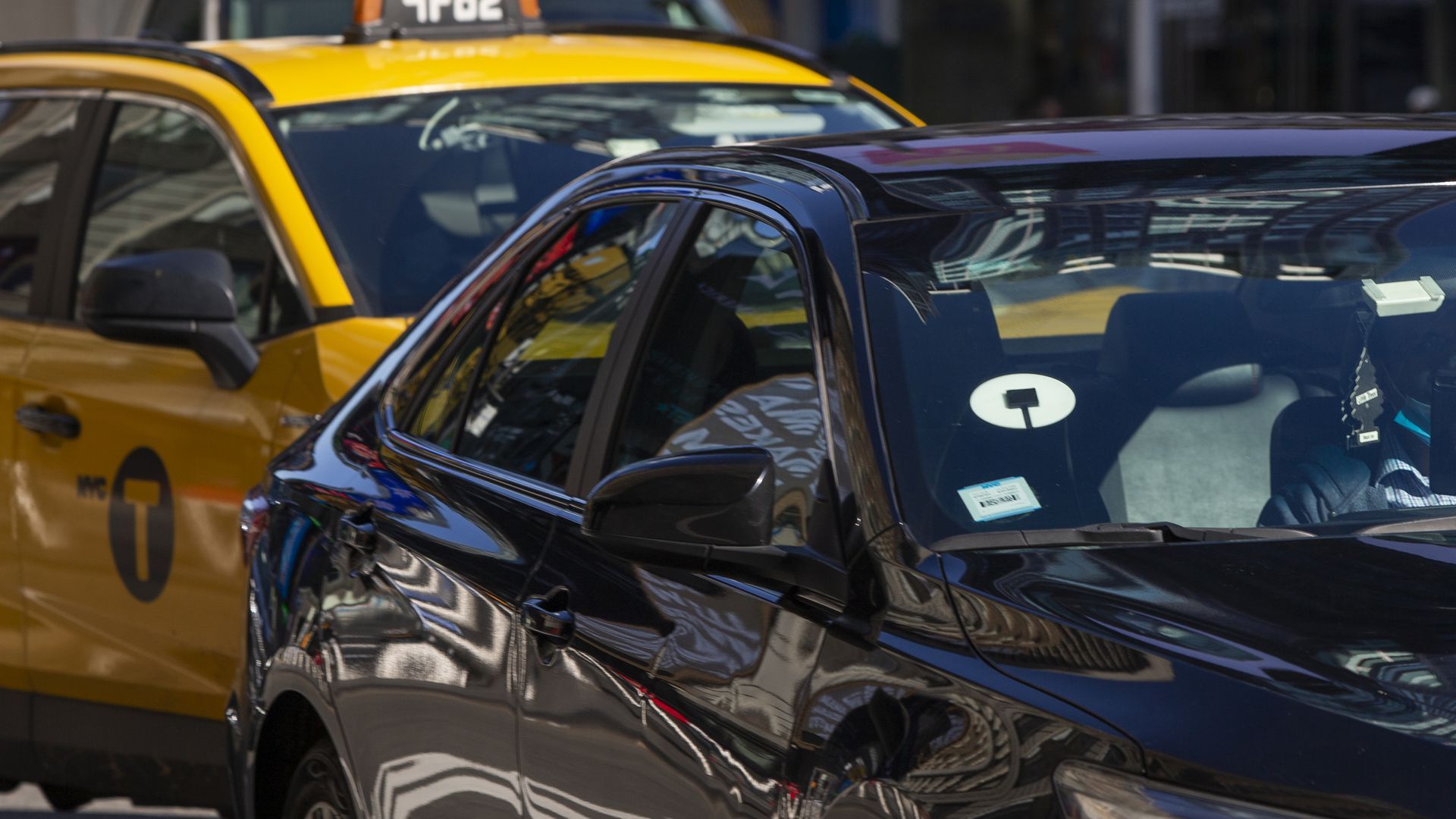
Photo: Eduardo MunozAlvarez/VIEWpress
Uber has long battled with the yellow cab industry, but yesterday's landmark detente in New York City shouldn't come as a surprise, Axios Closer's Hope King reports.
Why it matters: The agreement between the biggest rideshare operator in the country and adversaries in one of its most lucrative markets may not be entirely win-win, it's undoubtedly a need-need.
- COVID hurt nearly all out-of-home businesses, including Uber's and the taxi industry — which was already hurt by ride-sharing apps.
- During the pandemic, not only did demand for rides fall, the supply of drivers did too. This partnership ensures a greater distribution of drivers and riders across the New York City area.
Details: Uber's app will connect on the backend with Curb and Arro, which already host NYC taxis.
- Starting in the spring, taxi drivers on those apps will get access to Uber ride requests while Uber app users will get access to taxis.
What to watch: Uber wants to integrate itself with every taxi in the world, Andrew Macdonald, Uber’s global mobility chief, told WSJ.
3. Game workers’ push Microsoft on union
Microsoft says it will not object to Activision Blizzard recognizing internal unionization efforts, in response to a letter from Activision workers pressing the company to state its position about a potential union at Call of Duty studio Raven Software Axios' Stephen Totilo reports.
Why it matters: Microsoft's proposed $69 billion acquisition of Activision still faces regulatory hurdles, and the issue could come up during evaluations of the deal.
- Activision failed to recognize the union by a January deadline.
- A February outline of the acquisition sent by Activision to its shareholders states that the company may not voluntarily recognize a union or enter a collective bargaining agreement without satisfying one of several conditions, one of which is to receive Microsoft's approval.
In the letter, sent to CEO Satya Nadella and shared exclusively with Axios, workers ask whether his company has authorized Activision to approve or oppose recognition of the union.
- A version of the letter will run as an ad in the Seattle Times on Sunday.
"Microsoft will not stand in the way if Activision Blizzard recognizes a union," a company spokesman told Axios when asked about the letter.
Flashback: Quality assurance workers at Raven announced their intent to form a union in January, after striking over their parent company's decision to drop a dozen QA contractors.
Sign up for the Axios Gaming newsletter here.
4. Apple beat Epic, but it's still appealing
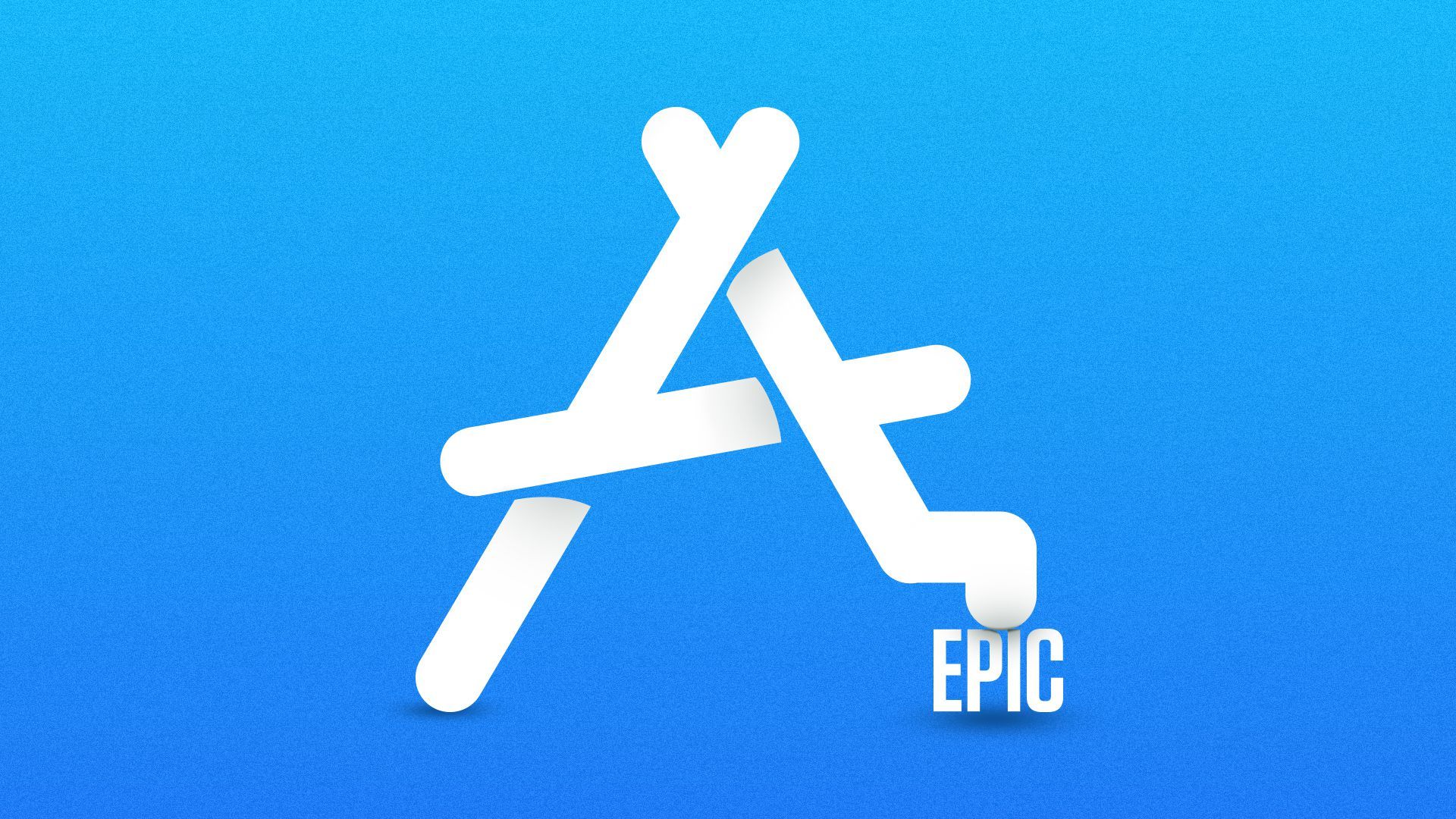
Illustration: Aïda Amer/Axios
Epic Games may have lost most of its case against Apple over its App Store practices, but the iPhone maker is still appealing part of the judgment, Ashley reports.
Driving the news: Apple filed court papers on Thursday asking an appeals court to overrule the trial judge's order that Apple allow apps to direct users to outside websites to make purchases.
Why it matters: Both Epic and Apple are appealing pieces of the ruling. Epic wants Apple to be declared a monopoly and be forced to allow rival app stores and in-app payment mechanisms.
- Apple argues the court erred in determining Apple broke California's Unfair Competition Law, and in deciding Epic would not be required to pay Apple's attorney fees.
Catch up quick: Epic, maker of the popular game Fortnite, sued Apple last year, arguing that the company was abusing a monopoly over its App Store.
- After a trial, Judge Yvonne Gonzalez Rogers largely ruled in Apple's favor.
5. Take note
On Tap
- Game Developers Conference wraps up in San Francisco.
Trading Places
- Former Microsoft principal program manager Chris Knowlton has joined video management system provider Panopto as chief evangelist.
ICYMI
- U.K. police have arrested seven people in connection with Lapsus$ hacks. (TechCrunch)
- The Justice Department brought charges against four Russians stemming from a series of years-old hacking incidents attacking critical U.S. infrastructure. (Axios)
6. After you Login
Check out this adorable scene of drag performer Marti Gould Cummings taking a request from a toddler in New Jersey to play "Baby Shark."
Sign up for Axios Login

Taking you inside the AI revolution, and delivering scoops and insights on the technologies reshaping our lives.