Axios Latino

¡Buen jueves! Today, we dive into stories about Latino street vendors, fentanyl labs and an app to combat violence against women.
- 🪅 It's also Pachanga Thursday!
- Puede leer la versión en español aquí.
This newsletter, edited by Laurin-Whitney Gottbrath, is 1,663 words, a 6.5-minute read.
1 big thing: A heritage home on the range
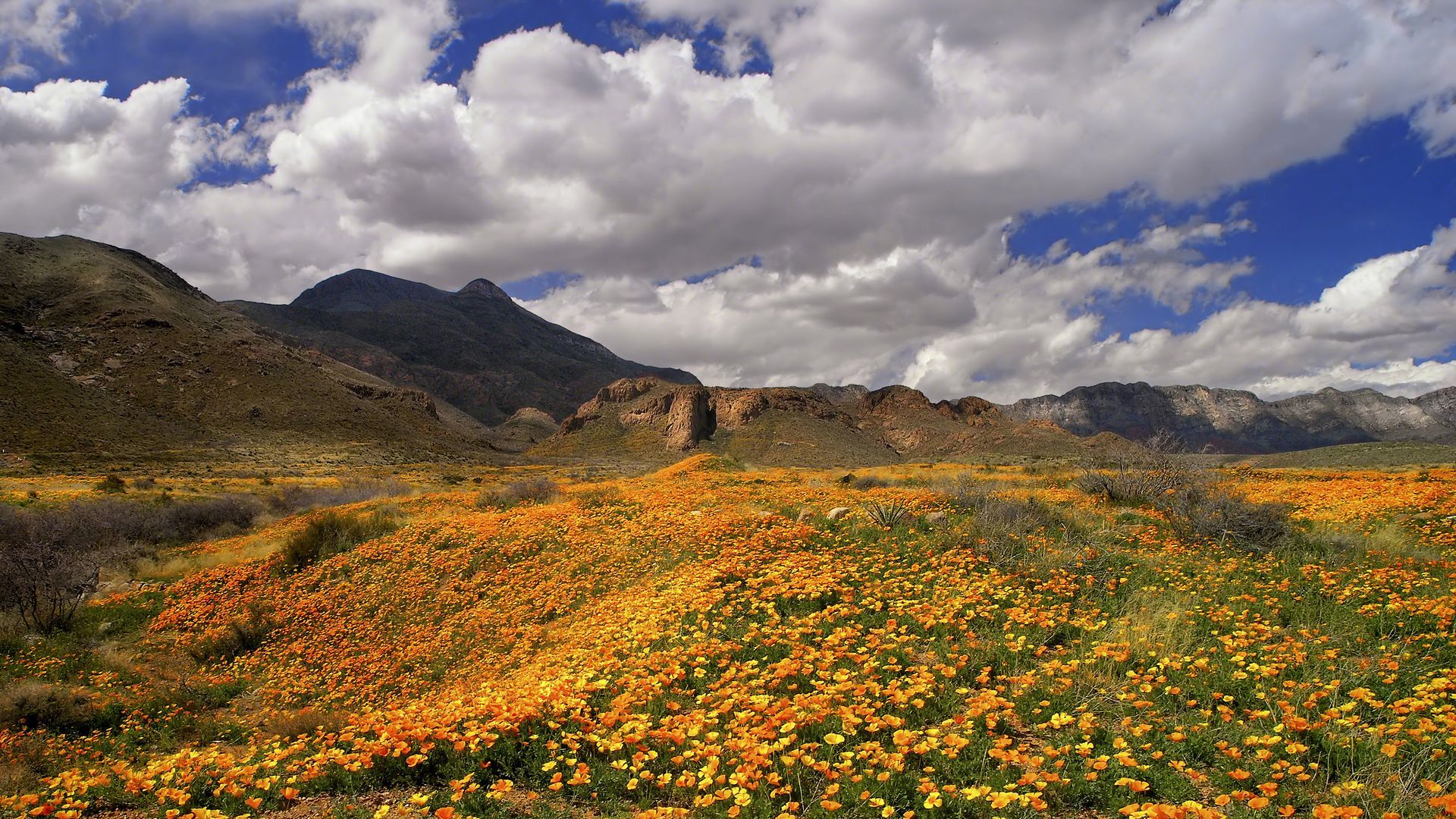
Castner Range. Photo: Mark Clune, courtesy of the Frontera Land Alliance
Advocates want the Biden administration to declare 7,000 acres outside El Paso, Texas, a national monument to give Mexican Americans and others in the area needed public space for hiking and other outdoor activities.
The big picture: Castner Range, a former U.S. Army artillery training facility, sits in desert terrain, and conservation advocates for decades have been trying to preserve it for public use.
- The 2021 Place Story Culture Report recently labeled Castner Range a Latino Heritage site that currently lacks official recognition and protections.
- The area played an important role in the survival of early Spanish settlers coming to what is now Texas and New Mexico.
Driving the news: El Paso, a city of 679,000 people where 82 percent of residents are Latino, has developed rapidly in recent years due to its location on the U.S.-Mexico border.
- The city lacks outdoor spaces, unlike other cities with high percentages of Latino residents.
- That has resulted in El Paso not having a culture of hiking and outdoor exploring found in Albuquerque, N.M., Tucson, Ariz., and Denver, according to Janae’ Reneaud Field, executive director of the Frontera Land Alliance.
- Families in the area have to drive about an hour and a half to experience White Sands National Park or an hour for Organ Mountains-Desert Peaks National Monument.
Between the lines: Some of the range is currently off-limits to hikers due to unexploded ordnances, but a designation would allow the federal government to assess the area and design trails.
The intrigue: Interior Secretary Deb Haaland hiked near Castner Range last month at advocates' request and heard from local community residents about their ideas for a possible monument.
- The Biden administration has not signaled what it intends to do with Castner Range yet. The Department of Interior declined to comment.
- U.S. Rep. Veronica Escobar (D-Texas) has introduced a bill to designate Castner Range a national monument, but advocates say the Biden administration can also make such a declaration under the Antiquities Act.
2. Fentanyl crisis hits both sides of the border

A man in Tijuana using fentanyl. Source: Noticias Telemundo
More people in northern Mexico are becoming addicted to fentanyl produced by criminal groups for U.S. consumption, Marina writes.
Driving the news: Cartels have in recent years transitioned from producing cocaine and heroin to making more synthetic drugs like fentanyl and meth, according to a Mexican government report published last week.
- Mexico is one of the primary sources of the fentanyl that enters the U.S., where drug overdose deaths hit a record last year.
- But now the cartels trafficking the drug across the border are also selling it to locals and migrants in northern Mexican cities, according to users and nonprofit groups like Verter A.C.
- “I know people who ended up in a vegetative state, a lot that died, so many that lost it all just because of fentanyl," a Tijuana man in recovery told Noticias Telemundo.
The big picture: Mexican authorities don’t have official data on overdoses from fentanyl, noting in a recent report only that consumption of opioids rose during 2020.
- But nonprofits, including Verter A.C. and PrevenCasa, recently said they tallied an average of 100 fentanyl overdose cases in Tijuana and about 400 in Mexicali in each of the past three years. Before then, overdoses were largely from cocaine or heroin, PrevenCasa added.
Between the lines: While many U.S. first responders are equipped with naloxone, a medication that counteracts the effects of opioids, it is harder to acquire in Mexico, making deaths more likely, per PrevenCasa.
- The group wants Mexican authorities to work to reduce harm from drug usage instead of just focusing on combating cartel production.
Go deeper: Latino drug overdose death rate jumped 40%, study finds
3. NYC street vendors fight to operate legally
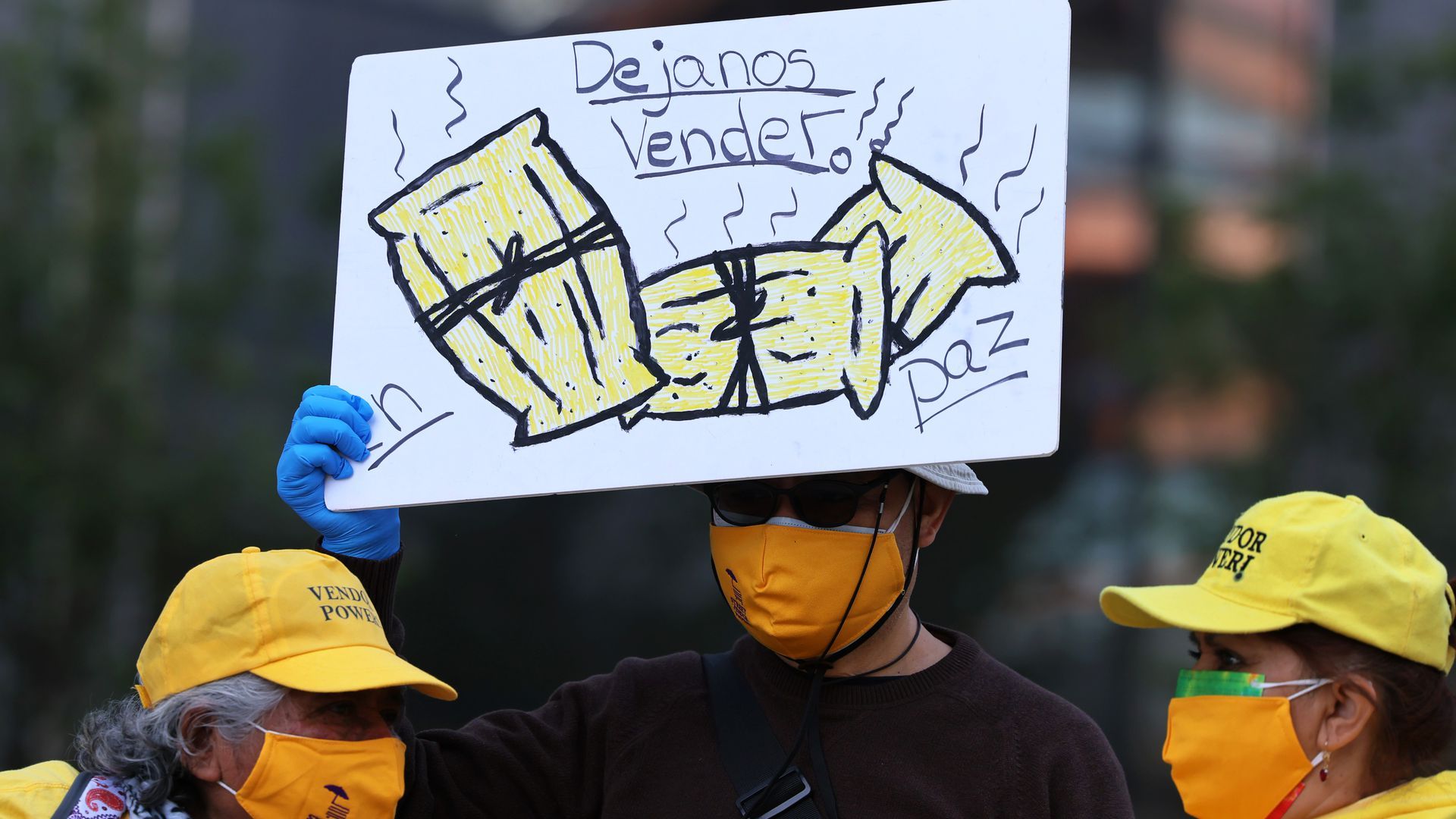
Activists demonstrate in support of street vendors in May 2021 in New York City. Photo: Michael M. Santiago/Getty Images
New York City street vendors, including many Latinos, are calling on officials to lift a cap on the permits they need to operate legally, Astrid Galván writes.
Driving the news: The city is home to up to 20,000 street vendors — many of whom are immigrants forced to work without permits or to pay exorbitant amounts to lease them because of the cap.
By the numbers: The city has made only 853 total licenses available for general merchandise.
- Some 12,000 people are on a waitlist that has been closed for a decade, meaning there's virtually no way to get a new permit, according to researchers at the Community Service Society of New York. Military veterans are excluded.
- New food vending permits are also capped and nearly impossible to get, street vendor advocates say.
- Vendors pay anywhere between $15,000 to $25,000 every two years to lease a permit from someone who already has one, according to the Street Vendor Project, an organization that fights for vendor rights.
- Others operate without a permit, risking $1,000 fines.
Flashback: New York began cracking down on street vendors in the late 1970s and early 1980s, placing caps on the number of licenses and permits.
- The New York City Council last year passed major reforms, including the establishment of a civilian department to enforce street vending rules under the Department of Consumer and Worker Protection. But critics say police are still doing some enforcement and that citations are back up following a pandemic lull.
- The legislation also lifted the cap to about 4,000 additional food vendor permits that can be issued in batches of 400. General vendors were excluded.
- Many restaurants and their supporters opposed the measure, arguing that increasing or lifting the cap on street vendor permits could hurt their businesses.
But, but, but: Advocates, including Street Vendor Project deputy director Carina Kaufman-Gutierrez, say street vending creates a path toward entrepreneurship, especially for immigrants and people who can’t access capital to start their own businesses,
State of play: A bill currently in the New York state legislature would eliminate the limits on permits and regulate the industry in cities of one million people.
- Street vendor advocates hope the state budget includes measures supporting the expansion of the permit program. But the budget process has stalled, and it's unclear whether the measures will be included.
4. An app for protecting women
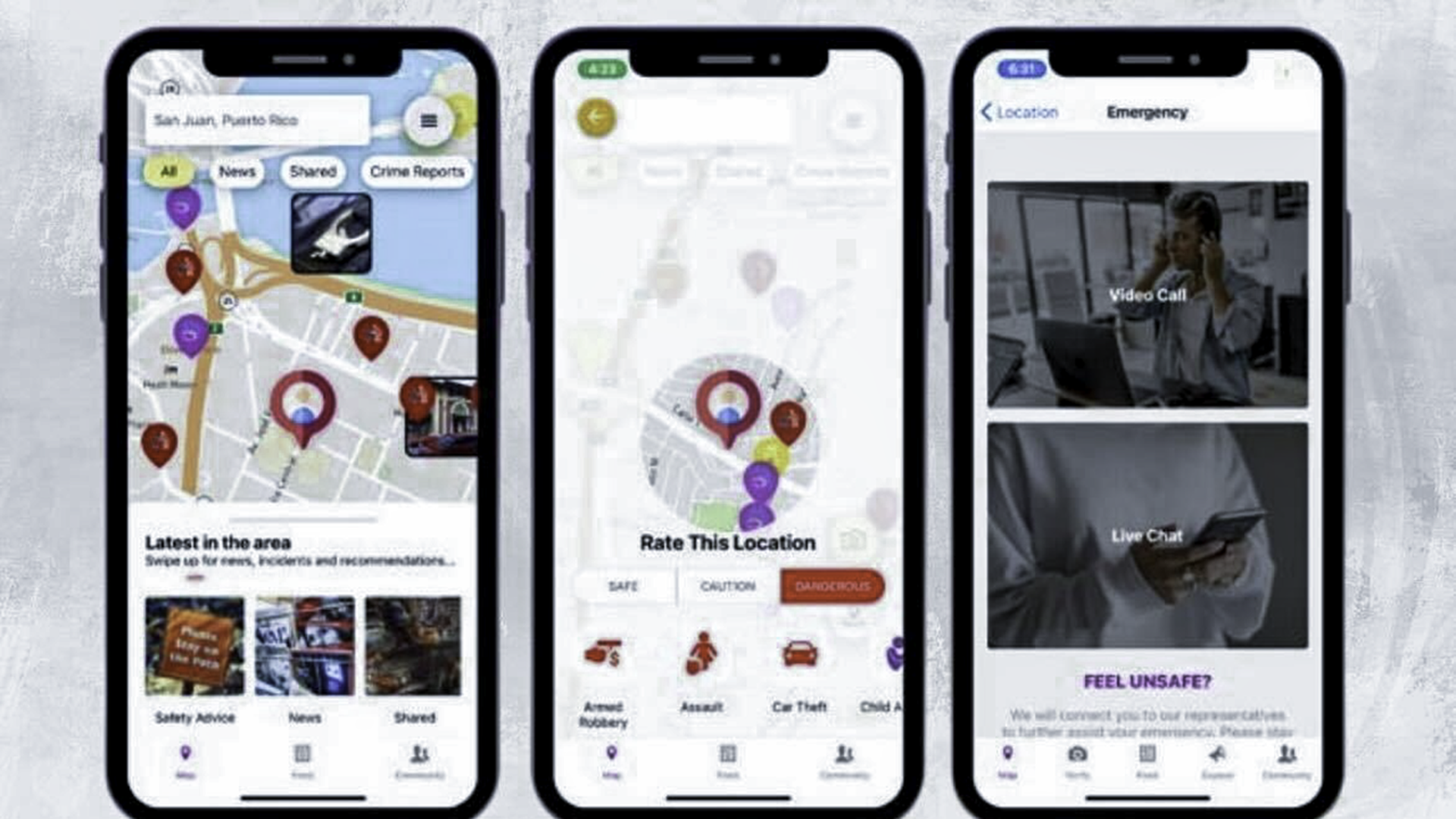
The interface of the Aware app. Photo courtesy of Aware
Two Puerto Ricans have created an app they hope can help women avoid rising gender violence, Marina writes.
How it works: The Aware app pulls from sex offender registry data, arrest warrants and local police reports to alert users when they are in a potentially unsafe area.
- In case of an emergency, users can video call a security agent and send out their location as a pinpoint.
Driving the news: Co-creators Claudia Ramos Zorrillo and Mayrel González Huertas say they came up with the idea after doing advertising work for the Oficina de la Procuradora de las Mujeres, the Puerto Rico attorney general’s special office for women.
- “We saw they had some resources once people became victims, but wondered how we could help people from even getting to that point,” Ramos Zorrilla said during a presentation on the app.
By the numbers: There have been at least 11 cases of women murdered because of their gender so far this year in the territory, according to the Puerto Rico Gender Equity Observatory.
- There were 53 femicides in 2021, the group recorded.
- The special office for women recorded 850 cases of sexual abuse crimes last year.
The big picture: The Aware app can also be used to send out notifications during active shooter situations or when a user approaches a zone with multiple theft reports.
- The app launched for iOS and Android in Puerto Rico last month, and the founders hope to eventually make it available for the mainland U.S. as well, co-creator Ramos Zorrilla told Noticias Telemundo.
5. Stories we’re watching
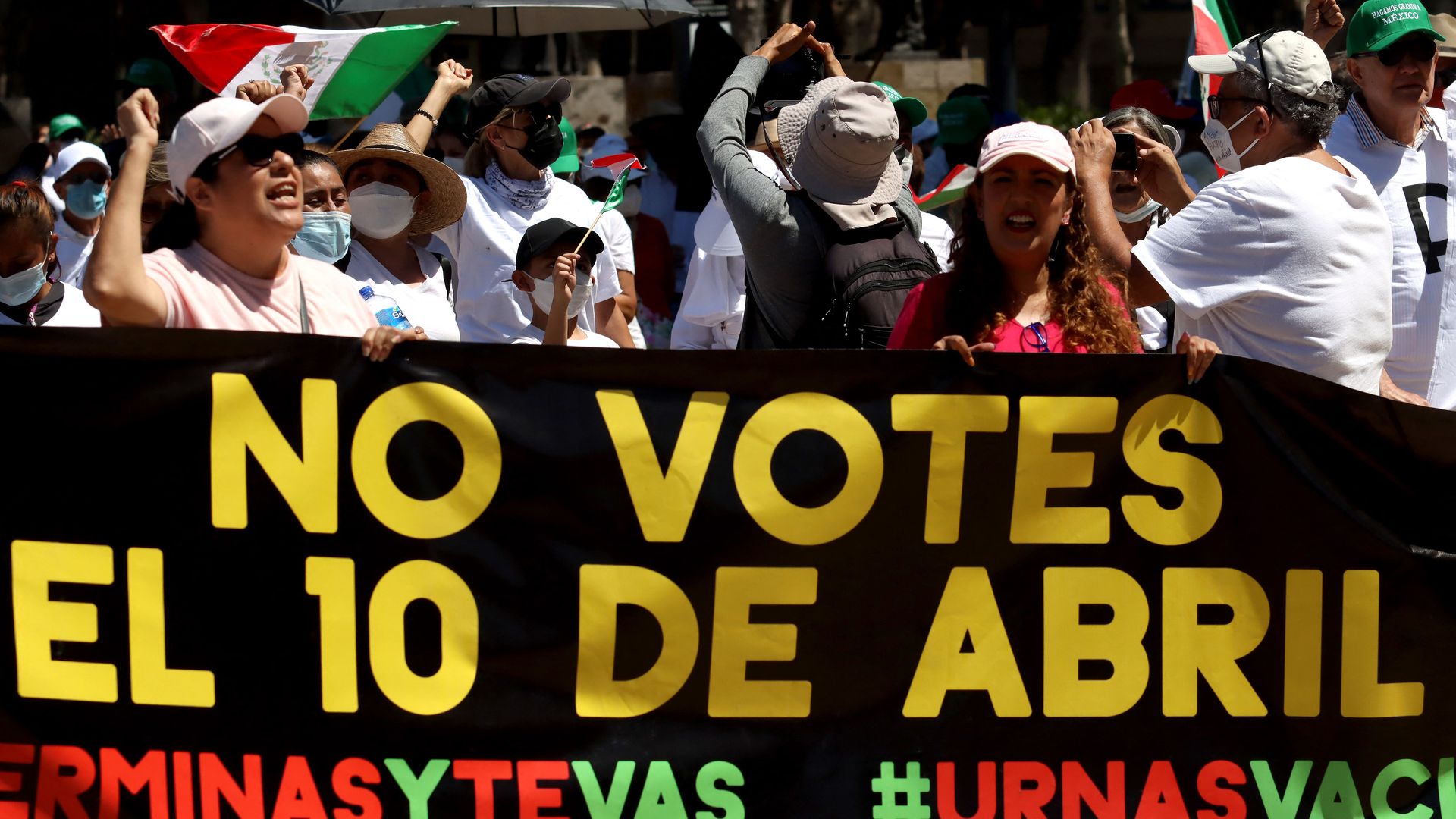
Opponents of Mexican President Andrés Manuel López Obrador demonstrate in Guadalajara, Jalisco, against the presidential recall referendum that will take place next Sunday. Photo: Ulises Ruiz/AFP via Getty Images
1. Mexicans are set to vote in a referendum Sunday on whether President Andrés Manuel López Obrador should be removed from office early.
- The recall referendum, which comes halfway through López Obrador’s term, is the first of its kind in Mexico.
- Polls show the recall is likely to fail. The political opposition has called instead for people to boycott the vote, arguing it's an unnecessary expense.
- A 40% voter turnout is needed for results to be binding, per the electoral authorities.
2. More Chileans now say they will reject a planned new constitution than will support it, according to a recent opinion poll.
- Support has dropped from 56% to 40% since January. A referendum on the new constitution, which is still being drafted, is scheduled for Sept. 4.
- Chileans voted to replace the Pinochet-era constitution in 2020 after mass protests. But many have become frustrated over the delay in drafting the new document, per the poll.
6. 🐶 1 smile to go: Pup interns

They're smart, fun and guaranteed to bring talents not seen in the office before — and, oh, did we mention they have four legs?
- These pups are part of a Colombian "internship" program looking to find forever homes for dogs by placing them in businesses, Marina writes.
Details: The "four-legged interns" project was set up by an NGO to incentivize adoption of rescued adult dogs.
- Businesses that are part of the program help pay to foster them for a year.
- Since the project's launch in November, the rescues have pawed through places like a gardening business, a call center, a creative design company and a radio station.
What they're saying: “It’s nice for us and also a good way for them to regain trust in humans,” Laura Chaparro, who works at a design firm fostering a pup, told Noticias Telemundo.
🪅 Pachanga Thursday
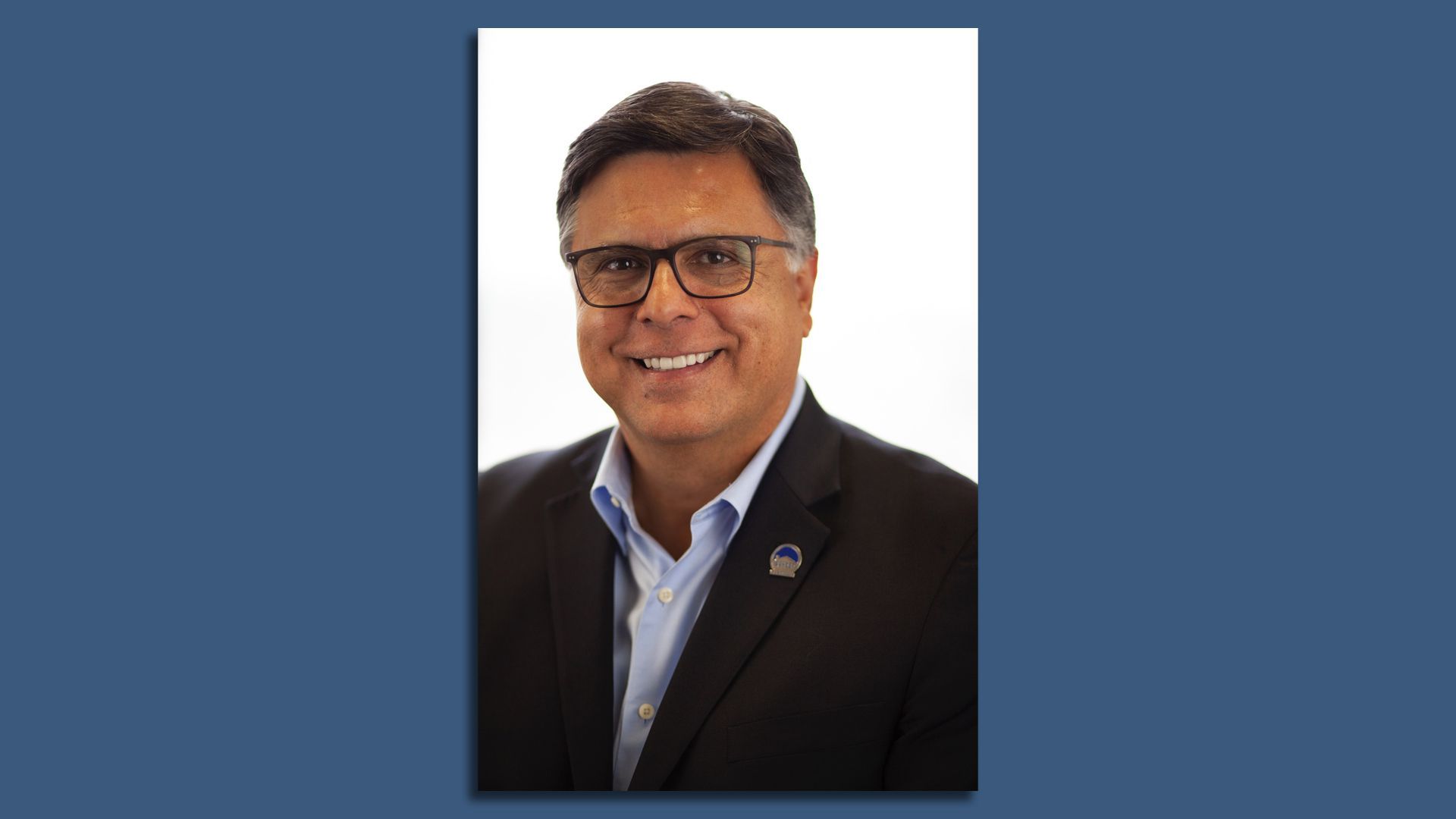
Gary Acosta. Photo: Courtesy of NAHREP
Get to know Gary Acosta, co-founder and CEO of of the National Association of Hispanic Real Estate Professionals.
- Acosta recently hosted the 2022 NAHREP National Convention and Policy Summit, which drew White House officials and members of Congress.
- He is also a general partner of L’ATTITUDE Ventures, a venture capital fund exclusively focused on Latino-led start-ups.
Thanks for reading! We'll be back Tuesday.
If you like Axios Latino, tell a friend to subscribe!
Sign up for Axios Latino

Keep tabs on the stories that most affect the U.S. Latino community on both sides of the border, a collaboration with Noticias Telemundo.