Axios Latino

¡Buen jueves! Who's ready for the weekend?
- We have you covered today with news about a groundbreaking TV show, a look back at a crucial civil rights case, and a battle for cleaner air.
- 🪅 Oh, yeah, and it's Pachanga Thursday!
- Puede leer la versiĂłn en español aquĂ.
- And if you like Axios Latino, tell a friend to subscribe — it's free!
This newsletter, edited by Astrid Galván and Laurin-Whitney Gottbrath, is 1,381 words, a 5-minute read.
1 big thing: A key desegregation fight, 75 years on
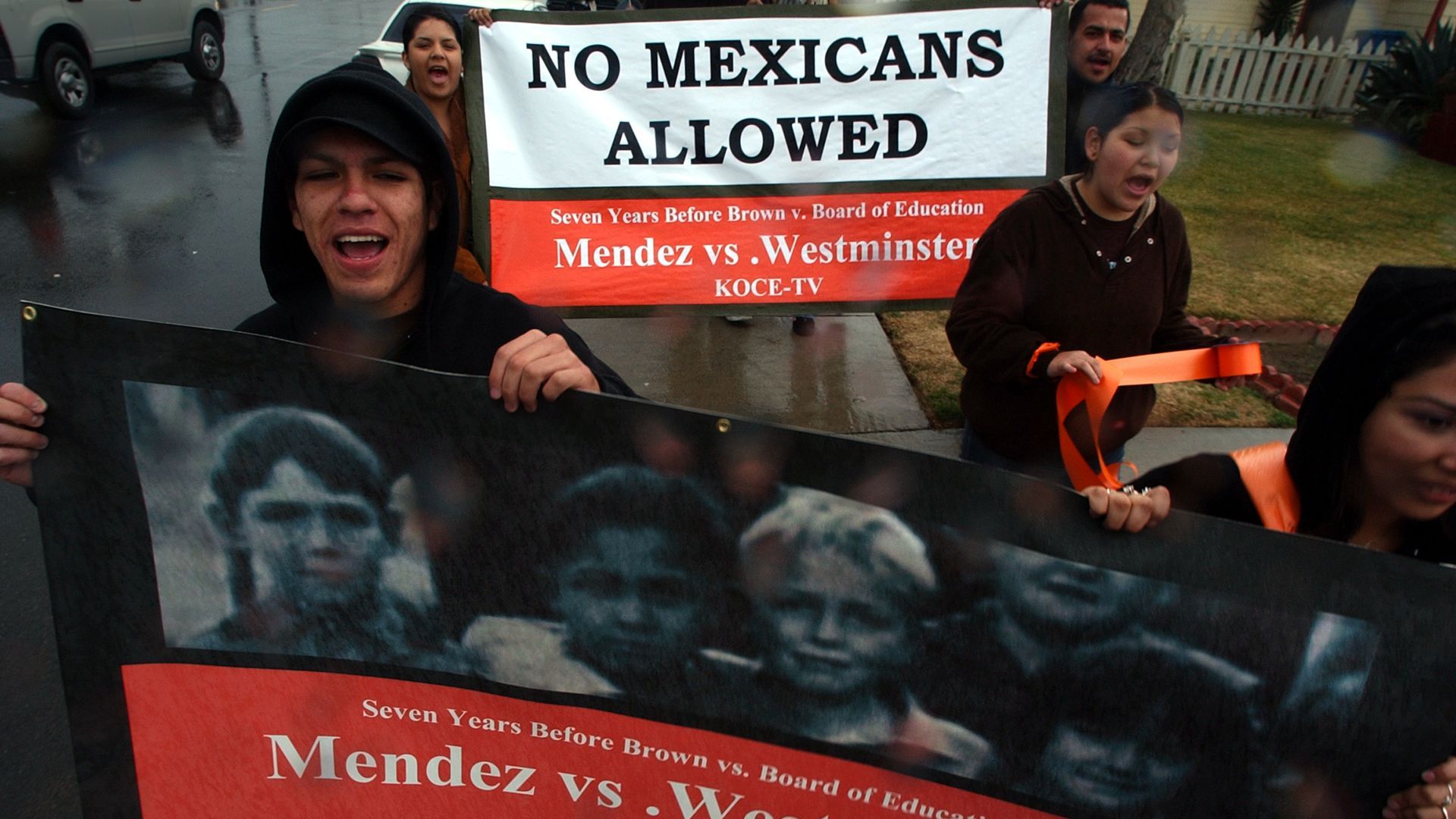
Students march in honor of the Mendez vs. Westminster school desegregation court case in California. Photo: Don Bartletti/Los Angeles Times via Getty Images
Seventy-five years ago today, in a pivotal case brought by a Mexican American and Puerto Rican family, a federal appeals court in California ruled against school segregation based on ancestry, Russell writes.
The big picture: The 1947 Mendez vs. Westminster ruling set up the U.S. Supreme Court's landmark Brown vs. Board of Education desegregation decision, but its legacy is often overshadowed.
- Since then, the number of Latino students has spiked from less than a percentage point nationally in 1970 to 27% of the overall student population in 2018.
Yes, but: Schools were found in 2018 to be effectively just as segregated as they were 50 years before, even as the nation grew more diverse, according to a report from The Civil Rights Project at UCLA.
- A Pew Research Center study found that in the 2018-2019 school year, 56% of Hispanic students and 43% of Black students attended public schools where half or more of the students were of the same race or ethnicity. For white students, that figure was 79%.
Flashback: Mexican-born Gonzalo Mendez and his Puerto Rican-born wife, Felicitas, lived in Westminster, Calif.
- When Felicitas' sister tried to enroll her kids and the Mendez children in school, only hers were allowed — the Mendez kids were considered too dark-skinned and were sent to a "Mexican school."
- The Mendez family and others sued in federal court, saying segregating Mexican American kids was unconstitutional.
- A district court judge ruled in their favor in February 1946.
- On April 14, 1947, the U.S. 9th Circuit Court of Appeals upheld the lower court's decision. Two months later, California Gov. Earl Warren outlawed school segregation in the state.
The intrigue: Supreme Court Justice Thurgood Marshall, then with the NAACP, used some of the arguments made in the Mendez case in Brown vs. Board of Education.
Read more.
2. Fighting for clean air 💪🏽
The smoggy sky in El Paso, Texas. Photo: Carlos Perez-Beltran for NBC/Noticias Telemundo
Activists across the U.S. are pushing — with some success already — for clean air in Latino communities, Marina writes.
Why it matters: Hispanic, Black and Asian neighborhoods in the U.S. are exposed to greater levels of air pollution particles, according to a Harvard study.
- Recent data from American Lung Association also shows that metro areas with large Latino populations are among the worst in year-round particle pollution.
- Exposure leads to higher risks of premature death and of childhood asthma.
Between the lines: The El Paso, Texas, group Familias Unidas del Chamizal sued the EPA, and late last year got the agency to downgrade the city's air quality rating. That means it has to better regulate new pollution sources.
- In California, the group ComitĂ© CĂvico Del Valle and the Greenlining Institute are pushing for a state bill to dedicate 40% of federal infrastructure funding to clean energy and water development in communities of color.
- In Colorado, a proposal under consideration, co-sponsored by two Latina legislators and championed by nonprofit Green Latinos, would strengthen regulations against air contaminants.
What they're saying: “We have the recycling facility next to the elementary school, we have the train, we have the I-10,” Hilda Villegas, of the El Paso group, told Noticias Telemundo. “There’s lead in the air, and what kind of American dream is that?”
What to watch: Last week, the philanthropic group Donors of Color Network announced it received $100 million in pledged funding for minority-led organizations or those that mainly work with communities of color to battle climate change.
Go deeper: Climate change hits home for Latinos
3. This comeback was a long time coming
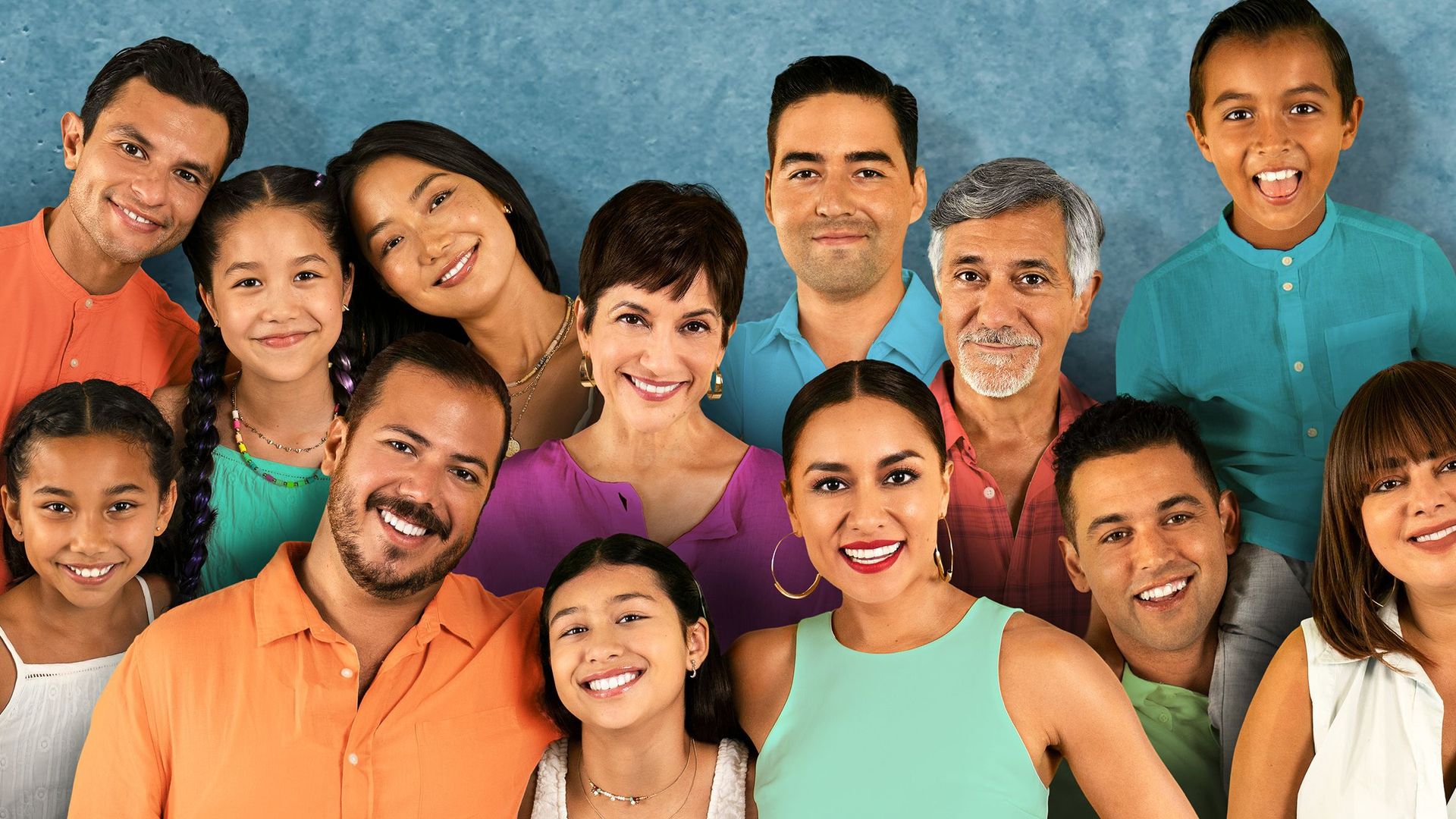
The cast of "The GarcĂas." Photo courtesy of New Cadence Productions.
“The Brothers GarcĂa,” a hit Nickelodeon show about a middle-class Latino family that ended 18 years ago, is coming back on air — this time, as "The GarcĂas" on HBO Max, Astrid writes.
Why it matters: Shows about and starring Latinos have been given short shrift by studios, usually getting poor advertising budgets and a brief lifespan.
- Latinos are also underrepresented on screen and behind the camera, data shows.
The big picture: “The Brothers GarcĂa,” which followed the lives of three boys, their sister and parents, ended on Nickelodeon in 2004 after four seasons.
- In the new show, which debuts today, the GarcĂa kids are all grown up with children and successes of their own.
Behind the scenes: Executive producer and showrunner Jeff Valdez has been pushing studios to reboot the show for a decade. Most of the actors from the original show weren't able to find work in the industry after the series ended, he said.
- The new show seeks to showcase a regular American Latino family — no classic stereotypes allowed — and show viewers a “simple slice of life,” Valdez said.
- Valdez says Latinos are too often portrayed as criminals. In “The GarcĂas,” they are business owners, journalists, astronauts and educators.
- Valdez is particularly proud of having a 100% Latino writing staff. Ninety percent of directors are also Latino.
4. Willing to help with wheels
Illustration: Annelise Capossela/Axios
A Hispanic-led association is helping uninsured Latinos who need specialized medical equipment like wheelchairs and walkers, Marina writes.
Why it matters: One in six Latino adults in the U.S. has a disability, and they report less use of assistive devices than white adults.
- Lower rates of insurance are to blame. Without insurance, a manual wheelchair may cost between $200 and $5,000.
Details: The Living Hope Wheelchair Association distributes walkers, nursing beds, adult diapers, catheters and other medical equipment to uninsured Latinos, regardless of their migratory status.
- It also helps with repairs.
- Supplies are donated or bought through fundraising. The nonprofit also seeks out other organizations that can help Latinos with disabilities pay their water or electric bills if they can’t afford them on top of their medical bills.
- Most of the nonprofit’s members use wheelchairs. They organize group activities like guitar lessons or park outings.
Flashback: Living Profit was established in Houston in 2005 after the county stopped a program to provide powered wheelchairs through Medicare, arguing there was rampant fraud.
5. Stories we're watching
A protest against Brazilian President Jair Bolsonaro in SĂŁo Paulo, Brazil, on April 9. Photo: Nelson Almeida/AFP via Getty Images)
1. Brazil’s electoral body has asked the European Union to observe the upcoming presidential elections, the Associated Press reports.
- Far-right president Jair Bolsonaro is trailing his main opponent, former President Luiz Inácio Lula da Silva, in the polls.
- Bolsonaro, without evidence, has accused the electoral authority of favoring his rival.
2. A county district attorney in Texas says he may intervene in the scheduled execution of Melissa Lucio over the death of her 2-year-old daughter, the Texas Tribune reports.
- Cameron County District Attorney Luis Saenz initially said during the Tuesday hearing he wouldn't intervene because the Texas Court of Criminal Appeals would probably stop the April 27 execution.
- But, later in the hearing, he said if the appeals court doesn't block the execution, he'd "do what I have to do and stop it."
- The Innocence Project and many others say Lucio is innocent. Her lawyers have applied for clemency.
6. 🌊 Smile to go: Surf’s up, kids

Peruvian children from a small town learned to surf while they waited for school to resume during pandemic closures, Marina writes.
Details: Many of the kids from Puémape, a seaside town that got electric power only in 2018, grew up next to the ocean but hadn’t learned to ride the waves.
- Surfer Kayosha Castro set up a camp while classrooms were closed, teaching the kids to swim, surf, meditate and helped clean the beach.
- The kids told AFP surfing was a lifeline for two years, as online classes weren’t available in the town and in-person classes didn’t fully resume in Peru until mid-March this year.
- Latin America and the Caribbean had some of the longest pandemic school closures in the world, UNICEF says.
🪅 Pachanga: CiCi Rojas
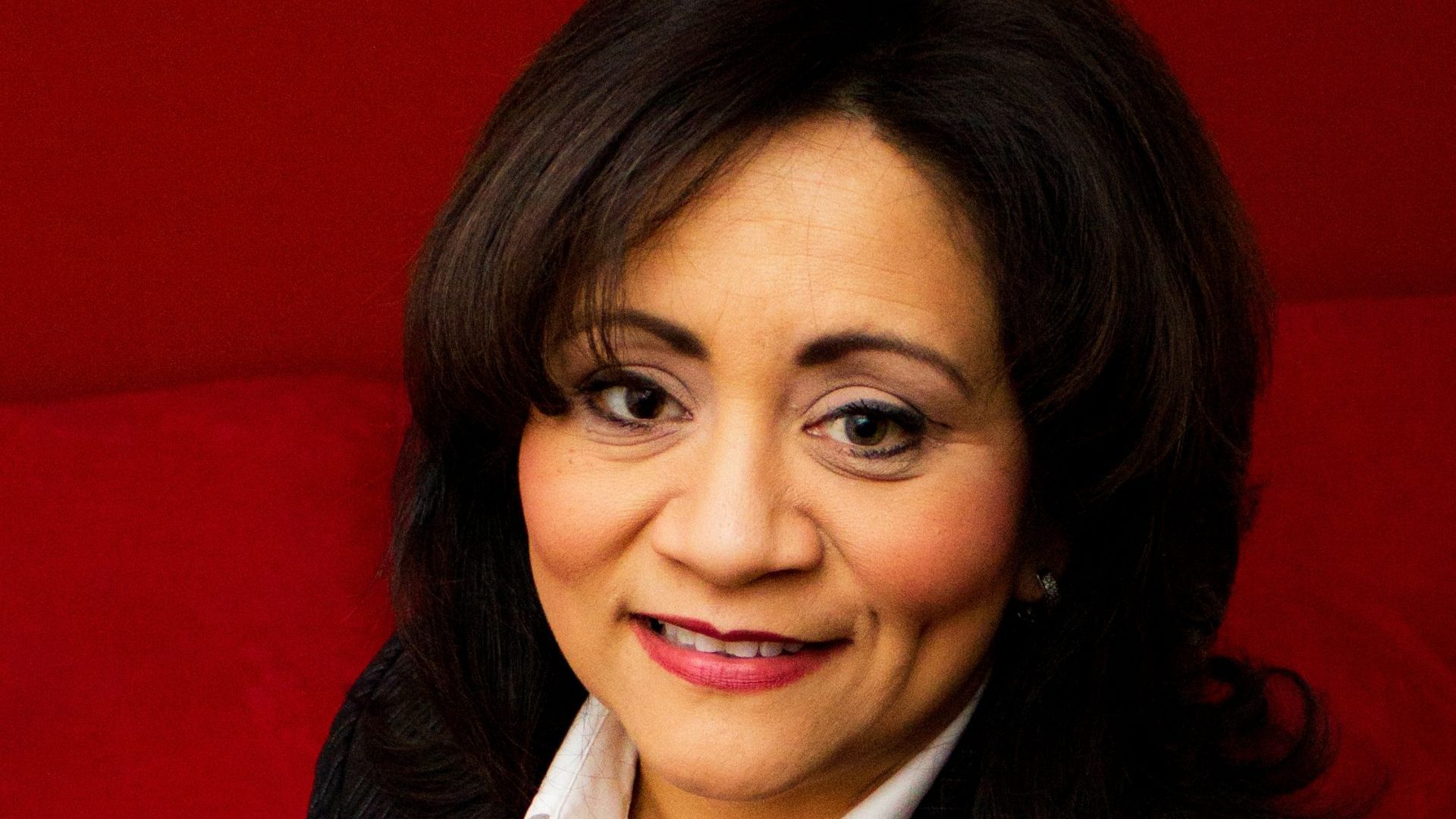
CiCi Rojas. Photo courtesy of YMCA-USA
Give it up for CiCi Rojas, who was just named the first Hispanic woman to chair the national board of directors at the YMCA of the USA!
CiCi co-founded and helps run a bilingual marketing agency. She also serves on the boards of Friends of the National Museum of the American Latino and USA Volleyball.
¡Felicidades!
That's it for today, thank you for reading! We'll be back Tuesday.
Sign up for Axios Latino

Keep tabs on the stories that most affect the U.S. Latino community on both sides of the border, a collaboration with Noticias Telemundo.