Axios Latino

January 11, 2022
¡Muy buen día! Today we're looking at under-treated pain, the lack of Latinos on school boards and redistricting fights.
- Send us any feedback (quejas, sugerencias, chismes) by replying to this email. Sign up if you aren’t yet subscribed, and remember you can read the Spanish version here.
This newsletter, edited by Alison Snyder, is 1,507 words, about a 5.5-minute read.
1 big thing: Tech to help Latinos with disabilities
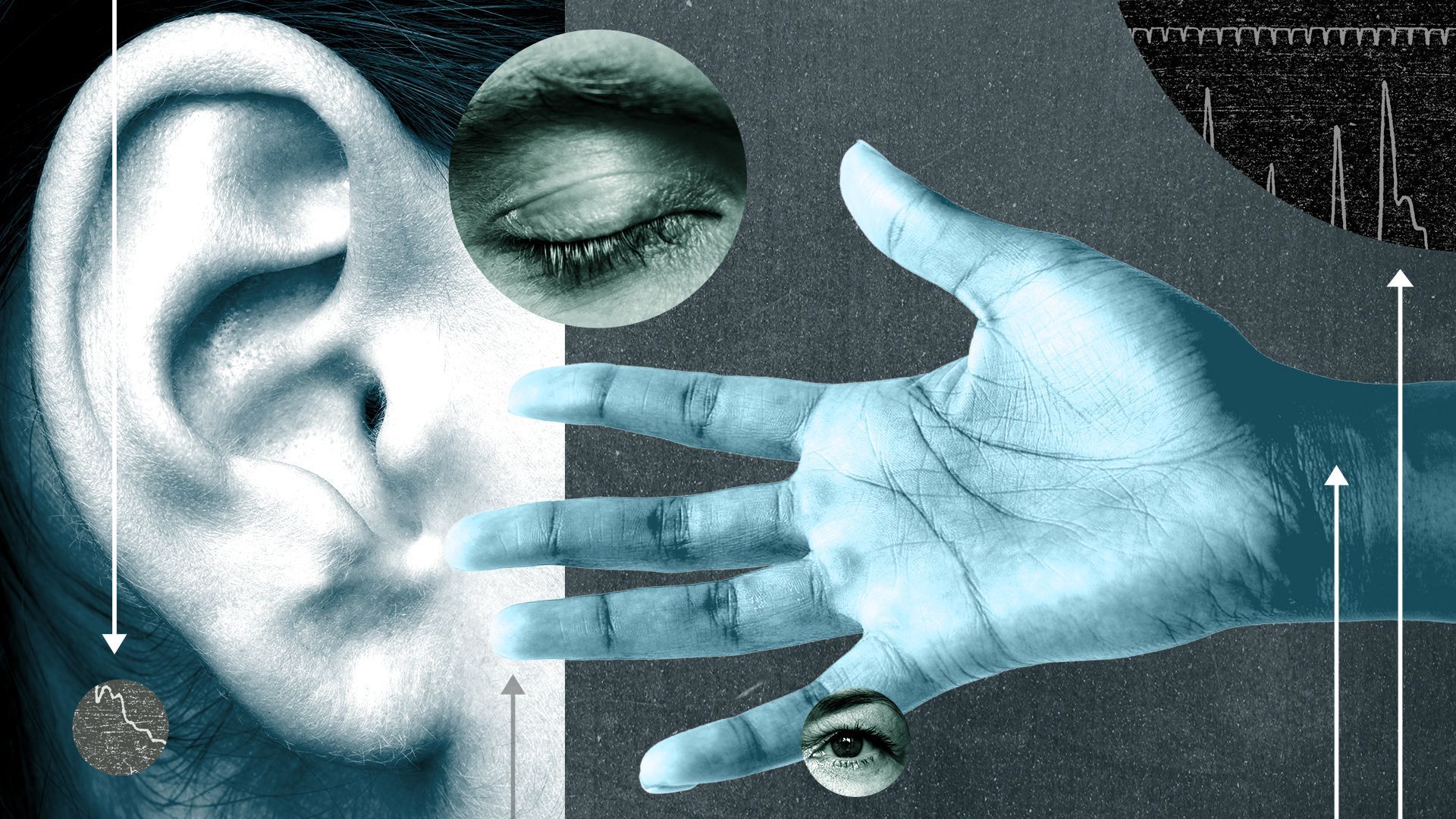
Illustration: Shoshana Gordon/Axios
Quality of life for U.S. Latinos who have a disability tends to be worse than for other demographics, spurring efforts to develop new technologies that could help.
Why it matters: One in six Latino adults in the U.S. has a disability. As the Hispanic population grows, more people could be in need of support.
What’s happening: More than 5.4 million Hispanics — about 9%, of all ages —have some form of disability in the U.S., according to an analysis of census data by the University of New Hampshire's Institute on Disability.
- That's a lower rate overall compared to their white, Black and Native American peers, but Hispanics report greater levels of unemployment due to disability, higher school dropout rates and lower use of assistive devices.
- Latinos have twice the risk of non-Hispanic whites when it comes to developing worse health outcomes and limits to performing usual activities.
- Language barriers, fears over immigration status, cultural stigmas against seeking help, and not having health insurance can hinder the advancement of Latinos who have disabilities ranging from mental health disorders and physical differences to cognitive impairments.
Some technologies and services are emerging to support Latinos with disabilities. They include:
- A Mexican teen is developing an app to help sign language speakers and people who aren’t deaf communicate easier by translating, with video assistance, sign language to text and voice, and vice versa.
- A video relay service from Purple Communications provides sign language interpretation in both Spanish and English and has just joined forces with Meta for easier use in Facebook products and video chatting.
- The nonprofit World Institute on Disability has a range of digital tools, including Proyecto Visión, a bilingual work training platform that also offers information on how to find health insurance through a job, budgeting or disability benefits.
By the numbers: Of Hispanics with a disability in the U.S., 26% live in poverty compared to 32% of Black people with a disability and 17% of white non-Hispanic Americans who are disabled, according to the University of New Hampshire analysis.
- Latinos with disabilities are less likely to be insured: about 89% have coverage nationwide in comparison to 94% on average for Black, white non-Hispanic, Asian and Native American people with a disability.
What they’re saying: “Technology has certainly improved our arena for communication, to feel more connected, [through] apps that pick up speech and translate it, so we can enjoy activities like guided tours at a museum,” Elvia Guillermo Aguilar, who is in charge of intercultural alliances at the Equity, Diversity and Inclusion office of Gallaudet University, told Axios Latino.
The big picture: About 13% of the population in Latin America and the Caribbean — regions with even greater accessibility challenges — has a disability.
- In cities like La Paz, Bolivia, NGOs and municipal governments have made progress improving transportation access for people with disabilities. They've also created playgrounds and parks designed for kids in wheelchairs in Brazil.
- A university with dedicated workshops and areas for rehabilitation services is being built in Cali, Colombia, by the nonprofit Asodisvalle.
2. Opioids a growing problem for Latinos

Opioid pills. Photo: John Tlumacki/The Boston Globe via Getty Images
Hispanic and Black adults in the U.S. were more likely than white people to be prescribed opioids in the past two decades, according to recent research.
Why it matters: Efforts to address the opioid crisis in the U.S. mostly focus on non-Hispanic white people, so the research suggests other groups are not getting the needed resources for pain management through new treatments or to combat possible painkiller misuse.
Between the lines: Latinos and Black Americans were less likely to be prescribed opioids in the 1990s, but that changed over the past two decades even as alternatives became more widely available.
- The research in the American Journal of Preventive Medicine points out that the trend could also indicate undertreatment of pain when people of color have less access to alternative methods of pain management.
- Earlier studies found Hispanics in the U.S. have historically received fewer pain medication prescriptions even when they have comparable pain levels.
- The Substance Abuse and Mental Health Services Administration warned in 2020 of “dramatic increases” in overdose deaths and opioid abuse among Latinos.
Go deeper: A hidden overdose epidemic
3. More Latino kids, few Latino school board members
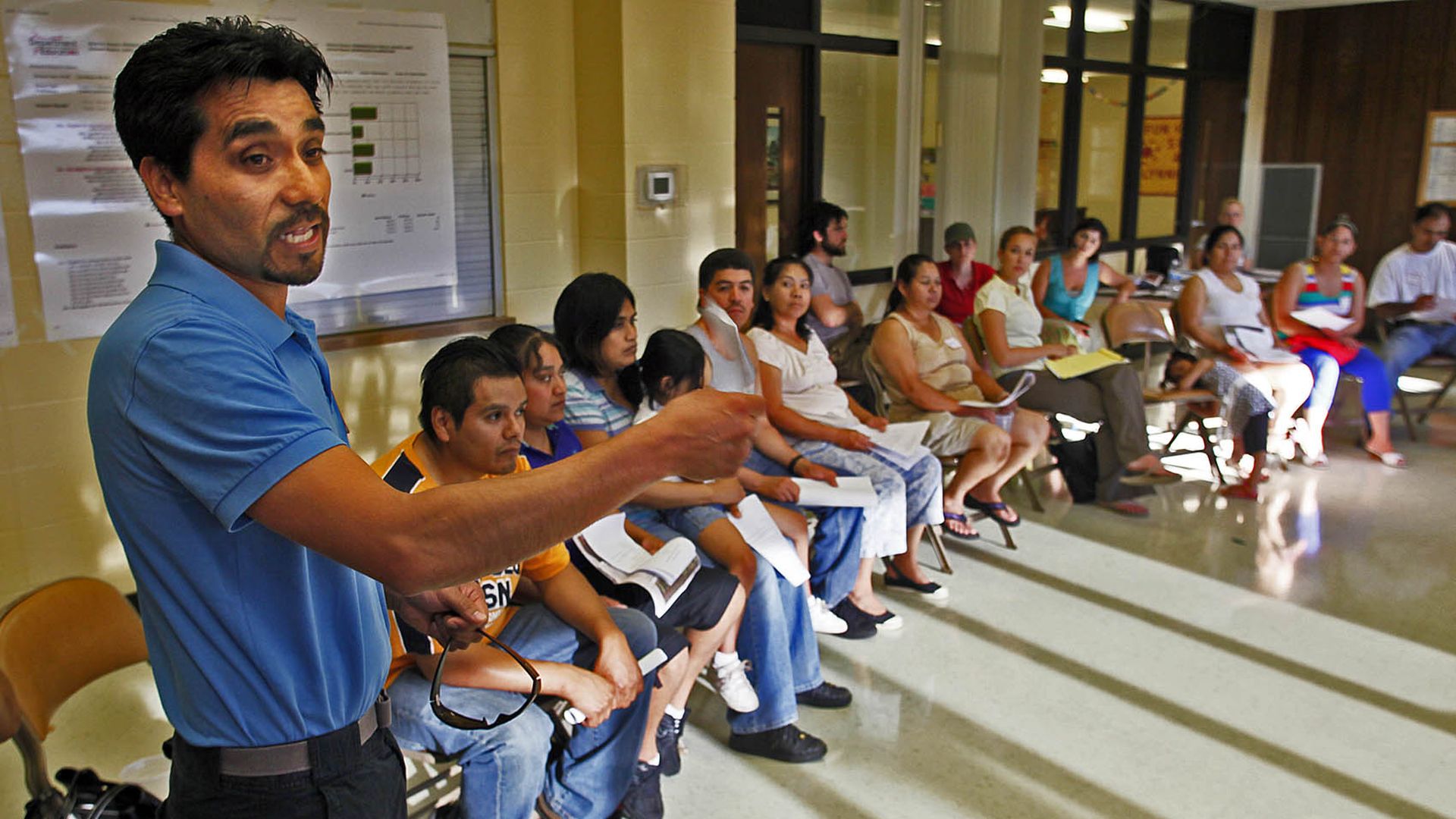
Latino parents at Burroughs Elementary school in Minneapolis during a school board meeting. Photo: Marlin Levison/Star Tribune via Getty Images
Roughly 86% of school board members say they had no Latino colleagues on their board last year, according to a new EdWeek Research Center survey of more than 1,500 school board members.
Why it matters: The small number of Latino school board members highlights the lack of Hispanic political power at local levels even as the number of Latinos in public schools grows.
Between fall 2009 and fall 2018, the percentage of public school students who were Hispanic increased from 22% to 27%, the latest federal data shows.
- But it's much higher in the Southwest. Hispanic students are 62% of New Mexico's K-12 schools; 55% in California; 52% in Texas; 47% in Arizona; and 44% in Nevada, according to the Pew Research Center.
What they're saying: “It’s one of the most important locally elected positions that we have in this country, our school boards,” Stephanie Parra, a board member of the Phoenix Union High School District, told EdWeek.
- “We are making decisions about the future of our country every single day.”
The big picture: The lack of Latino school board members at a time when the Latino student population is increasing puts Hispanics at a disadvantage in voicing concerns about school policies, Parra said.
- Conservative white parents in some states are demanding school boards remove some Latino-themed books from school libraries.
Don't forget: A 2018 survey by the National School Boards Association found that only 3% of school board members were Hispanic compared to 78% who were white and 10% who were Black.
4. Surging Latino population stirs up redistricting

Illustration: Annelise Capossela/Axios
The skyrocketing population growth among Latinos in urban areas is pressuring some cities into redistricting decisions that threaten historically Black wards.
Details: Latino and Black advocates in Chicago have clashed over how the city's 50 districts should be redrawn. The city's Latino population jumped 5% during the past decade, while the number of Black residents fell 10%.
- Milwaukee Mayor Tom Barrett vetoed a new City Council district map in December after Latino leaders called for a third Hispanic majority district to reflect their population growth, while the whole population shrinks.
- In November, the Clark County Commission (which covers Las Vegas) approved a compromise redistricting plan. Critics contend it kept a historic Black district but divided up the growing Latino and Asian American populations despite protest.
Between the lines: The Latino population in the U.S. grew by 23% during the past decade — and some metro areas saw a population boom three or more times that rate.
- Nearly half of the nation's largest 50 cities saw decreases in the percentage of Black Americans as the population moved to nearby suburbs, according to a Brookings Institution analysis of the census.
- As they’re leaving historic Black districts and wards created after long civil rights protests and costly lawsuits, Latinos and Asian Americans are moving in.
5. Stories we're watching
Supporters of opposition gubernatorial candidate Sergio Garrido outside the regional electoral office of Barinas, Venezuela, on Jan. 10. Photo: Federico Parra/AFP via Getty Images
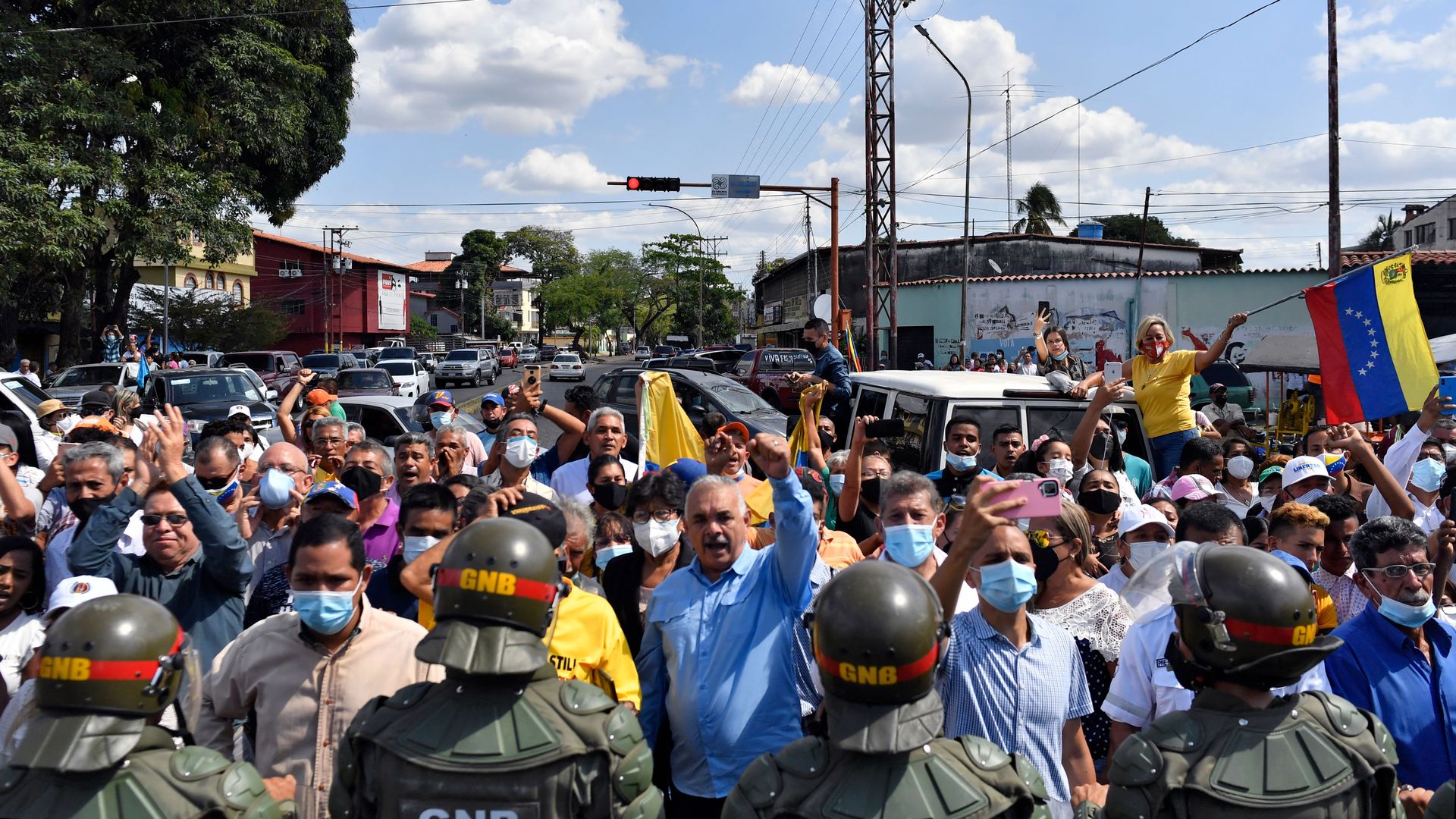
1. Venezuela’s opposition again defeated the ruling party in Barinas state, former president Hugo Chávez's birth place and once a stronghold for his party.
- Sergio Garrido was declared the winner of the gubernatorial elections on Sunday.
- The election was a redo of a November vote when the previous opposition candidate, Freddy Superlano, was ahead against incumbent Argenis Chávez, a brother of the former president who ended up withdrawing. Superlano was retroactively disqualified for an alleged administrative sanction.
- Sunday’s election was the first time in two decades that no one with the last name Chávez was on the Barinas ballot.
2. New sanctions were placed on Nicaragua by the U.S. and the European Union yesterday.
- They coincided with the inauguration of Daniel Ortega and Rosario Murillo for a fourth consecutive presidential term, after multiple allegations of fraud and the arrest of almost all rival candidates.
- The joint sanctions are aimed at officers like the Nicaraguan minister of defense and two of Ortega and Murillo’s children.
6. ⚱️ 1 smile to go: A peek into post-conquest Aztec life

Archeologists recently uncovered a 16th century Aztec altar in Mexico City just underneath the plaza where millions of tourists come to hear mariachis play.
Details: They found incense burners and an urn filled with ashes right next to Plaza Garibaldi.
- Archeologists say the site is especially remarkable because it was laid after the conquest, showing how Aztec traditions — like burial ceremonies — still occurred when Spaniard colonists were already promoting religious conversion.
The big picture: Similar to Pompeii, where most of the city is still underground as archeologists dig, sites of Mesoamerican cultures continue to be unearthed.
- In Mexico City and its surrounding area, which was the Aztec capital Tenochtitlan, the Spanish mostly built directly over the ancient city or repurposed the building blocks.
Thanks for reading, we’ll be back Thursday.
Sign up for Axios Latino

Keep tabs on the stories that most affect the U.S. Latino community on both sides of the border, a collaboration with Noticias Telemundo.