Axios Latino

February 10, 2022
¡Muy buen día! Today we discuss dangerous fishing in Venezuela, cycling dreams being realized and the ABCs of Sesame Street on both sides of the border.
- Our first pachanga Thursday is here! If you’d like your accomplishments to be featured in this newsletter, reply to this email with the details. (Bonus if you add a picture!)
- Puede leer la versión en español aquí.
This newsletter, edited by Astrid Galván, is 1,439 words, about a 5.5-minute read.
1 big thing: Birds of a feather
Big Bird and his Mexican cousin, Abelardo Montoya. Photo: Janet Kim for Sesame Workshop
The decades-long presence of "Sesame Street" on both sides of the border has come full circle with a Mexican American executive producer at the helm for its new season, Marina writes.
Why it matters: It is the first time a Latino serves in that role, although people of color have had a huge influence for years. The show is in production for its 53rd season.
Sal Perez was named executive producer in January after over a decade of producing projects for Sesame Workshop, including for the show's Latin American version, "Plaza Sésamo."
- “I grew up with 'Sesame Street' and 'Plaza Sésamo,'” Perez told Axios Latino. “I’m first generation Mexican American, and those shows portrayed my family’s two cultures like nothing else on children’s television at the time.”
- “That experience has stayed with me throughout and I want to bring a global perspective to everything we do.”
"Plaza Sésamo" was among the show's first exports, although "Sesame Street" was in roughly 20 countries by the mid-2000s.
- "Plaza Sésamo" first aired in 1972, three years after the debut of "Sesame Street."
- Big Bird’s counterpart in Mexico is Abelardo Montoya, a lime-green parrot with pink and orange on his face.
"Plaza Sésamo" has another notable difference — its opening song. It doesn’t ask how to get to Sesame Street, instead telling kids, “Come play, come sing, whether you’re from here or from there.”
Fun fact: There are two "Plaza Sésamo"-themed amusement parks in Mexico, in Monterrey and Guadalajara. The show has also been heavily involved in health, safety and educational initiatives in Latin America.
Flashback: Sonia Manzano, who played María Figueroa on "Sesame Street" from 1971 to 2015, was one of the first Latinas on American television.
- She was accompanied by Emilio Delgado, who played Maria's husband, Luis Rodríguez, and Desiree Casado, who played their fictional TV daughter, Gabriela.
Read the rest of the story here
2. Chasing the cash but coming up short

Illustration: Aïda Amer/Axios
Investments in U.S. Latino startups increased in 2021, but the percentage of the venture capital they attract remains abysmally small, Marina writes.
Why it matters: The lack of money invested in Latino businesses affects the growth of the entire U.S. economy.
- Half of all pre-pandemic growth among new small businesses came from Latino entrepreneurs in the U.S., according to the most recent data from the Stanford Latino Entrepreneurship Initiative.
- Those companies also increased their revenue faster than white non-Hispanic businesses.
- If funding were equal, Latino enterprises could generate $1.4 trillion in revenue this year, the Stanford initiative found.
By the numbers: Latino companies attracted $6.8 billion in 2021, compared to $2.8 billion in 2020, a recent Crunchbase analysis found.
- But that was only 2.1% of all venture capital money doled out last year.
- Early stage funding, such as seeding money, is even worse: Only 1.2% such investment goes to Latin-owned startups.
The bottom line: The money is out there, but it's not getting into the hands of many Latino founders.
- Tech entrepreneur Paola Santana says part of the problem is that the money is concentrated in Silicon Valley, and Latinos need to network with financiers there.
- “Money’s not gonna knock on your door, but that money is being deployed right now,” Santana said during a recent business forum.
3. Trying to stay afloat
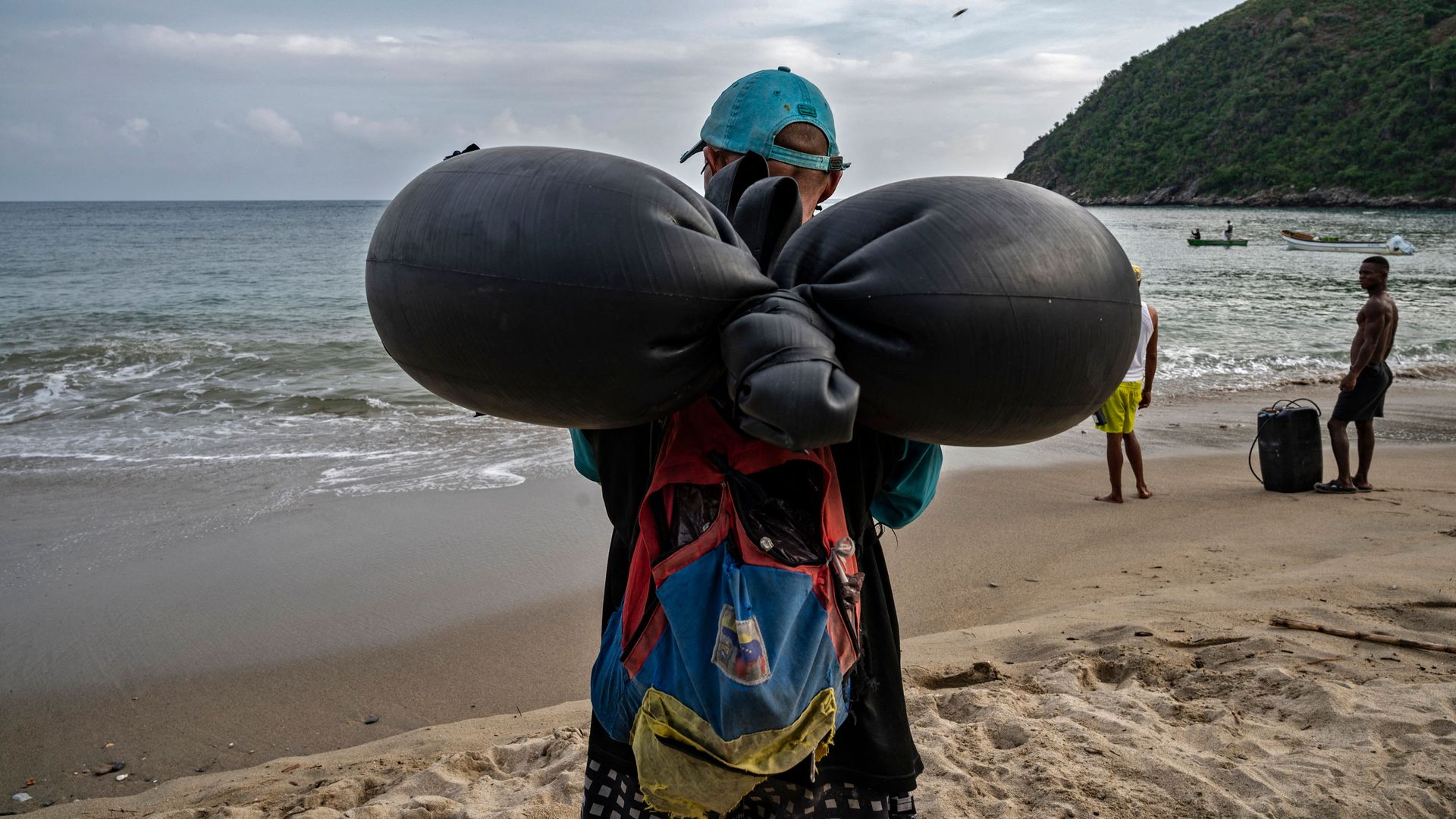
A fisherman with an inflatable in Venezuela. Photo: Yuri Cortéz /AFP via Getty Images.
Venezuelans are taking to sea using only inner tubes in the hopes of catching fish to sell or feed their families, Marina writes.
Details: Despite the danger of drowning, these fishermen see it as their only choice when faced with the hyperinflation and scarcity that makes most products — including fuel for boats — unaffordable.
- “A friend of mine died doing it, but we lost our fear a long time ago. We have to do it to get some money,” fisherman Enzo, who declined to give his last name, told Noticias Telemundo.
- At least three people drowned or were reported missing while fishing with inflatables in the second half of 2021.
Over 79% of Venezuelans can’t afford daily meals, according to a study from local universities.
- Persistent and deadly hunger is one of the reasons over six million Venezuelans — 20% of the population — have left in the past five years, mostly for Latin American and Caribbean countries.
- But many have recently headed to the U.S. Over 50,000 Venezuelans were intercepted by border authorities in the 2021 fiscal year.
Several of those apprehended Venezuelans are being deported by the Biden administration to countries like Colombia and the Dominican Republic, a report by Noticias Telemundo Investiga shows.
- The Biden administration had criticized former President Donald Trump for doing the same.
- Third-country deportations usually happen because the U.S. has no diplomatic relations with the government of Nicolás Maduro, having recognized opposition figure Juan Guaidó as the legitimate president of Venezuela.
4. Border robo-dogs
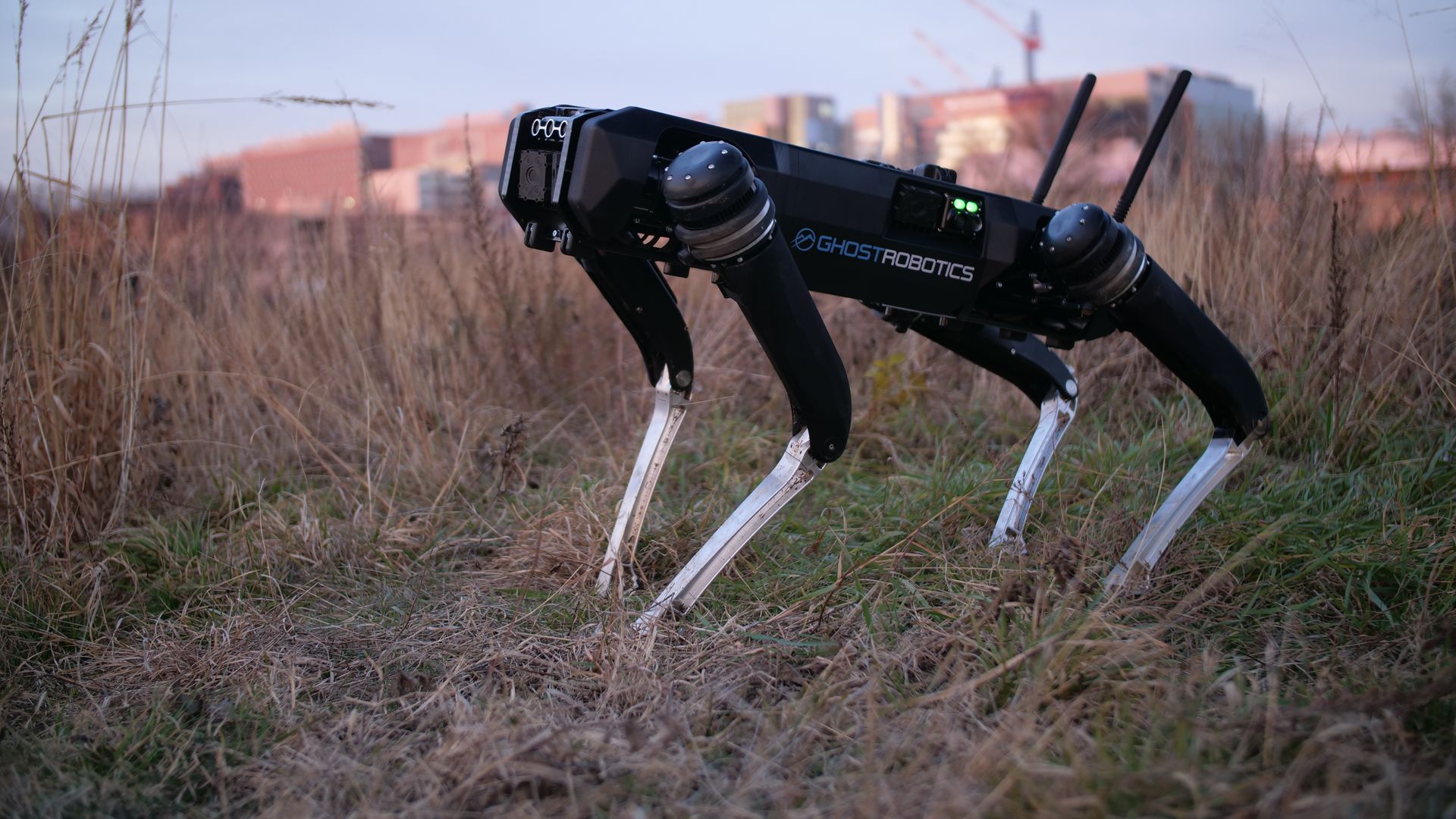
Photo courtesy of Ghost Robotics.
Robot dogs could soon help patrol the U.S.-Mexico border, Russ writes.
Driving the news: A research and development arm of the U.S. Department of Homeland Security announced last week it has been working with the Philadelphia-based company Ghost Robotics to develop a robot dog for the border.
- The dogs can transmit real-time video and other data back to human operators while climbing over sand, rocks and hills.
- The project has been under development for 2 1/2 years. It's unclear how many robot dogs will be deployed, or when and where.
Details: Ghost Robotics CEO Jiren Parikh told Axios he couldn't share more information but that some in development have special sensors and can carry equipment to identify drugs, nuclear materials and chemical weapons.
- "We are trying to keep CBP and other government personnel in the field out of harm's way."
What they're saying: "It is really sad to see how much money has been invested in military technology to seal the border," Fernando García, executive director of the immigrant advocacy group Border Network for Human Rights, told Axios.
But, but, but: The use of robot dogs along the border probably isn't violating any constitutional rights, Michael Olivas, the emeritus William B. Bates Distinguished Chair in Law at the University of Houston Law Center, told Axios.
- The government has introduced all sorts of new technology, from small drones to airplanes equipped with high-tech sensors. Case law has protected the use of such technology, Olivas said.
Find the rest of the story here.
5. Stories we're watching
Juan Orlando Hernández in November. Photo: Andy Buchanan, Pool/Getty Images
1. Former Honduran President Juan Orlando Hernández’s inclusion in a State Department list of corrupt Central American officials was made public this week.
- U.S. prosecutors suspect Hernández worked with drug traffickers, including a man who on Tuesday was sentenced to life in prison.
- Hernández, who left office last month, calls the allegations a “witch hunt.”
2. Mexican authorities yesterday arrested three men they say are responsible for murdering journalist Lourdes Maldonado.
- Maldonado was killed in broad daylight in Tijuana, one of four reporters murdered in a single month, laying bare the dangers for Mexican journalists.
- Authorities say they haven’t established a motive. Maldonado had said she feared for her life after accusing a former governor of labor malpractices.
6. 🐑 1 smile to go: Baaacked by a donor

An aspiring cyclist in rural Colombia was ready to raffle away his family’s lamb to pay for training abroad before an anonymous donor stepped in, Marina writes.
Details: Brayan Malaver needed $900 for eight months of training in Italy.
- When his story went viral, someone contacted him and offered to cover the cost so the family wouldn’t have to lose the lamb.
- Malaver, 20, hopes to compete in the under-23 category of the Giro d’Italia, one of the three major international cycling races.
Be smart: Colombia is a cycling powerhouse. Many of its most successful athletes come from poverty.
- Big names include Olympic silver medalist Rigoberto Urán; Nairo Quintana, who’s won the Giro d’Italia and Vuelta a España; and Egan Bernal, the youngest-ever Tour de France winner.
7. 🪅 Pachanga Thursday
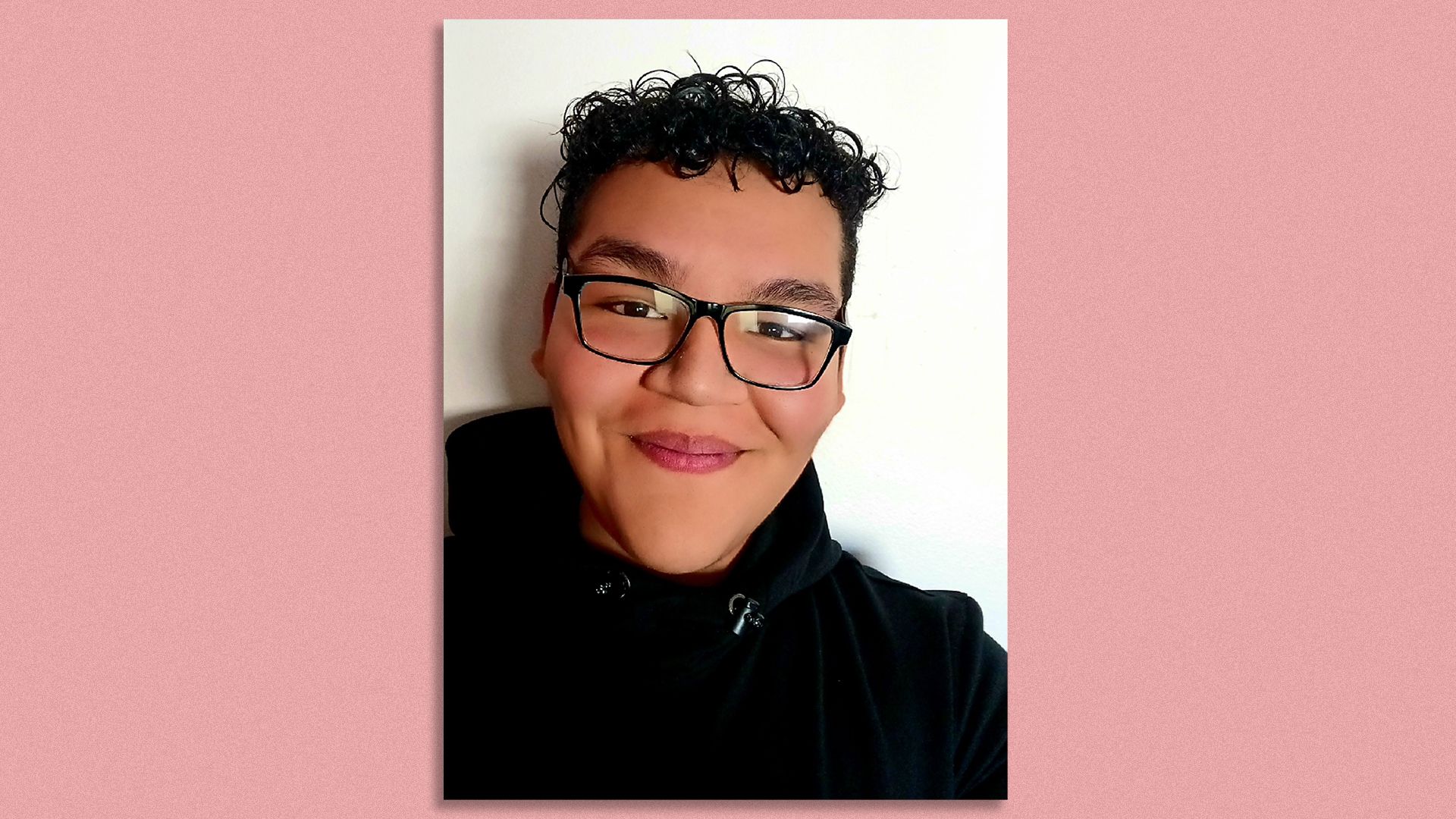
Photo courtesy of William Navarette Moreno.
🥁 Our inaugural pachanga is for William Navarette Moreno, a 17-year-old Colorado high school student who has already been accepted into medical school at the University of Colorado-Denver Anschutz.
Navarette Moreno, whose parents are Mexican immigrants, said he wants to be a primary care doctor and is driven by the sacrifices his mom and dad made to live in the U.S.
“I wanted to be able to fulfill that legacy and make something of myself,” he said.
Échale ganas, William!
Thanks for reading! We'll be back Tuesday.
Sign up for Axios Latino

Keep tabs on the stories that most affect the U.S. Latino community on both sides of the border, a collaboration with Noticias Telemundo.