Axios Kansas City

August 14, 2025

🥂 It's Thursday. Some say it's the best day of the week for a first date.
- Reply to this email and let us know your thoughts.
🌞 Today's weather: Sunny, with a high near 90.
Today's newsletter is 972 words — a 3.5-minute read.
1 big thing: The rise of the Power and Light District
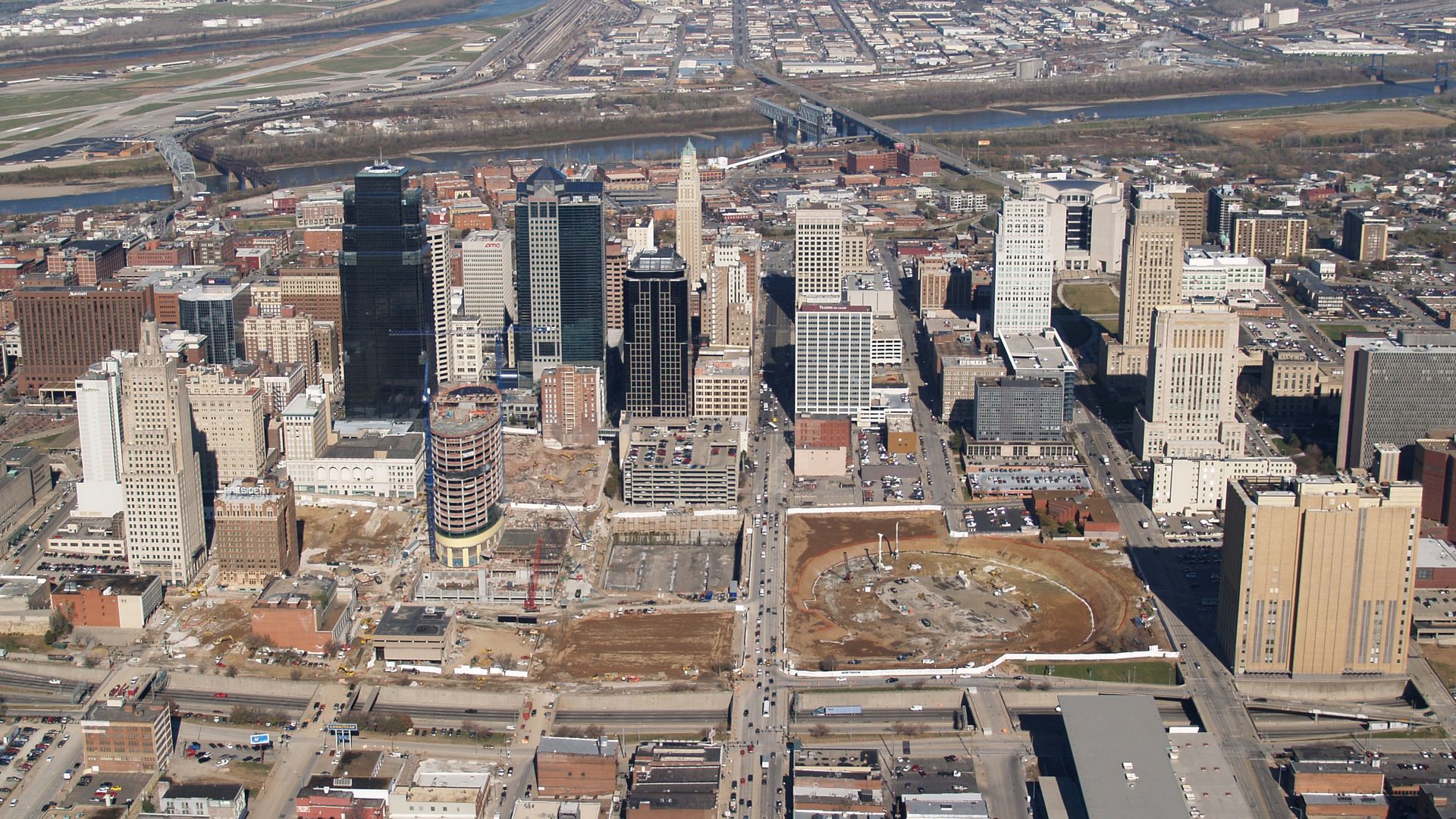
A decade after One Light rose into the sky, the Power and Light District is now one of Kansas City's most-visited neighborhoods.
Why it matters: Downtown has come a long way in recent history, and this 816 Day, it's worth remembering where the city center has been to better understand where it's going.
Context: KC's Economic Development Corporation described the Power and Light area in the 1990s as "a patchwork of empty parking lots, dimly lit storefronts, and vanishing foot traffic."
- In comparison, the district saw 18 million total visits in 2024, according to phone data gathered via Placer.ai in partnership with the Downtown Council.
Catch up quick: In 1999, Kay Barnes made history as KCMO's first female mayor. She became known for "pushing downtown Kansas City into the 21st century and restoring its relevance," longtime local journalist Kevin Collison wrote for the Kansas City Star.
- Many of the district's biggest investments were secured under her tenure: KC Live!, H&R Block's headquarters, and the Sprint Center (now T-Mobile Center).
- Then in 2015, One Light opened as the first downtown residential high-rise in four decades.
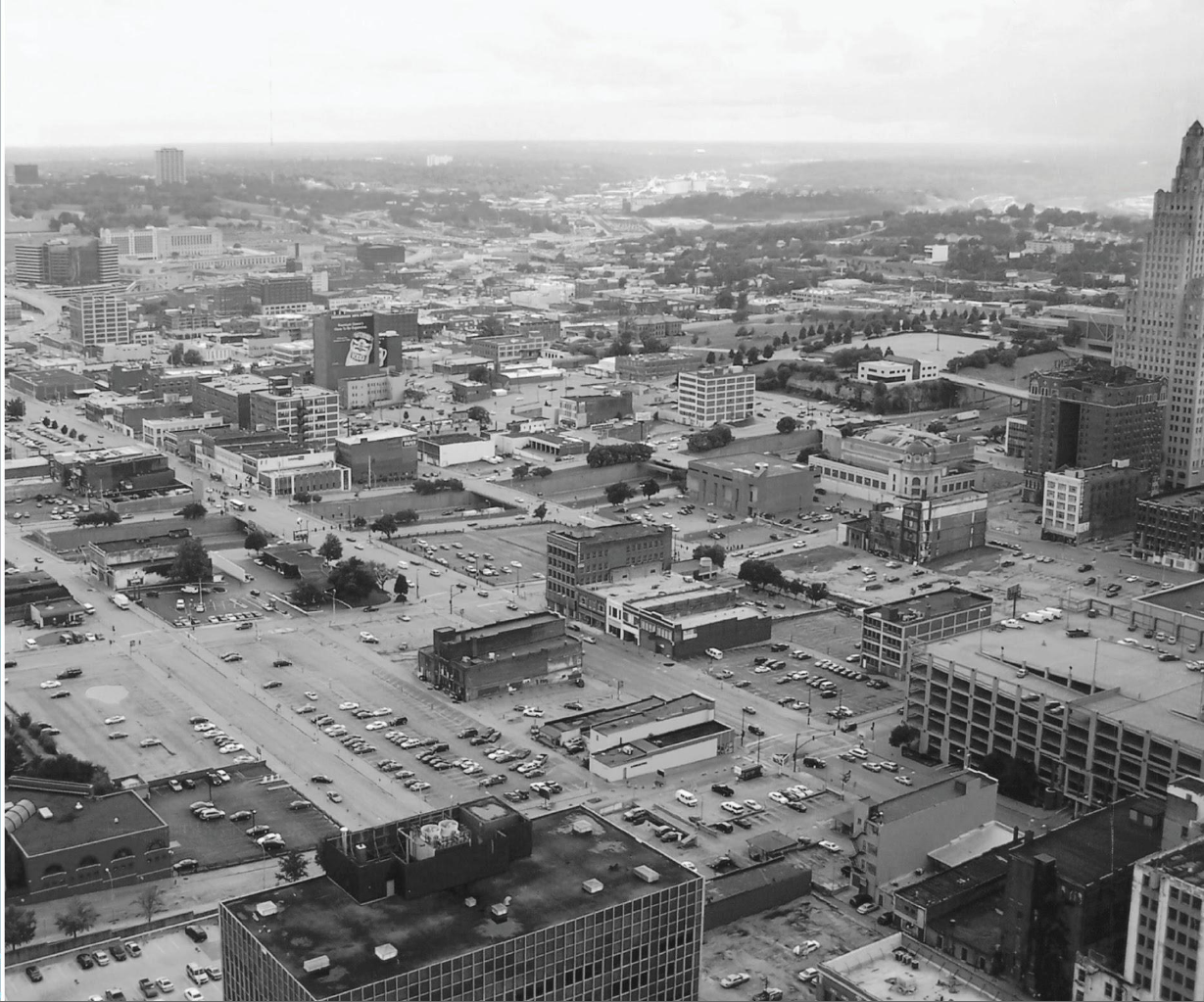
What they're saying: "I lived here before the District broke ground," Power and Light District president John Moncke tells Axios.
- "It is hard to believe that there was actually [a] pack of wild dogs that roamed my neighborhood downtown. That's not a figure of speech. I had to change my route."
In the last decade, The Cordish Companies has constructed two more Light towers and opened the Midland Lofts. The success of the KC Streetcar has led to two route extensions, which will triple its length by 2026.
2. Parking woes date back generations

If you've ever circled the block three times just to grab a coffee downtown, you're not alone. Complaining about parking in KC is practically a civic tradition, and the paper trail of gripes goes back nearly a century.
Flashback: On this date in 1985, the Kansas City Star wrote of the "revival of Downtown development" leading to a shortage of 3,600 parking spaces.
- The city contemplated building a new parking garage or setting up a "parking hot line for the desperate commuter."
Yes, but: Such griping spans generations.
- "Maybe we will get some benefits from our trips to the moon, although a look at the terrain indicates it's not going to be very helpful in solving our parking space shortage," longtime columnist Bill Vaughan wrote in 1971.
- Three years later, shuttle buses helped "ease" the parking space shortage near Kemper Arena.
The intrigue: Sometimes, more parking is seen as the answer.
- "Parking has been a long-time problem in our city, and the parking-space shortage hurts our businesses," reads a 2015 letter to the Star.
Other times, more parking is to blame.
- When merchants demanded a "one-hour parking" rule to support businesses way back in 1931, a streetcar company bemoaned traffic slowing down streetcars and threatening public transit.
Wise words: "Every American city is confronted with a perplexing parking problem," the Kansas City Journal opined in 1940.
💭 Abbey's thought bubble: I used to live on the Plaza. My car did not. At least I got my steps in.
The bottom line: When you complain about parking, you're at least carrying on a tradition.
3. ⛲️ Water fountain: Streetcar-turned-sandwich shop

💼 Missouri lawmakers are set to repeal the voter‑approved paid sick leave measure from Proposition A later this month, less than a year after voters added it alongside a minimum wage increase. (KCUR)
🚋 A 1940s Kansas City streetcar in the River Market is being repurposed into a grab‑and‑go deli called Car No. 551. The streetcar will serve sandwiches, barbecue, cocktails and desserts (Kansas City Star)
Quote du jour
"I fell in love with it. I became obsessed with it. I'm not ready to be an analyst right now, but give me 16 months."— Taylor Swift on Travis and Jason Kelce's podcast, "New Heights," last night, on learning about football after she met Travis Kelce.
4. The tariffs that stole Christmas
The Christmas business is pretty cheerful, but not this year: Companies that import and sell Christmas trees, twinkling lights and other holiday decorations say they've been hammered by tariffs.
Why it matters: You'll likely pay more for holiday supplies, and have fewer products to choose from — industry leaders are even warning about possible shortages.
- "There's no question that it will be harder to find the exact tree and decor that you want this year, and it'll be more expensive," says Jami Warner, executive director of the American Christmas Tree Association.
Where it stands: Christmas executives (yes, that's a thing) have had to be real Scrooges since President Trump's "Liberation Day" tariffs.
- They've laid off workers, canceled or cut back imports, and raised prices to deal with higher import taxes.
Village Lighting Company CEO Jared Hendricks says he has a loan of about $1 million, backed by his house, that he may need to tap to pay tariffs to bring product into the country.
- Shipments are still coming overseas, delayed after he canceled everything in the wake of the 145% tariff rate that was briefly in effect on China this spring.
The latest: The U.S. and China have extended their tariff truce for another 90 days, President Trump confirmed Monday. If that doesn't get extended, the truce will end in early November.
💭 Abbey's thought bubble: Grateful my family treats Christmas decorations like heirlooms. I've never had to buy a single ornament.
🫖 Abbey is considering buying a glass tea kettle but is deciding if it's worth the investment.
✈️ Travis is heading home from Iceland with a suitcase full of memories.
Edited by Chloe Gonzales.
Sign up for Axios Kansas City