Axios Houston

April 01, 2026


🚀 Rocketing into Wednesday!
🌦️ Today's weather: Chance of storms with a high in the mid-80s.
🌑 Sounds like: "Brain Damage" by Pink Floyd
🏟️ Situational awareness: DR Congo and Sweden qualified for the 2026 FIFA World Cup yesterday and will play group-stage matches in Houston.
- DR Congo will play Portugal, and Sweden will play the Netherlands in June.
Today's newsletter is 1,060 words — a 4-minute read.
1 big thing: 🌔 It's launch day for Artemis II

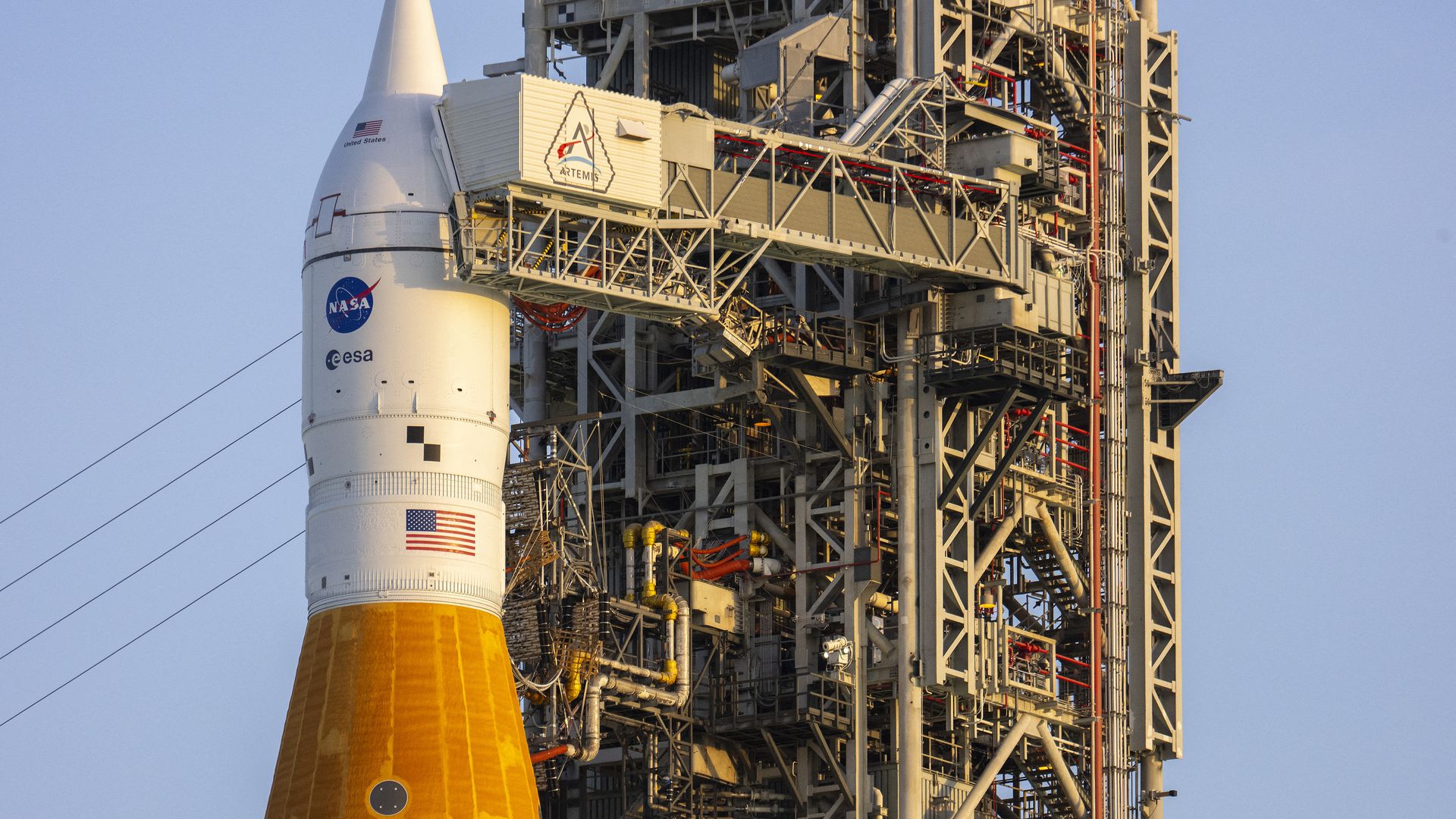
Just a few hours remain in the countdown for Artemis II, NASA's mission to return astronauts to lunar orbit for the first time since the Apollo era.
Why it matters: The mission, a crewed "dress rehearsal" for a lunar landing like Apollo 8 and 10 decades ago, will set several space milestones.
Driving the news: The agency's lunar hopes and dreams are sitting on pad 39B at Florida's Kennedy Space Center, in the form of a 322-foot-tall rocket set to launch three Americans and one Canadian on a 10-day flyby of Earth's natural satellite.
- The first of seven, two-hour launch windows opens at 5:24pm local time today.
- If the launch is scrubbed for weather, the next window is tomorrow. The mission has daily launch windows through Monday, with another April 30.
Flashback: The Artemis II "stack" — that's the Space Launch System (SLS) rocket plus the Orion spacecraft atop it — had to be rolled back into its hangar in late February to fix technical issues that prevented an earlier launch attempt.
Zoom in: While no small feat, Artemis II is only a lunar flyby mission.
- NASA once planned a moon landing with Artemis III, but recently rejiggered its schedule.
- Artemis III will now involve testing one or both of SpaceX and Blue Origin's lunar lander vehicles in low Earth orbit, with a moon landing targeted for Artemis IV in 2028.
NASA then hopes to return to the Moon annually, if not more often, with the ambitious goal of establishing a lunar base.
- But first: A quick visit to check out the cosmic neighborhood before getting into the real estate market.
How to watch: NASA will commence its livestream of the launch at 11:50am today.
2. 👩🚀 Meet the astronauts
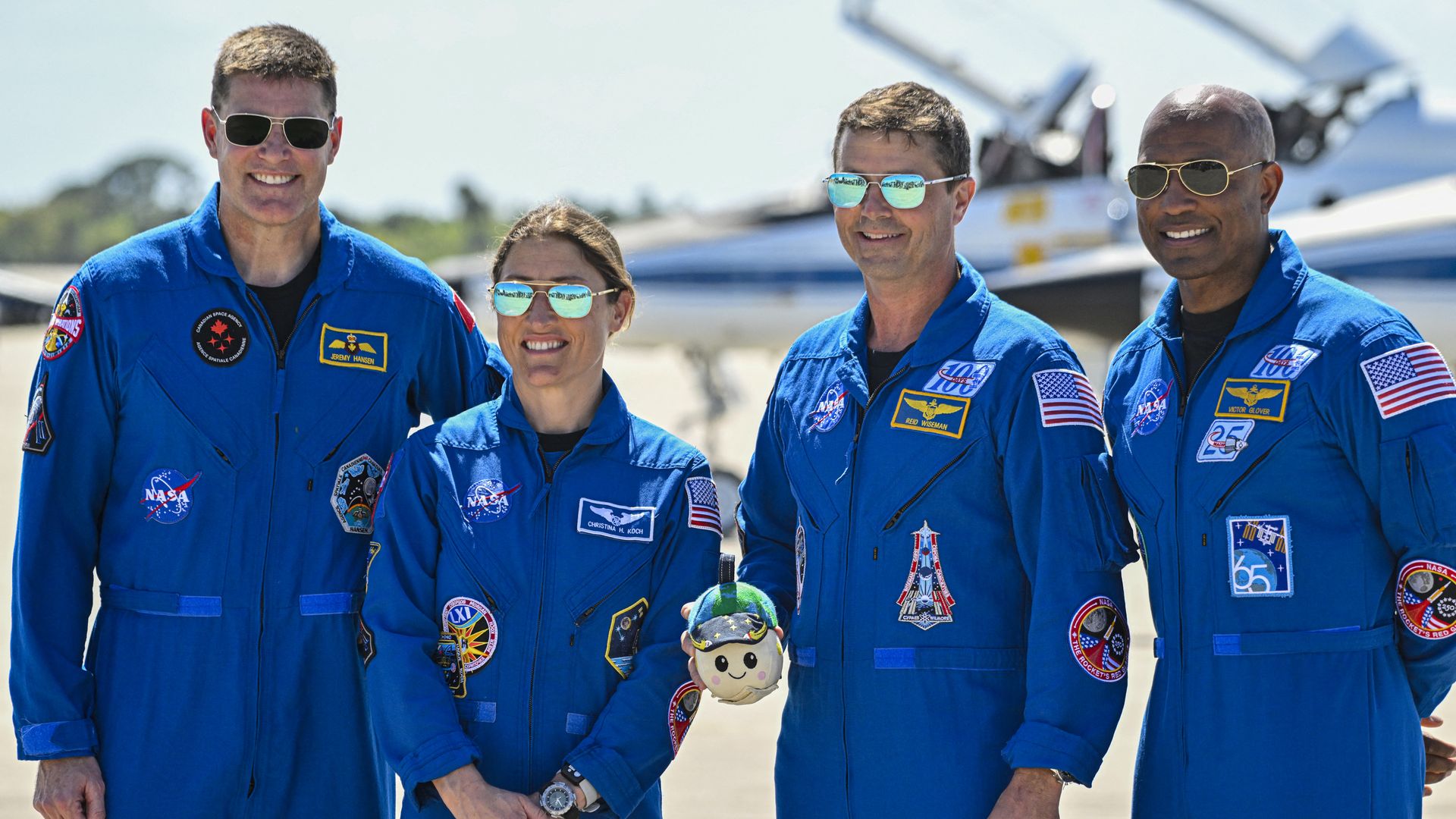
Four astronauts are set to rocket around the Moon during Artemis II.
Why it matters: The crew, which was quarantined in Houston ahead of the launch, features a number of firsts: The first woman, first person of color and first non-American to travel beyond low Earth orbit.
Here's who they are.
Commander Reid Wiseman
- Wiseman, a Navy veteran and father from Baltimore, has been a NASA astronaut since 2009.
- He first flew to the International Space Station in 2014, a 165-day mission during which he broke the record for conducting 82 hours of research in one week.
Pilot Victor J. Glover
- Glover, a former Naval pilot from California, became an astronaut in 2014 and first flew to the ISS on SpaceX's Crew Dragon in 2020 for 168 days.
- The father of four spent his career as a test pilot for several fighter jets.
Mission specialist Christina Koch
- Koch, a Michigan native, joined NASA in 2001 and became an astronaut in 2013.
- After launching to the ISS in 2019, she broke the record for the longest spaceflight by a woman at 328 days and participated in the first all-woman spacewalk.
Canadian Space Agency mission specialist Jeremy Hansen
- Hansen, a Royal Canadian Air Force veteran from Ontario, joined the cadet squadron at the age of 12 in 1988 and served as a fighter pilot from 2004 to 2008.
- He joined the CSA in 2009. This will be his first time in space.
3. 🔭 The greater meaning of Artemis

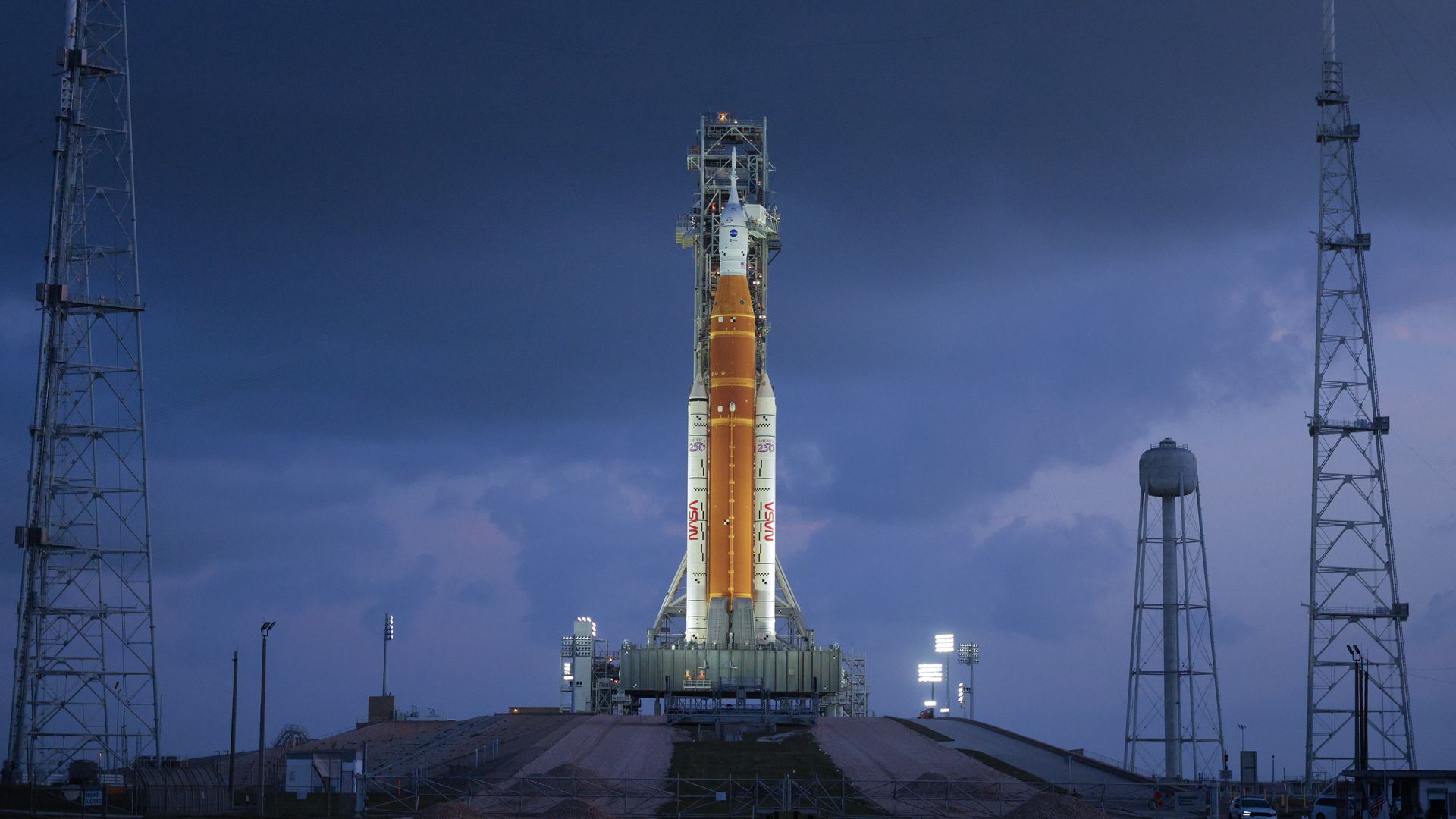
The Artemis program returns NASA to its original deep-space roots.
Why it matters: The mission comes as NASA pushes toward a higher cadence of lunar missions and a sustained human presence on the Moon.
Flashback: NASA left lunar missions with Apollo 17 in 1972, but everything that's happened since then — with the shuttle program, the International Space Station and more — has built on that experience and led to today, says NASA chief historian Brian Odom.
What they're saying: "I think [Artemis] signals a picking up where we last left off," Odom says. "There's still that 'shoulders of giants' mentality."
- "Deep space exploration has been the plan from the very beginning," adds Odom. "We're to that point now where we're applying all those great lessons."
The bottom line: "NASA, and the country, and the world, are undertaking a very monumental step here in that process of becoming a spacefaring society," Odom says.
4. Bayou Buzz

😋 Six Houston chefs and restaurants are 2026 James Beard finalists, including Maximo, Agnes and Sherman, March and more. (Axios)
🚦 An activist group is proposing to limit police traffic stops for non-safety reasons (such as expired tags) in an effort to reduce the risk of immigrants being turned over to ICE if they're pulled over. (Houston Chronicle)
🛒 Kroger is shutting down its Heights location and another in Spring, part of the chain's larger plan to shutter 60 stores nationwide. (Chron)
5. ⏰ Flashback: How Houston became Space City
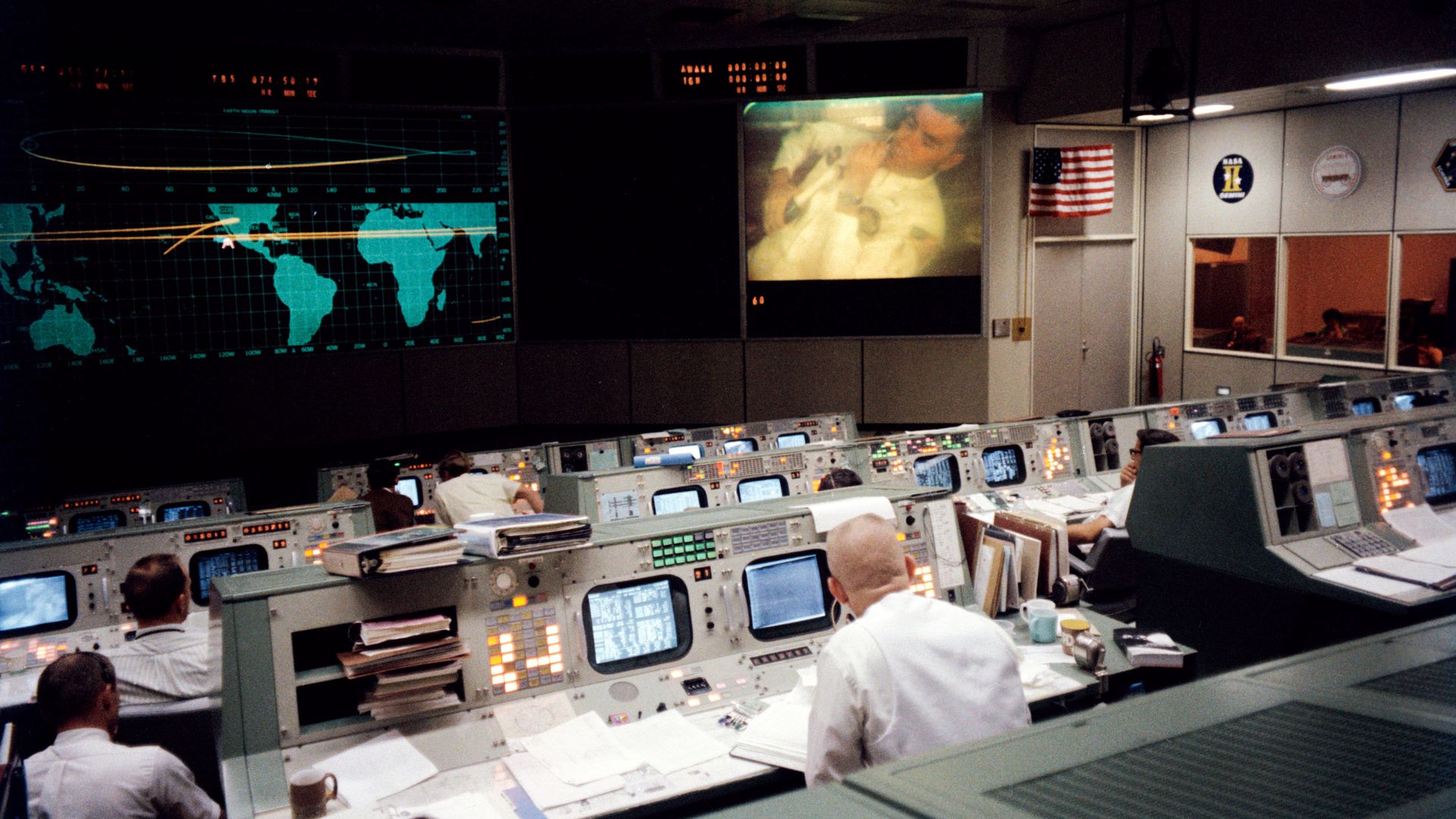
If you've ever wondered how Houston became Space City, we've got you covered.
Why it matters: The Johnson Space Center is the home of Mission Control for the Artemis missions — and has a potential future as command central for Mars missions and beyond.
Catch up quick: President Kennedy pledged to Congress in 1961 that the U.S. would send men to the Moon three years after NASA was created.
- Facilities at NASA Langley in Virginia, where the agency developed its Mercury missions for low-Earth orbit, were too small to accommodate the Moon-bound undertaking.
Flashback: The agency compiled 23 potential sites nationwide based on criteria including proximity to waterways, Department of Defense facilities and universities, according to NASA.
The intrigue: Tampa, Florida, was the initial favorite.
Yes, but: Vice President Johnson and U.S. Rep. Albert Thomas, a Houston Democrat who chaired the House Appropriations Committee at the time, used their political prowess to sway NASA leadership into landing on Houston.
- The pair, along with then-Rice University president Kenneth Pitzer, met with NASA officials to tour the future site near Clear Lake in August 1961, per the Houston Chronicle. NASA announced Houston as the winner a month later.
The bottom line: Months later, in 1962, Kennedy delivered his Moon Shot speech at Rice University.
- And the rest is history.
Thanks to Astrid Galván for editing this newsletter.
👩🚀 Shafaq is rocking her astronaut earrings today.
👀 Jay is determined to witness a rocket launch IRL one day.
Sign up for Axios Houston
