Axios Houston

October 28, 2026

🧙♀️ Witching you a magical Wednesday.
🌧️ Today's weather: Slight chance of showers and thunderstorms, with a high in the low 80s.
Today’s newsletter is 825 words — a 3-minute read.
1 big thing: 🤖 Robotaxi future still needs humans

Uber is betting billions on a driverless future, but the secret to making the economics work could be its vast army of human drivers.
Why it matters: Uber believes a hybrid network of robots and people — of the sort operating in Houston — can keep the expensive autonomous vehicles busier, and therefore more profitable, than fleets made up entirely of robotaxis.
The big picture: Think of a high-tech robotaxi like an airplane: It costs money whether it's carrying passengers or sitting on the ground.
- The more trips each vehicle makes, the more revenue Uber and its robotaxi partners can squeeze from that expensive asset.
Between the lines: Ride-hailing is a supply-driven business, and robotaxis aren't a substitute for drivers, Uber says — they're an additional form of supply.
Follow the money: Robotaxi economics remain unproven, Uber's head of autonomous mobility and delivery, Sarfraz Maredia, tells Axios, with no company yet making money operating them.
- So far, Uber says, robotaxis are taking shorter city-center trips, while drivers get longer, more lucrative ones.
That flexibility is an advantage, Uber says.
- Uber can size its robotaxi fleet for normal demand and summon more human drivers when needed.
Reality check: Drivers will be displaced eventually.
- Part-time drivers who use Uber as a safety net — women, caregivers and lower-income workers — will be disproportionately affected, the company acknowledges.
Zoom in: Uber is testing its Nuro robotaxis in Houston, with safety operators still behind the wheel, with plans to launch passenger service next year.
- Waymo and Tesla are operating driverless fleets in the area (more below), while Amazon's Zoox is testing its vehicles.
What we're watching: Whether Houston drivers feel the squeeze as robotaxi fleets here grow.
- In San Francisco, Los Angeles and Austin, where robotaxis have operated longer, drivers' hourly base pay fell or grew more slowly than elsewhere in the country, per research from Gridwise.
- Uber says driver earnings have stayed consistent in Austin and Atlanta, where Waymo robotaxis run on its app.
The bottom line: Humans may make Uber's robotaxi math work. Whether the math works as well for the humans is less certain.
2. 🚕 Tesla's Robotaxis expand
Speaking of robotaxis, Tesla has expanded its service across more of Houston.
The big picture: The autonomous cars previously operated in northwest Houston, near Jersey Village. Now, riders can hail them throughout much of the 610 Loop and northwest Houston, including Montrose, Midtown and East Downtown
- The expanded service area resembles a rocket, prompting the announcement, "Houston, we have liftoff." But the northeast portion of the Loop remains outside its boundaries.
What they're saying: "I swear it's just a coincidence," Tesla CEO Elon Musk joked on X about the map's shape.
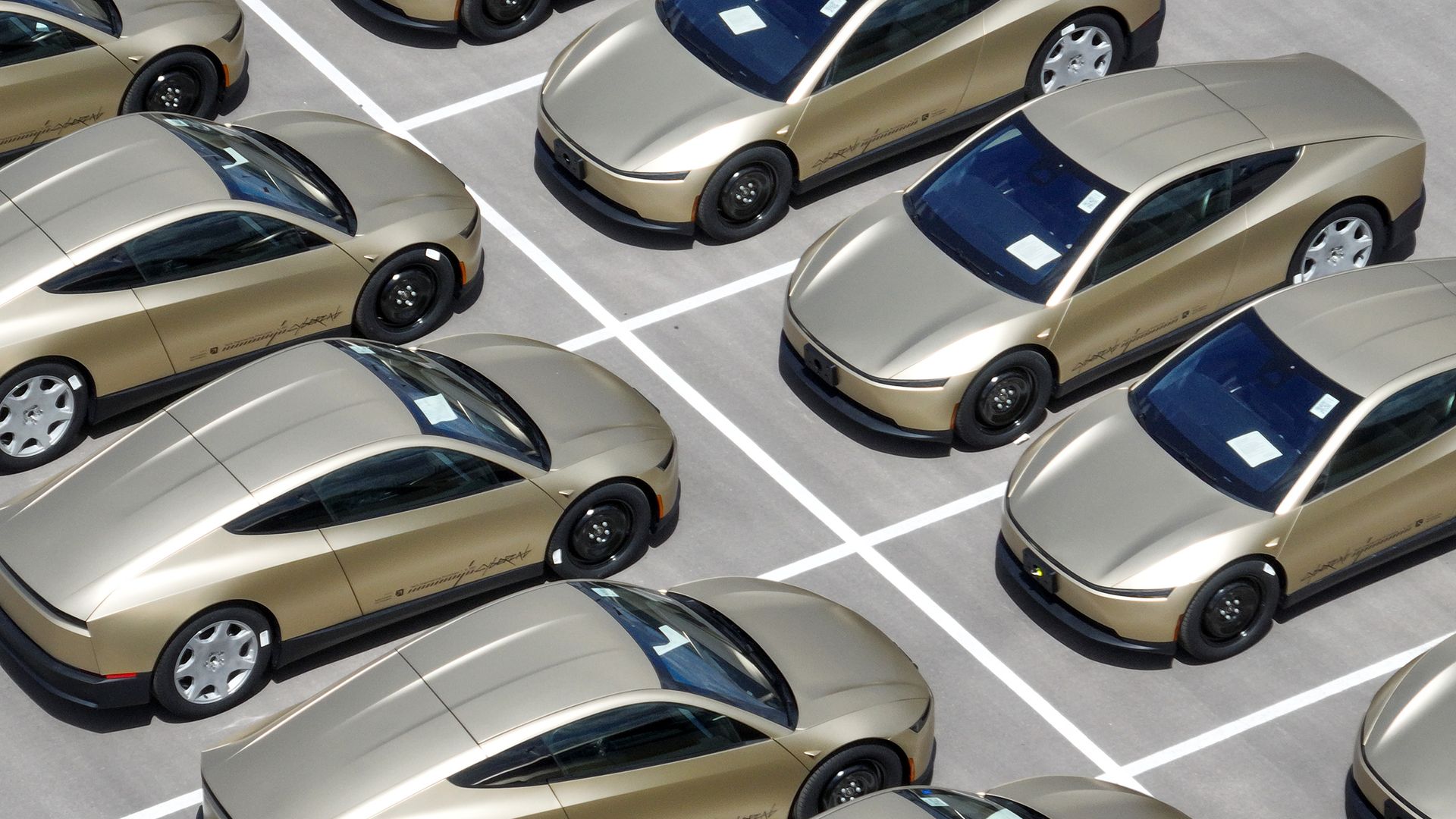
The bottom line: Expect to see more of Tesla's gold-colored robotaxis — conspicuously missing side mirrors — on Houston streets.
3. 👀 Musk-tied candidate scrubs AI from site


A Republican congressional candidate with ties to Elon Musk running in a district that stretches from Austin to the Houston area has scrubbed from his campaign website a section that promoted AI.
Why it matters: Republican Chris Gober is running in a GOP-friendly district, but data centers and Musk — who is not mentioned on the campaign site — have become radioactive for many voters.
Catch up quick: Gober helped run Musk's efforts to aid President Trump's 2024 campaign and is making his first run for Congress.
- A political action committee that opposes AI restrictions has spent $750,000 in support of Gober's campaign.
- Gober faces Democrat Caitlin Rourk, an Army veteran.
Zoom in: The Gober campaign site has deleted a section titled "Ensuring America's AI Dominance" from a list of priorities.
What they're saying: "We streamlined the website to focus on the issues we're driving in the final weeks of this race, and the ones we think everyone engaged in it should be talking about," Gober campaign manager Zach Gregory tells Axios.
- "This wasn't about removing any issue from the campaign. … We stand by every position we've taken, including on AI, rural communities, infrastructure, and election integrity," Gregory says.
4. Bayou Buzz

❎ The Supreme Court yesterday declined to revive a Biden-era rule allowing immigration judges to pause some deportation cases. The case originated in Texas. (Houston Chronicle)
💸 Gov. Greg Abbott raised $26 million in the latest campaign finance period, the most he's reported this election cycle as he faces an unexpectedly tough challenge from Democrat Gina Hinojosa, who raised $17.5 million.
- About one-fifth of Abbott's recent haul came from Elon Musk. (Texas Tribune)
🥪 Japanese sandwich cafe Sandoitchi is set to open its first Houston location in the Heights on Halloween. (Community Impact)
Thanks to Astrid Galván and Bob Gee for editing this newsletter.
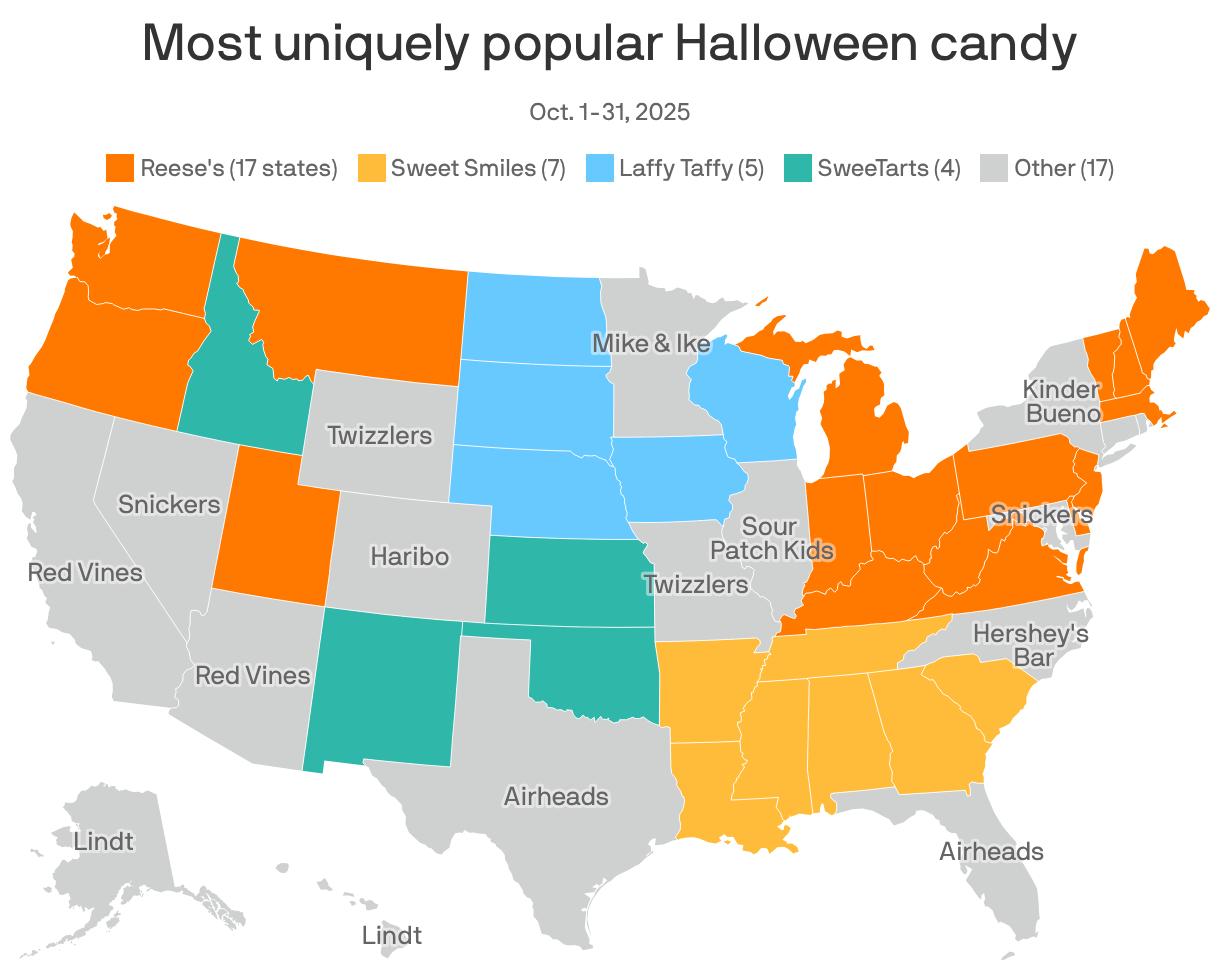
🤔 Shafaq can't remember the last time she had Airheads.
Sign up for Axios Houston
