Axios Hill Leaders

April 06, 2026

Happy Monday! Tonight's edition is 883 words, 3.5 minutes.
- 🎉 Scoop: Early victory dance
- 🏆 Jeffries winning streak
- 💰 Republicans on defense
1 big thing: 🎉 Scoop ... Early victory dance

Maine Senate candidate Graham Platner is making the case that his primary race against Gov. Janet Mills is all but over, a full two months ahead of their primary election on June 9.
Why it matters: The Maine Democratic contest to take on Republican Sen. Susan Collins is one of the messiest primaries in the country, exposing rifts in the party over age, gender and ideology.
- Platner's team told donors and allies he is pivoting to focus more on the general election, and polls show him leading Mills by double digits, according to a Thursday memo first seen by us.
- "While we aren't taking our foot [off] the gas in the primary, we're shifting gears and going full steam ahead into the general," Platner campaign manager Ben Chin wrote in the message.
Zoom in: Platner, a 41-year-old oyster farmer and veteran backed by progressives like Sen. Bernie Sanders (I-Vt.), is running against Mills, 78, a two-term governor endorsed by Senate Minority Leader Chuck Schumer.
- Mills has gone negative against Platner, airing ads that feature women criticizing controversial comments he made on social media about rape.
- "Republicans are foaming at the mouth to run against Graham Platner. ... Plenty of people have tried to count Janet Mills out in her career, and they've been wrong every time," said Mills Senate campaign spokesperson Tommy Garcia.
What's next: Platner has begun airing ads slamming Collins, and his team told us there will be more released in the next couple of weeks.
- A Platner campaign strategist said it will take down an ad pushing back against Mills' negative spots later this week. A similar commercial featuring Platner expressing regret over his previous comments stopped airing last week, according to the ad-tracking firm AdImpact.
- Platner's campaign is planning town halls in conservative areas, shifting its field operation to reach more independent voters, and creating new content featuring the candidate speaking with Republicans.
- Platner will still debate Mills ahead of the June 9 primary election, his team said.
— Holly Otterbein
2. 🏆 Jeffries winning streak
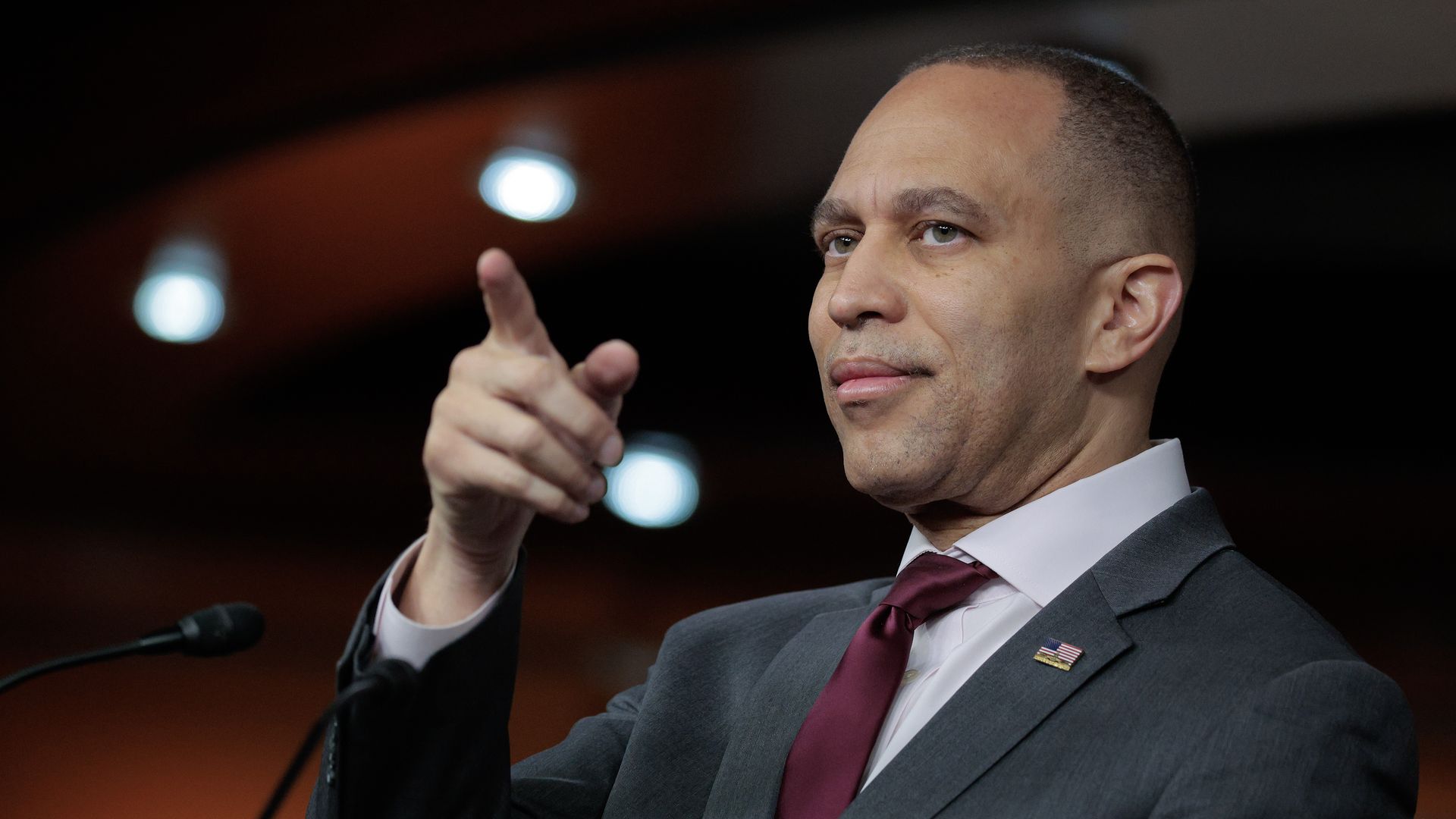
House Minority Leader Hakeem Jeffries is catching break after break as the left runs aground in Democratic primaries.
Why it matters: Every loss for an outsider leftist in a Democratic House primary is effectively a win for Jeffries.
- His core support lies in the mainstream liberal and moderate wings of the party, with more left-leaning candidates generally the least likely to commit to voting for him for House speaker if Democrats take the majority in the midterms.
Driving the news: After bruising losses in the Illinois primaries last month, one group trying to boost young progressive insurgents — Leaders We Deserve — is facing blowback from a campaign it supported.
- Sources close to the congressional campaign of Illinois state Sen. Robert Peters, who finished a bruising third in the primary to succeed Rep. Robin Kelly (D-Ill.), said the David Hogg-affiliated PAC dangled the hope of financial support that never materialized.
- The group even urged them to try to neutralize AIPAC and avoid taking an endorsement from another left-wing group, Justice Democrats, sources told us.
- The campaign of Irene Shin, an unsuccessful House candidate in Virginia, had similar grievances against Leaders We Deserve, the Washington Post reported last summer.
Between the lines: Progressive operatives told us Leaders We Deserve has undergone leadership changes in recent months that they said should address these issues.
- Leaders We Deserve officials have defended their decision-making, saying it would be a waste to spend heavily in support of campaigns like Peters', which they say was doomed to fail.
What's next: The Congressional Progressive Caucus is looking to throw more weight around in primaries, hoping to get left-wing splinter candidates to drop out in favor of more viable alternatives.
— Andrew Solender
3. 💰 Republicans on defense
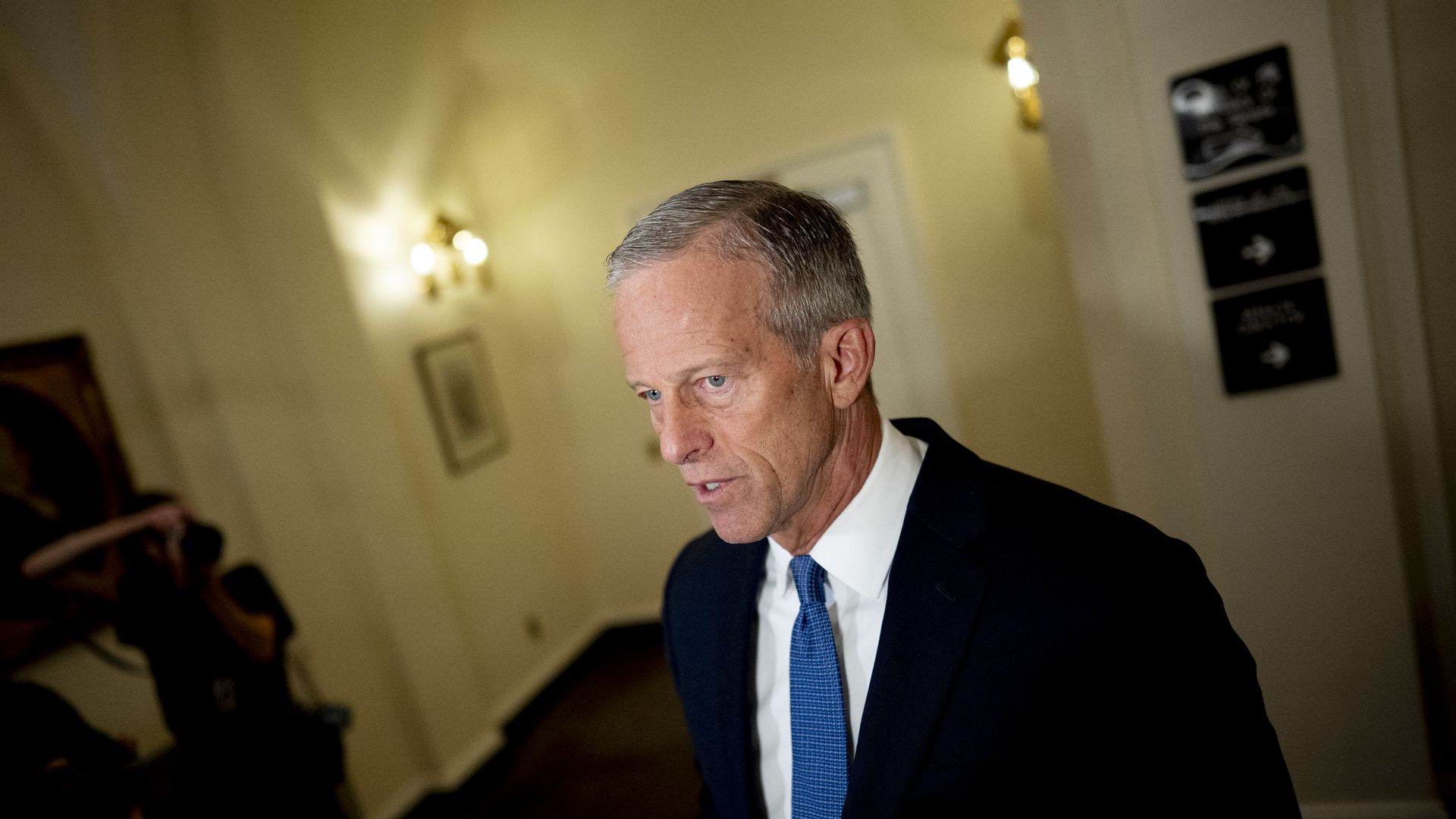
The top super PAC for Senate Republicans plans to spend twice as much this year to defend GOP seats as to target Democrats, it announced today.
Why it matters: The GOP's map of must-defend states has grown by two since this time last year.
- Senate Majority Leader John Thune —and NRSC chair Sen. Tim Scott (R-S.C.)— have long known Ohio, Maine and North Carolina would be dogfights.
- But the Thune-linked Senate Leadership Fund's early plans also include $29 million in Iowa, where Sen. Joni Ernst (R) is retiring, and $15 million in Alaska, where former Rep. Mary Peltola (D) will make it tough on Sen. Dan Sullivan (R).
Zoom in: "Our job is to preserve the majority," SLF executive director Alex Latcham told the New York Times.
- Latcham is "100% confident" Thune will keep his majority after November, he told the Times.
The big picture: SLF plans to spend $79 million in Ohio and $71 million in North Carolina; $42 million was previously announced in Maine.
- On the offensive side, it plans to spend $45 million in Michigan, $44 million in Georgia and $17 million in New Hampshire to target Democratic-held seats.
Between the lines: Texas — and its nasty Cornyn vs. Paxton runoff to come next month — hasn't made SLF's fall list.
- Latcham told the Times he doesn't view Democratic nominee state Sen. James Talarico as competitive (yet) in November.
— Justin Green
This newsletter was edited by Justin Green and copy edited by Kathie Bozanich.
Sign up for Axios Hill Leaders