Axios Hill Leaders

February 28, 2025

1 big thing: 💣 Johnson's time bomb

Vulnerable House Republicans are pleading with their leaders to be more careful with Medicaid and SNAP ahead of the 2026 midterms.
Why it matters: House Speaker Mike Johnson's moderates insist they won't support big cuts to those programs that could doom their campaigns.
- 😬 "It could be trouble," one Republican moderate told us after being granted anonymity to speak candidly about their party's marquee legislation.
- "We saw what happened in 2018," the lawmaker said. Voter anger over the GOP's legislative efforts during President Trump's first term helped Democrats flip more than 40 House seats.
🔥 But conservatives say the cuts that have spooked moderates aren't nearly deep enough.
- House Republicans passed the first step Tuesday for their hulking budget resolution, which allows $4.5 trillion in tax cuts, partially offset by spending cuts.
- The next step is hard: GOP-led committees will now turn instructions to trim spending into line-item cuts that can be voted on and used against them.
🛑 Zoom in: Johnson's moderate and swing-district Republicans told us major cuts to benefits are a red line.
- "I have told my leadership ... there are scores of Republicans who don't want to go further [on Medicaid] than requiring work for able-bodied adults, getting the illegals off and rooting out waste, fraud and abuse," one Republican told us.
- "If it goes further than that," they said, "the bill is probably dead."
🔪 Yes, but: Conservatives are equally emphatic that the bill must include substantial enough cuts to Medicaid to offset the increases in spending — creating a seemingly unworkable dilemma for Johnson.
- Insufficiently deep Medicaid cuts are "probably a nonstarter," said Rep. Eric Burlison (R-Mo.).
- Burlison went as far as to say Republicans "should cut more" than the budget provides for, telling Axios: "I just had people in my office say, 'You didn't cut enough.'"
What's next: Some vulnerable Republicans have distanced themselves from the vote by saying the budget measure is just a conceptual framework that doesn't mandate specific cuts.
- "Last night's vote was just a procedural step to start federal budget negotiations and does NOT change any current laws," Rep. Rob Bresnahan Jr.(R-Pa.) said in a strident statement yesterday.
- Rep. Ryan Zinke (R-Mont.) insisted there is "zero mention of cutting Medicaid" in the budget resolution — even as it calls for the Energy and Commerce Committee to seek $880 billion in cuts, some of which will likely have to come from Medicaid.
— Andrew Solender
2. 💰 Dems grasp for shutdown off-ramp
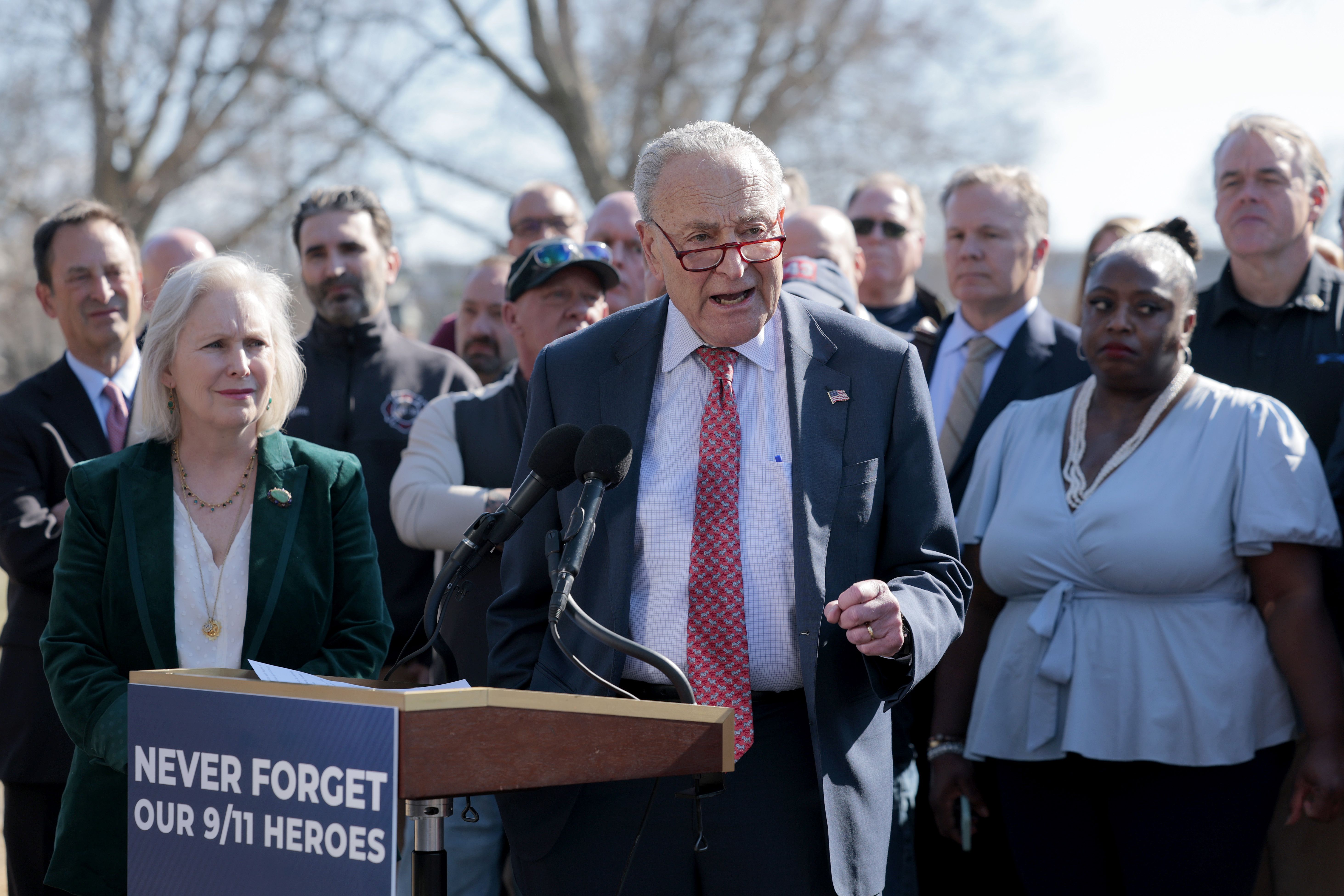
Senate Democrats are quietly discussing how to avoid a government shutdown by adjusting some of their demands on Trump and Elon Musk's spending freezes and mass firings.
Why it matters: A shutdown could make life even worse for federal workers, and appearing to want a shutdown is bad politics for Democrats.
- Senate Minority Leader Chuck Schumer has been meeting with senators all week to discuss government funding, including a meeting with moderates today, sources tell us.
- Schumer has made two basic requests in those conversations: keep your powder dry on discussing government funding and don't talk about wanting a government shutdown.
Zoom in: That's forcing appropriators to look for creative ways to try to regulate the Trump-Musk cost-cutting machine without resorting to explicit language that would scare Republicans off a deal to fund the government before March 14.
- Good appropriators are masters at achieving their goals in the fine print of spending bills instead of maximalist language up high.
- The challenge for Democrats is how to protect federal workers in the long run without causing them immediate and acute pain.
Between the lines: The blame for the government shutdown in 2018-19 fell to Trump, in part, because he claimed he would be "proud" to do so.
- Schumer wants to avoid any implication that his party wants to facilitate a 2025 shutdown.
- But he also knows he has some clear leverage over Republicans.
- Senate Majority Leader John Thune will need at least eight Democratic votes to pass a funding package.
— Stephen Neukam and Hans Nichols
3. 🐴 GOP lone rangers
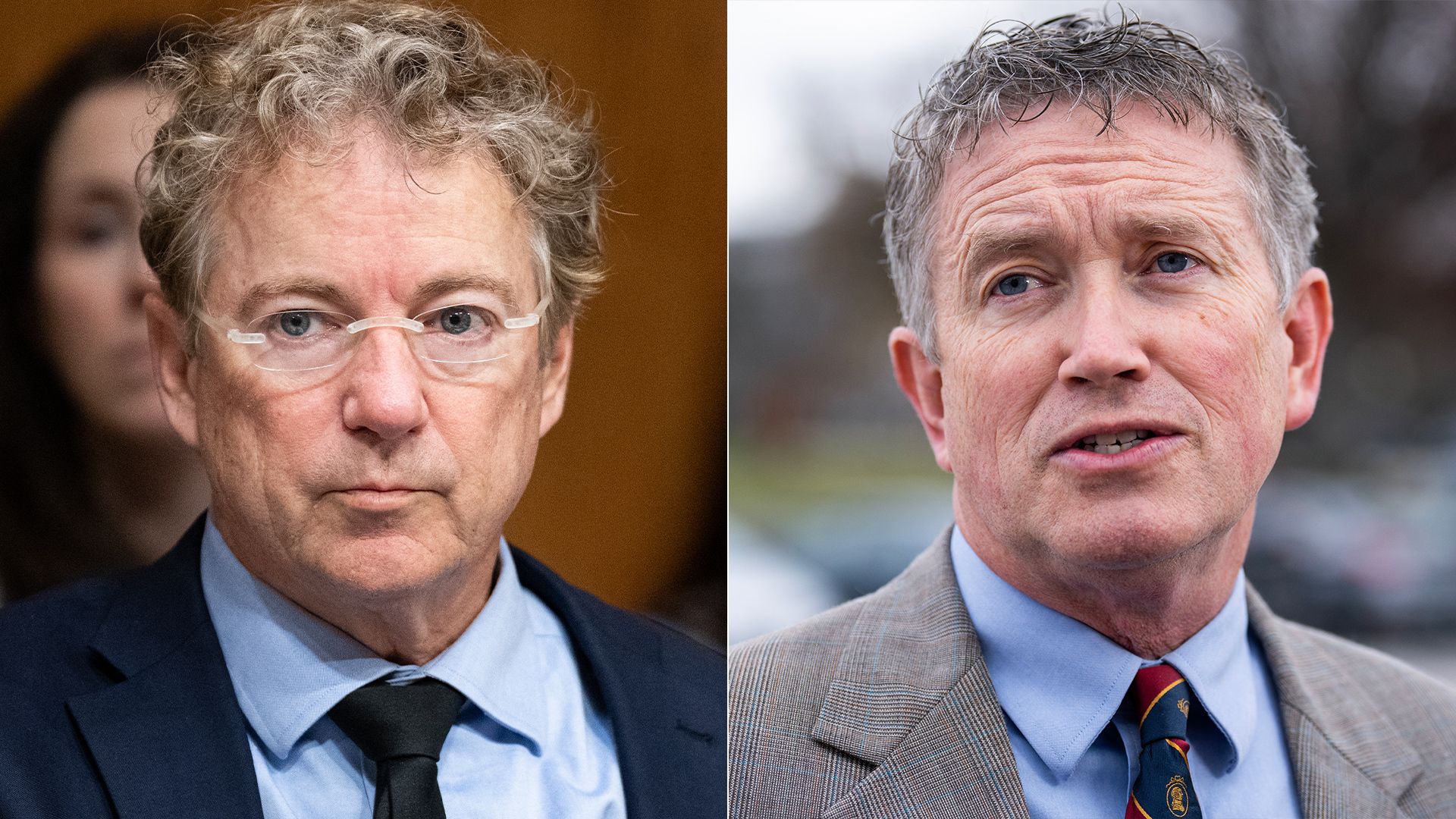
Two Kentucky Republicans — Sen. Rand Paul and Rep. Thomas Massie — are staking out their claims of total resistance to leadership pressure on big votes.
Why it matters: Massie and Paul's whip immunity strips leverage from GOP leaders Johnson and Thune when negotiating with Democrats on must-pass funding bills this year.
- Massie was the only House Republican to vote against Johnson's budget reconciliation package Tuesday. He's also against a short-term government funding bill if the deficit isn't addressed in regular spending. (It won't be, at least to his satisfaction).
- Paul is a "no" on government funding, he told us today. That leaves Thune needing at least eight Senate Democrats to vote "yes" to keep the government open.
— Justin Green
4. 😱 Most DOGE-vulnerable states
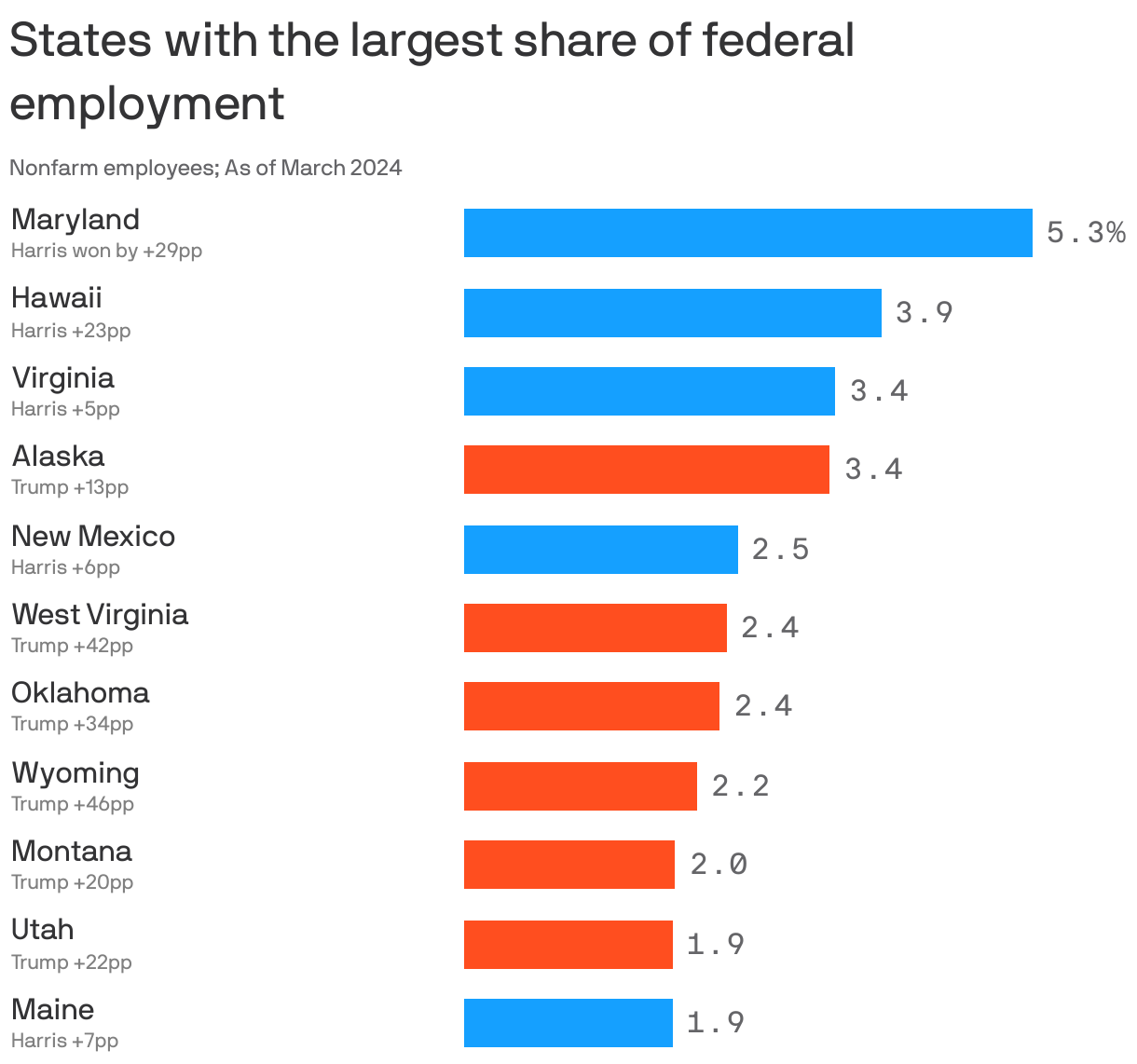
Trump and Musk's rampage to shrink the federal government will be felt far outside the nation's capital — in deep red states as well as blue.
- Why it matters: The cuts will undoubtedly affect D.C., but more than 80% of federal workers live outside the metro area, according to the Partnership for Public Service.
Zoom in: Federal civilian jobs make up 21% of all nonfarm employment in Washington, D.C. — far more than in any state, according to government data analyzed by Pew Research Center.
- Of the 10 states with the greatest percentage of federal employment, six voted for Trump and five voted for then-Vice President Harris. (Maine and Utah are tied for 10th.)
- Alaska has the fourth-highest share of federal workers. Republican Lisa Murkowski, one of the state's senators, has been outspoken about her concerns with DOGE.
— Stef Kight
Axios Hill Leaders