Axios Generate

June 13, 2025

☕ Hi readers, there's a lot happening. We've got the news but also a wide-angle look at how the shale boom influences U.S. policy, all in just 1,247 words, 4.5 minutes.
🗞️ ICYMI: President Trump will appear at Sen. Dave McCormick's (R-Pa.) inaugural Pennsylvania Energy and Innovation Summit next month in Pittsburgh to discuss AI, energy and labor, Axios' Megan Morrone was first to report.
🎶 This week marks 40 years since Talking Heads released the album "Little Creatures," which provides today's intro tune...
1 big thing: A provocative take on America as a petro-state
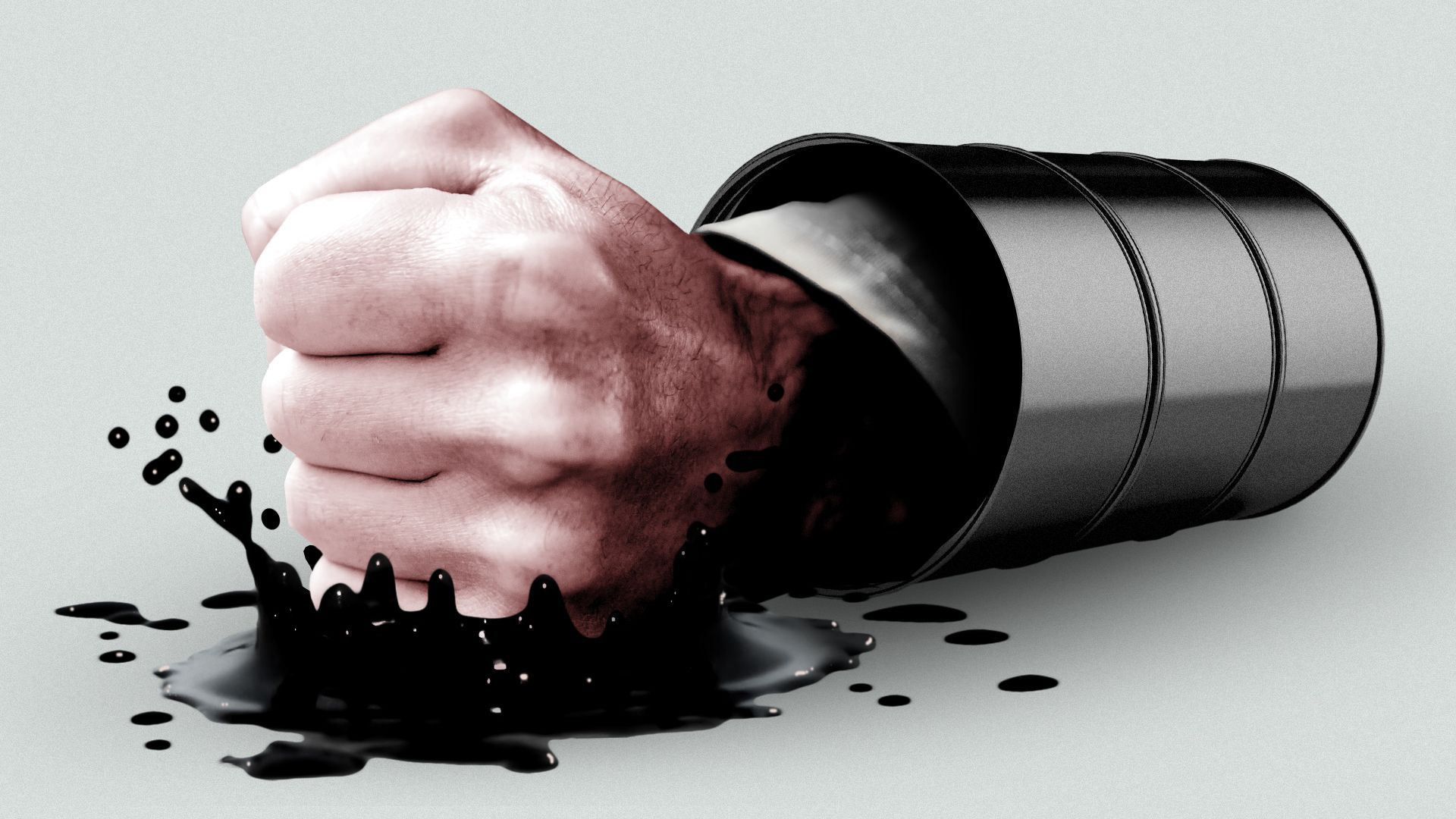
Don't sleep on the shale boom as a force behind Trump 2.0's "disruptive" foreign and trade policies, a new essay argues.
Why it matters: The provocative Foreign Affairs piece calls the U.S. oil and gas export surge an "overlooked" driver of America's posture on the global stage that's "mostly unrelated to [President] Trump's particular preferences."
- These huge shipments abroad are a relatively recent thing that followed many years of growing imports.
The big picture: "Since then, the country has begun to behave less like a liberal hegemon and more like a classic petrostate," write UCLA political scientist Michael Ross and Georgetown geopolitics and justice professor Erik Voeten.
- When oil imports were much larger and rising, the U.S. "aligned with other energy-consuming countries in securing maritime trade routes, stabilizing markets, and supporting international institutions."
- "Now, like other top oil exporters, such as Russia and Saudi Arabia, the United States has lost its long-term interest in international cooperation and has become more willing to use the leverage gained by its production capacity to secure short-term concessions," they write.
The intrigue: Ross and Voeten are not making some kind of monocausal argument about what enabled MAGA's rise.
- They characterize Trump's trade wars, withdrawal from treaties and his "contempt" for traditional allies as rooted in his worldview and populist leanings.
- But they do fear that the relatively recent revival of America's petro-might is enabling the U.S. to seek near-term gains over long-term alliances.
State of play: It's not just a Trump thing, the essay titled "Petrostate America" argues.
- It traces declining U.S. support for free trade to shale's rise. They note former President Obama refused to appoint appellate judges to the WTO, "effectively crippling the body's dispute-resolution mechanism."
- They also point out former President Biden kept many Trump 1.0 tariffs in place and "adopted new protectionist industrial policies and export sanctions."
"The erosion of U.S. support for multilateral trade cooperation coincided with the shale boom," it states.
Yes, but: There are plenty of cases to make that the U.S. boom enables more stability.
- The soaring crude prices today amid the Israel-Iran conflict? Consider the landscape if U.S. output hadn't risen by 8 million barrels per day since 2010.
- U.S. LNG helped Europe diversify away from Russian gas after the invasion of Ukraine, though Ross and Voeten note U.S. oil and gas have given Trump "more authority when demanding European trade concessions."
Zoom out: Whether they're on target or out to lunch, Ross and Voeten aren't the first analysts to start considering how the U.S. petro-boom is fundamentally changing the country's place on the world stage.
- Scholars with Columbia's energy think tank recently published a piece announcing the arrival of a "new form of energy bipolarity."
- The dividing line is between petro-states (notably the U.S., Russia and Saudi Arabia) and electro-states led by China and the EU that are racing ahead on renewables, EVs and grid tech.
The bottom line: "Energy dominance may seem like a boon for the future of American power, but unless the U.S. government shows more restraint, it could turn into a bust," Ross and Voeten write.
2. 🛢️ What they're saying about oil's surge after Israel's strike on Iran


Israel's strikes against Iran last night immediately sent oil prices up sharply, with Brent now trading at its highest level since early April.
Why it matters: Traders are responding to risk that the conflict could spread in ways that affect regional oil production and transport.
What they're saying: Oil prices' "ultimate landing point will likely hinge on whether Iran revives the 2019 playbook and targets tankers, pipelines, and key energy facilities across the region," RBC Capital Markets Helima Croft said in a note, referring to the 2019 Iranian-backed strike on Saudi facilities.
- She also notes that Israel does not appear to have targeted Iran's main oil export infrastructure, but said it could occur if there's an "extended" military operation.
What we're watching: "If oil is caught in the cross-fire, we anticipate that President Trump will seek OPEC spare barrels to try to keep a lid on prices and shield US consumers from the economic impact of the Middle East conflict," Croft writes.
The bottom line: Barclays' Amarpreet Singh said in a note: "So far, these attacks have had no effect on oil market fundamentals but the risk of that eventuality has obviously increased."
3. ⏩ The fast-moving fight over electric cars
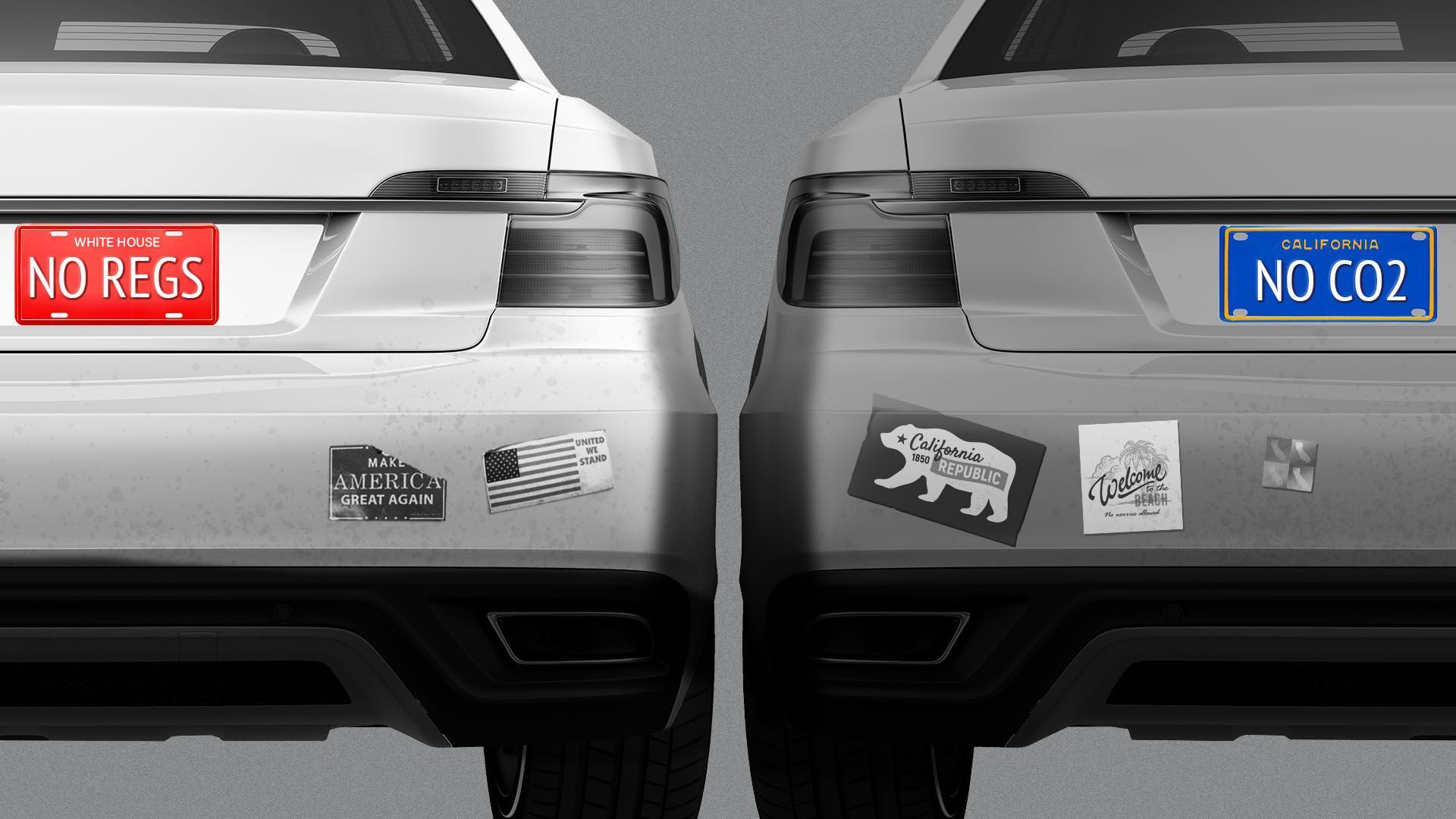
The intense political fight over EVs is moving deeper into the legal realm.
Why it matters: Pro-EV incentives and rules were a top Biden-era priority, but battery-powered cars — along with wind — are Trump 2.0's top energy targets.
Catch up quick: President Trump signed legislation yesterday that blocks California rules to phase out sales of gas-powered cars by 2035.
- The state is by far the country's biggest car market, and roughly a dozen other states follow its rules.
Yes, but: California's attorney general and colleagues in 10 other states immediately sued.
- The high-stakes case turns on an especially wonky question: whether the Congressional Review Act used to scuttle regulations can apply here.
- What Trump signed are revocations of EPA waivers that enable the California EV rule (and separate rules on trucks and nitrogen oxide).
The big picture: The CRA enabled a quick strike — resolutions under the law are immune from filibuster in the closely divided Senate.
Friction point: "The federal government ran roughshod over federalism and separation of powers principles in applying the CRA to these three preemption waiver decisions," the lawsuit states.
The other side: Trump said in a statement: "These bipartisan measures prevent California's attempt to impose a nationwide electric vehicle mandate and to regulate national fuel economy by regulating carbon emissions."
- The federal government, not states, should create emissions standards "given the inherently interstate nature of air quality," he said.
What we're watching: The next steps in the multidimensional battle between California Democratic leaders and Trump 2.0.
- Gov. Gavin Newsom yesterday issued an executive order tasking state regulators with crafting new rules to cut CO2 and air pollution from cars and trucks.
- Those rules would be an "additional measure to build on existing regulations" or an alternative measure if the court allows Trump's action to stand, it states.
4. 🧁 Bonus chart: the state of U.S. EV sales


U.S. sales of fully electric cars remain on a generally upward trend, but growth has slowed and then dipped of late.
What we're watching: Colliding forces.
- More models are coming to market at various price points.
- Trump officials and GOP lawmakers are paring back purchase subsidies and pro-EV regulations.

5. 🏃 Catch up quick on finance: Planes, geothermal, coal
🛠️ Aerospace startup JetZero will build a North Carolina factory to make large, futuristic-looking passenger jets, it said.
- Why it matters: The "ultra-efficient all-wing body design" uses 50% less fuel than traditional big jets, the company said. It has secured investments and conditional purchase deals from United Airlines and Alaska Airlines.
- Go deeper: The WSJ first broke the news and has much more.
♨️ Meta has a deal with geothermal startup XGS Energy it said would enable a 150-megawatt project in New Mexico. It's Meta's second foray into geothermal following an agreement last year with Sage Geosystems. Go deeper.
👍 Via Bloomberg, "A World Bank-linked climate fund has backed South African plans to cut its reliance on coal, unlocking up to $2.6 billion in financing and giving the nation's energy transition an unexpected boost."
6. 🧮 Number of the day: 20%
A UBS analysis estimates that six tech giants — Amazon, Microsoft, Google, Meta, Oracle, and Apple — accounted for 20% of U.S. power demand growth in the 12 months from March 2024 to March 2025.
Why it matters: Data centers account for much of that expanding tech industry electricity thirst.
📧 Did a friend, colleague or an AI chatbot send you this newsletter? Welcome, please sign up.
🙏 Thanks to Chris Speckhard and Chuck McCutcheon for edits to today's edition, along with the brilliant Axios Visuals team.
Sign up for Axios Generate