Axios Generate
April 17, 2025


🛣️ The rubber is meeting the road on massive energy policy changes under Trump 2.0.
- Today we open with a stark example and then roam around the beat, all in just 1,181 words, 4.5 minutes.
🎸 This week marks 50 years since Texas rock legends ZZ Top released the album "Fandango!," which provides today's intro tune...
1 big thing: What's next in Trump's war on wind
/2025/04/16/1744845452795.gif?w=3840)
Trump officials just took their most aggressive step to thwart offshore wind by stopping ongoing construction of Empire Wind, a big project off New York's coast.
Why it matters: It's their first move against an offshore development that was already getting built.
- Halting Equinor's multibillion-dollar project yesterday sent shock waves through the young U.S. industry.
- It's a "major escalation of regulatory assault on offshore wind," TD Cowen Washington Research Group said in a note that sees jeopardy for other projects that have begun construction.
Catch up quick: Interior Secretary Doug Burgum said on X that his agency will demand a halt pending "further review of information that suggests the Biden administration rushed through its approval without sufficient analysis."
- Interior didn't respond to a request for more info, and Burgum linked to coverage in the conservative Washington Free Beacon.
- That story shows a memo alleging "serious deficiencies."
How it works: The 810 megawatt Empire Wind 1 was slated to send enough power into New York to supply 500,000 homes, per Equinor. It was expected to start producing power in 2026.
- The company began laying rock in the marine region earlier this month.
- The project also supports onshore work at the South Brooklyn Marine Terminal, where per Equinor, more than 1,500 people have worked.
- The site is designed to serve as a staging area for offshore turbines, the project's operations and maintenance base, and onshore substation.
The big picture: Future projects were stifled at Trump 2.0's outset. And even before that, financial hurdles were hitting the sector, putting the Biden-era goal of 30 gigawatts installed by 2030 out of reach.
- A January executive order barred new lease sales and new permitting, while requiring review of existing leases. Burgum's memo notes both pending and existing permits are under review.
- EPA last month yanked an air permit for a separate proposed but frozen project called Atlantic Shores off New Jersey.
State of play: There's one large-scale commercial offshore wind project in operation — Ørsted's 132 megawatt South Fork Wind commissioned in 2024 that helps power Long Island.
- Five larger Atlantic Coast projects are in some phase of construction, including Dominion Energy's 2.6 gigawatt Coastal Virginia Offshore Wind (CVOW) project, Vineyard Wind off Massachusetts, and Ørsted's Revolution Wind in New England.
Equinor said it will "engage directly" with Interior to "understand the questions raised about the permits we have received from authorities."
- NY Gov. Kathy Hochul, in a statement, said she will "not allow this federal overreach to stand."
- "Doubling back to reconsider permits after projects are under construction sends a chilling signal to all energy investment," the American Clean Power Association said in a statement.
The other side: The anti-offshore wind group Protect our Coasts New Jersey cheered the move, alleging the project threatened marine navigation and commercial fishing.
The bottom line: The "messaging is clear" even though details are scarce, and "negative impacts for early stage construction projects are real," TD Cowen analysts write.
- They see lower risks for projects in more advanced stages of construction like Vineyard and CVOW, but add: "The only certainty here is uncertainty."
2. 🏃 Catch up quick on tech and policy: Carbon removal, EPA grants, sanctions
🤝 Oil and gas heavyweight Occidental Petroleum revealed yesterday that it recently bought the direct air capture startup Holocene. Terms were not disclosed.
- Why it matters: Occidental is the oil company moving most aggressively into the carbon removal space and previously acquired the DAC firm Carbon Engineering.
- What's next: "We believe combining these technologies will enable us to advance our R&D activities to improve the efficiency of our direct air capture process, reduce CO2 capture costs and accelerate DAC deployment," Occidental said in a statement.
- Go deeper: Heatmap first reported the news and has more.
⚖️ Via the Washington Post, "A federal judge has temporarily blocked President Donald Trump's Environmental Protection Agency from terminating at least $14 billion in climate grants approved under President Joe Biden."
- Why it matters: The Greenhouse Gas Reduction Fund is among the biggest Biden-era climate grant programs.
- What we're watching: EPA quickly appealed, per E&E News.
⚔️ Via Reuters, "The United States on Wednesday issued new sanctions targeting Iran's oil exports, including against a China-based 'teapot' oil refinery, as President Donald Trump's administration seeks to ramp up pressure on Tehran.
3. 🔢 The Midwest's data center boom is heating up...


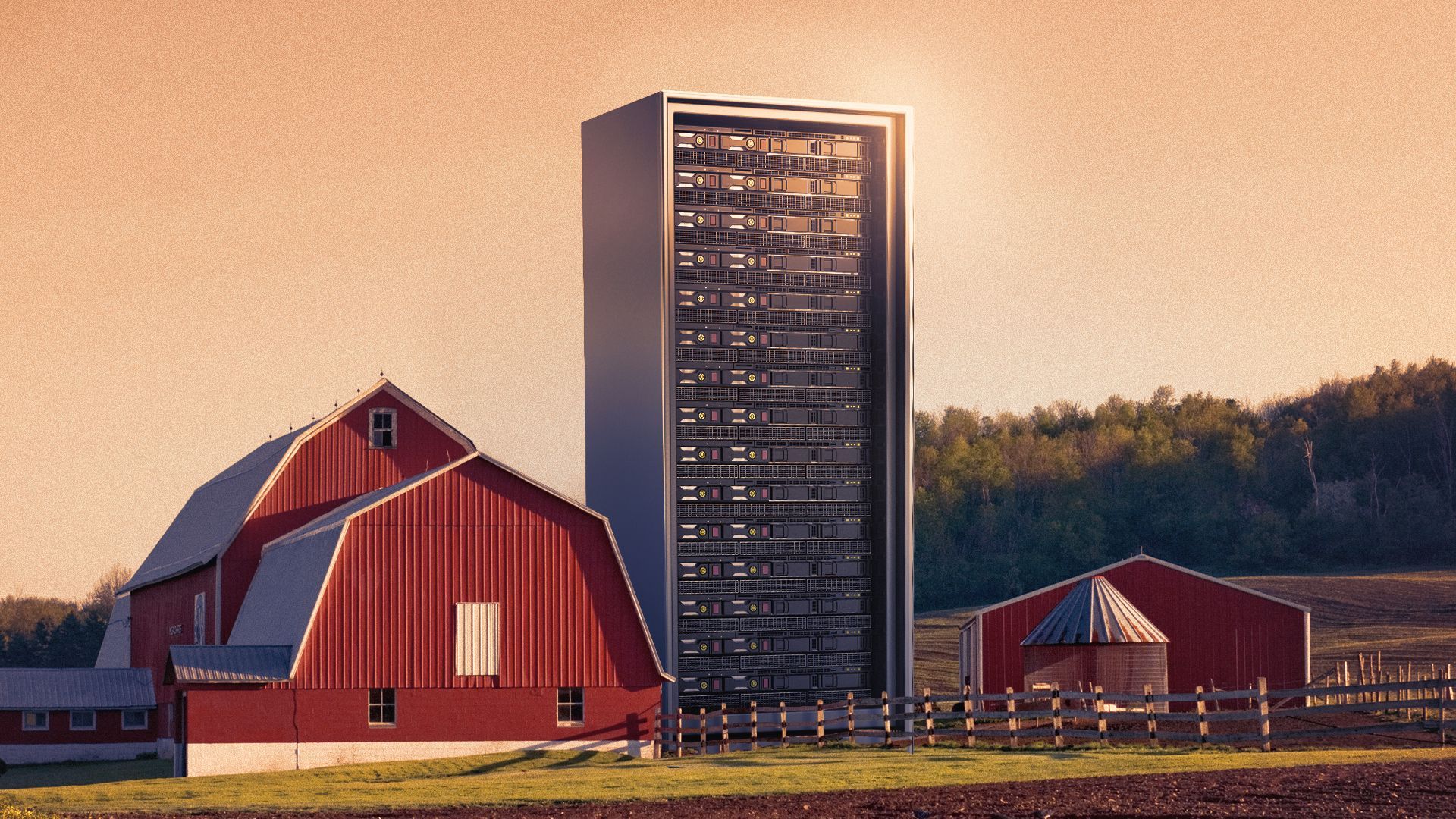
The AI expansion is reshaping the Midwest, driving a wave of data center development, straining energy systems, consuming millions of gallons of water — and triggering a new debate over who benefits.
State of play: The Midwest is emerging as one of the nation's fastest-growing hubs, with development stretching from Kansas and Iowa to Great Lakes states like Ohio, Michigan, Indiana and Wisconsin.
- Columbus, Ohio, and Chicago remain the region's primary data center markets.
- But companies are increasingly eyeing secondary cities like Minneapolis, Pittsburgh, Des Moines and parts of Indiana, where land is cheaper and energy is more available, says Andy Cvengros of real estate firm JLL.
- Cooler Midwest temperatures and proximity to the Great Lakes reduce the need for energy-intensive cooling — an advantage over warmer Southern states.
Yes, but: The expansion often happens behind closed doors.
- Local governments frequently sign nondisclosure agreements with tech firms, limiting public knowledge of energy and water usage, says Helena Volzer of the nonprofit Alliance for the Great Lakes.
4. ...and fracking helps power Pennsylvania's AI growth


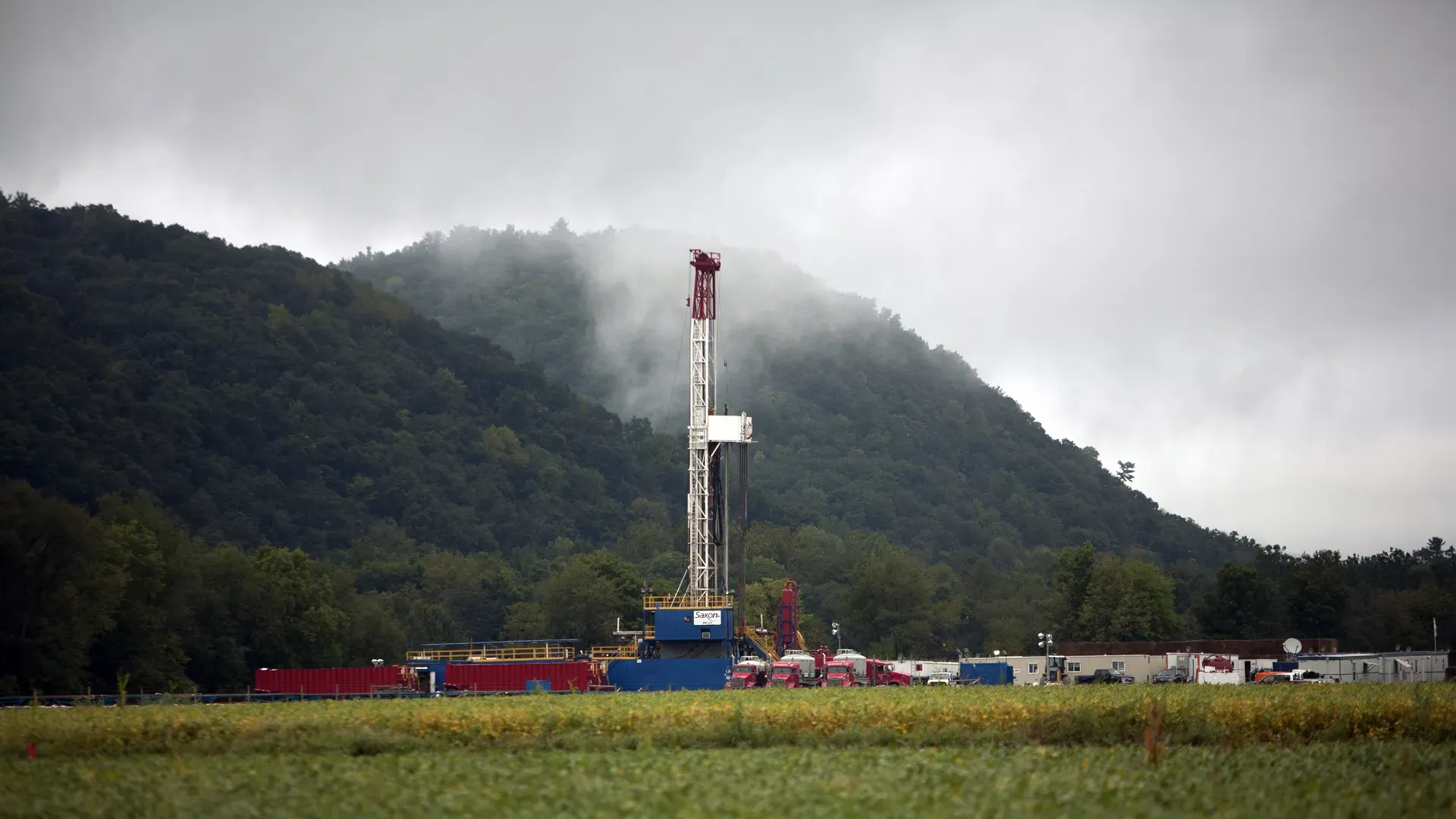
The data center boom is coming to Pittsburgh — and natural gas is fueling it.
Why it matters: Pennsylvania's vast natural gas reserves are attracting developers searching for energy sources powerful enough to run large data centers as AI surges
The big picture: The state is positioned well as an AI infrastructure hub, with support from industry groups and organized labor, but the prospect also raises the climate stakes and has revived Pennsylvania's environmental fight over fracking.
Catch up quick: Since January, Southwestern Pennsylvania has attracted three massive data center proposals — TECfusions, Fort Cherry Development District, and a facility at the former Homer City Generating Station — and all are planned to be powered by natural gas.
- The Homer City project would generate up to 4.5 gigawatts — enough to power most of Manhattan.
The other side: Any natural gas expansion will worsen climate change, said David Masur, director of statewide environmentalist group PennEnvironment.
5. 🧮 Number of the day: -15.1%
That's the Q1 2025 slide in Tesla sales in California, by far the country's largest EV market, compared to the same stretch a year earlier.
Why it matters: "An aging product lineup and backlash against Elon Musk's political initiatives are likely key factors for the decline" in Tesla's EV market share, the California New Car Dealers Association said in their quarterly report.
- New registrations for all other EV brands grew 35%, but EVs' overall share of new sales dipped slightly.
- Fully electric vehicles were slightly over one-fifth of total car sales in the state last quarter. H/t to Bloomberg, which has more.
6. 💬 Quote of the day
"Climate change introduces these humanitarian crises and natural disasters that can weigh heavily on the blood supply."— Johns Hopkins University pathologist Evan Bloch
He's quoted in the NYT's coverage of a new analysis that explores climate-related risks to blood collection, testing, transport, and storage.
- The assessment is published in the journal Lancet Planetary Health.
📧 Did a friend, colleague or an AI chatbot send you this newsletter? Welcome, please sign up.
🙏 Thanks to Chris Speckhard and Chuck McCutcheon for edits to today's edition, along with the brilliant Axios Visuals team.