Axios Generate

July 03, 2025

π The long weekend beckons and we're in the fast lane, with just 1,039 words, 4 minutes.
πΊπΈ We'll be off on July 4. Enjoy the holiday! Generate returns Monday.
π» At this moment in 1983, the late Irene Cara was No. 1 on Billboard's Hot 100 with today's intro tune...
1 big thing: Trump's drilling tensions, revisited


This chart βοΈ puts a finer point on a big story we've been tracking: signs that U.S. oil output growth is stagnating and could decline soon.
Why it matters: President Trump wants to "drill baby drill."
- But many producers in the heart of the oil patch have other plans β and some say Trump's trade policies are discouraging drilling.
Driving the news: The Dallas Fed yesterday released its latest quarterly survey of execs in its region that includes the prolific Permian Basin.
- These anonymous surveys are hot commodities for anyone seeking the industry pulse.
State of play: The poll of exploration and production (E&P) firms and drilling contractors showed overall activity contracting slightly and production dipping as well in Q2.
- Looking ahead, the poll's average of price forecasts is $68 per barrel over the next year for WTI, the benchmark U.S. grade, roughly where it's at now.
- "Almost half of executives surveyed expect to drill fewer wells in 2025 than they planned at the start of the year," it states.
- Large producers (10,000+ barrels per day) were more likely to see drilling "significantly" fall.
What we're watching: Prices and input costs.
- If they drop to $60 per barrel and stay there, 61% expect their production to fall slightly over the next 12 months, while 9% see a big drop (see above).
- Twenty-seven percent of execs say the recent steel tariff hike will mean slightly fewer wells drilled, and 5% expect significantly fewer.
Threat level: "The Liberation Day chaos and tariff antics have harmed the domestic energy industry," one E&P exec told the Dallas Fed.
- "Drill, baby, drill will not happen with this level of volatility. Companies will continue to lay down rigs and frack spreads," said the exec, one of several criticizing the tariffs.
Flashback: The Q1 survey showed that on average, firms say they need oil at $65 to profitably drill new wells.
- The latest outlook from the Energy Department's independent stats arm projects a slight drop in the second half of this year and a slight annual decline in 2026.
Yes, but: A White House spokeswoman said Trump is making drilling easier by rolling back "stifling" Biden-era regulations.
- "The One, Big, Beautiful Bill's tax cuts and full equipment expensing will further turbocharge growth and investment by oil and gas companies β another reason Republicans need to get this bill across the finish line and onto the President's desk," Taylor Rogers said in a statement.
The big picture: U.S. output is already at record levels, and the country is by far the world's largest producer.
- Trump's "dominance" agenda includes more drilling access in offshore areas and Alaska. But those are very long-term projects.
- Today's economic picture, combined with shale producers' focus on capital discipline and shareholder payouts, is working against near-term growth.
What's next: The global market sways domestic drilling decisions, and OPEC+ will meet July 6 to decide on its next tranche of output increases.
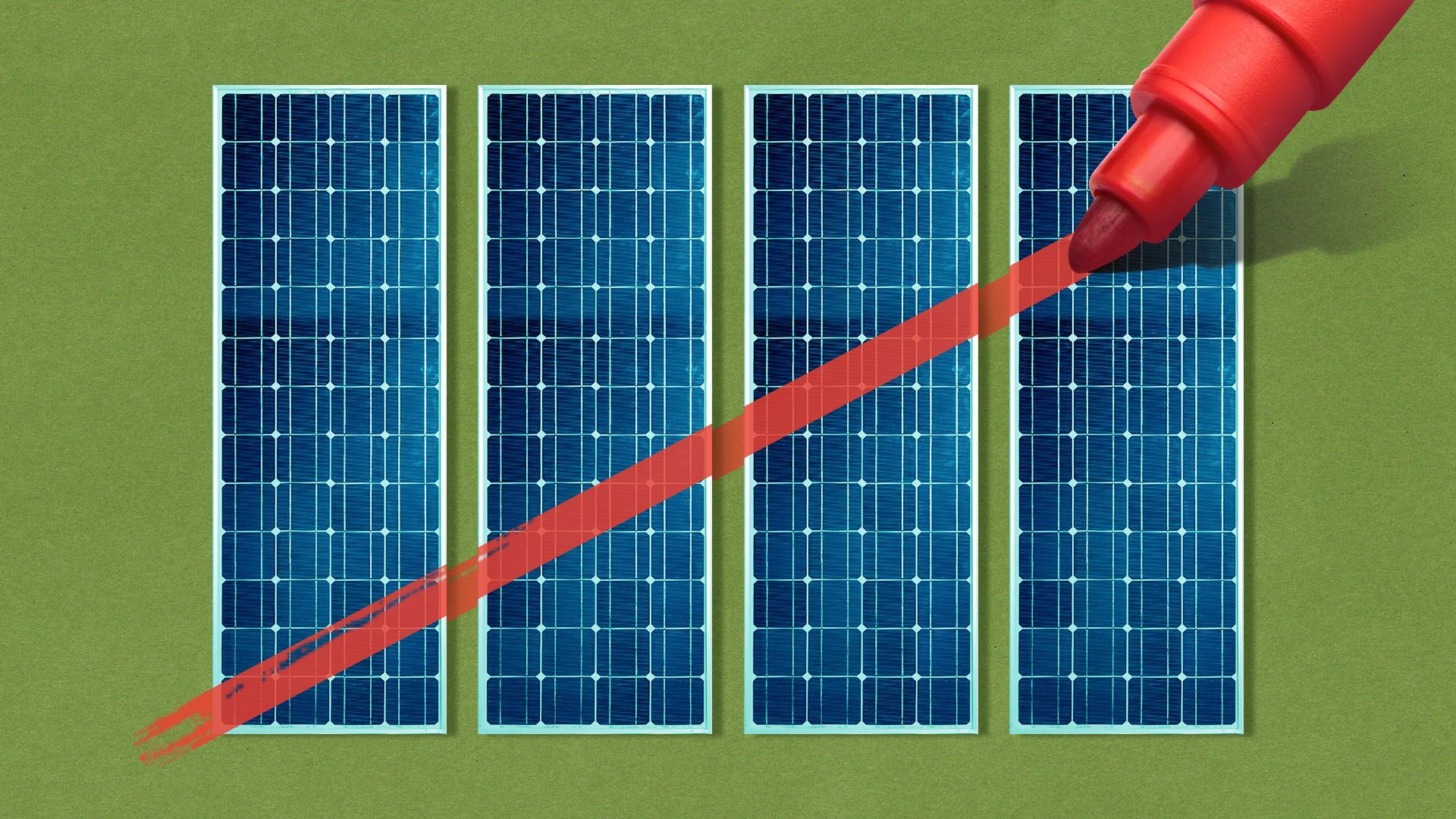
2. π§ What's next as energy overhaul heads for Trump's desk
Here are a few things I'll be watching now that the GOP budget plan is on the cusp of final passage and President Trump's signature.
π Renewables' and EVs' path ahead. Solar, wind and EVs face an aggressive loss of incentives in the plan.
- State of play: The Princeton-led REPEAT Project is out with preliminary estimates of the bill, which shakes up the landscape for many kinds of tech.
- The big picture: It sees $500 billion less in cumulative electricity and "clean fuels" investment from 2025-2035 than what would otherwise occur.
- What we're watching: The analysis sees 72 fewer gigawatts of wind and solar capacity additions by 2030.
π³οΈ The midterm politics. Democrats will hit Republicans over reduced low-carbon energy investment in red states.
- Yes, but: The political salience of clean energy is hardly clear β the IRA did not appear to provide a big 2024 lift β so the midterms are the next test.
π’οΈ Oil industry appetites. The bill expands and speeds up leasing, and under more favorable terms. That includes offshore and Arctic regions in Alaska.
- The big picture: These and other provisions reverse what Republicans and the industry call undue restrictions that Biden officials imposed on domestic energy.
- Yes, but: The new access will reveal industry interest β or lack thereof β in expensive, long-term projects in Alaska, home to massive hydrocarbon deposits.
π Tesla's tough road. In addition to scuttling consumer purchase credits, the bill ends civil penalties on automakers that don't meet fuel efficiency rules.
- Threat level: This and Trump's executive steps to ease auto standards could greatly cut the market for regulatory credits. They're a major revenue source for Tesla, which is mired in a sales slump.
3. π Lease returns are about to shake up EV markets
A tax loophole that encouraged consumers to lease, rather than buy, electric vehicles in recent years means a flood of used EVs will be hitting the market soon.
Why it matters: The expected wave of lease trade-ins will help fuel the next phase of EV adoption by giving price-conscious buyers more affordable choices.
The big picture: There aren't many crystal balls in the auto industry, but lease returns are rather easy to predict.
- Since vehicles are typically leased for two or three years, companies already know when those cars will be turned back for resale.
State of play: Nearly 1 million EVs were leased from the beginning of 2022 through the first quarter of 2025, according to Experian data analyzed by Cox Automotive.
- EV lease rates jumped from around 15% in 2022 to 67% by March 2025. Tesla, in particular, saw a spike in lease rates, per Cox. The industry's usual lease rate is about 25%.
- The surge had everything to do with a wrinkle in how the 2022 Inflation Reduction Act was written.
What's next: Roughly 123,000 leased EVs (and plug-in hybrids) will return to the secondhand market this year, according to Recurrent Auto, a data firm that tracks the EV market.
- In 2026, the number will more than double to 329,000 EVs. By 2027, 650,000 leased EVs will be turned in.
- That's more than 1 million used EVs hitting the market in the next three years.
4. πΊπΈ One holiday thing: energy since independence
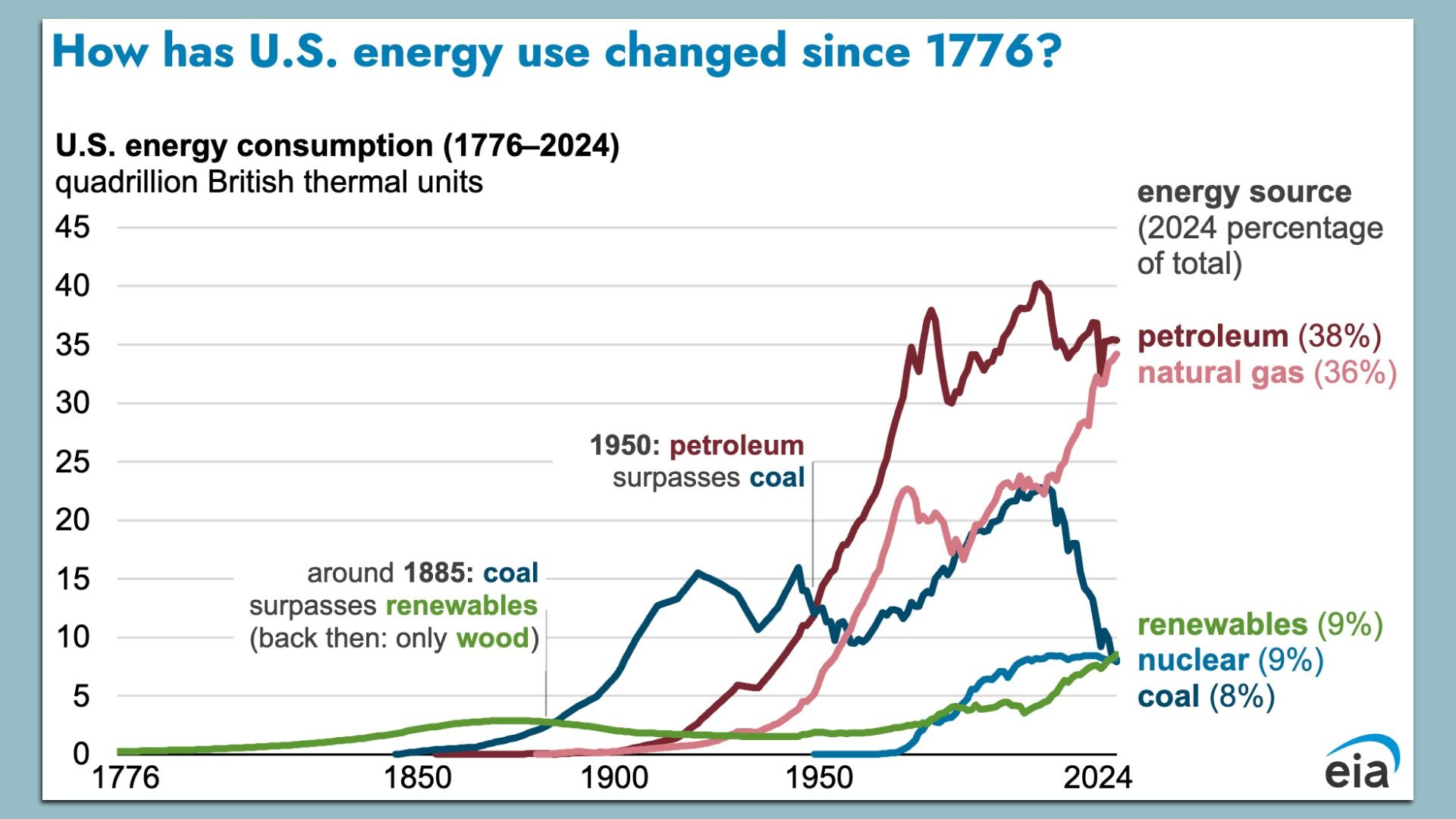
This chart captures the long-long-long term evolution of U.S. energy sources.
The big picture: The changes aren't stopping.
- An EIA primer notes that consumption of energy from fast-falling coal dipped below nuclear last year.
π§ Did a friend, colleague or an AI chatbot send you this newsletter? Welcome, please sign up.
π Thanks to Chuck McCutcheon and Chris Speckhard for edits to today's edition, along with the brilliant Axios Visuals team.
Sign up for Axios Generate