Axios Generate

March 21, 2025


🕺 Happy Friday! We open with reporting on a new climate lobbying effort, and then roam around, all in just 1,325 words, 5 minutes.
🎸 This week in 1983, ZZ Top released "Eliminator," and there's advice for anyone who meets your Generate hosts on today's intro tune...
1 big thing: New lobbying player brings Trump-ready pitch
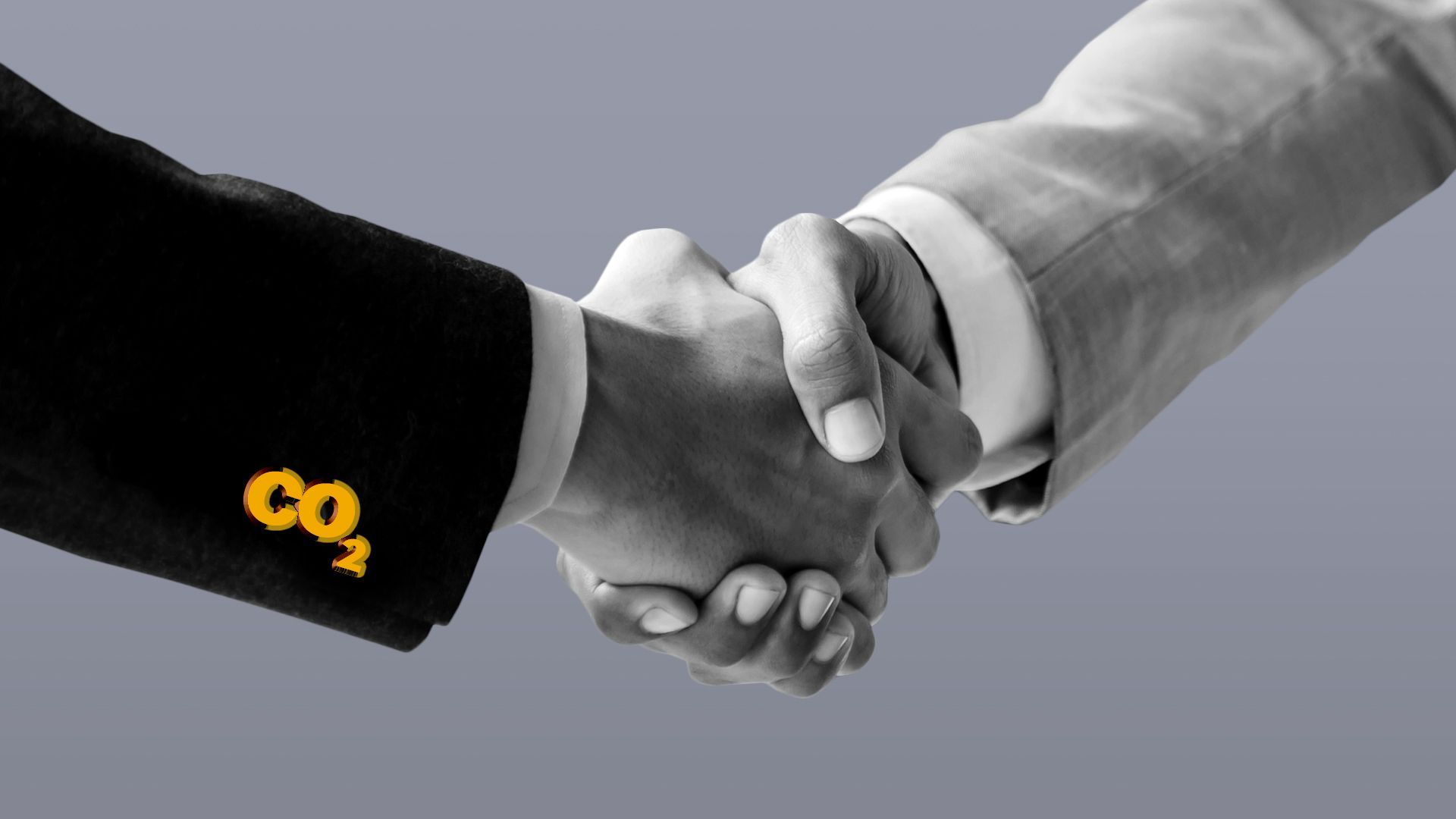
👀 First look: A new group aims to bolster U.S. manufacturing via policies that ensure markets reward goods made more cleanly than competitors abroad.
Why it matters: The Cleaner Economy Coalition sees an opening in the Trump era even as it preps for much longer-term work.
- Its first outside lobbyists are Trump-world and Capitol Hill GOP leadership vets.
Driving the news: It's a new affiliate of the Climate Leadership Council (CLC), a group that GOP elder statesmen launched in 2017.
- The Cleaner Economy Coalition is a 501(c)(4) — a nonprofit class with a free hand to make lobbying and advocacy its main focus.
State of play: "We need an approach that starts with promoting U.S. competitiveness. That has to be the central component to any U.S. climate policy," Greg Bertelsen, the CEO of the CLC who's also heading the new group.
- "We're leaving huge economic points on the board today, and we are risking ceding enormous economic opportunity in the future," he said.
- U.S. manufacturing is already among the world's cleanest, "but in the global marketplace, they're getting almost no benefit for that."
What we're watching: The coalition hopes to boost heavy industries (think steel, chemicals, cars and more) and help the U.S. thrive in growing global markets for advanced energy equipment.
- Examples of policy goals include trade penalties against high-CO2 imports and retaining the IRA credit, called 45X, for manufacturing clean energy goods.
- But they'll push a wide range of ideas. Not among them: "carbon dividends" (a version of a carbon tax) that have been among the CLC's big goals.
The intrigue: It has retained Michael Best Strategies, with lobbyists including Alexander Angelson, a legislative affairs aide in the first Trump White House.
- There's also a trio of former aides to House Speaker Mike Johnson and ex-Speaker Kevin McCarthy: Jason Yaworske, Brittan Specht and Preston Hill.
- They've also brought on MO Strategies. Founder and GOP vet Marty Obst, who had senior roles in Trump's 2016 and 2020 races, and Rob Goad, a former Trump White House adviser, are listed.
"Right now, we are focused on getting in front of the administration and members of Congress on both sides of the aisle," Bertelsen said, though discussions about the new group began over a year ago.
- The annual budget will be over seven figures. The CLC is currently a $4 million-plus outfit, and Bertelsen said the new affiliate will start below that, although where it eventually ends up is uncertain.
- It will be funded via corporate contributions and "others who are aligned with our mission."
The bottom line: There's a "simple two-part test" for policy — does it make U.S. companies more competitive, and does it lower global emissions, Bertelsen said.
- "If the answer to the first question is 'yes,' in most instances the answer to the second question is going to be 'yes' as well."
2. 🧈 One tech thing: carbon butter


Savor, a startup that makes fats from carbon, plans to kick off a Series B round later this year, CEO Kathleen Alexander told Axios.
Why it matters: Food made without agriculture could be more efficient to produce, require less energy and emit fewer greenhouse gases.
Driving the news: The 3-year-old startup yesterday officially launched its first commercial product: a butter made from inputs like carbon dioxide, green hydrogen and methane.
Unlock the whole story, and talk to our sales team about Axios Pro Deals for a steady diet (no pun intended!) of scoops and smart analysis.
3. 🔭 Universities team up to get U.S. scientists into IPCC

With the extent of official U.S. government participation in the next UN climate panel report in doubt, a new group has formed to recruit U.S. authors.
Why it matters: The Intergovernmental Panel on Climate Change is the most authoritative scientific group studying climate change. It was established to advise policymakers and the public on the latest climate science findings.
- Its reports influence the UN climate talks, as well as the policies of individual governments and large corporations.
Zoom in: The new U.S. Academic Alliance for the IPCC, hosted by the American Geophysical Union, formed soon after the U.S. decided not to send State Department representatives to an IPCC plenary meeting in China last month.
- In addition, NASA blocked one of its IPCC participants from attending the meeting and eliminated funding for a technical support unit meant to help scientists working on the report.
- The alliance is seeking researchers who would like to participate in the IPCC's seventh assessment report to self-nominate as authors and reviewers.
- The academic group are observers within the IPCC and therefore are eligible to nominate experts for IPCC roles, in addition to governments.
- AGU is the world's largest association of Earth and space scientists.
The intrigue: The founding members include Princeton University, Woods Hole Oceanographic Institution, Yale and the University of California at San Diego.
- The group is looking to raise awareness of authorship opportunities for U.S. scientists.
- With the Trump administration's antipathy toward climate science, universities are stepping up to ensure the U.S. still has scientific representation at the IPCC.
What they're saying: "While the administration's next steps remain unclear, it is essential that American scientists continue contributing to the rigorous, peer-reviewed assessments that shape global climate policy," the AGU said in a statement to Axios.
What we're watching: How successful this effort is at funneling U.S. climate expertise into the IPCC process despite any governmental disengagement.
4. ⛏️ Trump team ramps up minerals, oil push

Trump officials are taking fresh steps to spur mining and drilling on vast swaths of federal lands and beyond.
The latest: A new executive order eyes using the Defense Production Act to expand production. Other elements include...
- Telling the Interior Department to prioritize extraction over other activities on lands with deposits.
- ID'ing projects for expedited permitting, including under the Fast-41 program launched in 2015.
- New project financing via the U.S. Development Finance Corp. using funds freed up via the DPA.
How it works: The order covers critical minerals, uranium, copper, potash, gold, and anything else the new White House energy council determines — including potentially coal. Bloomberg has more.
State of play: On the oil-and-gas front, the Interior Department said it plans to reopen 82% of lands in the National Petroleum Reserve-Alaska, where Biden officials imposed major restrictions.
- Interior also said it would make far more of the Arctic National Wildlife Refuge available for development.
What we're watching: Whether Arctic refuge offerings under the new regime ignite industry interest in the region, which was absent in a late-Biden-era sale.
5. 🎉 Bonus policy notes: EPA, Iran, IRA

⚖️ The battle over EPA's $20 billion climate grant program is expanding.
- The latest: Four Democratic AGs are suing EPA over funds under the climate law program that current agency head Lee Zeldin is trying to scuttle.
🥊 The Treasury and State Departments are imposing new sanctions on a Chinese refinery and storage terminal in the latest effort to crimp Iranian oil exports.
- Why it matters: "Both being hard assets in China, we see this as a clear risk escalation for physical flows for the region, though [yesterday's] moves stopped short of a full physical impediment to the illicit Iranian oil trade into China," RBC Capital Markets' Brian Leisen said in a note.
🔚 Over two dozen energy execs (largely in oil and mining) and investors are pressing Congress to repeal all IRA subsidies — even ones that could aid their firms and industries.
- Why it matters: It underscores differing postures within the sectors as Congress weighs the fate of tax credits in budget talks.
- The big picture: A new letter argues that subsidies bring higher costs or lower quality. It's "just a way of taking money from more efficient producers—and from taxpayers—and giving it to less efficient producers." Full letter.
6. 🧮 Number of the day: around 46,000 Teslas
That's how many Cybertruck pickups Tesla is recalling over a steel panel that can become detached, though it's "not aware of any collisions, fatalities, or injuries."
Why it matters: The recall of the rather niche product is the latest setback for Tesla, which is also struggling with slumping European sales of its main offerings and other woes.
📧 Did a friend, colleague or an AI chatbot send you this newsletter? Welcome, please sign up.
🙏 Thanks to Chris Speckhard and Chuck McCutcheon for edits to today's edition, along with the brilliant Axios Visuals team.