Axios Generate

February 25, 2025


✅ Tuesday. We've got news at home and abroad in a whirlwind tour that's just 1,229 words, 4.5 minutes.
🗓️ Happening tomorrow: Join Andrew and Axios' Daniel Moore at 8am ET in Washington, D.C., for an event on the future of electric grids, featuring Rep. Kathy Castor (D-Fla.), Rep. Bob Latta (R-Ohio) and Sen. Tina Smith (D-Minn.). Register.
🎹 Rest in peace to the legendary Roberta Flack, who passed away at 88 and has today's intro tune...
1 big thing: Germany remains key climate player

The Christian Democratic Union Party's win in Germany ensures that Europe's biggest economy is likely to continue to lead on climate change — though with a different framing and focus.
Why it matters: Germany has taken aggressive action to lower emissions and push so-called "green" policies within the European Union and internationally.
- With the U.S. retreat from climate policy on the international stage, Germany's positions — and those of the EU overall — will take on greater importance.
State of play: Experts on Germany expect the new government to emphasize industrial policy over climate change.
- The governing coalition under Chancellor Olaf Scholz had such an emphasis on green policies that it outstripped public support, said Liana Fix, a fellow for Europe at the Council on Foreign Relations.
- "In general there is a little bit of a political backlash," Fix told Axios.
- Still, Fix doesn't expect a Trumpian rollback on climate but rather a reframing and refocusing on fixing the lagging economy.
The CDU-led government is expected to be friendlier to nuclear power, following the decision after the 2011 Fukushima nuclear disaster to close the country's fleet of power plants.
- The government is likely to favor restarting mothballed plants, given the country's power challenges following the cutoff of Russian natural gas in the wake of the Ukraine conflict.
Zoom in: The ascension of Friedrich Merz as new chancellor follows a campaign in which climate change wasn't a top-tier issue.
- However, the far-right AfD party — which came in second — had run on a more skeptical climate platform, criticizing policies put in place under Scholz and his coalition that included prominent roles for the Green Party.
The intrigue: Germany has committed to reducing greenhouse gas emissions by at least 65% compared to 1990 levels by 2030 and 88% below 1990 levels by 2040.
Between the lines: The shifts will be in what the government emphasizes and how it reframes climate issues, according to Linda Kalcher, executive director of Strategic Perspectives, a European think tank.
- "Both conservative and social-democrat parties committed to reaching climate neutrality by 2045," Kalcher told Axios via email. "The next government will focus on security, industrial policy, energy prices, boosting the economy and competitiveness."
- According to Fix, a top-line message from Merz is that climate policy won't take priority over economic policy.
Kalcher agreed: "The question isn't whether Germany will decarbonize, but how fast."
- "The next government must ensure the energy transition works for industry, workers, and consumers alike — otherwise, we will see a proper backlash and de-industrialization," she said.
The bottom line: The incoming government may not be as outspoken about sustainability and climate as the current one. But its policies would continue Germany's prominent climate role within the EU and beyond.
2. 🛫 Breaking: United Airlines stakes carbon removal startup Heirloom

United Airlines is investing in direct air capture startup Heirloom and secured rights to purchase 500,000 tons of CO2 for sequestration or use in making cleaner jet fuel.
Why it matters: It's the first investment in a company commercializing DAC under United's Sustainable Flight Fund, joining other types of CO2 management startups in the portfolio.
- The companies didn't disclose the investment size or per-ton removal prices.
The big picture: Aviation is about 3% of global energy-related CO2 emissions — and growing. But sustainable jet fuels are available in only small quantities.
State of play: CO2 captured with Heirloom's tech can be combined with green hydrogen to make sustainable fuels, or buried underground, they said.
- "By utilizing DAC as a dual-pronged tool that can both greatly reduce CO2 emission from aviation fuel and remove residual emissions, we are charting a true path to Net Zero aviation," Heirloom CEO Shashank Samala said in a statement.
Catch up quick: The new funding follows Heirloom closing a $150 million Series B round in December to help commercialize its DAC tech, which vastly speeds up limestone's CO2 absorbing ability.
- Series B backers include Chris Sacca's Lowercarbon Capital, Mitsubishi Corporation, Breakthrough Energy Ventures and a suite of others.
- Heirloom opened a 1,000-ton-per-year plant in California in 2023 and has much larger facilities planned.
The bottom line: Deep pockets are backing Heirloom, but removal remains at a small scale for now.
3. ⚛️ How Chris Wright can make nuclear happen
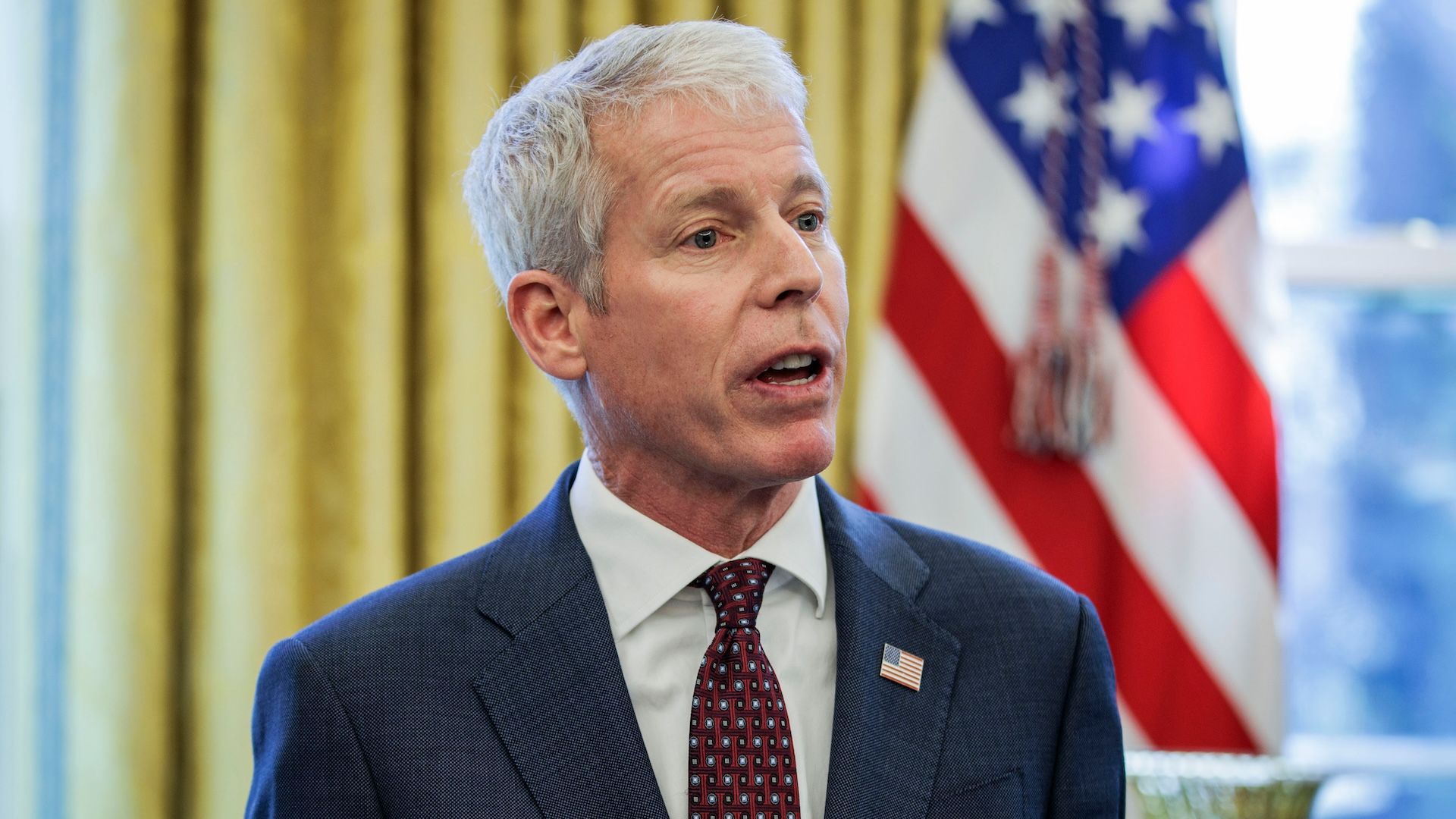
Energy Secretary Chris Wright has unused tools to further his goal of commercializing next-wave nuclear reactors, a new paper argues.
Why it matters: The new DOE boss is prioritizing nuclear right out of the gate.
- But while tech giants are unveiling lots of non-binding project plans, getting first-of-a-kind tech into commercial deployment is really hard.
Driving the news: Matt Bowen, a nuclear analyst with Columbia University's energy think tank, sees ways to build on DOE's various existing efforts.
- One is beefing up DOE's work with the Tennessee Valley Authority to deploy GE Hitachi's BWRX-300 small modular reactor.
- The department could strike a power purchase deal at higher prices than it pays for grid power for department sites in the area, like Oak Ridge National Lab.
Another idea is partnering with industry consortia, including hyperscalers and reactor companies.
- Bowen envisions a "payment-for-milestones" structure akin to NASA's work with SpaceX.
- DOE could also renegotiate existing cost-share agreements with companies including TerraPower and X-energy to ensure this milestones structure.
What we're watching: How Wright starts translating wide-angle goals into policy specifics.
4. 💻 On my screen: Ukraine's minerals and LNG

⛏️ Tapping Ukraine's mineral wealth is hardly a sure thing even if Trump officials strike a deal, a new Center for Strategic and International Studies primer explains.
- The big picture: The deal is "unlikely to be consequential in the medium term given the barriers to investment," the analysts write. It notes there's "very limited" data on whether the materials can be mined commercially, as well as security risks that will give resource companies pause.
- What we're watching: "Under the Trump administration, Ukraine, Europe, and NATO as a whole are likely to face a great decline in security guarantees from the United States without offering strategic resources or financial compensation in return," write Gracelin Baskaran and Meredith Schwartz. Full post.
🌎 UC-Berkeley resource economist Meredith Fowlie sizes up recent LNG analyses (including DOE's late-Biden-era study) and concludes the climate world should have higher priorities.
- Why it matters: "Of all the climate initiatives launched under the Biden Administration, the LNG pause is not the cause we should be fighting for," her new blog post states.
- The big picture: Fowlie writes that "banning fuel exports in one location will have limited impact on the big climate picture." She urges focus on other battles, like fighting for EPA methane policies and driving down renewables' costs. Full post.
5. 🎽 Catch up quick on policy: Sanctions and litigation

⚔️ The State and Treasury Departments imposed fresh sanctions that target Iran's oil exports, part of Trump officials' wider "maximum pressure" campaign.
- State of play: Sanctioned parties include the Iranian Oil Terminals Company and tanker operators and managers in India and China. AP has more.
⚖️ Environmental groups are suing USDA for pulling down climate-focused web pages.
- Friction point: The complaint alleges the "purge" of policies, guides, datasets and resources violates administrative procedure and freedom of information laws.
6. ⚙️ One tech thing to go: Mercedes' solid-state battery EV
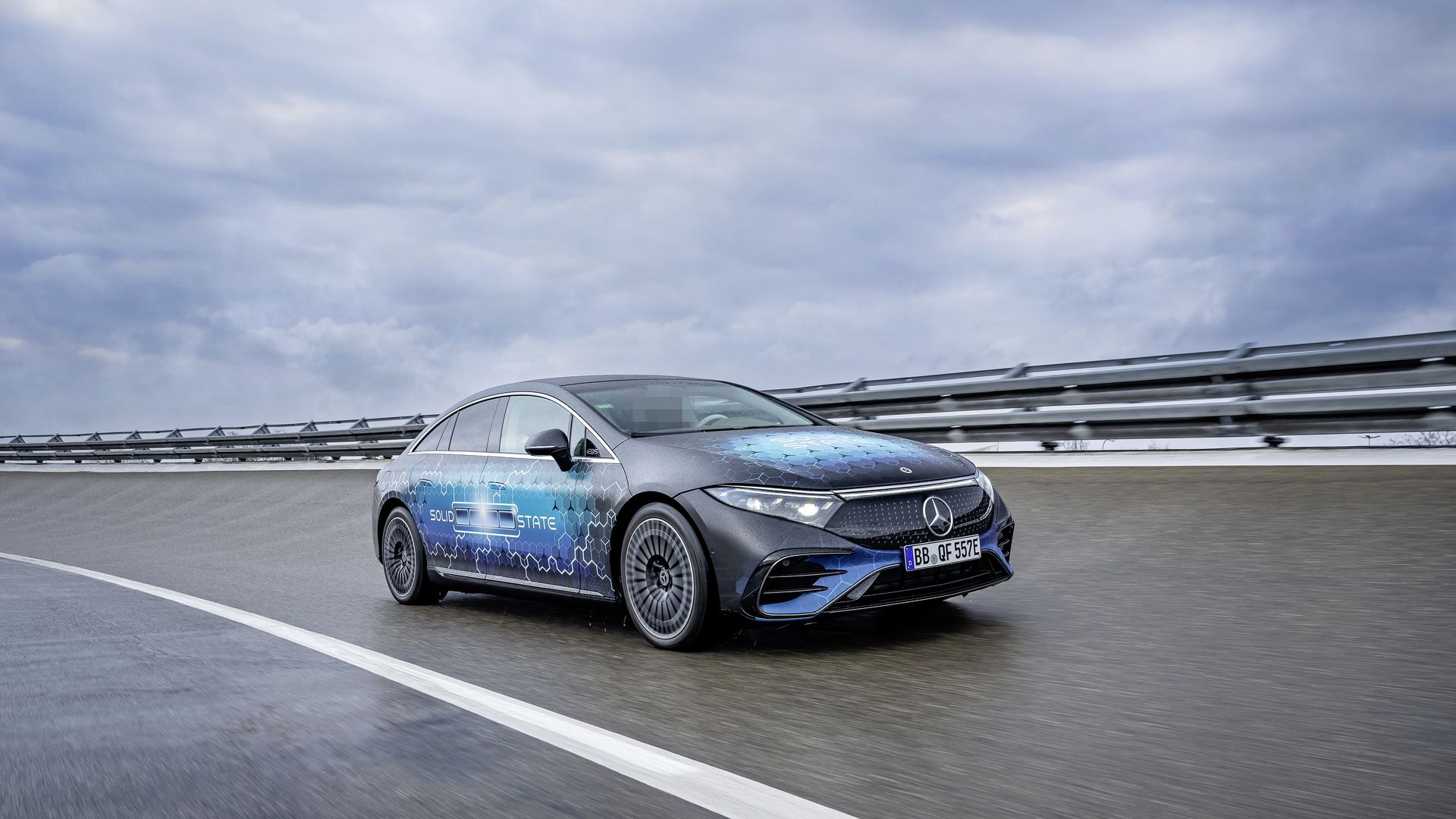
Mercedes has begun road testing a modified EQS sedan that uses solid-state batteries developed by U.S. startup Factorial Energy.
Why it matters: They expect the vehicle to have a range of up to 620 miles.
- Solid-state tech promises longer range, faster charging and higher safety than lithium-ion units with liquid electrolytes.
- Getting it into real-world use remains challenging, but multiple automakers are working on it. InsideEVs has more.
📧 Did a friend, colleague or an AI chatbot send you this newsletter? Welcome, please sign up.
🙏 Thanks to Chris Speckhard and Chuck McCutcheon for edits to today's edition, along with the brilliant Axios Visuals team.