Axios Generate

July 22, 2025

👀 I've got two exclusives to open today's edition before roaming around the beat, all in just 1,276 words, 5 minutes.
🌎 Axios House returns to NYC for Climate Week and the UN General Assembly (UNGA) this year from Sept. 21-24.
- We'll host a dynamic lineup of newsworthy conversations with visionaries and leaders who are shaping the global agenda. Interested in attending? Sign up for updates.
🎹 On this date in 1974, Stevie Wonder released the brilliant album "Fulfillingness' First Finale," which provides today's intro tune...
1 big thing: An exclusive look at the newest AI-nuclear tie-up

DOE's Oak Ridge National Lab and the AI startup Atomic Canyon will announce a collaboration today to streamline licensing for new nuclear plants.
Why it matters: Navigating the Nuclear Regulatory Commission process is complex and time-consuming, even as U.S. power demand rises and hyperscalers seek new electrons for AI data centers.
- The collaboration expands Atomic Canyon's business, which has focused on helping owners of existing reactors use AI in regulatory compliance.
The big picture: The plan is to "use high-performance computing to create high-fidelity simulations that ensure the safety of designs while accelerating licensing with artificial intelligence to automate aspects of the review process," the lab and company said.
State of play: Trump 2.0 officials are trying to speed up deployment of new plants of various shapes and sizes, including SMRs and gigawatt-scale units.
- One of President Trump's recent nuclear executive orders gives the NRC 18 months to reach final decisions on applications to build and operate new reactors.
"The NRC and the industry at large is going to need a lot of help to make it so they can hit those deadlines, and our view is artificial intelligence is going to play a key role in enabling that," Atomic Canyon CEO Trey Lauderdale tells Axios.
How it works: Oak Ridge is home to massive computing power deployed to help train Atomic Canyon's AI model that's based on over 50 million pages of highly technical NRC documents.
- ORNL director Stephen Streiffer tells Axios that using AI does not replace human beings, who perform final validation. Instead, he says, this use case for AI enables more speed and stronger design safety work.
- "Where AI becomes useful is that it's helping the regulator, and it's helping the power plant builder, make sure that there are no gaps in the safety analysis," he said in an interview.
Catch up quick: The ORNL-Atomic Canyon collaboration is part of a wider trend of harnessing AI to help with regulations for existing and future nuclear reactors.
- DOE's Idaho National Lab will use a Microsoft tool to create safety and analysis reports that are part of construction and license applications, the parties said last week.
- Also last week, Westinghouse and Google said they're working together to harness AI to make building Westinghouse reactors an "efficient, repeatable process."
The bottom line: "We're trying to get nuclear reactors onto the grid so that we can increase the energy supply and hopefully ultimately decrease the price to consumers in the U.S., where part of that demand itself is driven by AI," Streiffer said.
- "And we can make that happen more quickly with AI as well. And that's really exciting."
2. 👀 Exclusive: Grain Belt Express transmission developer plans gas connection
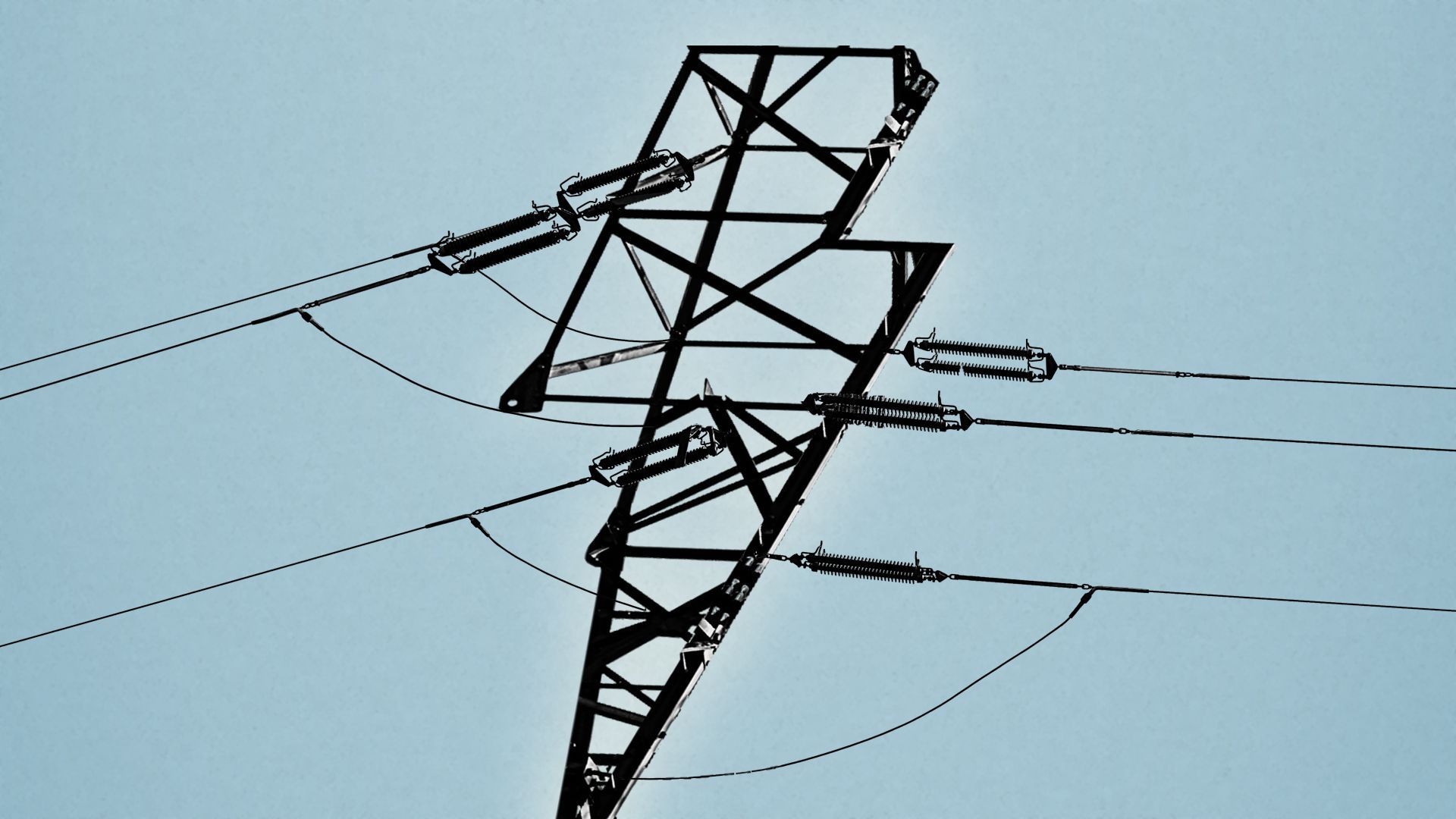
Invenergy, the company behind a huge proposed Kansas-to-Indiana transmission project facing political headwinds, will seek to connect a gas-fired power plant it's developing to the line, per a source close to the company.
State of play: Invenergy is also in active discussion with a company to bring existing coal-fired generation onto the proposed Grain Belt Express project, according to the source, who spoke on condition of anonymity.
Why it matters: Fossil fuel connections could change how the line is perceived. It currently would connect large wind resources in Kansas to points eastward and has long been viewed as a major boost to renewables.
- In late November, the Energy Department's loan office that backs low-emissions tech announced a conditional $4.9 billion loan guarantee for the project's first phase.
- Invenergy has touted the project's ability to "unlock access to one of the strongest combined wind and solar energy resources in the United States."
The intrigue: Prominent Missouri GOP opponents of the line criticize it as a green energy project and emphasize Biden-era federal support.
- GOP Sen. Josh Hawley of Missouri said on X this month that he secured a pledge from Energy Secretary Chris Wright that he'll be "putting a stop to the Grain Belt Express green scam."
- Hawley said he had spoken directly with President Trump. Missouri AG Andrew Bailey — a Republican who has launched a probe of the project — has similarly called it part of the Biden-era "green new scam."
- Missouri GOP officials also have argued that Grain Belt Express runs against the interests of farmers and other landowners and criticized use of eminent domain.
DOE did not provide comment but has broadly said it is reviewing Biden-era loan commitments.
The other side: Invenergy says the project will enable grid reliability and meet growing demand.
- It said Hawley is trying to kill a massive project that's "aligned with the President's energy dominance agenda."
Zoom in: Under FERC rules, Grain Belt Express LLC is currently managing its own interconnection process until the project becomes operational, but it's open to all generators, the source explained.
What we're watching: Whether the gas proposal and coal discussions help erode political opposition.
3. 🏃 Catch up quick: Congress, nuclear, data centers
🛑 A House GOP spending bill aims to halt a District of Columbia lawsuit against oil giants for allegedly misleading consumers about the climate effects of their products. Check out Section 832 of the bill.
👍 The U.K. government today announced that it's proceeding with the Sizewell C nuclear plant that it said would provide enough power for 6 million homes. Full announcement...Reuters coverage.
⚛️ Japan's Kansai Electric Power is taking initial steps toward a decision to build what would be the nation's first new nuclear plant since the 2011 Fukushima disaster.
💻 OpenAI and Oracle today announced an agreement to develop 4.5 gigawatts of data center capacity under the wider Stargate project. But a WSJ piece notes Stargate has been slow to get off the ground.
4. 📊 On my screen: Population and peak oil

🧑 Population change is highly overrated as a force that will influence global warming levels, analyst Hannah Ritchie writes in a post that blends her analysis and other researchers' work.
- Why it matters: This is true in both directions, she explains, because "large demographic changes happen over longer timescales than we have to get emissions down."
- Zoom in: A recent paper by the University of Texas' Mark Budolfson and others explores two pathways that are roughly two billion people apart in 2100 and six billion apart in 2200.
- What they found: Ritchie notes that "[w]hat's crucial is that the difference in global temperatures between the two scenarios is tiny: billions more people increase temperatures in 2200 by just 0.1°C."
- The bottom line: Assumptions about the pace of per-capita decarbonization affect things. But overall, in the very distant future when total population differences under varying trajectories become quite large, per-capita emissions are low enough anyway that there's little impact.
🛢️ Veriten analyst Arjun Murti's latest post revisits his view that oil demand isn't facing the kind of near-term peak that IEA — which sees demand growth ending in 2030 — and some others are projecting.
- The big picture: The post, which tracks with recent OPEC research, lays out several reasons why the peak is much further away. It challenges what he calls unrealistic assumptions about global gains in fuel economy and EV adoption, for instance, and demand gains outside China.
- The bottom line: "The difference between the more optimistic view of long-term oil demand that we and OPEC have versus the consensus view that oil is on the verge of being a sunset industry is at the heart of the long-term investment opportunity we see in the traditional energy sector."
5. ⚛️ Number of the day: $2.64 billion
That's how much global funding the nuclear fusion industry raised in the 12 months from July 2024 through July 2025, per a new tally of public and private finance.
Why it matters: It's a significant rise over the prior 12 months, but vastly more funding is needed to start bringing pilot plants online, per the Fusion Industry Association report based on a member survey. Full report
📧 Did a friend, colleague or an AI chatbot send you this newsletter? Welcome, please sign up.
🙏 Thanks to Chuck McCutcheon and Chris Speckhard for edits to today's edition, along with the brilliant Axios Visuals team.