A power titan calls transmission key to Trump's agenda

Add Axios as your preferred source to
see more of our stories on Google.
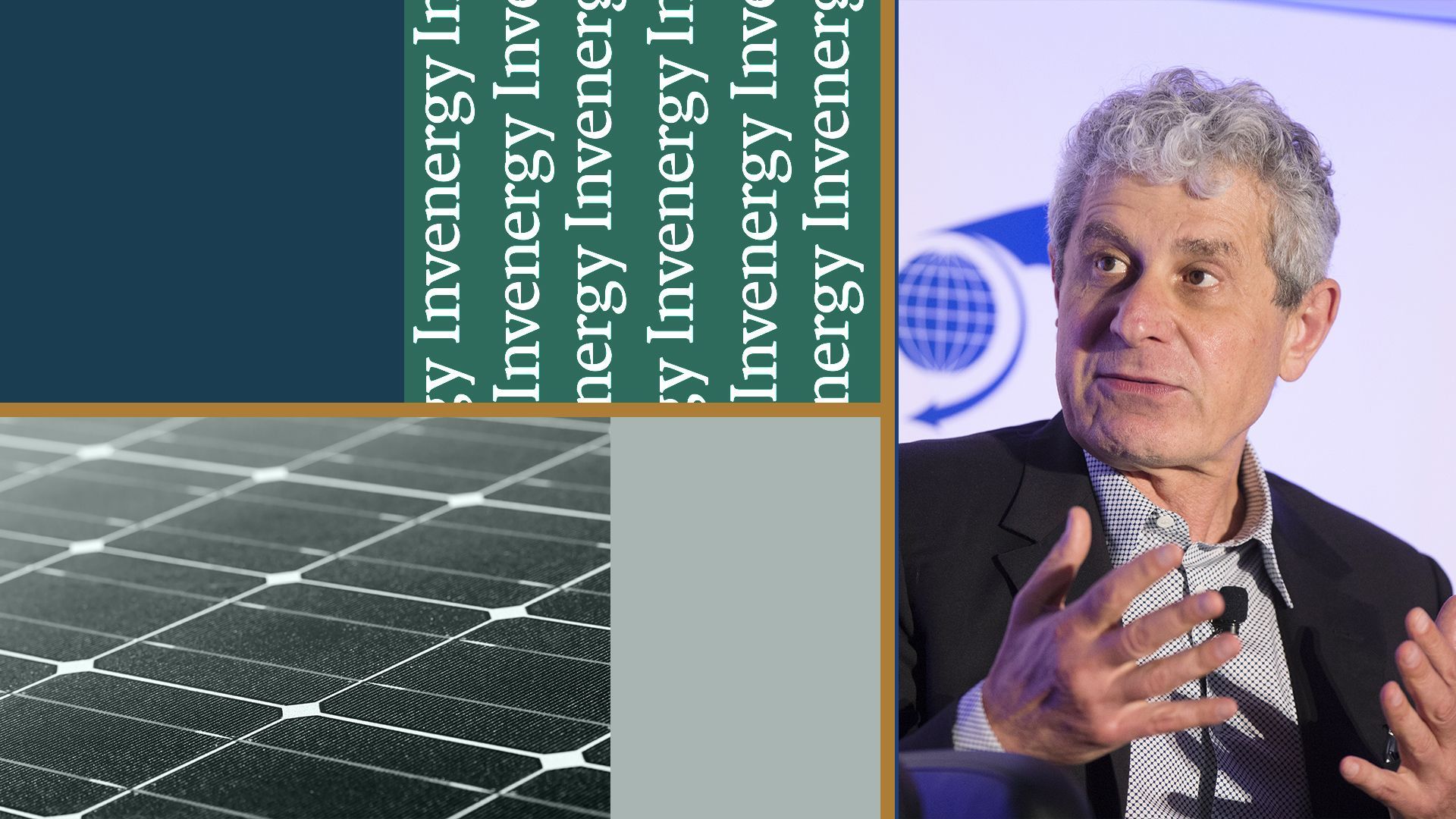
Photo illustration: Axios Visuals. Photo: Christinne Muschi/Bloomberg via Getty Images
Michael Polsky, founder and CEO of independent power giant Invenergy, has plenty on his plate. But one priority stands out.
- "If I could only be allowed to give one [piece of] advice to the administration, what to do, what's most important, I would say, 'Support transmission development. Everything else will come,'" he tells Axios.
Why it matters: The breadth of the privately held firm's assets and plans gives Polsky a wide-angle view as the U.S. faces newly rising power demand.
- Invenergy is among the country's largest renewable and storage developers.
- Its assets and pipeline also include large transmission and gas projects, and solar panel manufacturing.
Driving the news: Polsky called interregional transmission a tech-neutral key to unlocking and moving power needed for supporting AI and other large industries, and re-shoring manufacturing.
- That dovetails with the heavy White House emphasis on energy infrastructure — including grid updates — but Polsky has some specifics in mind.
What we're watching: In late November, the Biden-era DOE announced a conditional $4.9 billion loan guarantee for phase 1 of Invenergy's proposed five-gigawatt Grain Belt Express line from Kansas to Indiana.
- The first 2.5 gigawatt phase would run nearly 600 miles from Kansas to Missouri, but faces some political opposition, notably from GOP Sen. Josh Hawley (R-Mo.).
- Invenergy is in discussions with the administration about the loan financing, a spokesperson said.
"President [Trump] said we want to unleash American energy, we want to have abundance, low cost, independence. This is what Grain Belt is all about," Polsky said.
- Asked about other policy goals, he said FERC has historically not been "proactive" on large-scale transmission.
- "Perhaps the politicians have to take things in their hands and create some political enablers, legislation to support these initiatives," he said.
The big picture: Permitting help is key, but not enough, Polsky said.
- Independent developers need access to cost-recovery mechanisms to make the economics work — and reflect the resilience and reliability benefits the lines provide, he argues.
Catch up quick: The multinational Invenergy's 209 generation and storage projects total 33 gigawatts of capacity to date, mostly in the U.S.
- Roughly 20% comes from natural gas, according to a spokesperson.
- Its project pipeline has an estimated value of $150 billion, private equity giant Blackstone, a major investor, told the WSJ.
- Gas is playing a growing role thanks to customer demand from data centers and other factors, the Invenergy spokesperson said via email.
Threat level: Polsky warned that nixing IRA incentives could raise consumer costs for two reasons.
- One is that it makes solar, wind and storage less expensive.
- Another is that killing IRA subsidies would lessen competition with fossil fuels at a time of rising demand, which would also be inflationary for energy costs, he said.
- "If we remove all IRA support, prices for energy would go up, definitely," Polsky said.
The bottom line: Meeting Trump's energy goals will require a mix of sources, he said.
- "Dominance has to be with multiple resources...dominance means we have got to dominate in both renewables and fossil fuels."
