Axios Gaming

December 08, 2022

Happy Thursday.
It's a busy day on a busy week. Let's get into it.
Today's edition: 1,506 words, a 6-minute read
1 big thing: U.S. suing to block Microsoft-Activision deal
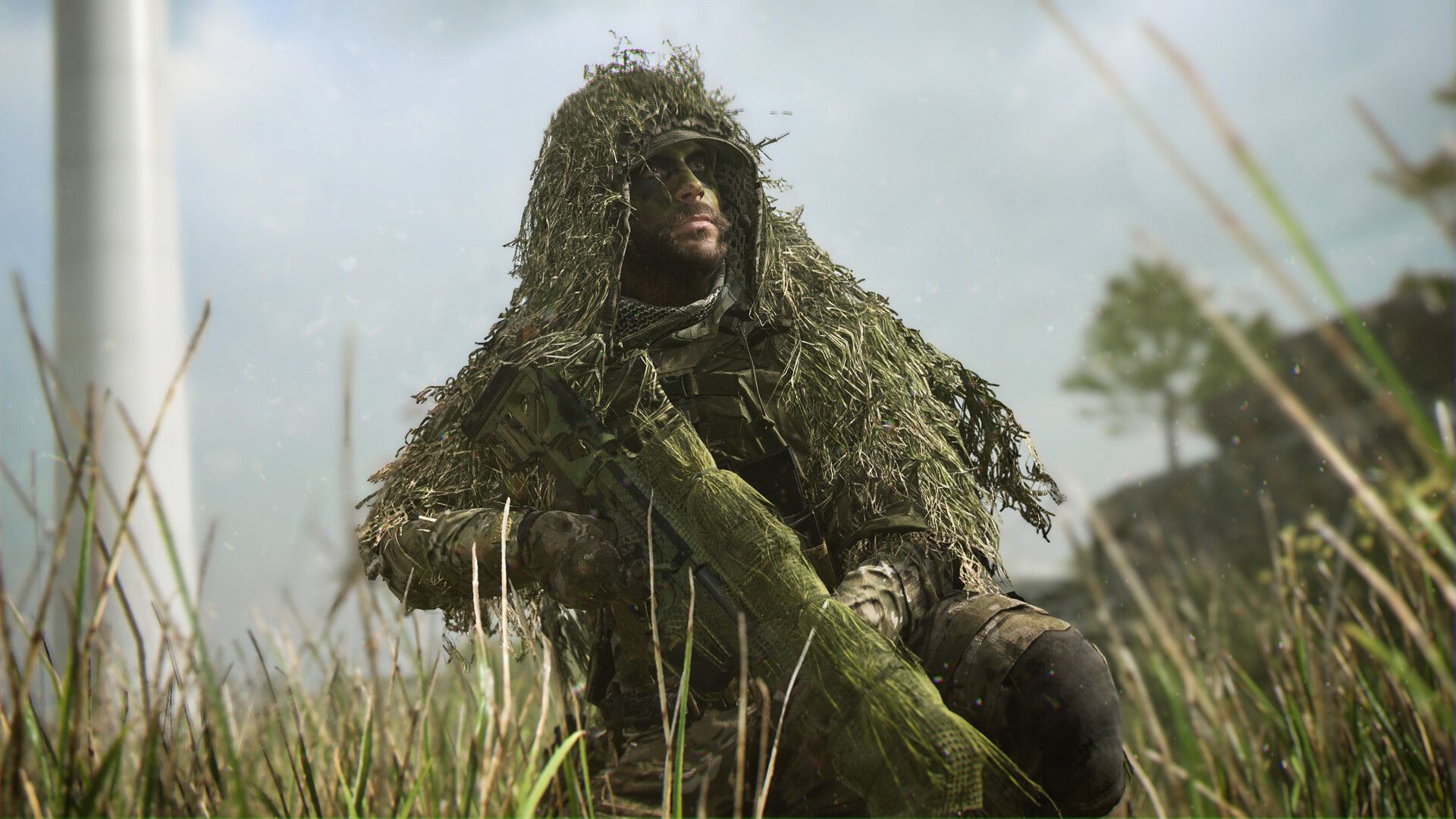
Call of Duty: Modern Warfare 2. Screenshot: Activision Blizzard
The Federal Trade Commission is suing to block Microsoft's $69 billion bid to buy Activision Blizzard.
Why it matters: If successful, it could stop the biggest attempted acquisition in game history and establish a ceiling, however high, for the kinds of mergers the FTC will tolerate.
What they're saying: “Today we seek to stop Microsoft from gaining control over a leading independent game studio and using it to harm competition in multiple dynamic and fast-growing gaming markets," Holly Vedova, director of the agency's Bureau of Competition, said in a statement.
- The commission voted 3-1 to sue.
The other side: "While we believed in giving peace a chance, we have complete confidence in our case and welcome the opportunity to present our case in court," Microsoft president Brad Smith said in a statement.
- In a message to Activision Blizzard employees today, CEO Bobby Kotick said: "We believe these arguments will win despite a regulatory environment focused on ideology and misconceptions about the tech industry."
Details: While a lot of attention has paid to what Microsoft might do with Activision's lucrative Call of Duty franchise, the FTC's announcement today zeroed in on Microsoft's practices regarding games made by Bethesda/ZeniMax, which Microsoft bought for $7.5 billion in 2020.
- "Microsoft decided to make several of Bethesda's titles, including Starfield and Redfall, Microsoft exclusives despite assurances it had given to European antitrust authorities that it had no incentive to withhold games from rival consoles," the FTC said in its statement.
Between the lines: Microsoft has spent considerable energy arguing that it would not keep Call of Duty from rivals like Sony PlayStation, should the deal go through.
- This week alone, it made an unprecedented push for the deal.
- On Monday, Microsoft president Brad Smith argued in a Wall Street Journal op-ed that his company's purchase of Activision would be “good for gamers." That same day, Communication Workers of America said that nearly 300 game testers at Microsoft’s ZeniMax studios (Bethesda, Arkane, Id Software and more) were voting to unionize and that Microsoft was expected to voluntarily recognize the union if the drive prevails.
- On Tuesday, Microsoft announced a 10-year deal to bring Call of Duty to Nintendo platforms, along with a pledge to continue to bring Call of Duty to Valve’s popular Steam marketplace on PC, should the purchase of Activision Blizzard go through. Call of Duty hasn't appeared on a Nintendo device since 2013 and returned to Steam only this year after several years' absence.
Between the lines: Labor conditions and access to Call of Duty, particularly on PlayStation, have been sticking points for politicians and regulators scrutinizing the Activision bid.
- Microsoft executives complained publicly this week that Sony wasn't trying to pursue a Call of Duty deal with them.
- Microsoft said today that it offered concessions to the FTC this week. Clearly the agency didn't bite.
2. 2. SCOOP: Activision sues California agency that sued it
Photo: Ina Fassbender/AFP via Getty Images
A public records lawsuit filed this week on behalf of Activision Blizzard aims to turn the tables on California’s Civil Rights Department, which has been suing the game maker over alleged sexual misconduct and pay discrimination at its workplace.
Why it matters: Activision has been in a bitter dispute with California’s state investigators and has repeatedly tried to get that case tossed.
- That contrasts with the $18 million settlement it agreed to last September with federal investigators over misconduct at the company.
Driving the news: The new suit, filed to California Superior Court in Sacramento, alleges that the California agency improperly slow-walked or withheld information about its contacts with the media and labor unions regarding the case.
Among the records the company seeks are communications between the Civil Rights Department (CRD) and reporters from the New York Times, the Washington Post and other news outlets.
- It also wants to see exchanges with the Communication Workers of America, the labor group that has repped some Activision Blizzard employees in their efforts to unionize since late 2021.
- And it says California has also failed to turn over documents regarding any internal concerns over the agency’s approach to mediating its issues with Activision.
- These documents should be produced through California’s Public Records Act, the suit asserts, and Activision wants a judge to force California’s hand.
What they’re saying: "No state agency is above the law, especially one charged with enforcing it," an Activision Blizzard spokesperson told Axios.
- The lawyer who filed the suit for Activision, Christopher Skinnell, says in the suit that the CRD “deliberately unleashed a hurricane of hostile media coverage against the company based on malicious and knowingly false assertions. It also worked with activists who contributed to the CRD’s media war.”
- The new lawsuit says the California complaint, which alleged widespread sexual misconduct for years at the company, was "unlawfully filed.”
- That’s a reference to an argument Activision’s lawyers have repeatedly made that California did not meet its obligations to mediate a settlement prior to suing two summers ago.
The other side: The CRD, for its part, has claimed that it is legally permitted to redact certain information from requests.
- In court, it has pressed Activision Blizzard to be more forthcoming in fulfilling California’s request for documentation related to the case.
- It has sought years of records involving potential misconduct at the company and, in a court filing this week, complained of Activision's "meritless objections" to some of its requests.
3. Need to know
🤔 An upstart rival to Twitch called Kick is backed by the crypto gambling site used by one of Twitch's most prominent streamers, the Washington Post reports.
🎮 One in five adults who play video games online say they've been exposed to white supremacist ideology while playing online in 2022, more than double that of last year, according to a study by the Anti-Defamation League.
😲 Sonic the Hedgehog co-creator Yuji Naka was among the game developers arrested for a second time in Japan over allegations of insider trading, the Asahi Shimbun reports.
- His former employer, Square Enix, responded to the first round of arrests by saying it had "set up a system to prevent insider trading."
✊ Gaming website Polygon has published a printable zine that walks game developers through the process of potentially forming a union.
☹️ IGN has laid off at least 10 workers amid restructuring, Kotaku reports.
🏆 The Game Awards host and industry hype man Geoff Keighley was profiled in The Ringer, with many quotes — some spicy — from a newsletter writer you may know.
🕹 Atari plans to publish Akka Arrh, a "lost" 1982 game from arcade pioneer Jeff Minter in February for PC, PlayStation and Switch. Only three arcade cabinets built to run the trippy game are said to exist.
4. The week ahead

The Block. Screenshot: Paul Schnepf, Future Friends Games
Friday, Dec. 9
- Dragon Age Absolution premieres on Netflix.
- Dragon Quest Treasures (Switch) and Jelly Car Worlds (Switch, Steam, Apple Arcade) are released.
Saturday and Sunday, Dec. 10 and 11
- A quiet weekend
Monday, Dec. 12
- Another quiet day
Tuesday, Dec. 13
- Crisis Core: Final Fantasy VII Reunion (PC, console) and High On Life (PC, Xbox) are released.
Wednesday, Dec. 14
- The Witcher 3 next-gen upgrade (PS5, Xbox Series) is released.
Thursday, Dec. 15
- Aka (PC, Switch) and Blacktail (PC, PS5, Xbox Series) are released.
- Sonic Prime premieres on Netflix.
Friday, Dec. 16
- My Little Pony: Mane Merge (Apple Arcade) and The Block (PC) are released.
5. Peter played... Rogue Legacy 2
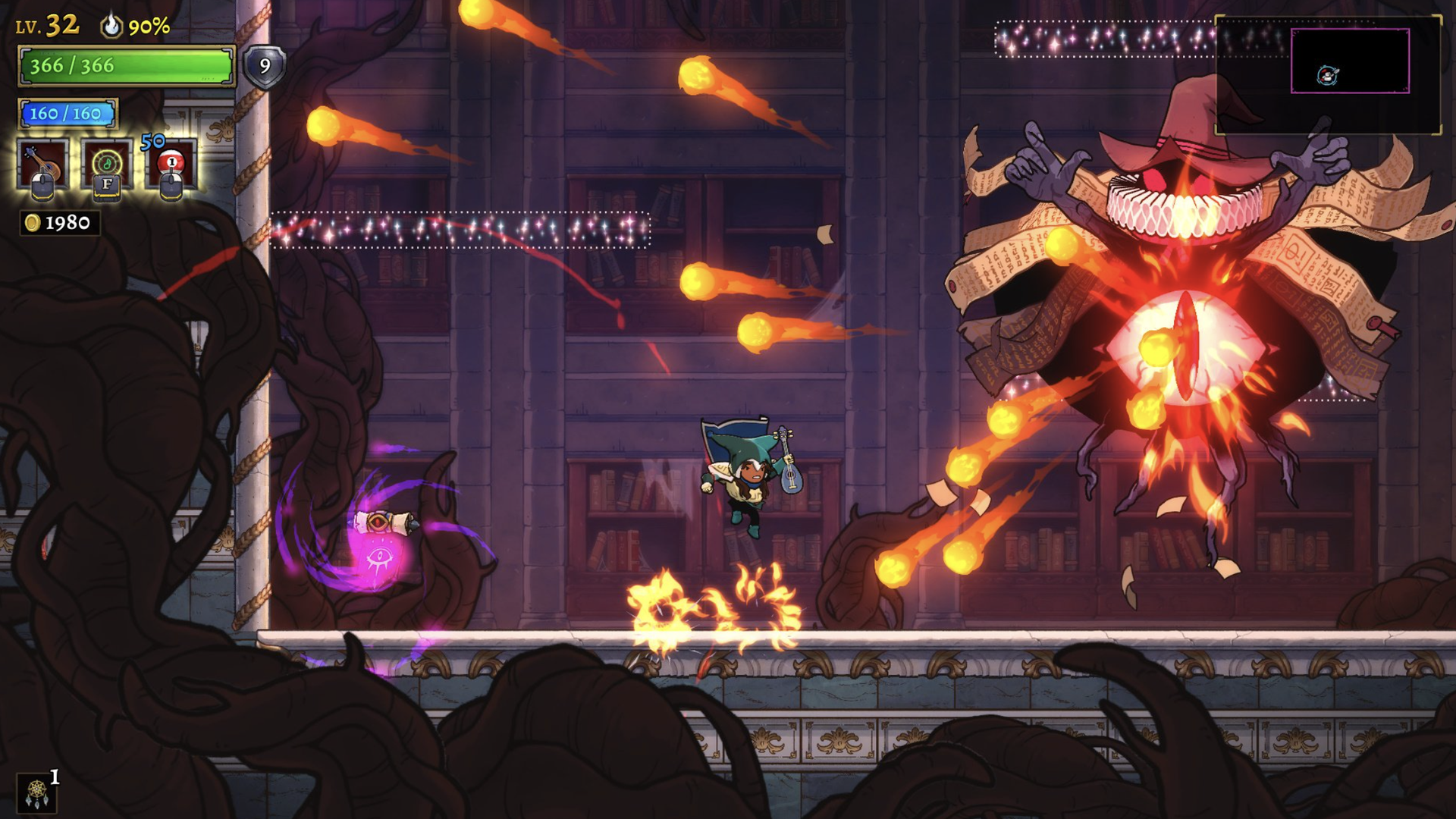
Rogue Legacy 2. Screenshot: Cellar Door Games
Nine years after the release of 2013’s Rogue Legacy, Axios’ Peter Allen Clark is happy to have jumped feet first into this year’s sequel: Rogue Legacy 2 (20 hours played and counting on the Steam Deck).
Rogue Legacy 2 is a 2D side-scrolling, dungeon crawler, rogue-like, meaning a run-based game where dying means starting back at the beginning.
- The gimmick is that, when you invariably die and start over, your character’s lineage lives on and you choose one of the descendants to play as next. There are varying classes (ax-wielding barbarian, magic-throwing wizard), multiple boons and traits that may make for a difficult run.
- For instance the “Hollow bones” trait makes you fall slower, the “Diva” trait blacks out the screen with only a spotlight on you and your enemies, and “Methemoglobinemia” turns your character blue.
The loop is similar to other rogue-like games: You play a run learning slightly more about the game, earning gold and experience, you slightly level a character up, you die. Oh, and it’s very difficult.
- Rogue Legacy 2 is a bit of Dark Souls, a bit of Spelunky and a bit of Binding of Isaac.
The sequel is built off its predecessor’s solid bones, and the biggest changes largely add depth.
- The expanded progression system lets you level up characters in, oh, so many ways. The map is much larger. There are more classes, more relics to boost characters, more weird lineage traits that can dramatically change how each run is played.
- And there’s a new art style. Instead of the pixelated look of the first Rogue Legacy, the sequel opts for a very clean, often pretty, animated approach.
After 20 hours, I’ve beaten half of the bosses and am still learning about the many, many items, traits and abilities. I’ll be playing more.
🎁 Like the newsletter? Refer Axios Gaming to your friends to spread the word and get free stuff in the process. Follow the link here to begin.
🐦 Find me on Twitter: @stephentotilo.
Thank you to Peter Allen Clark for editing and Rob Reinalda for copy editing this newsletter.
Phew