Axios Gaming

February 07, 2022

Happy Monday, everyone. Stephen here with an edition of the newsletter that you could say I've been working on since October (see item 3).
A heads up: Join Axios virtually at our inaugural What’s Next Summit on April 5. Register here to attend livestream sessions with discussions on trends that will revolutionize our future.
Today’s edition is 1,269 words, 5 minutes.
1 big thing: No slowdown in sight
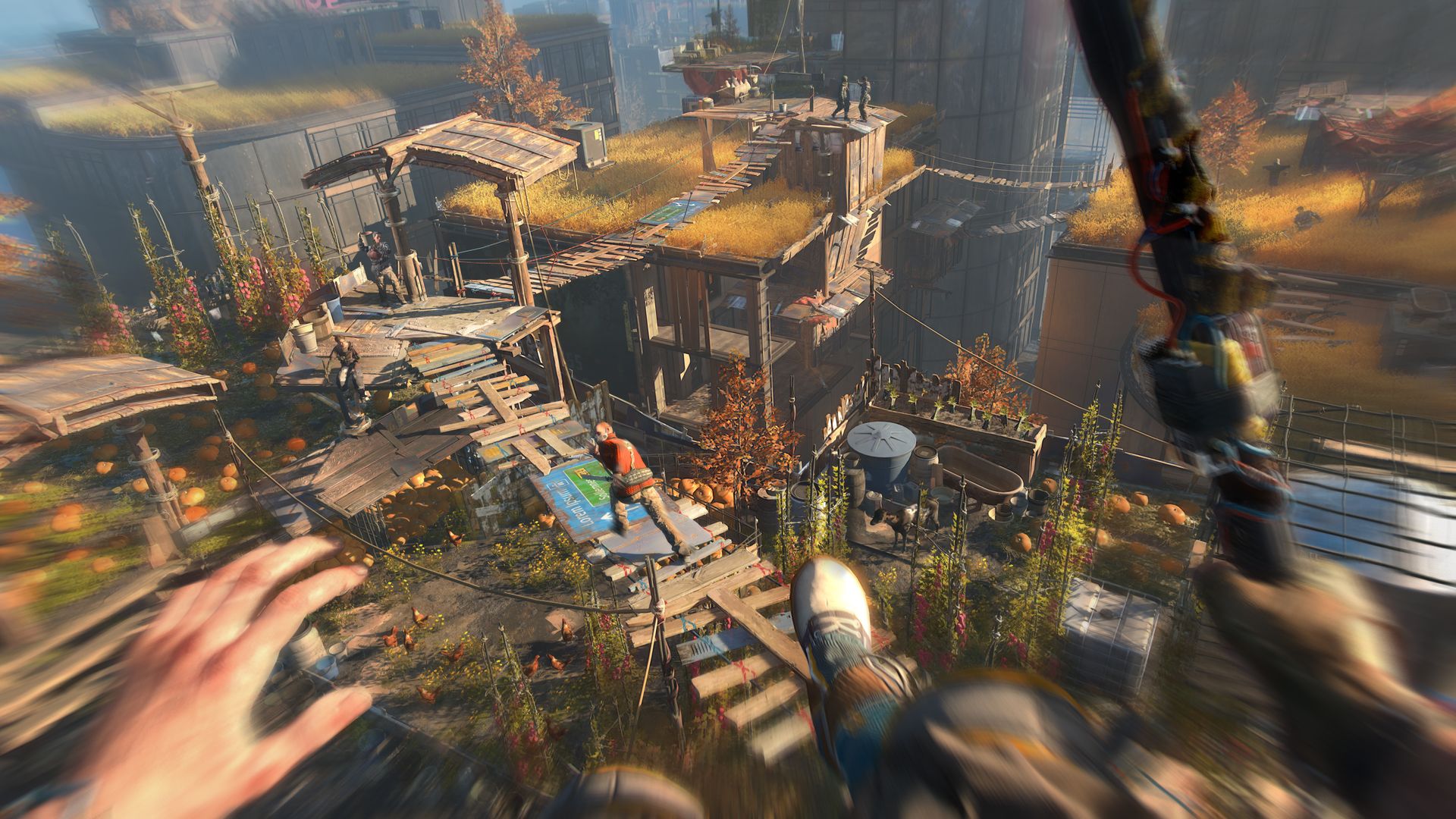
Dying Light 2. Screenshot: Techland
Zombies-and-parkour game Dying Light 2 had a huge launch last week, and one big number shows how big it was: 274,983.
Why it matters: That was the new game’s peak concurrent player count on the PC gaming service Steam over the weekend — and the kind of gargantuan audience figures that attest to a gaming market that isn’t slowing down.
Other recent eye-poppers include:
- Nintendo’s announcement that Pokémon Legends: Arceus sold 6.5 million copies in its first week.
- Square Enix’s news that Bravely Default Brilliant Lights, a mobile spinoff to a largely Nintendo-based franchise, has attracted 4 million users in less than two weeks.
- Microsoft's recent boast that December’s Halo Infinite and October’s Forza Horizon 5 have reached 20 million and 18 million players, respectively.
Between the lines: Each number represents a story, and all represent efforts to maximize a game’s reach.
- Some franchises are shifting toward mobile where bigger audiences await.
- Microsoft is pursuing a strategy of maximizing a game’s availability by putting its games into its popular Game Pass subscription service as well as offering them via console, PC and even, thanks to streaming, mobile. It also launched the multiplayer mode of Halo Infinite for free.
- Dying Light 2’s number pops because it’s a sign of more traditional success: a game sold at full price, somehow hitting a concurrent player count on Steam that is nine times higher than its successful predecessor (and the 23rd best peak for any game on Steam ever).
Yes, but: Big numbers don’t always hold up.
- Amazon’s long struggle to make a hit video game appeared over when its New World game launched last September and reached over 900,000 concurrent players on Steam, but in the last 30 days, its concurrent player count has peaked at just over 100,000.
- Despite a hot start, Halo Infinite on Steam has already fallen to under a 10th of its peak, dropping out of Steam’s top 100 games played.
- Games often fall when players tire of the game, find it lacking in replayability or wander to other titles due to the lack of additional content.
What’s next: Dying Light 2’s creators, clearly enamored with numbers — even silly ones like the since-walked-back 500 hours of playtime — have promised five years of continued support for the game.
2. That’s a no on NFTs

itch.io
Some video game companies are bullish on NFTs. Some companies hedge. Now indie-friendly online retailer itch.io has a take, and it’s a clear vote against.
- “NFTs are a scam,” the marketplace tweeted Saturday.
- “If you think they are legitimately useful for anything other than the exploitation of creators, financial scams, and the destruction of the planet the[n] we ask that please reevaluate your life choices.”
- Proponents of gaming NFTs argue that they will empower players to cash in on virtual items they develop by playing and can be eco-friendly. But critics say they’re a pyramid scheme that’s too deeply tied into tech that has a large carbon footprint.
Between the lines: Itch.io’s stance isn’t surprising, given the platform’s rep for favoring artistic expression.
- But the position also helps further clarify just where the growing array of NFT-based games will wind up. Not on itch, clearly, and not on dominant PC marketplace Steam, which bans them. Xbox’s marketplace isn’t looking very likely, either.
- GameStop is a likely contender, given its plans for an NFT marketplace.
3. You ask, we answer
It’s time for our weekly Q&A. We’ve got a special one today, as I’m finally answering a question a reader sent us in October about bad video game endings.
Q. Is there a reason that a AAA game can excel so much and then ostensibly forget its ending? Why so?
A. To answer this one, I contacted veteran video game writer Darby McDevitt, who has been making games — and game endings — for over a decade, almost all for the Assassin's Creed series.
- The reader didn’t ask about AC, but I figured he'd have something worth sharing.
Players don’t finish most games, McDevitt notes. But a lot of attention, from players, press and game makers, is paid to how games start.
- “Studios have a massive incentive to throw all their resources into making sure a player’s first impression is a stellar one, and less incentive to worry about if they will finish it,” McDevitt said.
- Second, he said, remember the difference between plot and story. “It has been my experience that while many games in the AAA space have coherent, straightforward plots that help propel the action and the player motivation, they don’t often have stories with enough dramatic tension to support a captivating ending.”
- Players will even put up with bad stories if the game plays well, more so than they'd do the opposite. That can set a gamer up for disappointment. “They might be playing a game that they enjoy on a gameplay level, without noticing that the story isn’t actually stirring up a sufficient amount of dramatic tension … and by the time they reach the ending, it just fizzles out.”
Note from Stephen: I’ll have more from McDevitt this week on Assassin’s Creed’s endings in particular.
- For now, if you have questions about other video game topics, send them over. We might even get an expert to weigh in, even if it takes us four months.
4. Need to know
🤔 Resident Evil 4 lead creator Shinji Mikami said he wrote the 2005 game’s story in three weeks and would like to see any future remakes improve it, VG247 reports.
😀 Tomorrow Children development house Q Games achieved the rare feat of reclaiming its intellectual property from original publisher Sony thanks to studio chief Dylan Cuthbert’s patient “diplomacy,” GamesIndustry reports.
👩🏻⚖️ Thursday’s item about a music promoter who Ubisoft is suing over the rights to stage Assassin’s Creed concerts merits a follow-up. The promoter disputes the publisher’s claim, telling Axios: “Massimo Gallotta Productions denies Ubisoft’s allegations and meritless claims. MGP will vigorously defend against this action, file claims of its own, and seek to recover its attorney’s fees as well.”
5. Worthy of your attention
The Unnerving Rise of Video Games that Spy on You [Ben Egliston, Wired]
Consternation about digital technologies harvesting our data is increasingly common. Video games are by no means free of critique (see, for instance, concerns around inciting violent behavior, or exposure of children to gambling-like practices), but they have been less afflicted by these critiques regarding data and privacy. While critique of the CCP’s use of games to collect biometric data represents an awareness of how video games might enact surveillance, it is only one such example. We need to think critically and lucidly about video games as mechanisms for extraction and accumulation.
6. When death makes you older
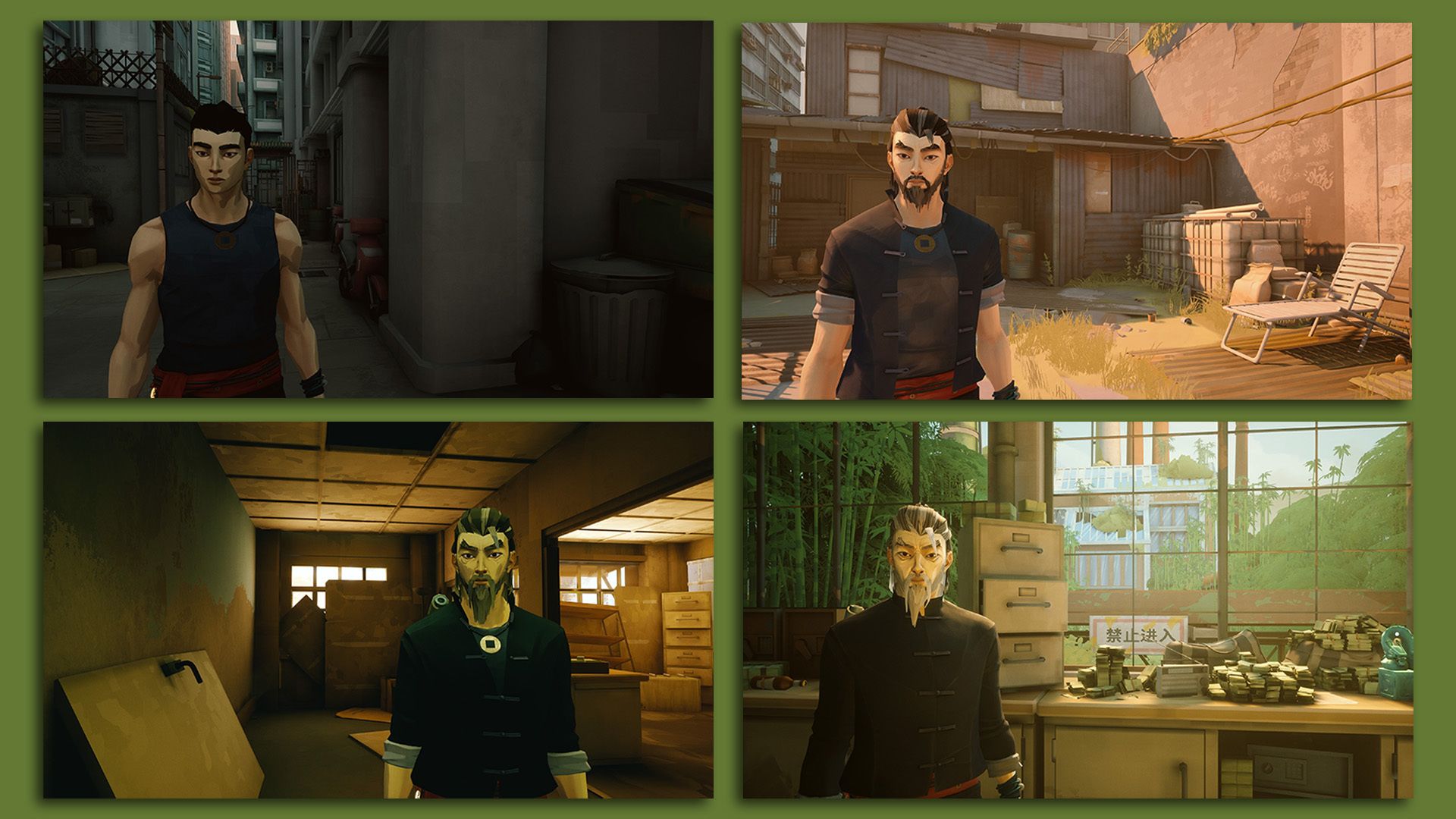
Sifu. Screenshot: Sloclap/Axios
The new PC and PlayStation martial arts action game Sifu — which is fashioned to feel like an interactive kung fu movie — uses an unusual system that revives and ages players' characters each time they are killed in combat.
Details: You start at age 20 but after your first “death,” you revive as 21. After a second death, you revive at 23, etc.
- Stumble your way into your 70s and it’ll soon be game over, forcing a restart at a younger age.
- Along the way, your character hits harder but becomes more fragile with each passing decade, an optimistic implication that at least something improves physically as your hair grays.
- The goal is to win while young, but it’s very hard and only for players who will enjoy a steep challenge that requires repetition and perfection.
For more reading: The Verge’s Ash Parrish interviewed Sifu’s developers about the game’s stiff challenge and about another controversy: the implications of a game about Chinese culture made by a predominantly white studio.
🎁 Like the newsletter? Refer Axios Gaming to your friends to spread the word and get free stuff in the process. Follow the link here to begin.
🐦 Find us on Twitter: @megan_nicolett / @stephentotilo.
Used an original Kinect on Saturday. Not a joke, everyone. Just sharing.