Axios AM

August 08, 2022

1 big thing — Scoop: Trump's telltale toilet
Photos from Maggie Haberman via Axios
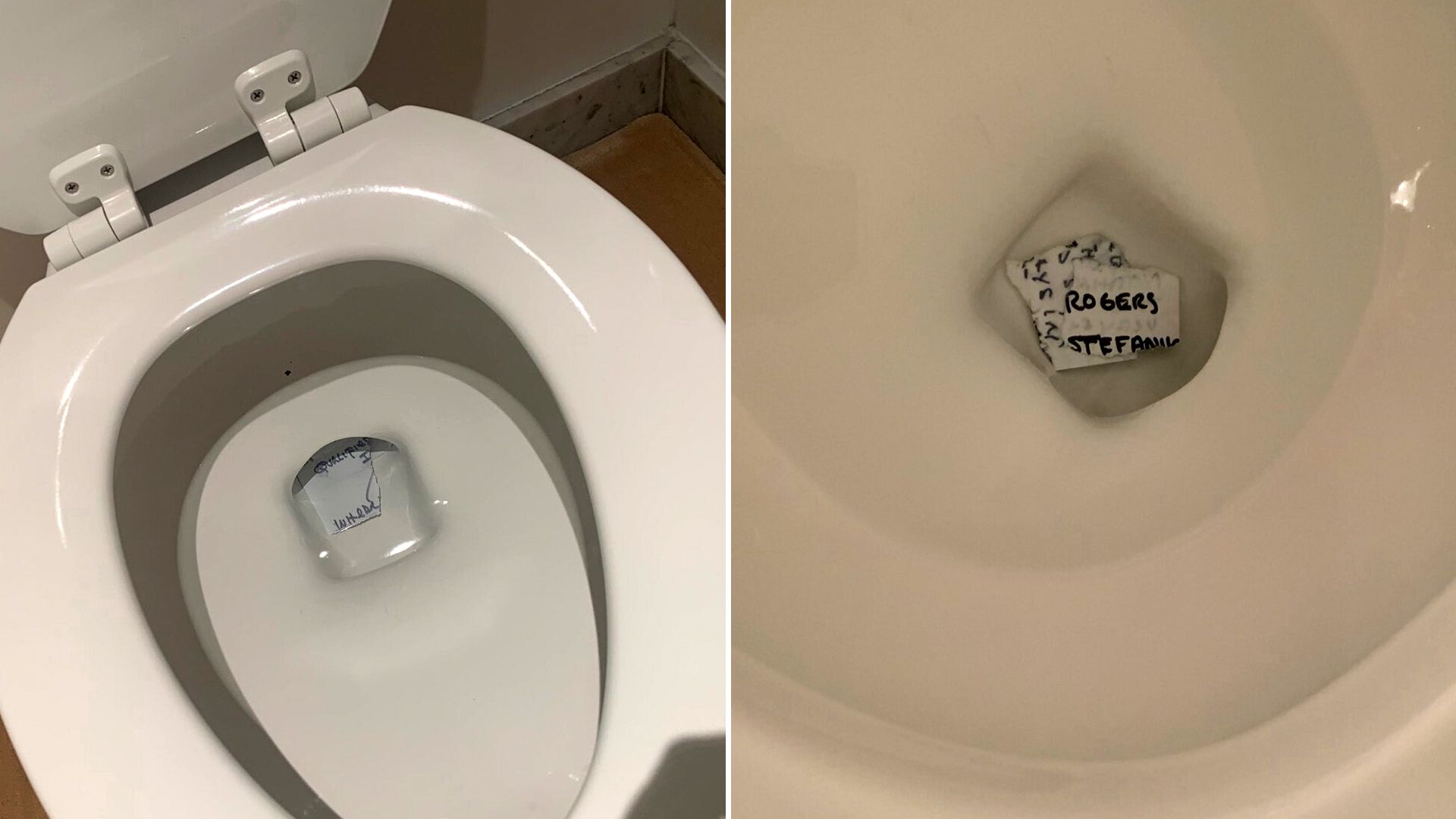
Remember our toilet scoop in Axios AM earlier this year? Maggie Haberman's forthcoming book about former President Trump will report that White House residence staff periodically found wads of paper clogging a toilet — and believed the former president, a notorious destroyer of Oval Office documents, was the flusher.
- Why it matters: Destroying records that should be preserved is potentially illegal.
Trump denied it and called Haberman, whose New York Times coverage he follows compulsively, a "maggot."
- 👀 Well, it turns out there are photos. And here they are, published for the first time.
Haberman — who obtained the photos recently — shared them with us ahead of the Oct. 4 publication of her book, "Confidence Man: The Making of Donald Trump and the Breaking of America."
- A Trump White House source tells her the photo on the left shows a commode in the White House.
- The photo on the right is from an overseas trip, according to the source.
Trump spokesperson Taylor Budowich told Axios: "You have to be pretty desperate to sell books if pictures of paper in a toilet bowl is part of your promotional plan."
- "We know ... there's enough people willing to fabricate stories like this in order to impress the media class — a media class who is willing to run with anything, as long as it anti-Trump."

Between the lines: The new evidence is a reminder that despite the flood of Trump books, Haberman's is hotly anticipated in Trumpworld.
Haberman's sources report the document dumps happened multiple times at the White House, and on at least two foreign trips.
- "That Mr. Trump was discarding documents this way was not widely known within the West Wing, but some aides were aware of the habit, which he engaged in repeatedly," Haberman tells us.
- "It was an extension of Trump's term-long habit of ripping up documents that were supposed to be preserved under the Presidential Records Act."
The handwriting is visibly Trump's, written in the Sharpie ink he favors.
- The scrawls include the name of Rep. Elise Stefanik of upstate New York, a Trump defender who's a member of House Republican leadership.
2. Biden's BFD

President Biden has defied expectations, earning a legacy as a president who got big things done despite a deeply divided Congress, Axios' Margaret Talev and Alayna Treene write.
- After passing the Senate 51-50 yesterday — with Vice President Harris casting the tie-breaking vote after an all-night session — Democrats' climate, health and tax bill is expected to clear the House on Friday.
🔎 Zoom in: The legislation opens the door to Medicare negotiating lower prescription drug prices, and is expected to push the nation toward clean energy by making it cheaper.
The bill joins a list of hard-fought Biden-era legislation shaping the U.S. economy, society and foreign policy for decades to come — despite the constraints of a 50-50 Senate:
- The American Rescue Plan (COVID stimulus).
- The Infrastructure and Jobs Act.
- Confirmation of Justice Ketanji Brown Jackson, the first Black female on the Supreme Court.
- Gun safety legislation.
- CHIPS (semiconductor manufacturing and U.S. competitiveness with China).
- Veterans' health care expansion.
🥊 Reality check: It's unclear how much this list will help Biden in November's midterms, or if he seeks re-election in '24.
- Biden's approval rating has been stuck below 40%.
- Inflation is still very real.
- Some of the effects of the Inflation Reduction Act passed by the Senate yesterday — including lower prescription drug prices for a broad number of Americans — may take months or years to be felt.
Between the lines: As Obamacare showed Dems in their 2010 "shellacking," getting major legislation through Congress doesn't always help the party in power — at least not in the short run.
👀 What we're watching: The political challenge for Biden and his party now turns in large part to messaging — from the bully pulpit and in a campaign advertising blitz between now and November.
3. What the bill means for climate

Illustration: Annelise Capossela/Axios
4. 📷 1,000 words

Sen. Bernie Sanders sits in the shade on the Senate steps yesterday after an all-night "vote-a-rama" on the Inflation Reduction Act.
5. 🚚 Two Americas Index: Why we move
 Open embedded content from datawrapper.dwcdn.net
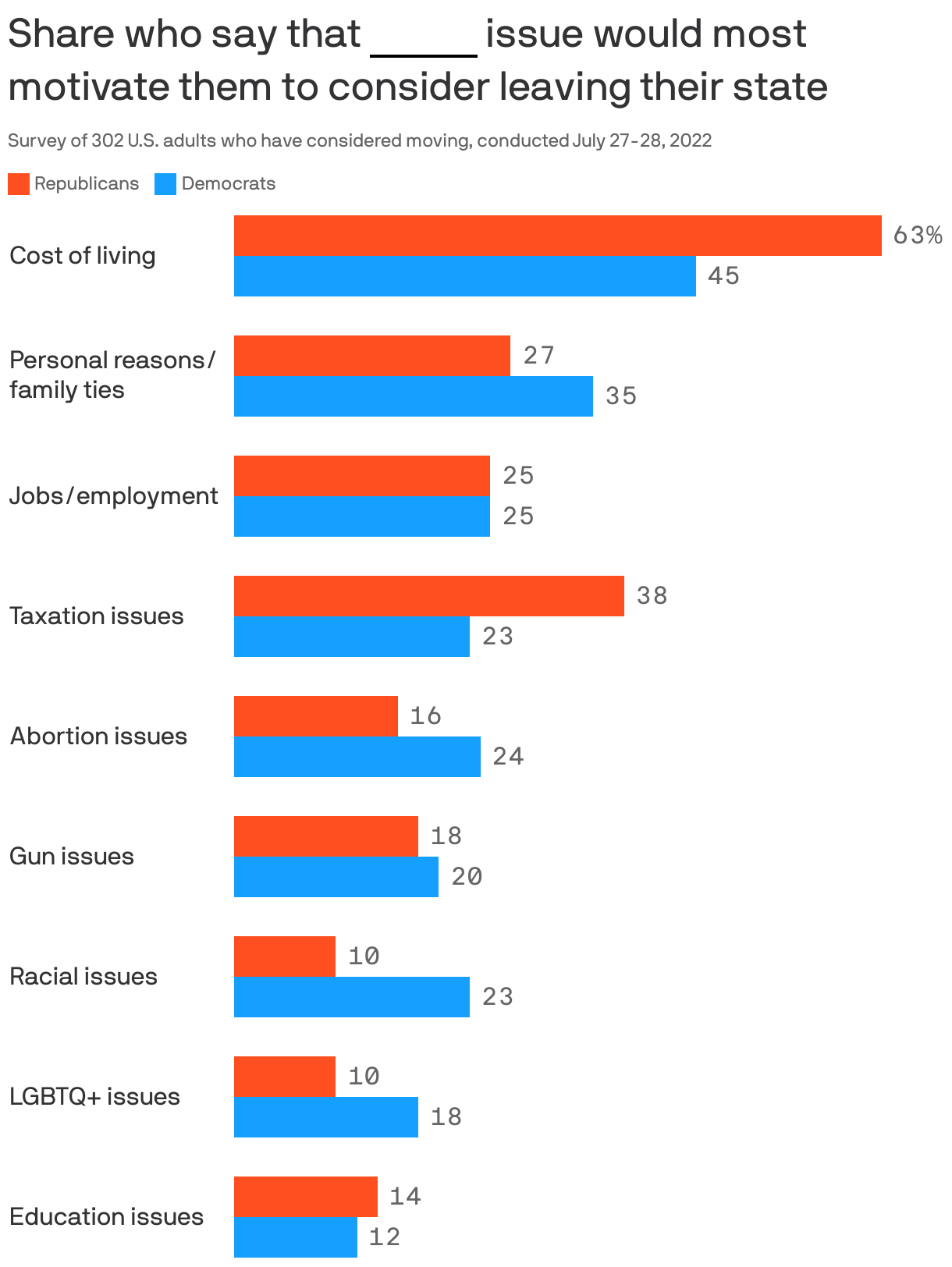
Democrats thinking about moving to another state are about twice as likely to consider blue states than red or swing states.
- Republicans' preference for red states is even more pronounced, Axios managing editors Margaret Talev and David Nather write from our Axios-Ipsos Two Americas Index.
Why it matters: Ideological self-segregation is only accelerating in these inflationary, post-Roe times.
- "[P]eople look to be going to a safe space ... for their ideological identity," Ipsos pollster and senior vice president Chris Jackson said.
By the numbers: Republicans were more likely to consider moving to red states (51%) than blue states (20%) or swing states (28%).
- Democrats were more likely to consider moving to blue states (48%) than red states (25%) or swing states (27%).
Abortion rights, racial equality and LGBTQ protections were key factors influencing Democrats' decision-making.
- Republicans were more likely to be motivated by lower taxes.
Between the lines: Politics isn't the main reason people consider moving to another state. The biggest drivers are economic — cost of living and jobs, or personal or family reasons, the poll found.
The intrigue: 38% of respondents eyeing a move said they were interested in a state where their vote would "count" more.
6. 📚 Quote for the road
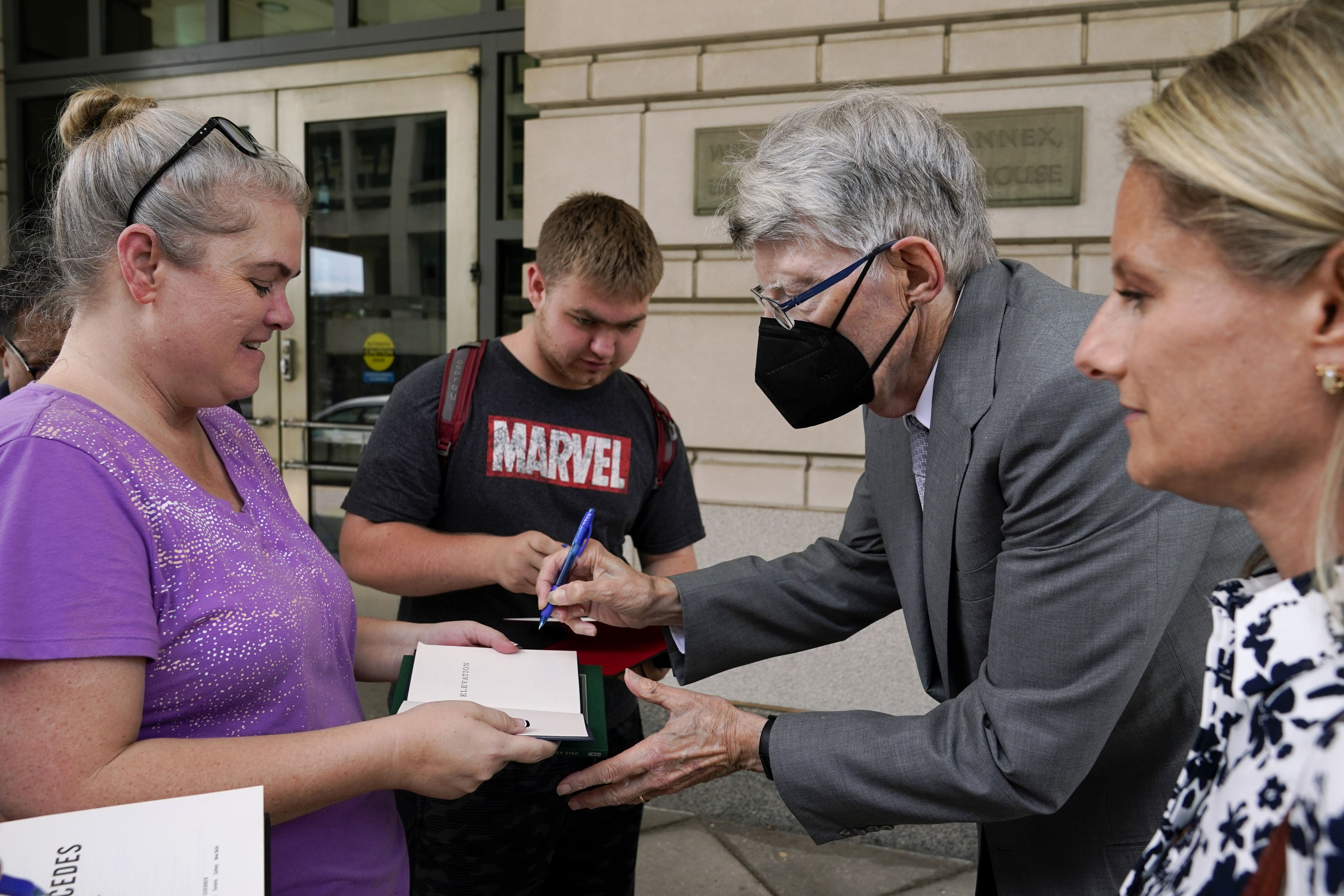
Bestselling author Stephen King, 74, when asked to identify himself in federal court in Washington last week, as he testified in an antitrust case against the merger of Penguin Random House and Simon & Schuster:
"My name is Stephen King. I'm a freelance writer."
Axios AM

Catch up with the most important news of the day