Axios Future of Mobility

April 22, 2026

👋 Hi again! I'm back from the Bay Area, where I spent a lot of time riding around in robotaxis and ride-share vehicles. A little bit on that👇, with more to come.
✈️ Today, though, we're looking at innovations in aerospace, which can't come fast enough for airlines grappling with soaring prices for jet fuel.
- 😲 One sobering assessment from the head of the International Energy Agency: Europe could run out of jet fuel within weeks. What will that mean for your summer vacation?
1,679 words, a 6½-minute read.
1 big thing: Time to rethink the airplane
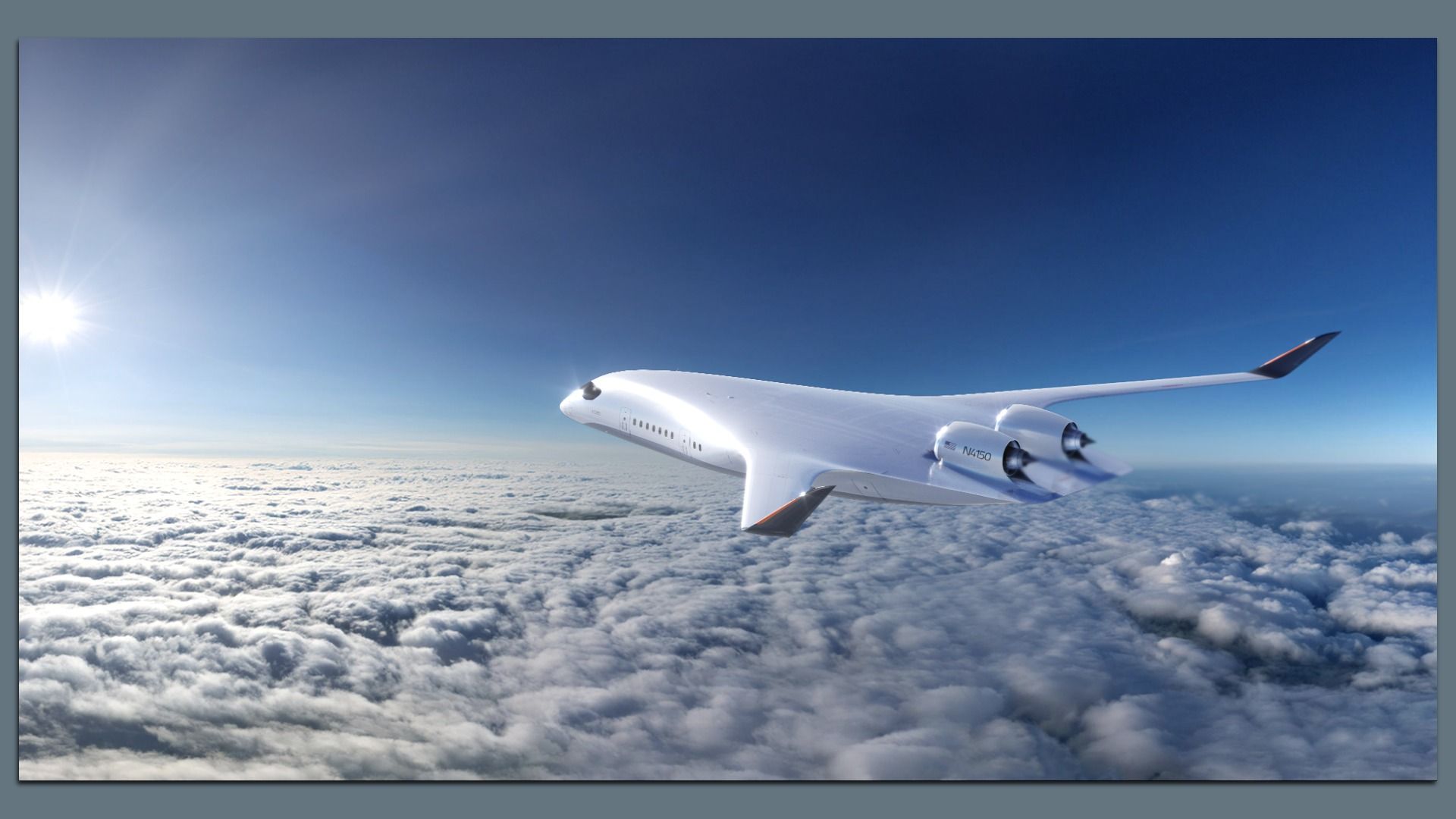
Airlines are raising fees and cutting routes as the cost of jet fuel soars, which could revive interest in a radical airplane design that promises big fuel savings.
Why it matters: Fuel is airlines' single biggest cost — and one of the few they can't control, as shown by the volatility in oil prices during the Iran war.
- A clean-sheet airplane design that improves aerodynamics could be a game-changer — if developers can muster the financial and technical resources needed to get their designs off the ground.
The big picture: Blended-wing body aircraft — planes that look like manta rays, with the fuselage and wings morphed into one fluid shape — are suddenly looking more attractive.
- Lower drag resistance and better lift promise to cut fuel consumption by 30% or more.
- "If somebody can make it work, they're going to start printing money," Graham Phero, an aviation patent attorney at Sterne Kessler, tells Axios.
Two aerospace startups, both based in southern California and stocked with industry veterans, are pushing to bring them to reality.
- Jet Zero, which has raised $226 million to date and is backed by United Airlines and Alaska Airlines, has a $235 million Defense Department contract to develop a full-size demonstrator by 2027.
- Natilus, another startup, announced $28 million in Series A financing earlier this year led by Draper Associates and various strategic investors in aerospace, defense and global freight logistics.
Context: The blended-wing concept isn't new. It dates back to the 1940s, when U.S. aircraft designer Jack Northrop pioneered the idea of "flying wing" aircraft, later developed as the B-2 stealth bomber, which proved the concept works.
- Now, after advances in materials, computers and fly-by-wire controls, it is becoming more feasible as a commercial plane.
State of play: Between its Air Force contract, other government incentives and commercial commitments, JetZero says it has raised or secured more than $1 billion in financing.
- Progress on the full-scale demonstrator is "on track and on budget," a spokesperson says, and JetZero plans to break ground on a new factory in Greensboro, North Carolina, in mid-June. It's looking to enter commercial service in the early 2030s.
- Natilus's latest funding will enable the company to complete its first full-scale prototype of a regional cargo plane, which it hopes to be FAA-certified by the end of the decade.
Zoom in: As a passenger jet, JetZero's design could replace aging midsize jets on transcontinental and some international routes up to 5,000 nautical miles.
- It would carry about 250 passengers in a wide, multi-aisle "theater-style" cabin with larger overhead bins and more personal space.
- The tradeoff: fewer window seats, although virtual screens could provide everyone with a view of the clouds.
Natilus plans to move freight before passengers. But it's also working on a 200-passenger aircraft intended to compete with the Boeing 737 MAX and Airbus A321-neo, which would arrive in the early 2030s.
- Natilus says it's in talks with major carriers, and claims more than 570 pre-orders, worth $24 billion. Among them is SpiceJet of India, which plans to purchase 100 aircraft, once the plane is certified.
Reality check: Bringing these airliners to market is far from certain, says AeroDynamic Advisory consultant Richard Aboulafia.
- "There is something here," he says of blended-wing designs. "It's just that there are big, big hurdles."
- Companies need a path to FAA certification, of course, but they also need to build factories and establish global operations to support their aircraft.
- "JetZero has raised $1 billion or so. They have $11 [billion] or $12 [billion] to go. Entering this market is ridiculously expensive," Aboulafia said.
The bottom line: Innovations in aircraft design could make global airlines more resilient to geopolitical volatility and help them achieve their long-term sustainability goals — if they can get off the ground.
2. Filling the short-hop gap
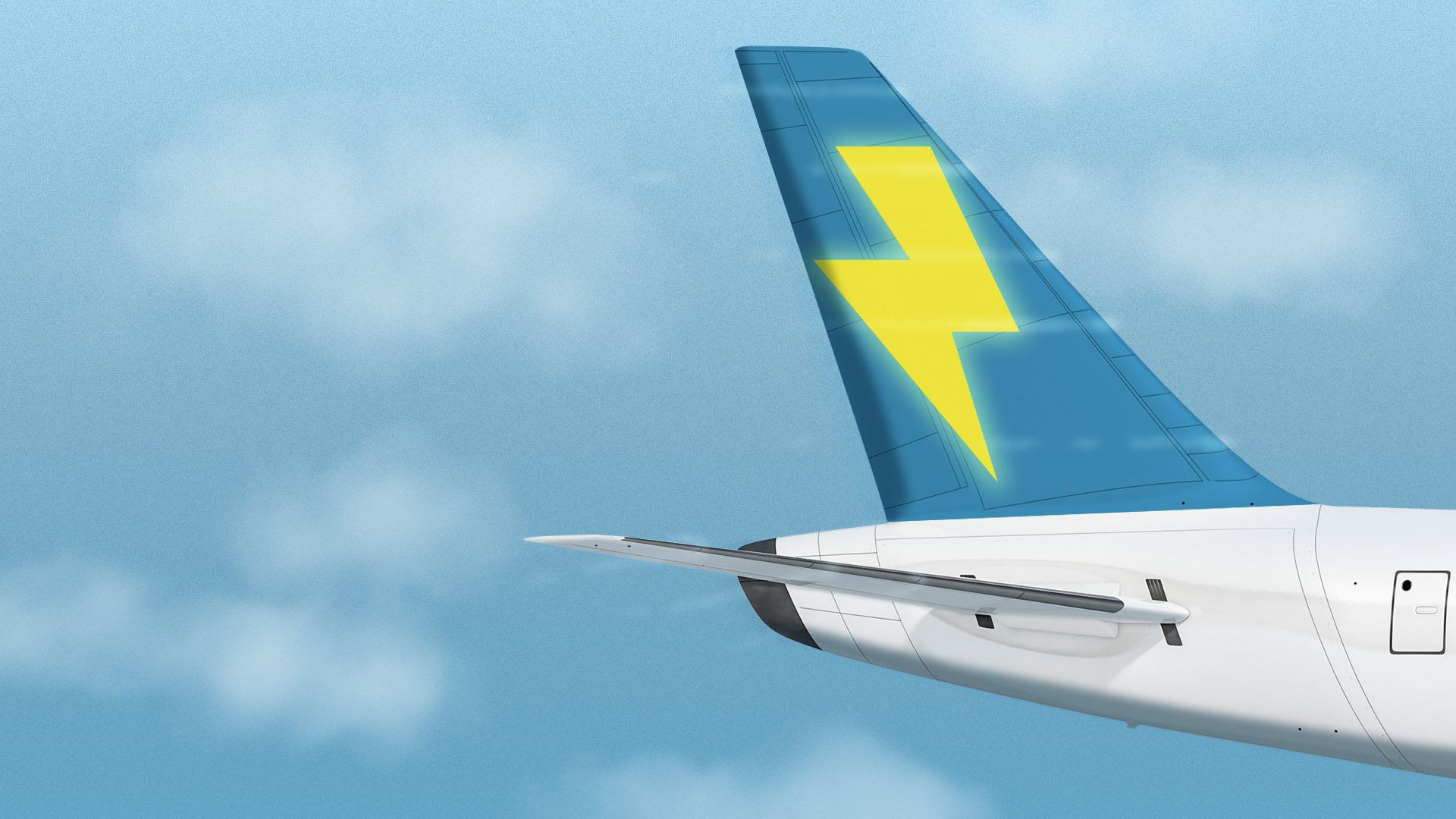
Electric and hybrid aircraft in development could reconnect smaller cities with short-hop flights that airlines abandoned and rail never managed to replace.
Why it matters: Regional air service in the U.S. has been hollowed out for decades, leaving midsize and rural communities with fewer travel options, longer trips and weaker economic ties.
- A new generation of aircraft could help fill those gaps.
Zoom in: Battery-powered electric air taxis like those from Joby and Archer take off and land vertically, using existing helipads and new vertiports coming soon.
- They're designed for really short hops, typically 50 miles or less. (Think airport-to-downtown or suburb-to-city routes.)
Yes, but: The challenge is trips that are roughly 100 miles to 500 miles, distances that are too far to drive conveniently but too close to support traditional jet service.
- A number of aviation startups are zeroing in on that sweet spot, too.
Electra.aero of Virginia has designed a nine-seat hybrid-electric aircraft that can take off and land in as little as 150 feet — roughly the size of a soccer field — giving it access to small regional airports, grass strips and parking lots.
- It has a series of small electric propellers that rapidly blow air over the wings, creating an aerodynamic technique called "blown lift" that allows for ultra-short takeoffs.
- Because it's more efficient on takeoff, it can travel farther — up to 330 nautical miles (380 miles).
Beta Technologies gets a similar range from its fully electric conventional plane, Alia, which takes off and lands at existing airports and can carry up to six passengers plus a pilot.
- The Vermont-based company is also building charging infrastructure at many regional airports that can serve any electrified aircraft.
What they're saying: "Rising jet fuel costs are accelerating interest in more efficient alternatives," said Louis Saint-Cyr, an executive with Surf Air Mobility, which is focused on short-haul regional routes that are ideal for electric aircraft.
- It's partnering with both Beta and Electra to launch commercial electric passenger flights in Hawaii.
What we're watching: Electra and Beta are among the companies participating in a federal pilot program designed to bring these planes to market faster.
- They'll be testing flights between New York and Atlantic City, for example, and between various cities in Florida.
- Electra just announced a similar test program in Norway, where it aims to link remote communities with major air hubs.
3. Tesla Robotaxi expansion has familiar ring
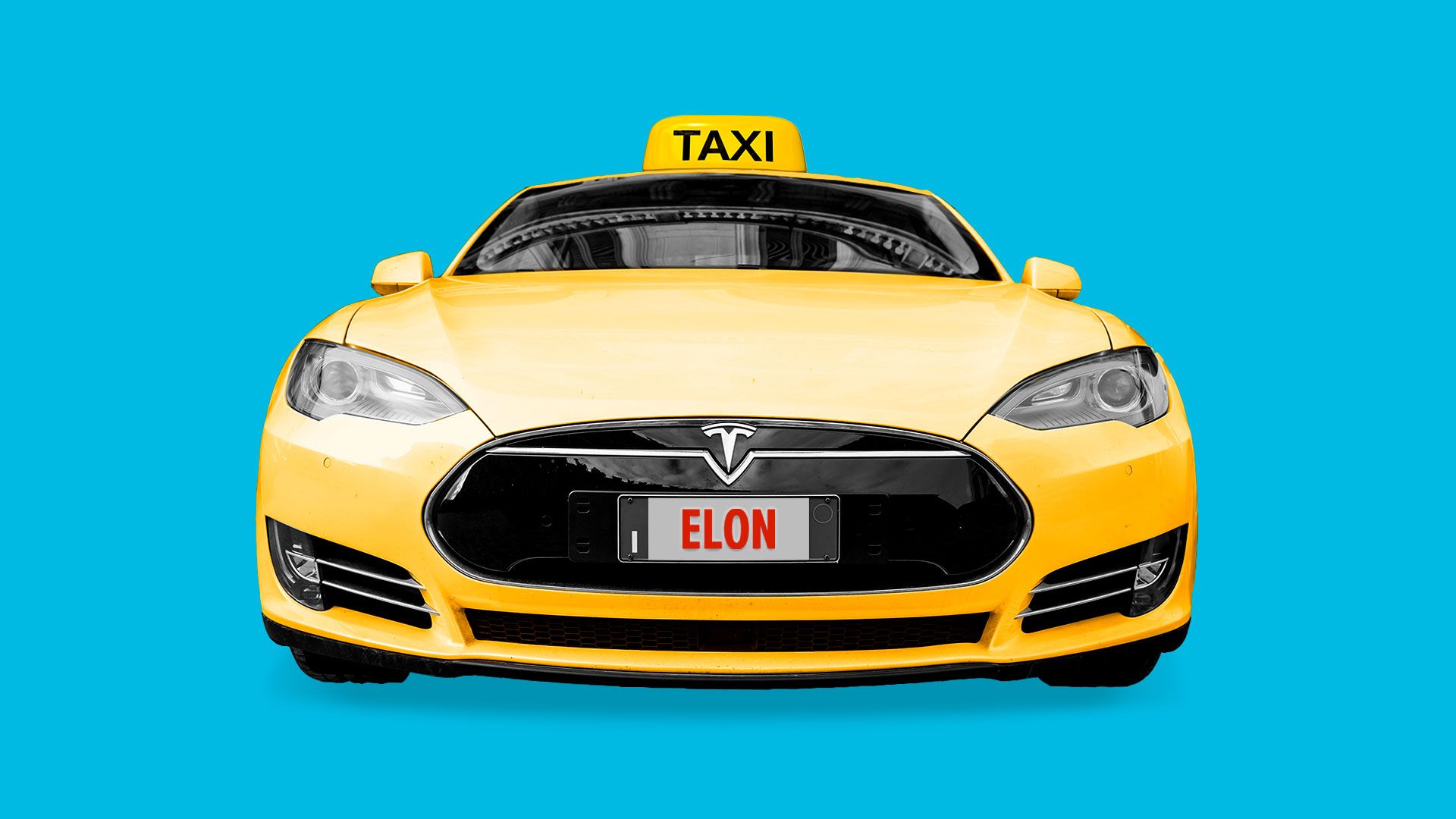
Tesla says it has expanded its Robotaxi service to Dallas and Houston, but it doesn't appear to be much of a service.
- Robotaxi Tracker, a crowdsourced site, reports only two cars deployed in each city, and they're mostly unavailable.
Why it matters: Tesla has bet its future on AI and autonomy, but hasn't shown much progress since launching its first Robotaxis with safety drivers last summer in Austin.
State of play: In January, just days before its fourth-quarter earnings release, Tesla announced it had launched "unsupervised" Robotaxi rides in Austin.
- Its stock climbed on the news, but three months later, only about a dozen fully driverless Teslas are available for ride-hail in Austin. Most of its cars still have a safety driver.
In San Francisco, meanwhile, Tesla offers a ride-hailing service with safety operators.
- It hasn't obtained the necessary permits from the state of California to offer driverless rides, although its new Cybercab — with no steering wheel or pedals — has been spotted testing in San Francisco.
What we're watching: The company is reporting first-quarter earnings today, and CEO Elon Musk will no doubt be quizzed on how the Robotaxi rollout is going and what comes next.
4. Drive-thru
🌪️ A tornado damaged part of Rivian's factory in central Illinois last weekend, but fortunately no one was hurt and it won't affect the launch of Rivian's crucial R2 model coming later this spring, CEO RJ Scaringe told employees. (CNBC)
🏎️ Formula E, the all-electric racing series, introduced its Gen4 race car for the 2026-27 season. It features an all-new powertrain that can go in excess of 208 miles per hour and 0-60 mph in 1.8 seconds. It's also said to be the world's first recyclable race car. (Carscoops)
🚛 Einride is adding 75 of its electric heavy-duty trucks to Amazon's Relay freight network as part of a deal that gives the Swedish startup a toehold in the e-commerce giant's operations. (TechCrunch)
5. What's driving me: Tesla Robotaxi

I downloaded the Tesla Robotaxi app last week while I was in the Bay Area, just to see what the service was like there.
- The app was easy to use and similar to Lyft or Uber.
- I ordered a ride from a meeting in Mountain View to my hotel in Palo Alto, and was given a 9-minute wait time.
- One glitch: When the car arrived, it was waiting on the opposite side of an industrial building, so I had to walk a couple of hundred yards to find it.
The Robotaxi looked like an ordinary black Model Y, with a driver behind the wheel. (As noted above, Tesla lacks the permits to operate a driverless ride-hail service in California.)
- At least I got to push the button to start the ride while he sat with his hands in his lap for the entire trip.
- The 3-mile ride was smooth and comfortable, and cost $9.21, compared to the $13.99 I paid for a Lyft to get me to my meeting.
Yes, but: When the Tesla turned onto the street where my hotel is located, it entered the parking lot for a different hotel across the street from my destination.
- In fairness, the safety driver offered to drive me to the correct hotel, but I got out and walked.
The bottom line: Tesla grabs headlines with its Robotaxi ambitions, but in the real world, it has a lot of work to do.
Thanks to editors Pete Gannon and Bill Kole. If you're a fan of this newsletter, please ask your friends to sign up, too.
Sign up for Axios Future of Mobility