Axios Future of Mobility
August 05, 2026

😎 Welcome back! It's August!
🔍 Today we're taking a closer look at Zoox, which is finally ready to launch its commercial robotaxi service.
- Plus, why that's good news for Tesla.
1,814 words, a 7-minute read.
1 big thing: Zoox's big bet starts in Vegas
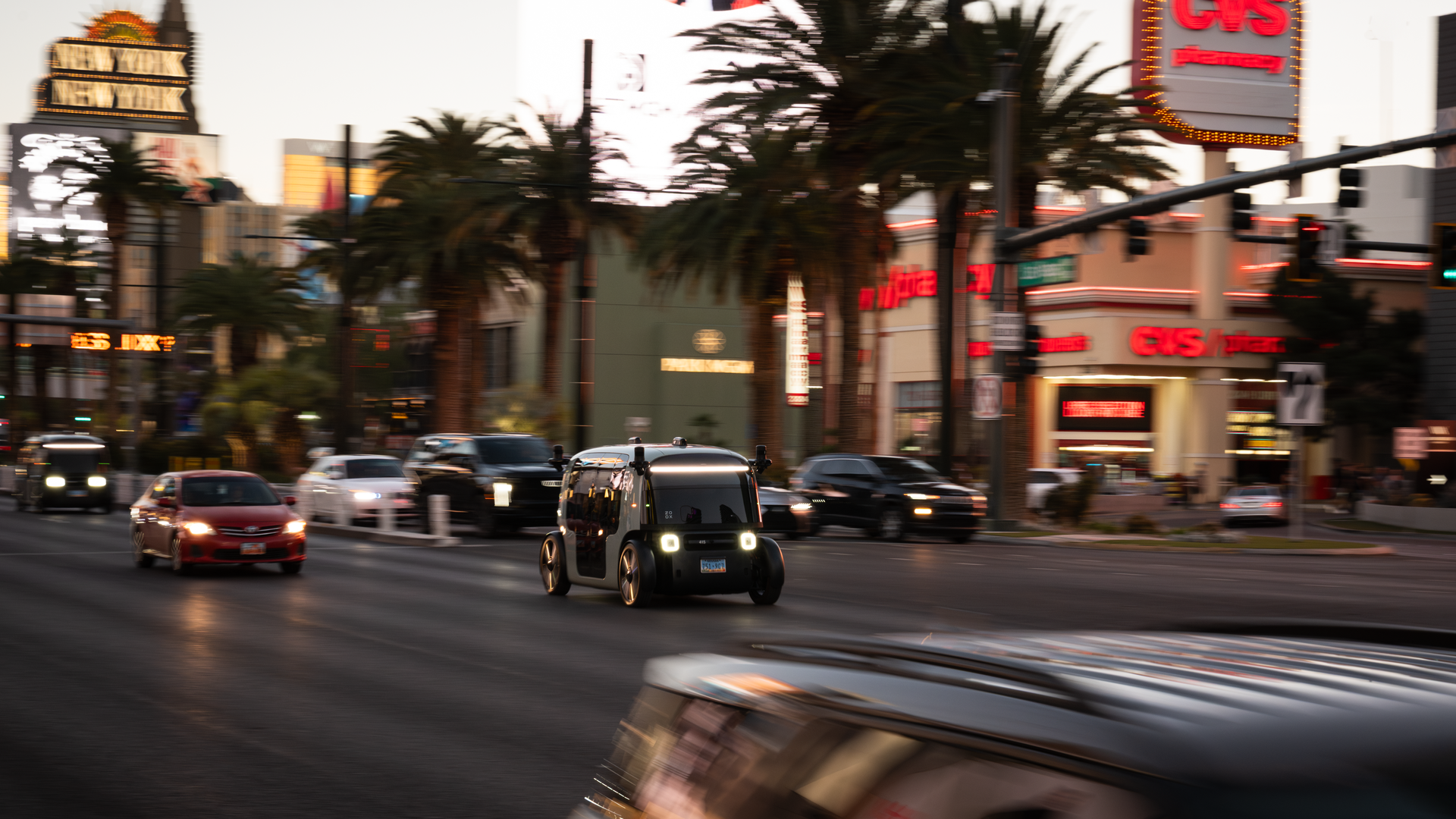
"Robotaxi" is pretty much synonymous with Waymo, whose white Jaguar i-PACEs account for roughly 95% of all autonomous ride-hailing trips in the U.S.
- But now Amazon-owned Zoox is about to start scaling its own driverless service with a purpose-built robotaxi and a self-sufficient business model.
Why it matters: Zoox has chosen a harder path than other mobility providers.
- While Waymo and Uber increasingly lean on partners to build vehicles and service fleets, Zoox is designing its own vehicle, manufacturing it, operating depots and controlling nearly every aspect of the customer experience.
- That could result in a more lucrative profit haul down the road, but the risk is that it multiplies the number of things Zoox has to get right.
Driving the news: Starting Monday, Zoox says it will begin charging fares in Las Vegas, after receiving a critical exemption last week from federal regulators for its purpose-built robotaxi, which lacks a steering wheel and other human controls.
- Collecting payments is an important milestone for Zoox as a business, and comes less than a year after the company launched its free service to the public in Las Vegas.
- Since then, Zoox's custom robotaxi has driven more than 3 million miles on public roads and carried nearly 1 million riders across Las Vegas, San Francisco, Austin and Miami.
By comparison, Waymo robotaxis have driven more than 220 million miles and log about 500,000 trips per week across 11 cities.
Zoom in: Instead of turning an existing car into a robotaxi, Zoox designed its friendly-looking, toaster-shaped vehicle from scratch.
- It's bidirectional — meaning there's no front or rear — and it features carriage-style seating and wide symmetrical doors that open only on the safest side of the street.
- Interior cameras automatically check whether a vehicle is clean before sending it to another rider, and the system alerts riders if they leave a phone or coffee behind.
- With ZooxCast, riders can pair their phone once via Bluetooth, and then every time they hail a ride, their Zoox will recognize them.
- Another app feature, Find My Zoox, lets riders select distinct lighting and sound cues to help identify their specific robotaxi in crowded pickup zones.
What they're saying: "Because we're vertically integrated, we can do things that other companies can't," Jesse Levinson, co-founder and CTO, told me as we toured San Francisco recently in a Zoox.
State of play: Others have opted not to do it all, finding it's better to focus on their specialty, given the huge capital expense of standing up a large-scale robotaxi service.
- Waymo, for example, buys cars from Jaguar, Geely and Hyundai, and outfits them with its proprietary self-driving tech. And it lets fleet management partners operate its depots.
- Uber's robotaxi strategy is also heavily dependent on partners, while AV developers like Nuro, Wayve and Aurora license their self-driving technology to carmakers.
Tesla's integrated approach with Cybercab is similar to Zoox, but it starts with almost two decades of manufacturing experience and 9 million cars already on the road.
- Zoox hopes to build 10,000 robotaxis a year someday. So far, it's built a little more than 100.
With Amazon's backing, however, Zoox executives are confident they'll get there.
- "Zoox is going to be basically [spending] double-digit billions to scale the technology," Levinson said, adding that Amazon, which bought the company in 2020 for $1.2 billion, understood that the project would take more time and capital than Zoox itself projected.
- "They love the purpose-built robotaxi," he said. "They would not have bought us if we didn't have the vehicle. It wasn't like just a pure technology play ... it's a whole new market for their customers that they've never played in before."
What we're watching: Amazon has long characterized Zoox as a long-term investment. Like other tech giants, however, it has ramped up AI spending significantly in recent years on things like data centers, chips and power.
- Amazon did not respond to a request for comment on Levinson's remarks.
The bottom line: Ultimately, the payoff for Zoox — and Amazon — depends on how quickly it can ramp up production and deployment to amortize that investment across a huge fleet of vehicles.
2. A win for Zoox is a win for Tesla
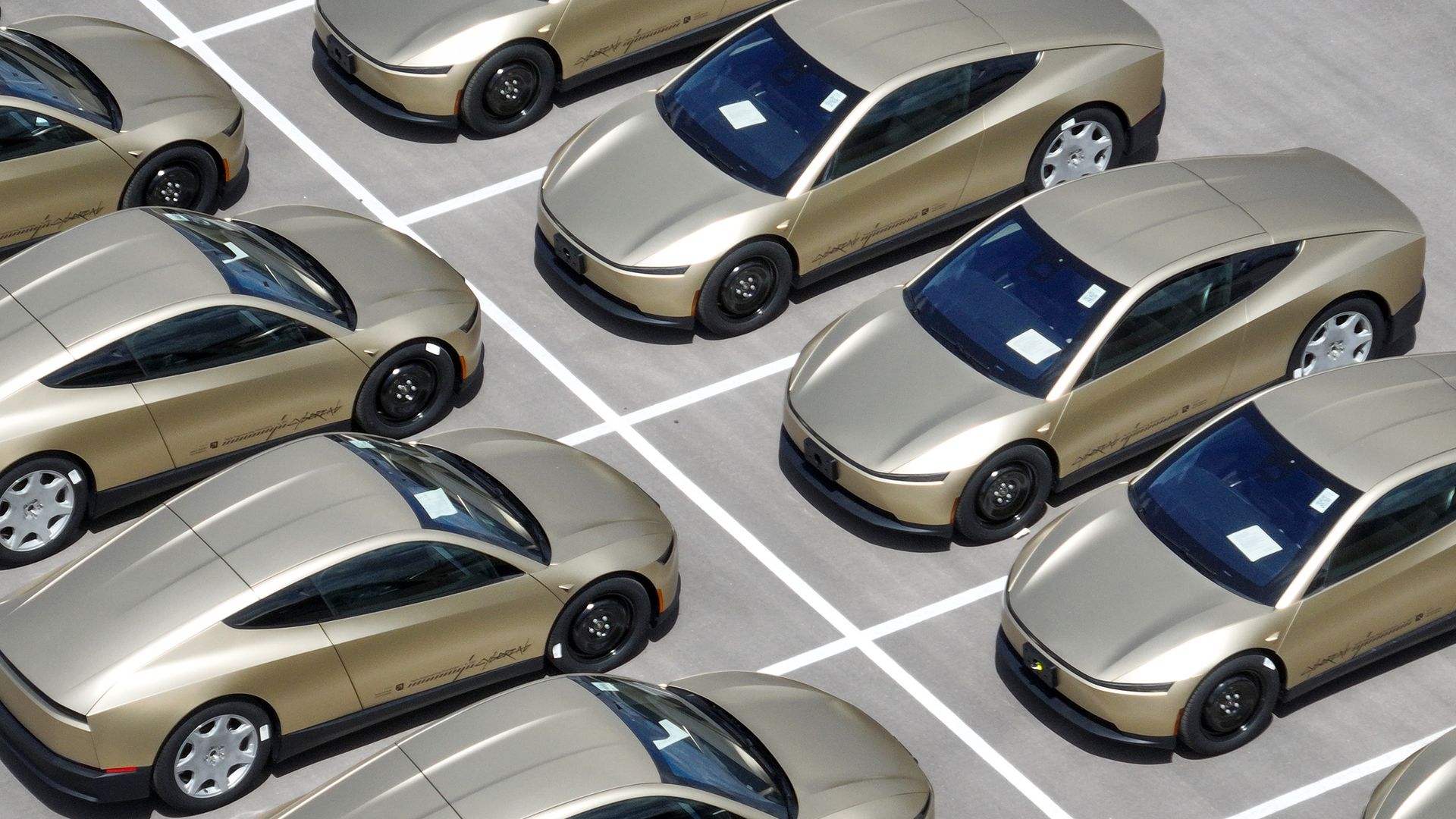
Tesla hasn't tried to seek regulatory approval for its driverless Cybercab — nor is it likely to now that the U.S. cleared Zoox to deploy its own robotaxi with no steering wheel or pedals.
Why it matters: Tesla's bet has long been that it doesn't need permission to launch the two-seat Cybercab because the Trump administration is quickly dumping outdated regulations that would prevent it from coming to market.
- The fine print in the National Highway Traffic Safety Administration's Zoox ruling (👆) should make Tesla even more confident that it can skip the red tape.
Catch up quick: Zoox sought, and received, an exemption from federal motor vehicle safety standards for its purpose-built robotaxi, which lacks driver-centric features like a steering wheel, brake pedal and mirrors.
- The exemption for up to 5,000 vehicles over two years clears the way for Zoox to convert its current demo fleet of 105 vehicles into a paid, commercial robotaxi service.
Between the lines: The most interesting part of NHTSA's ruling was the agency's acknowledgement of its limited authority when it comes to autonomous vehicles.
- "The Agency notes, however, that there are no performance requirements for an [automated driving system] that is replacing a human driver performing the dynamic driving task and NHTSA has no authority to require a higher level of safety performance in the context of deciding whether to grant an exemption," it wrote.
- In other words, exemption decisions must be focused narrowly on vehicle performance, not the overall safety of the self-driving technology.
- For example: Is the vehicle's stopping distance equivalent to or better than a car with a brake pedal?
What they're saying: That regulatory limitation will make it easier for Tesla to self-certify the safety of its camera-only driving system, which has been heavily scrutinized, says Rob Grant, a former exec at Cruise, Aurora and Lyft, who co-leads AV research firm AUTNMY AI.
- "ADS performance is not a central consideration of meeting the standards. NHTSA has now put that on the record," Grant says.
- "That removes any question of Tesla's ADS performance, and that helps them toward self-certification."
Safety advocates, meanwhile, are concerned that NHTSA is moving too fast.
- "It seems there is a finger on the scale toward the mass deployment of autonomous vehicles, but there's no evidence yet that they're safe," Cathy Chase, president of Advocates for Highway Safety, tells Axios.
What we're watching: NHTSA is partnering with technical experts at SAE Industry Technologies Consortia (ITC) to try to develop the first-ever automated vehicle performance standards over the next three years.
3. Where air taxis meet robotaxis
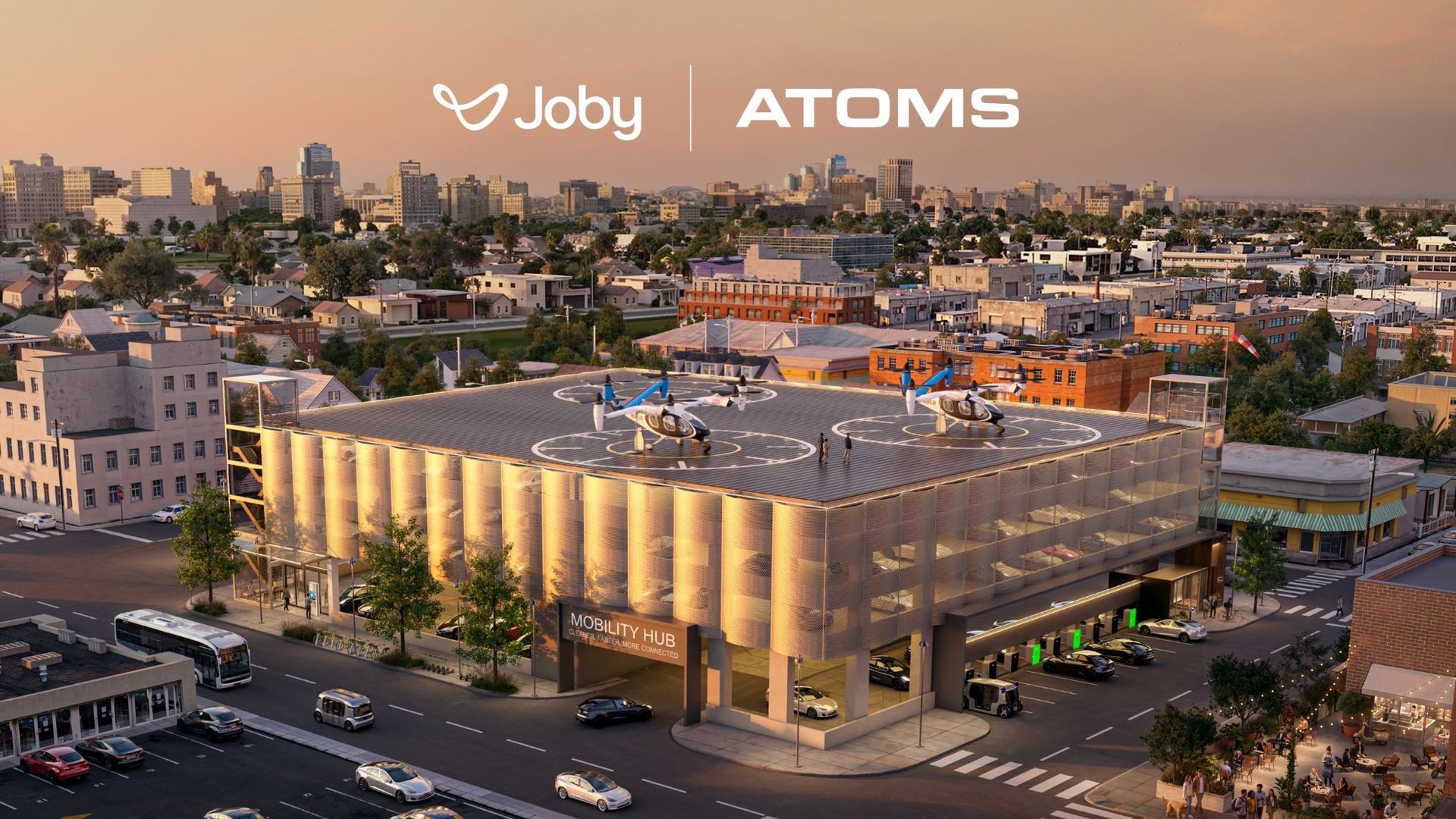
Joby is partnering with former Uber CEO Travis Kalanick's new company, Atoms, to develop next-generation transportation hubs where electric air taxis, robotaxis and ridesharing services will converge.
Why it matters: As urban air taxis get closer to reality, they'll need places to land, charge and connect passengers to the rest of their journey.
The big picture: Infrastructure is rapidly becoming the backbone of the next era of mobility.
- Charging and maintenance depots are critical components for large-scale robotaxi fleets, with AV companies racing to lock up the best sites and secure the necessary power to enable frequent charging and quick turnarounds.
- Private equity firms — including EQT and BlackRock's Global Infrastructure Partners — are betting that robotaxi depots will become a new category of infrastructure investment, much like data centers, warehouses and cell towers.
Electric air taxis need a similar foundation, and Kalanick, whose firm just raised $1.7 billion, recognizes the need.
- "Smart cities require innovative real estate and infrastructure development," Kalanick said in a statement.
- "As new transport modes and smart city services become available, designing and deploying a new asset class to support them is critical."
Zoom in: Atoms will initially focus on building hubs in Florida, New York and Texas, where Joby is preparing to launch early operations under the White House-backed eVTOL Integration Pilot Program (eIPP), as well as California.
- The companies did not say how much they plan to invest in the facilities, but the first locations are expected to be announced soon.
The intrigue: The deal is a full-circle moment for Kalanick, who envisioned autonomous vehicles and air taxis when he led Uber from 2010 to 2017.
- Uber later unloaded the AV business to Aurora and sold the air taxi unit, Uber Elevate, to Joby.
- Now Uber is among the investors in Atoms' $1.7 billion funding round, which was led by Andreessen Horowitz.
4. Drive-thru
🚕 Moove raised $250 million to build more maintenance depots, or "nests," for self-driving cars. The fleet management company, now valued at $2.1 billion, already works with Waymo and Uber. Watch this space. (Bloomberg)
💰 Lucid is delaying the launch of its more affordable EVs to the second half of 2027, as the company looks to cut $1.4 billion in costs. (Reuters)
⚡️ EVGo is adding rebranded Tesla Superchargers across its charging network, in one of the most significant deployments of Superchargers by a non-Tesla company. The V4 Superchargers are capable of up to 500kW/1000 volts.
🇨🇳 General Motors and China's SAIC Motor have renewed their joint-venture agreement for 20 years after a major restructuring that included closing factories and eliminating some models. (Reuters)
5. 🚘 What I'm driving
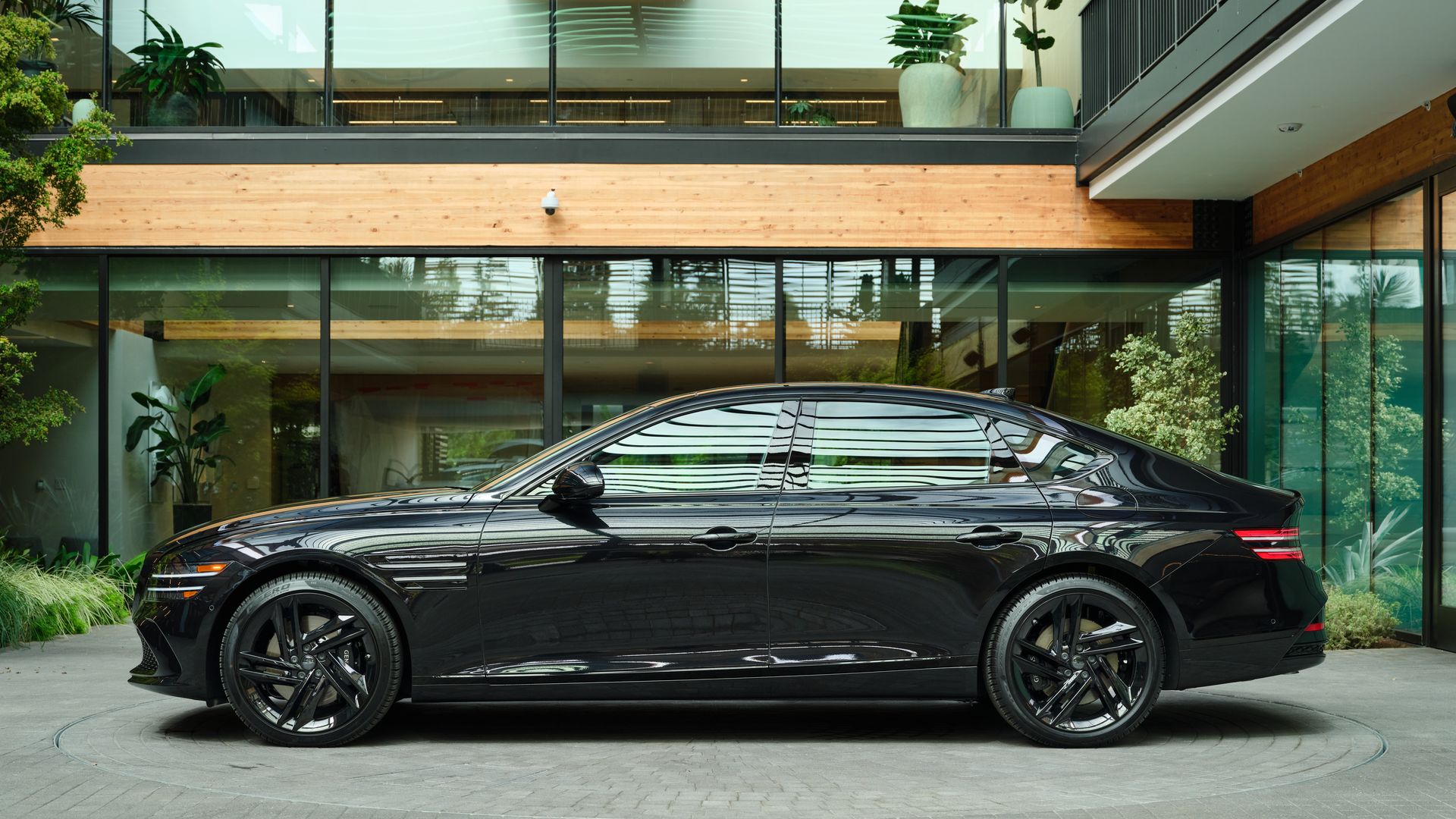
2026 Genesis G80
- MSRP: G80 starts at $59,945 (including destination charge); As tested: $81,495 for Prestige Black trim.
- Under the hood: 300-hp turbocharged four-cylinder engine or 3.5-liter twin-turbo V6. 8-speed automatic transmission and all-wheel drive are standard.
- Manufacturing site: Ulsan, Korea.
What's new: New monochromatic Prestige Black trim, previously only available in Korea, adds a bit more sophistication.
- Other than that, the 2026 Genesis is a carryover from last year's model update.
What I loved: Genesis has earned its spot among luxury brands like Audi and BMW by delivering opulent features, top-notch quality and attractive styling.
- The bonus is that it's generally less expensive than its German counterparts, although tariffs have driven up prices.
- I loved the curbside presence of the G80's long hood and black wheels.
- Inside, I appreciated the plush materials and the 27-inch display screen, along with heated and ventilated front and rear seats.
- Cool tech features include fingerprint ID and Smart Park, which lets you maneuver the car in and out of a tight parking spot while standing outside of the car.
What drove me crazy: I kept mixing up the rotary shift knob with the adjacent rotary controller for the infotainment system.
I test-drive vehicles in my role as a juror for the North American Car and Truck of the Year awards. Opinions are my own.
Thanks to editors Pete Gannon and Bill Kole. If you're a fan of this newsletter, please ask your friends to sign up, too.
Sign up for Axios Future of Mobility