Axios Future of Mobility

November 05, 2025

🙋♂️ Hi, Nathan here, filling in for Joann — she'll be back soon!
👊 This week, we're looking at growing opposition among unions to self-driving cars.
- 🏭 Plus: A dispute between China and the Netherlands is triggering fears of another chip shortage.
Today's newsletter is 1,116 words, a 4-minute read.
1 big thing: Why unions are becoming a problem for self-driving cars


Union opposition is emerging as a potential obstacle to the rollout of driverless vehicle services.
Why it matters: Advocates of self-driving cars say the technology will prevent deaths and make life more convenient, while opponents argue it will destroy jobs and isn't ready for prime time.
Zoom in: Multiple labor groups throughout the country are pushing back on behalf of truckers, bus drivers and other professional vehicle operators.
- Teamsters Local 25 in Boston recently joined a coalition to support a proposed ordinance that Waymo says would effectively ban its self-driving cars from operating in the city.
- The Transport Workers Union recently said it "strongly opposes the testing of autonomous vehicles from Waymo on New York City streets."
- The Amalgamated Transit Union has warned that "autonomous vehicles could threaten our members' jobs."
- The Drivers Union in Tukwila, Washington — which is affiliated with Teamster Local 117 — said it's "highly opposed to the City of Seattle, the State of Washington, or any local jurisdiction permitting robotaxis to travel on our public roads without human safety operators."
State of play: Waymo and Tesla are the two primary companies that have begun self-driving car services, offering rides to customers in places like Phoenix, San Francisco and Austin.
- Waymo this week announced plans to start testing its vehicles in Detroit, Las Vegas and San Diego.
- At the same time, Aurora Innovation has been testing self-driving semi-trucks between Houston and Dallas and last week announced testing between El Paso and Fort Worth, citing a "perfect driverless on-time and safety record" so far.
On a national level, the Teamsters — whose membership base includes the legion of truck drivers at UPS — has called for a national regulatory standard requiring a human operator in all autonomous vehicles.
- And that human operator should remain subject to federal requirements for commercial driver's licenses (CDL), the union contends.
- "Allowing the unfettered and unregulated operation of autonomous vehicles — ultimately seeking to replace human drivers with robots — is unequivocally a threat to safety on our roadways and the existence of good jobs in the trucking industry," Teamsters president Sean O'Brien testified before Congress in July.
The big picture: Arthur Wheaton, a union expert at Cornell University, said the labor movement's concern about driverless vehicles should come as no surprise.
- "It's been a fight for hundreds of hundreds of years about technology replacing workers," Wheaton tells Axios. "I could see where the Teamsters would be upset about that."
The other side: "Waymo has a proven track record of making transportation safer, more accessible, and more sustainable in the cities where we operate," Waymo spokesperson Ethan Teicher said in a statement. "Transportation is a team sport, and we believe autonomous vehicles, professional drivers, and the wider ecosystem will thrive together as we increase transportation options for everyone."
The intrigue: The promise of self-driving cars has largely been cheered by elected Democrats and Republicans alike in recent years.
- The Obama, Biden and Trump administrations have all generally been welcoming of autonomous vehicles, though none has successfully pursued what the industry has long wanted: a single national regulatory standard, compared with the current patchwork of state regulations.
What to watch: Whether Teamsters president O'Brien — who has counseled President Trump on issues like film tariffs and the appointment of Labor Secretary Lori Chavez-DeRemer — uses his position to press the White House to require safety drivers in vehicles.
2. 🇨🇳 vs. 🇳🇱 dispute triggers fears of chip shortage

A dispute between China and the Netherlands over a chip manufacturer is rippling through the auto industry, threatening to hobble vehicle production.
Why it matters: Nexperia — which is owned by China's Wingtech but based in the Netherlands — is a major supplier for automakers, particularly those based in Europe.
Catch up quick: The Dutch government seized control of Nexperia several weeks ago over intellectual property concerns, ousting the company's CEO and imposing new management.
- China then temporarily banned exports of Nexperia chips, triggering fears of a new chip shortage.
- Reuters reported Tuesday that Nexperia had sent a letter to customers stating it could not say when chip exports would resume or whether they would be of sufficient quality.
What they're saying: "The Netherlands continues to act unilaterally without taking concrete steps to resolve the issue, which will inevitably exacerbate the adverse impact on the global semiconductor supply chain," China's Ministry of Commerce said Tuesday, Bloomberg reported.
- A Dutch Ministry of Economic Affairs spokesperson said the country is pursuing a "constructive solution that is good for Nexperia and our economies."
The bottom line: Automakers such as Volkswagen, Mercedes-Benz, BMW, Nissan, Honda and Volvo are at risk of experiencing critical parts shortages.
3. 🧐 A Tesla flying car?
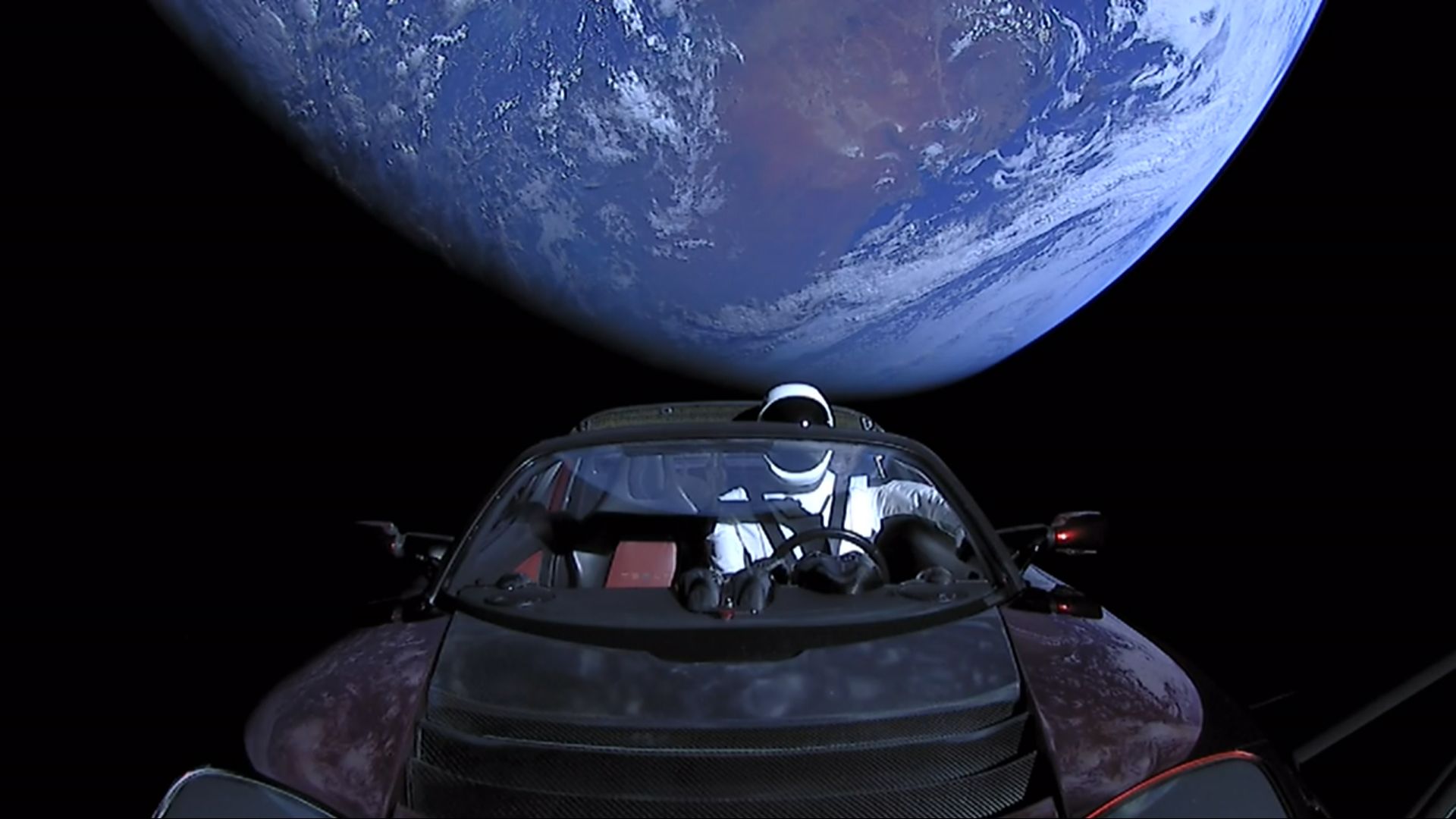
"My friend Peter Thiel once reflected that the future was supposed to have flying cars, but we don't have flying cars. ... I think if Peter wants a flying car, we should be able to buy one."— Tesla CEO Elon Musk, in an interview with podcaster Joe Rogan, hinting that the company's forthcoming demo of the new Tesla Roadster could showcase the ability to fly.
4. ✅ Drive-thru
🪫 Kia confirmed it's indefinitely delayed plans to bring the EV4 sedan to the U.S. The Korean automaker had showcased the model at the New York Auto Show in April. (Car & Driver)
🚒 The Novelis aluminum plant that suffered devastating damage during a fire in September is expected to reopen in December. The incident disrupted production for several automakers, including Ford. (Automotive News)
🗺️ Google is adding its Gemini chatbot to its Maps app, letting users get chatty with their navigation app across Android, iOS and their cars. (Axios)
5. 🎶 Studio on wheels

Hi, it's Maxwell Millington, Axios entertainment reporter.
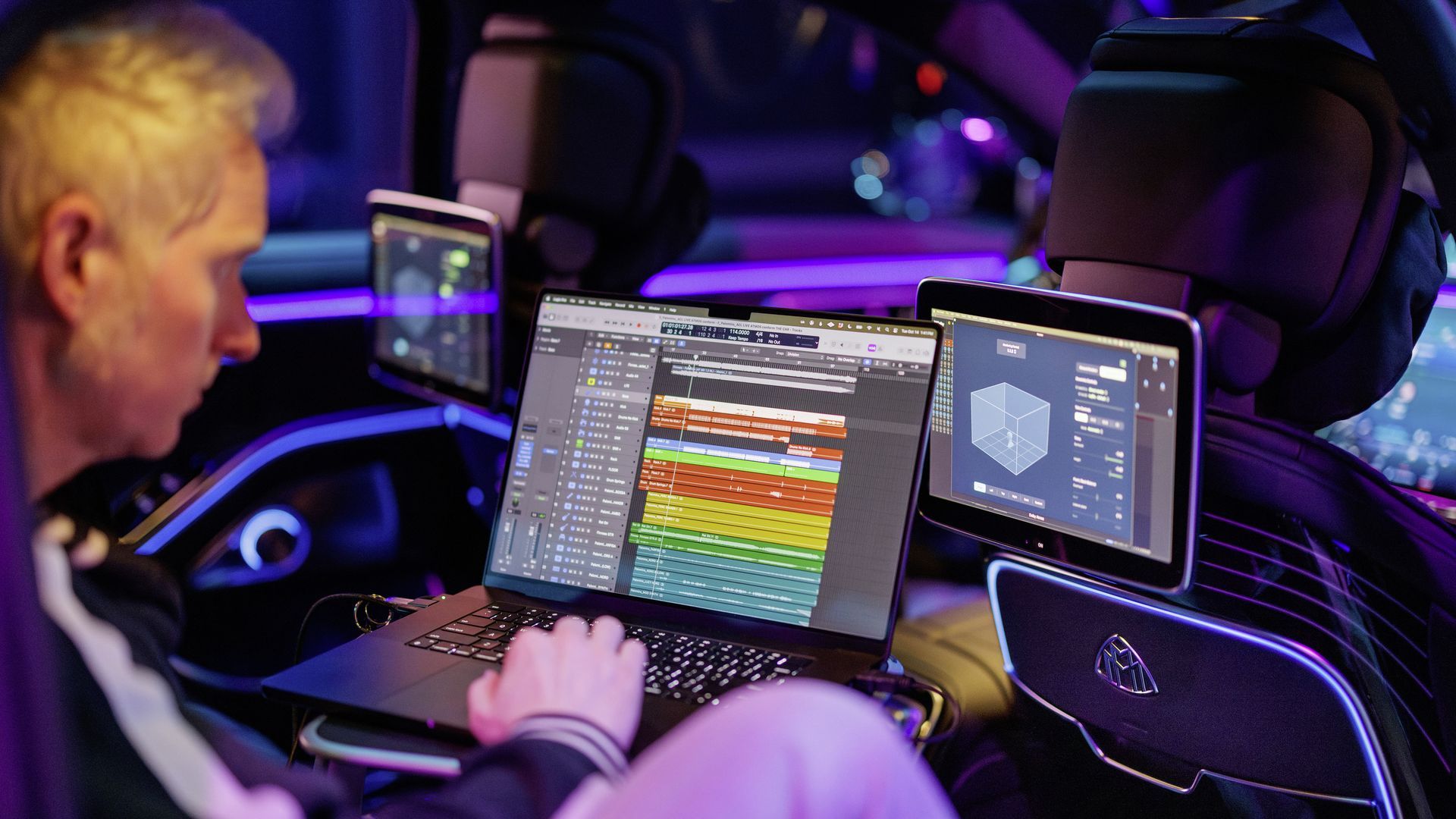
- I recently watched four-time Grammy-nominated producer Aron Forbes mix a track in the back seat of a Mercedes Maybach.
- Forbes, a regular collaborator with Billie Eilish and Finneas, described the car's new sound tech as having a studio on wheels.
🎵 State of play: Mercedes-Benz vehicles are among the first non-Apple devices to offer spatial audio with Dolby Atmos.
- The German automaker partnered with Apple and Universal Music Group (UMG) with the understanding that many recording artists prefer to hear their music played through car speakers.
- More than 76% of drivers say that having realistic spatial sound is either "important" or "rather important" to them, according to Mercedes-Benz research.
What's next: UMG says its artists will base their song approval process on how the final mix sounds in a Mercedes-Benz.
- The system will also be available in the Cadillac Optiq.
Thanks to Ben Berkowitz and Bill Kole for editing. Sign up for Future of Mobility here.
Sign up for Axios Future of Mobility