Axios Future of Mobility

December 17, 2025

🎄 One week until Christmas Eve! I have a lot of work to do ...
- Future of Mobility is taking a break until the first week of January, but I want to wish you a peaceful holiday season and a Happy New Year.
🎁 Need a last-minute gift idea? Give your friends and family a subscription to this newsletter! It's FREE!
1,631 words, a 6-minute read.
1 big thing: The huge cost of extreme policy swings
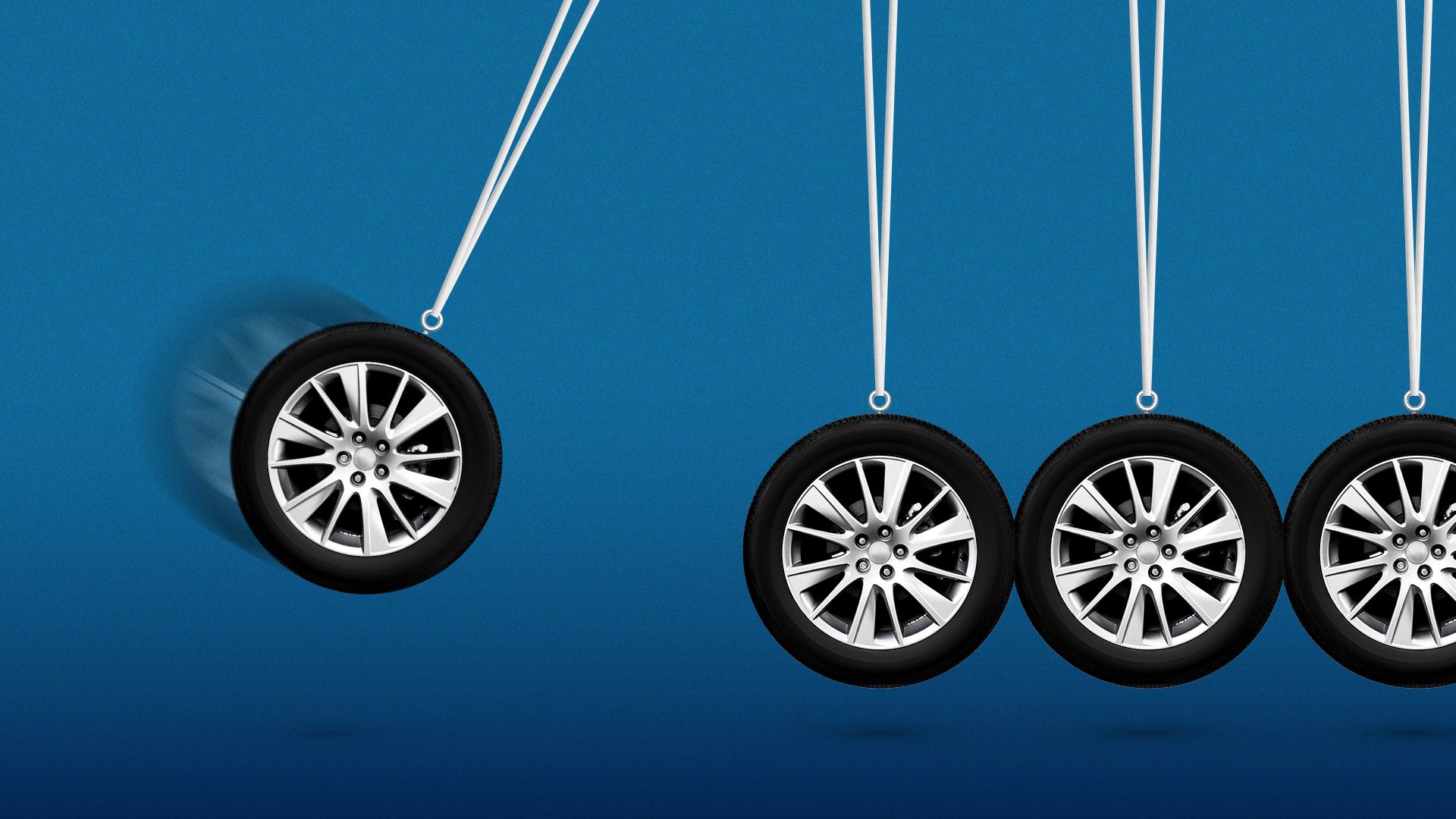
Seesawing government policy can wreak havoc on companies.
- Exhibit A: Ford Motor Co., which has written off tens of billions in stranded investments over the past 15 years.
Why it matters: Big shifts in political power tend to lead to extreme regulatory swings, too, as policymakers try to steer consumer markets in one direction or another.
- For capital-intensive industries, that can result in billions of dollars wasted, and crucial time lost, while global rivals like China keep advancing.
Driving the news: Ford's stunning $19.5 billion write-down of planned electric vehicle and battery investments this week is the latest example of what happens when big bets chase ever-changing policy directives.
The big picture: "These massive swings in policy from administration to administration are paralyzing to the industry," David Steinert, a partner in the automotive and industrial practice at AlixPartners, tells Axios.
Flashback: Just four years ago, Ford announced an $11.4 billion plan to build a new EV and battery manufacturing campus in Tennessee and two more battery plants in Kentucky.
- The project was supported by huge government loans and manufacturing incentives, plus tax credits for EV buyers — policies the Biden administration and industry experts thought would shove the new car market toward 50% EVs in a decade or two.
Yes, but: The new Trump administration quickly gutted those policies and gave automakers a green light to produce more gas-powered vehicles without penalty.
- Now Ford is retrenching on EVs and will spend billions more to switch factories to produce gas and hybrid trucks and vans, which it believes consumers will prefer.
What they're saying: "We view Ford's move as an acknowledgement that its EV strategy is not working," amid weak demand and regulatory rollbacks, wrote BNP Paribas Research auto analyst James Picariello.
- But by targeting a 50% mix of electrified powertrains by 2030, he said, "[w]e believe Ford is still protecting itself against a future pro-environmentalist U.S. administration change."
Zoom out: Lots of industries, ranging from energy and pharmaceuticals to health care and construction, are being buffeted by a similar whiplash.
- Back-and-forth policy shifts in trade, immigration, deregulation and taxes are making it hard for companies to stick to a long-term plan.
Ford says its strategy pivot, while expensive, was driven by many factors — not just regulatory changes — including low EV demand, high battery costs and even customer complaints about the limitations of an electric pickup truck.
- "Ford is following the customer," Andrew Frick, who is president of both the traditional and EV divisions, told reporters.
- "We are looking at the market as it is today, not just as everyone predicted it to be five years ago," he said.
Reality check: Management decisions matter, too.
- Ford, GM and other automakers eagerly scooped up all those government incentives while jumping on the EV bandwagon.
- Many ignored signs that consumers weren't ready to make the switch — the lack of available charging, for example, and high sticker prices.
- Clear proof that policies were propping up EV sales came at the end of September, when consumer tax credits expired and EV sales collapsed.
Friction point: For now, Trump's seismic policy actions seem like a net win for automakers because they're now free to produce more high-margin, gas-powered trucks and SUVs, despite higher cost from tariffs.
- If Democrats take control of Congress in the 2026 midterm elections, or recapture the White House in 2028, the policy pendulum would likely swing back again.
What to watch: In the meantime, more big EV investments like Ford's are going to wind up as stranded costs, predicts AlixPartners' Steinert.
- GM already took a $1.6 billion charge after cutting EV production and said more write-offs may be coming.
The bottom line: The EV reckoning is a reminder that automakers should be listening more to consumers and less to policymakers.
2. ⚡️ What's next after Ford killed its electric F-150
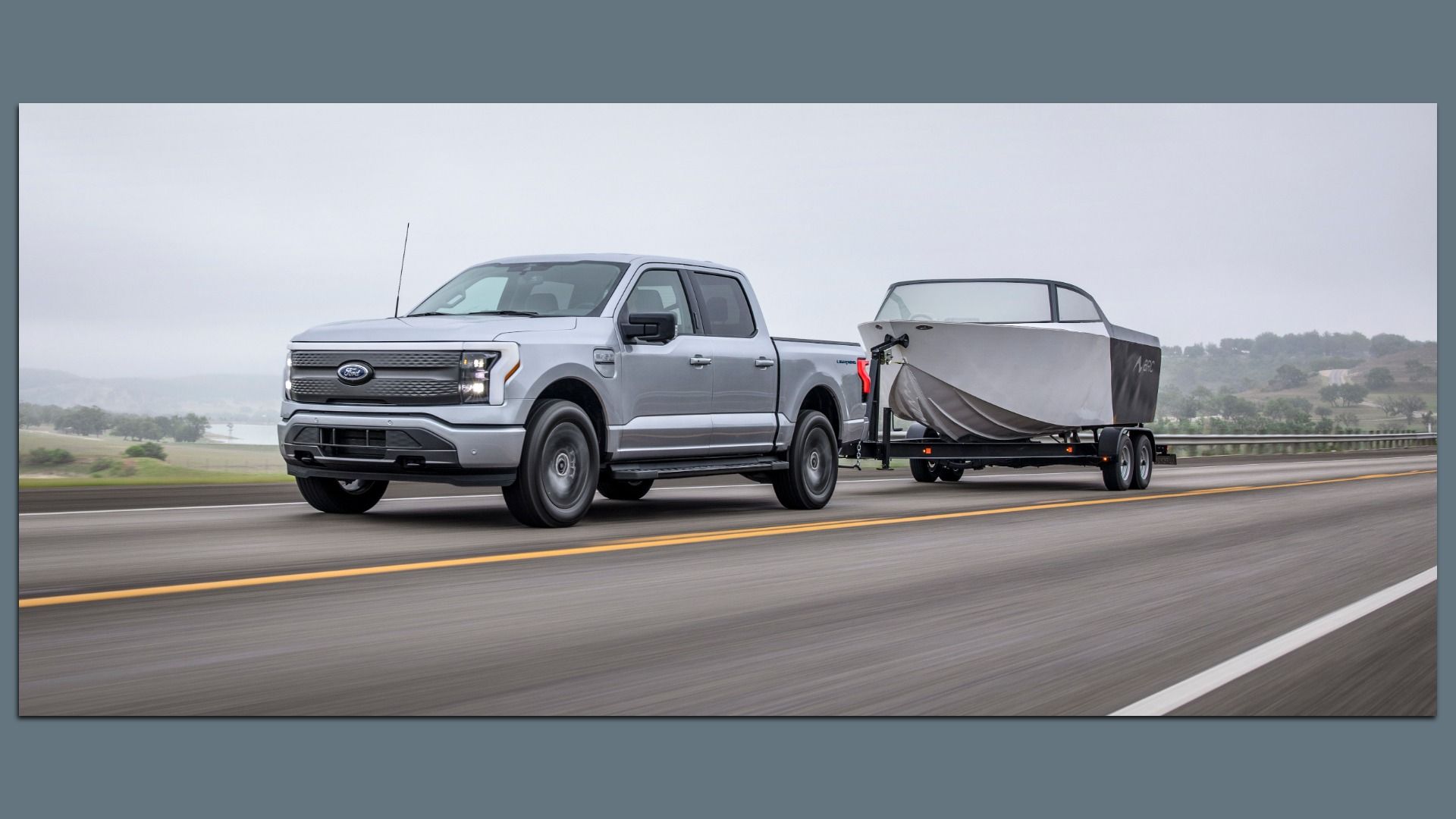
Ford might have stopped production of its once-popular F-150 Lightning electric pickup truck, but it's being reborn as a hybrid known as an extended-range EV, or EREV.
Why it matters: Get ready to hear a lot more about "EREVs," the buzziest powertrain technology in the auto industry, especially for large vehicles like trucks and SUVs.
- Already popular in China, several automakers are introducing EREVS in their largest models, including Ford, Hyundai and Scout, VW's new outdoor brand.
How an EREV works: Like a typical EV, an EREV has a battery and one or more electric motors that turn the wheels.
- What's different is that an EREV also has a small gasoline engine which acts as an onboard generator to recharge the battery when it runs low.
- The engine isn't connected to the wheels, so it can't propel the car, which is the key difference between an EREV and a typical hybrid gas-electric vehicle.
The technology isn't really new.
- It's been used by diesel-electric locomotives for a century, and both the Chevrolet Volt and BMW i3 used it 15 years ago.
Between the lines: Despite initial high demand, F-150 Lightning buyers quickly learned that towing a boat or trailer with an electric pickup truck dramatically reduced their driving range.
- "These really expensive $70,000 electric trucks, as much as I love the product, they didn't make sense," Ford CEO Jim Farley told CNBC.
- An EREV is a "better solution" for large vehicles, Farley said, with 700 miles of driving range, almost always on electricity.
What to watch: Ford hasn't disclosed details about the next-gen Lightning or when it will go on sale.
3. Aurora to Teamsters: no human operators

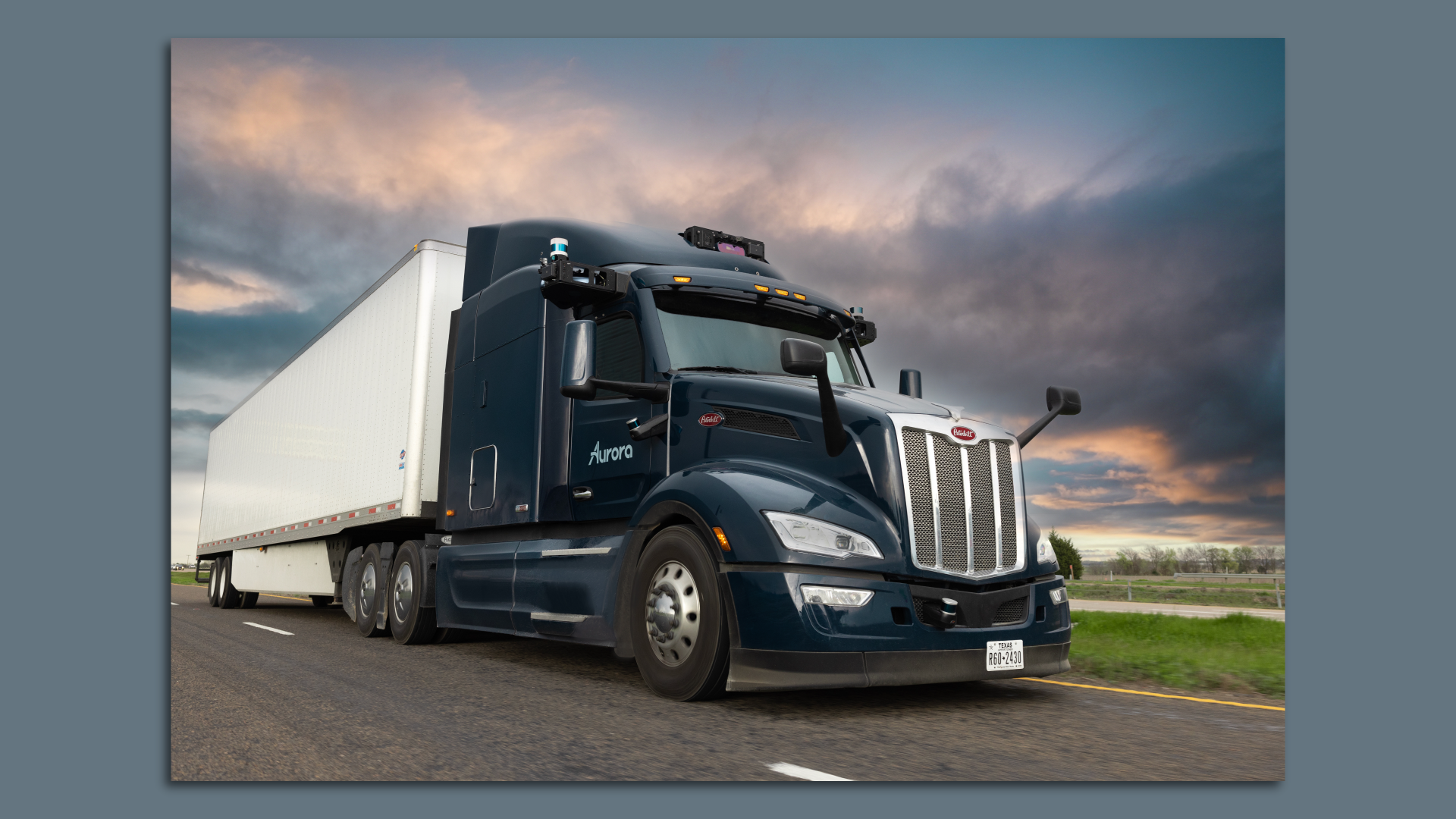
The ascendance of self-driving semi-trucks sets up a collision between autonomous vehicle advocates and union leaders, who are signaling resistance to driverless vehicles.
Why it matters: There are some 3.6 million professional U.S. truck drivers, but the industry has struggled with retention amid the worst freight recession in recent memory.
State of play: On one side is the Teamsters union, which recently called for a national regulatory standard requiring a human operator in all autonomous vehicles.
- On the other side are companies like Aurora Innovation, which is already running autonomous trucks on multiple routes in Texas, with plans to expand throughout the southwestern U.S. in 2026.
What they're saying: Aurora CEO Chris Urmson told Axios that he doesn't agree with the Teamsters' bid to force a human into every truck cab, arguing that it's "a very dangerous job" with "lots of health issues" and quality-of-life problems.
- "It's a job that I'm thankful people are willing to do but that we should be able to do better," Urmson said. "We have the opportunity to elevate that job to roles of terminal operations or to dispatch, and we'll ultimately grow the logistics industry by making it more efficient."
The other side: The Teamsters want driverless vehicles to have human operators subject to federal requirements for commercial driver's licenses.
- "Allowing the unfettered and unregulated operation of autonomous vehicles — ultimately seeking to replace human drivers with robots — is unequivocally a threat to safety on our roadways and the existence of good jobs in the trucking industry," Teamsters president Sean O'Brien testified before Congress in July.
Aurora currently has a human observer on board trucks on a route in Texas, at the request of a key customer.
- But Urmson projected that the U.S. will have "thousands" of driverless trucks within five years.
4. Drive-thru

🚨 How Luminar's doomed Volvo deal helped drag the company into bankruptcy. (TechCrunch)
🇪🇺 The European Union is set to soften emissions rules for new cars, scrapping an effective ban on combustion engines following months of pressure from the automotive industry. (Bloomberg)
🔋 Battery recycler Redwood Materials is joining others in the industry in shifting its focus from EV batteries to energy storage systems. (Automotive News)
- ✈️ Everybody's doing it, even Boom Supersonic.
🚖 Waymo is in talks to raise more than $15 billion for expansion, in a financing round led by its parent company, Alphabet. A deal would value the robotaxi company at close to $100 billion, Bloomberg reported.
🤥 Tesla engaged in deceptive marketing around Autopilot, a California judge ruled. The company could face a 30-day sales suspension in the state unless it alters its messaging. (CNBC)
🚗 Inside Rivian's big bet on AI-powered self-driving. (TechCrunch)
5. What I'm driving: 2026 Nissan Sentra
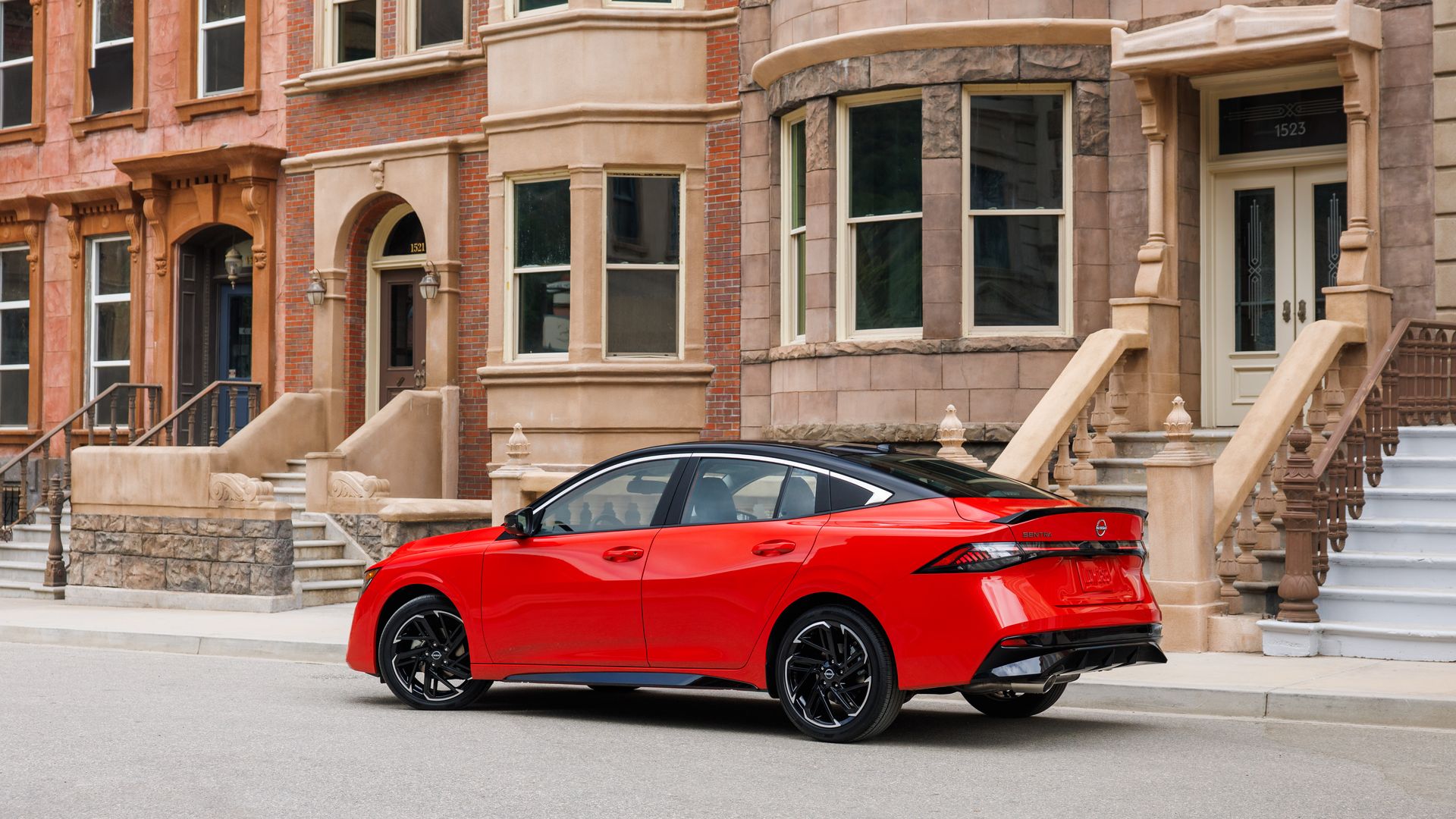
I admit it: I was surprised by how much I liked the new Nissan Sentra.
Why it matters: Nissan has been struggling lately with financial restructuring, leadership issues and declining sales. So my expectations were low.
Yes, but: The 2026 Sentra is really good-looking, inside and out, with lots of standard safety equipment and technology, plus a smooth and confident ride and handling.
If there's one knock on the Sentra, it's the absence of a hybrid powertrain to match segment leaders Honda Civic and Toyota Corolla.
- Instead, it's powered by the same 149-horsepower four-cylinder engine and continuously variable transmission (CVT) found in the previous generation.
With a $25,000 starting price (well under its main competitors), that's OK. For some people, that powertrain will be just fine.
- My Sentra SR test vehicle came with the $2,300 premium package, which added "leatherette" power seats, a surround camera and Nissan's ProPILOT Assist technology.
- With a few other goodies like a moonroof and black alloy wheels, the final sticker price was just under $32,000.
The bottom line: Considering the high price of new cars, the Nissan Sentra seems like a great value.
I test-drive vehicles in my role as a juror for the North American Car and Truck of the Year awards. Opinions are my own.
Many thanks to editors Ben Berkowitz and Bill Kole for helping to deliver this newsletter to your inbox every Wednesday.
Sign up for Axios Future of Mobility