Axios Future of Mobility

February 25, 2026

🌷Another week closer to spring! Hold on to that thought while you're digging out.
🚙 Who taught you to drive? Autonomous vehicles learn to drive in a simulated world built by AI.
- 🌎 The question is how real is it? It matters for safety.
Today's newsletter is 1,595 words, a 6-minute read.
1 big thing: AI driver's ed
The more that autonomous vehicles can learn to drive in the virtual world, the less time they need to practice on physical streets.
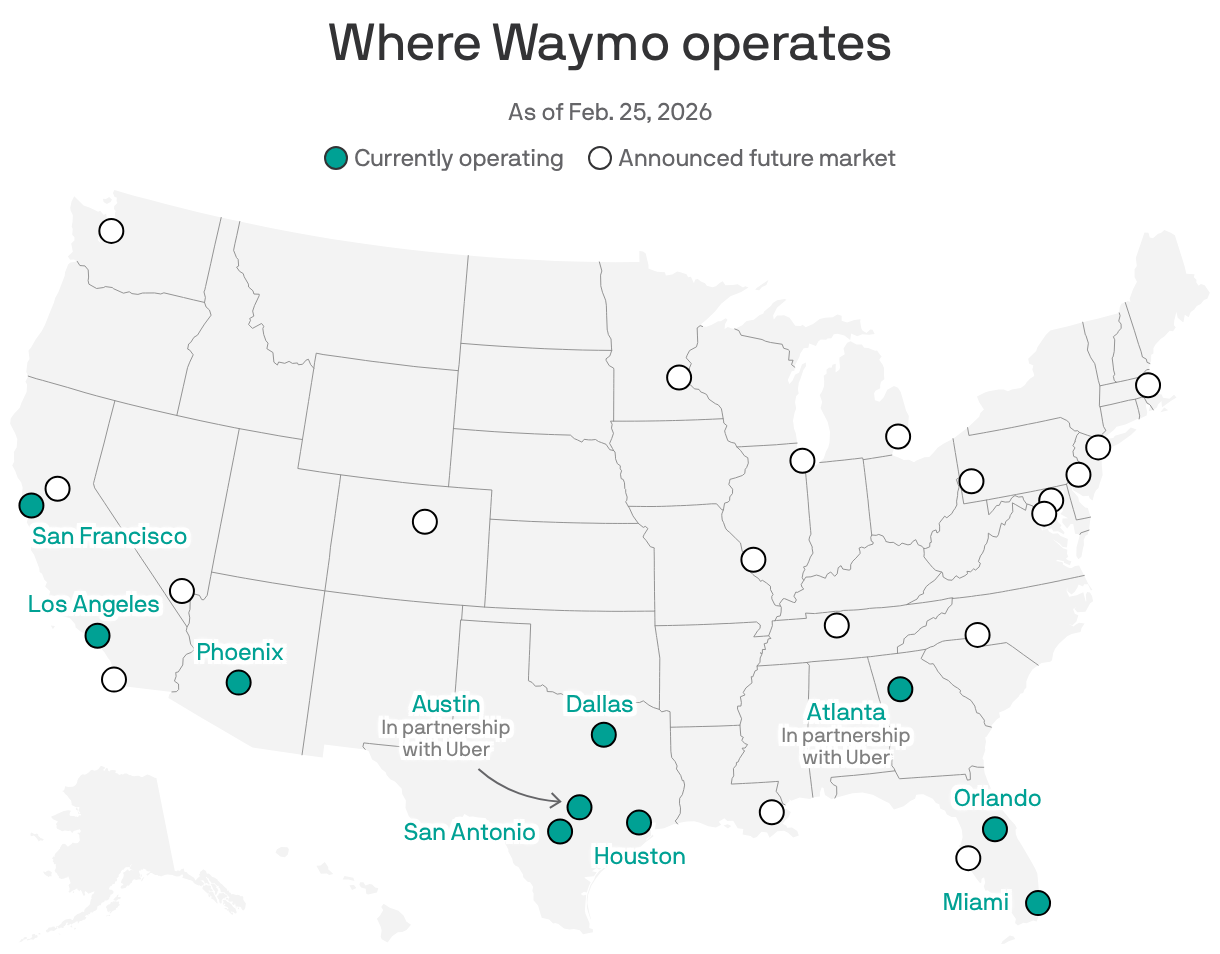
Why it matters: Simulation could accelerate robotaxi rollouts — Waymo is now operating in 10 cities — provided AI-generated training data truly mirrors reality. Not all experts are convinced.
The big picture: So-called world models — AI systems that simulate physical reality — are essential to developing everything from self-driving cars to robots and video games.
- Though the concept dates back decades, world models are becoming more important as AI advances beyond text toward general intelligence for the physical world.
How they work: World models learn by digesting video or other sensor data to create a digital twin of the environment, modeling motion, interactions and predicting what happens next.
- AV developers like Waymo and Waabi use them to train vehicles on complex scenarios long before their tires hit public roads.
- The goal is to design a system that can reason through situations it's never seen before.
Zoom in: Waymo says its Waymo World Model, built on Google DeepMind's Genie 3, can simulate rare edge cases — from tornados to wandering elephants — that are nearly impossible to capture in real-world testing.
- This "what if" capability helps Waymo rapidly improve its technology to safely scale its robotaxis across more cities, the company says.
Yes, but: While simulation is essential to teach AVs to drive, even the best simulators can't anticipate every random hazard, says Carnegie Mellon Emeritus Prof. Philip Koopman, an expert in embodied AI safety.
Friction point: "You only know world models are good enough through testing, and we are not doing enough testing," warns Missy Cummings, George Mason University robotics professor and a former safety advisor at the National Highway Traffic Safety Administration.
- "The use of simulated data to both build and validate world models is the ultimate in hubris and will most certainly lead to deaths for AI used in safety-critical systems," she says.
- "GIGO [garbage in, garbage out] is the operative word here."
Relying on synthetic data to design embodied AI systems like robotaxis creates risks that aren't fully understood, Koopman adds.
- "You have AI talking to AI. Where's the ground truth?" he asks.
What they're saying: Waymo points to its safety record:
- "Compared to human drivers over 127 million rider-only miles, the Waymo Driver has been involved in 10x fewer serious injury or worse crashes and 13x fewer crashes with injuries to pedestrians," the company says, citing its own peer-reviewed research.
- Waabi, meanwhile, defended the realism of its AI-generated world, and claimed it sets an industry standard.
Between the lines: Using its own paired testing method, the Waabi World simulator achieved a 99.7% "realism score" — reflecting how a robotaxi trained by AI drives the same in the real world as it does in simulation, founder and CEO Raquel Urtasun said.
- While other companies don't share similar measurements, Waymo says internal benchmarks show its own world model "embodies the highest level of realism to date."
What we're watching: Regulators may eventually use simulated driving tests to determine whether AV systems are safe to deploy.
- But proving a simulator's realism should be a prerequisite in the meantime, Urtasun said.
The bottom line: Robotaxis are only as good as the AI model that trained them.
2. Waymo's rapid growth

Waymo added four new cities in Texas and Florida this week as self-driving cars begin to penetrate mainstream America.
Why it matters: Armed with $16 billion in fresh capital, Waymo is quickly extending its lead over other players like Tesla and Amazon-owned Zoox, which are still mostly in testing mode.
The newest markets are Dallas, Houston, San Antonio and Orlando.
- The service will start slowly, with riders invited on a rolling basis until Waymo adds more cars to its fleet and scales up necessary operations like vehicle charging, service and maintenance.
- By later this year, it will be more widely available, Waymo says.
By the numbers: Now in 10 cities, Waymo has doubled the number of markets it serves in a matter of months.
- It's laying the groundwork for service in at least 20 cities, and is on track to provide more than 1 million driverless rides per week by the end of the year.
- It has about 3,000 robotaxis deployed nationwide, more than one-third of them in the San Francisco Bay area.
What we're watching: Waymo's robotaxis are adapting quickly to new markets, but basic operational challenges — such as setting up charging and maintenance hubs — could slow growth.
- And in some places, laws would have to change because robotaxis aren't allowed.
3. Sneak peek: Calling an air taxi on Uber
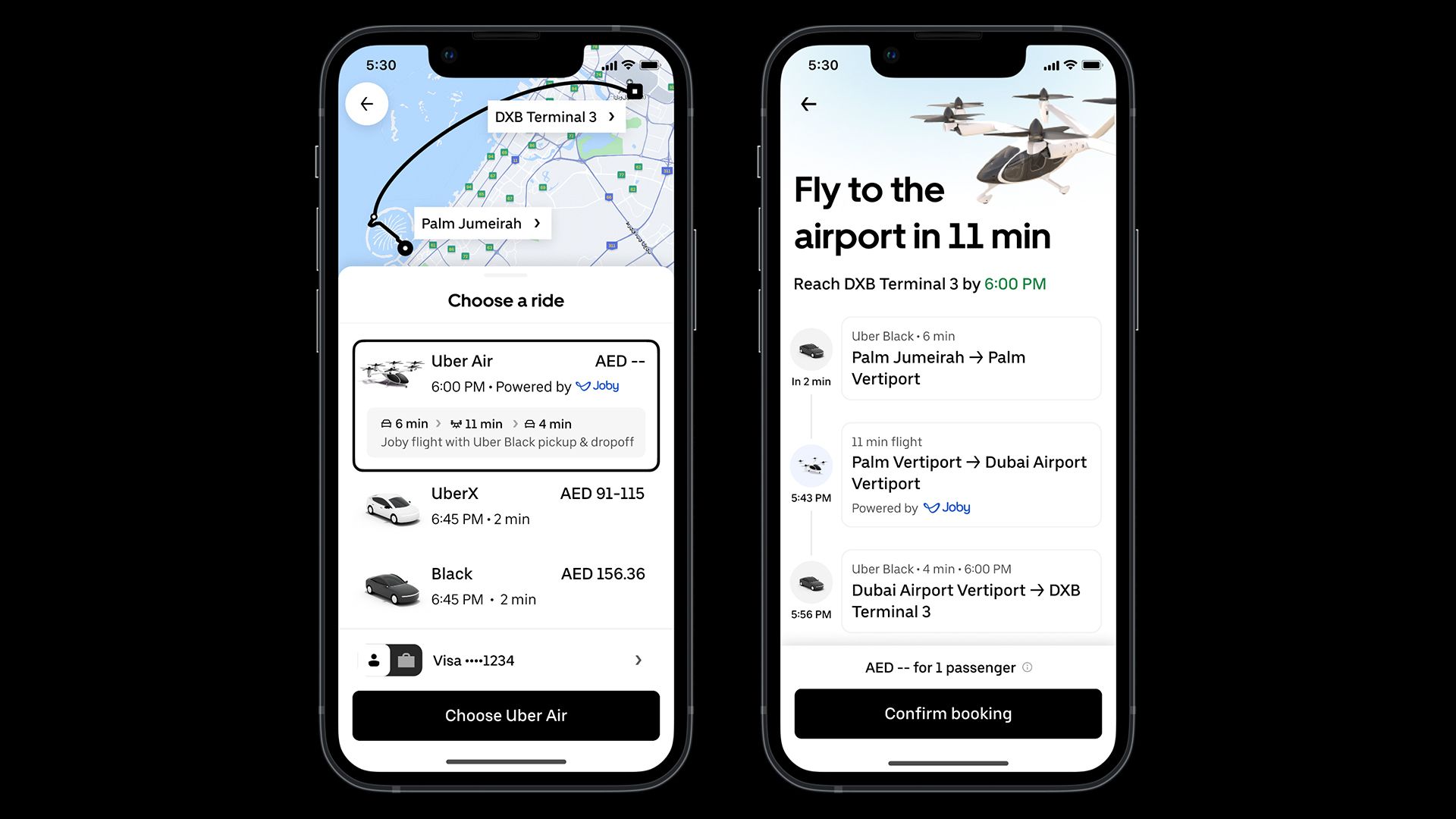
Headed to the airport? Uber customers in Dubai will soon have another ride option: Uber Air.
Why it matters: The first passengers on U.S.-built electric air taxis will be in the Middle East, while American manufacturers Joby and Archer await Federal Aviation Administration certification at home.
Driving the news: Uber Air powered by Joby was unveiled today, showcasing how riders will be able to seamlessly book Joby's electric air taxi on the Uber app.
How it works: Riders enter their destination in the "Where to?" bar, as usual. If their trip qualifies, Uber Air powered by Joby will appear as an option.
- With one tap, the app will book every leg of the journey — including Uber Black pickup and drop-off at Joby vertiports.
State of play: The air taxi service is expected to launch later this year in Dubai, a first for both companies.
- Once certified by the FAA, Joby aims to launch its electric air taxi service in New York and Los Angeles, as well as in the United Kingdom and Japan.
What we're watching: The FAA is expected to announce several pilot projects for eVTOLs next week.
4. Bill on self-driving cars seeks a passing lane
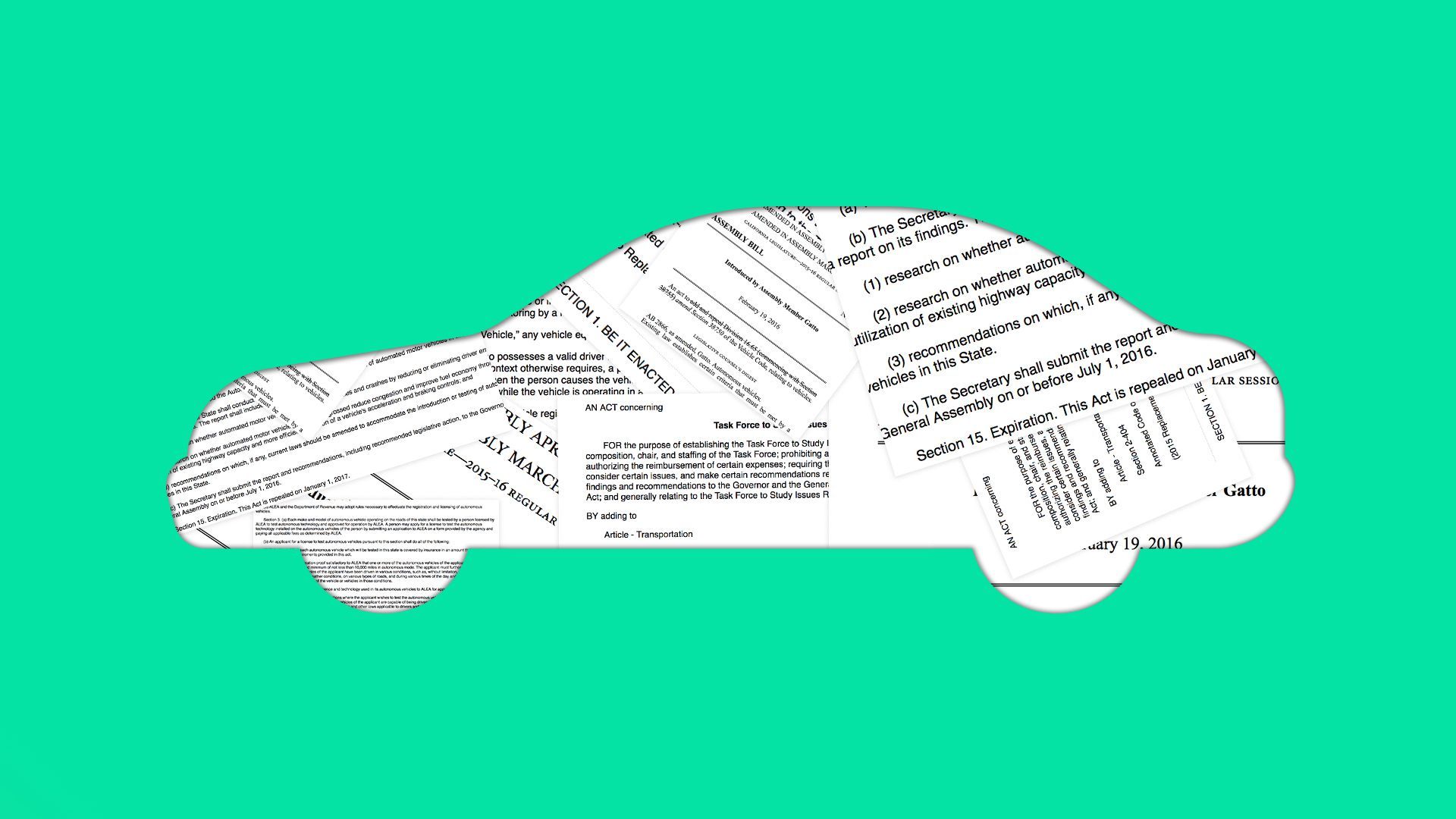
Lawmakers could finally pass legislation regulating self-driving cars by inserting language into a mandatory highway funding bill later this year.
Why it matters: Congress has tried — and failed — for nearly a decade to pass a comprehensive autonomous vehicle bill. In the meantime, AVs are rolling out across U.S. cities under a patchwork of state rules, with minimal federal guidance.
The big picture: Congress considers the renewal of highway, transit and infrastructure programs, known as the Surface Transportation Reauthorization, every five or six years.
- The current one expires Sept. 30, which is why AV advocates smell an opportunity.
What they're saying: "Every year we operate without a federal framework is a year American companies are fighting with one hand tied behind their back, and a year that other countries can use to close the gap," Jeff Farrah, CEO of the Autonomous Vehicle Industry Association, tells Axios.
- China, he notes, is not waiting.
- "Attaching AV legislation to this must-pass reauthorization package is the clearest and best path to enactment," he says.
Between the lines: At a recent Senate hearing, Farrah outlined what Congress should do:
- Require that AV manufacturers demonstrate the safety of their vehicles and that they abide by a series of driving competencies.
- Create a national AV safety database to enhance reporting at the state and federal level.
- Modernize motor vehicle standards to allow for vehicles that don't require human drivers.
What's next: Republicans on the House Transportation & Infrastructure Committee hope to issue a draft highway bill in early March.
5. Drive-thru
👋 U.K.-based Wayve, a leading developer of autonomous driving technology, raised $1.2 billion from investors that include Mercedes-Benz, Nissan and Stellantis.
- Uber, also an investor, committed an additional $300 million in milestone-based capital tied to the commercial rollout of Wayve-powered robotaxis in 10 global cities, starting in London.
- Wayve will license its software to automakers and Uber will own and operate the fleet, creating a scalable model for autonomous ride-hailing using mass-produced vehicles, Wayve said.
💭 Thought bubble: Uber continues to spread its AV bets widely in an effort to ensure robotaxis become part of its service rather than a competitive threat.
🤖 Honda-backed Helm.ai introduced a camera-based software stack for hands-free driving in complex city traffic without high-definition maps or lidar sensors.
- Founder and CEO Vladislav Voroninski tells Axios the system is designed to let automakers easily scale to more advanced levels of autonomy, including "eyes-off" Level 3 driving and fully autonomous Level 4.
🚖 New York Gov. Kathy Hochul withdrew her proposal to allow robotaxis in smaller cities outside Manhattan, citing a lack of support in Albany. (Reuters)
- What we're watching: Waymo's license to test in NYC is up for renewal March 31.
⚡️ The car world is going electric, without America, a must-read op-ed from China automotive guru Mike Dunne. (The Free Press)
6. What I'm driving: 2026 Kia K4 hatchback
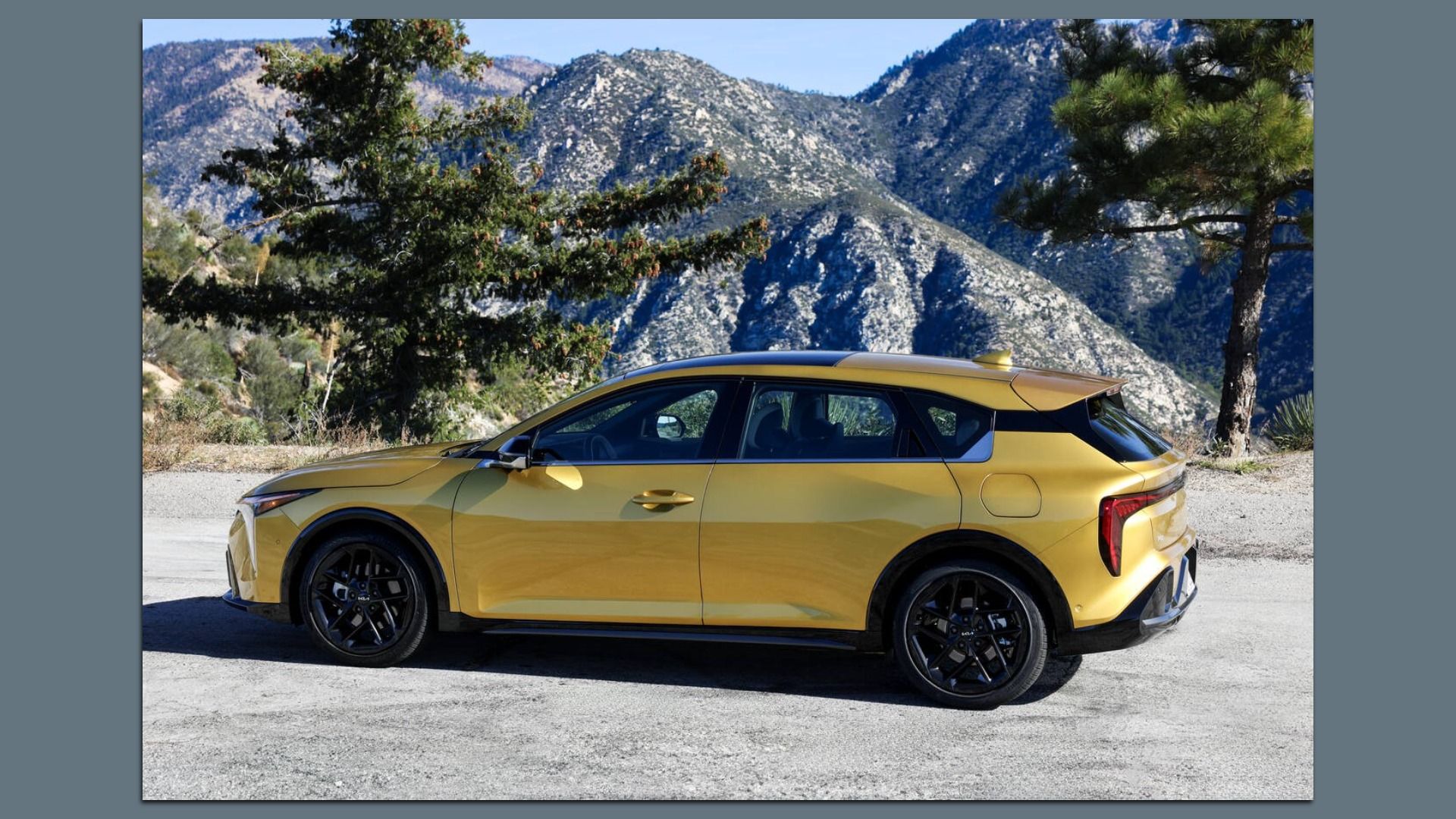
I've been enthralled with small cars lately (and their small prices), so I enjoyed spending a week behind the wheel of the new Kia K4 hatchback.
Why it matters: There aren't enough affordable cars on the market, so kudos to Kia for giving its entry-level K4 sedan a sporty hatchback sibling.
The K4 hatchback EX base model I drove had an MSRP of $24,890, and came with a bevy of advanced driver-assistance features and crash avoidance technologies you'd typically find in a more expensive car.
- The interior boasted a 12-inch touchscreen, Apple CarPlay & Android Auto, a backup camera, heated seats and remote start — all standard.
The bottom line: The K4 is a big value in a small package.
Thanks for reading! And thanks to Pete Gannon and Amy Stern for editing. Please ask your friends to sign up!
Sign up for Axios Future of Mobility