Axios Future of Mobility
September 02, 2026

👋 Hi again! September already! First U-M football game of the season this weekend in Ann Arbor. Go Blue! 🏈
- 🍕 Speaking of college, we're diving into campus delivery robots this week, and watching Tesla's Cybercab launch tomorrow in Austin, another famous university town.
📚 Transportation is all about getting complex systems to run. "Simplify: Do 50% More with 50% Less," a new book by the three Axios co-founders, shows you how to delete what's clogging your life and work so you have more time for what you enjoy and are awesome at. Jim, Mike and Roy include lots of tips for making AI work for you rather than inflicting more bloat. Preorder Simplify.
1,702 words, a 6½-minute read.
1 big thing: A new class of campus robots
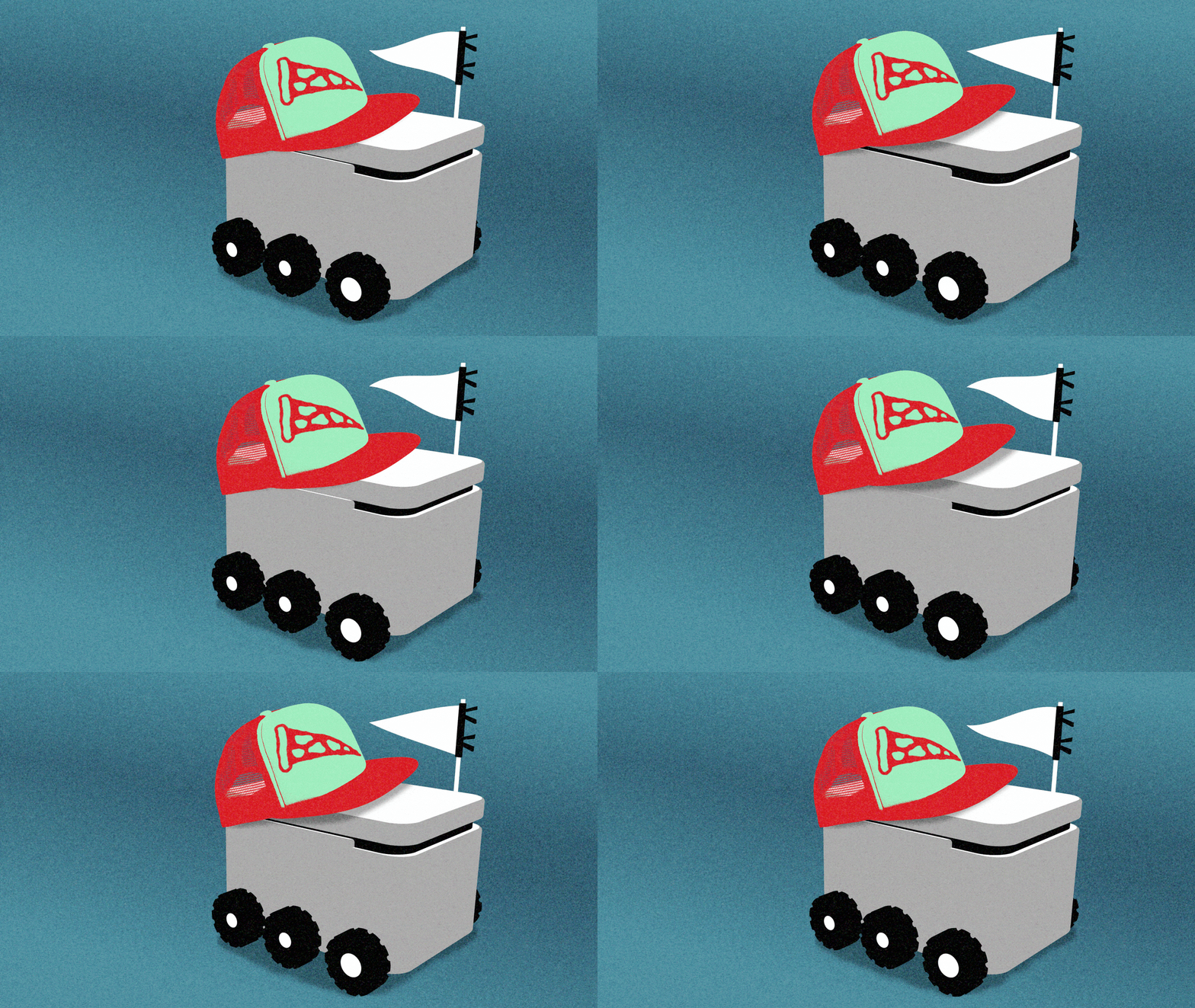
A new cohort of fresh-faced delivery robots is arriving on college campuses this fall after the leading incumbent graduated last spring to chase bigger ambitions in the real world.
Why it matters: Students and universities have come to love the futuristic porters of lattes, pizza and late-night snacks, while robotics companies get something far more valuable: a chaotic, real-world proving ground for physical AI.
Driving the news: Starship Technologies, which pioneered college robot delivery at George Mason University in 2019 — expanding later to 67 campuses — announced in May it was shifting its U.S. focus to more lucrative grocery deliveries.
- Universities already accustomed to the roving robots moved swiftly to recruit replacements, some of whom had already been eyeing campus delivery.
State of play: Avride operated robots on four campuses last year. Now it's adding 21 that were previously served by Starship.
- Robot.com just signed a seven-year agreement with food service company Sodexo to expand its autonomous delivery across Sodexo-managed campuses.
- Cartken and Coco Robotics are smaller players on campuses.
The big picture: It turns out college students are a surprisingly good test audience for delivery robots.
- They're hungry at weird hours, impatient, tech-friendly and living in a compact environment where walking 15 minutes for dinner can feel like an intolerable burden.
- When school is in session, campuses offer exceptionally high order volumes and high turnaround rates, said a spokesperson for Avride, one of the companies stepping in to fill the void left by Starship.
Yes, but: School isn't always in session. Students keep going home for breaks, and campuses empty out during summer months.
- Starship figures its robots got only about seven months of work a year on college campuses, versus year-round demand for urban grocery delivery.
- That's a big reason why the company switched strategies, Valentin Naidja, Starship's senior vice president of revenue, tells Axios.
Follow the money: "The whole game is, like, how many deliveries can you do per robot?" Naidja said. "Obviously, if you do 15 deliveries per day per robot for 12 months, it's much better than doing 12 or 13 for six months or seven months, right?"
- Starship wants to be "a billion-dollar company" and sees dramatically more growth ahead in groceries.
What we're watching: Delivery companies' ambitions could run into a new U.S. rule restricting new foreign-made robots.
- Avride's robots are built in Taiwan, for example, and Starship's are built in Estonia.
- Naidja says complying with new U.S. sourcing and assembly requirements could make the already-challenging economics of robot delivery unworkable.
- "This might make the business unprofitable for everybody," he said, calling it "an issue for every robot provider right now."
The bottom line: For now, however, an incoming class of robots is getting a valuable education in delivery.
2. Waymo's next-gen robotaxi is here — but for how long?
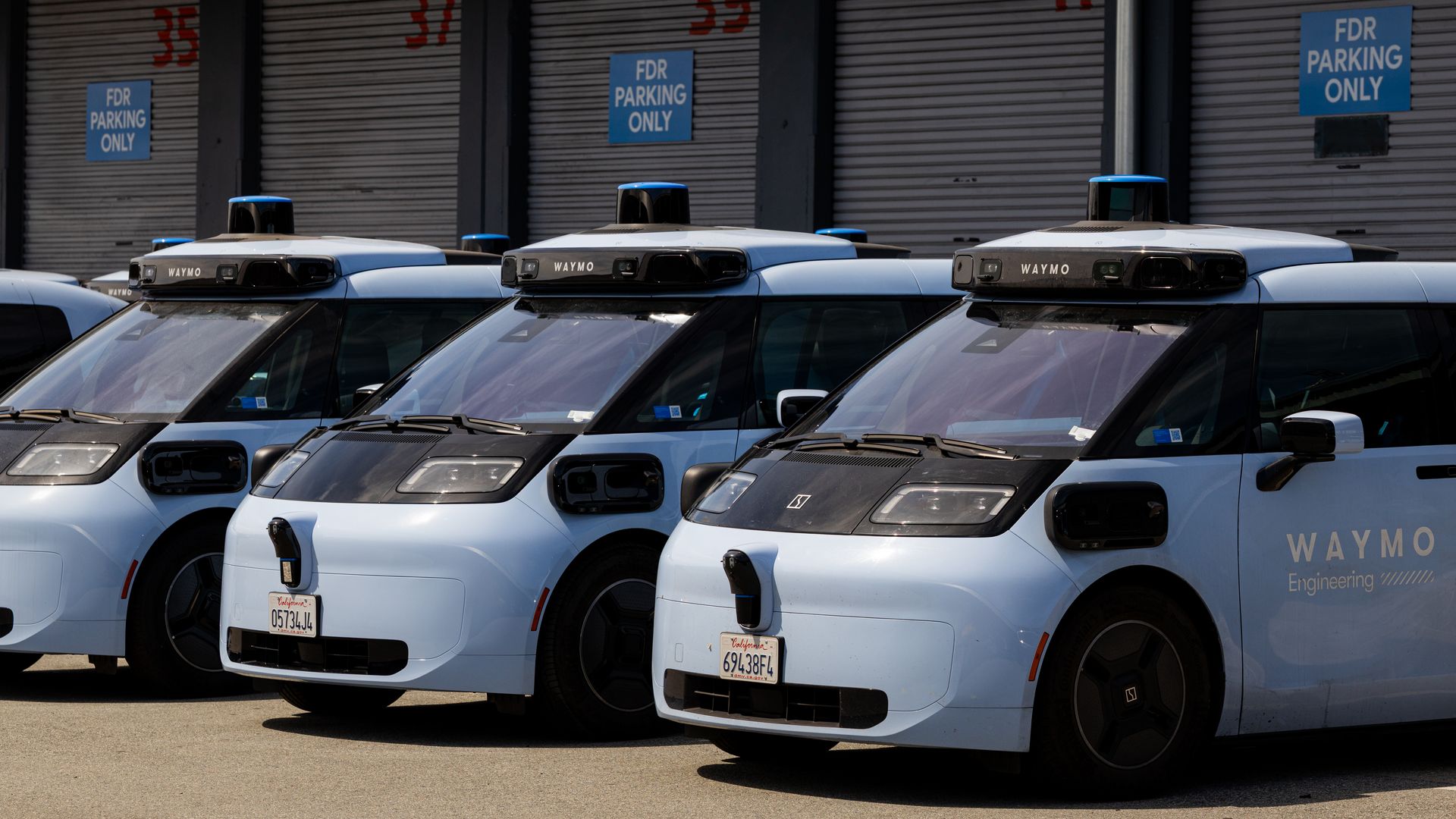
Waymo is accelerating its nationwide expansion with cheaper, next-generation robotaxis — thousands of which are built in China and could eventually run afoul of tightening U.S. restrictions.
Why it matters: The Alphabet subsidiary is betting its next phase of growth on cheaper robotaxis built for massive scale — just as Washington could move the goalposts on where those vehicles can come from.
Driving the news: Waymo began carrying public passengers yesterday in Denver, San Diego and Tampa, pushing its nationwide commercial fleet beyond 4,000 vehicles.
- While Tampa will see the familiar white Jaguar I-Pace SUVs, Denver and San Diego will be the first markets served exclusively by Waymo's new powder-blue, snub-nosed Ojai robotaxi.
- The expansion to Denver is also important because it's the first Waymo market with meaningful winter weather, adding snow, cold, elevation and challenging road conditions.
Zoom in: The Ojai features the sixth-gen Waymo Driver, which has fewer sensors and is cheaper to build and maintain.
- The system is designed to be modular, so it can migrate to other vehicles, including future Hyundai Ioniq 5 robotaxis, which are still in testing.
The Ojai is based on a stripped-down vehicle manufactured by Zeekr, a brand owned by China's Geely Holding Group and subject to huge tariffs.
- TechTimes estimates a $38,000 Ojai chassis costs about $78,000 after tariffs, before Waymo adds roughly $20,000 worth of self-driving equipment — still far below estimates for the earlier-generation I-Pace Waymo.
Friction point: The Ojai could become problematic for Waymo as the U.S. government tightens technology import restrictions to protect national security.
- A current Commerce Department rule restricts Chinese software and hardware in connected vehicles, including automated-driving software.
- Waymo says it complies because Zeekr is supplying only the basic vehicle, while Waymo installs its own autonomous-driving and connectivity technology in Arizona.
Yes, but: A bipartisan bill from Sens. Elissa Slotkin (D-Mich.) and Bernie Moreno (R-Ohio) would close that door by targeting where the vehicle itself comes from, not just its technology.
- The bill would prohibit the import and sale of connected vehicles manufactured in China or linked to foreign adversaries — even if their AV software and connectivity systems are American.
What they're saying: "We support the broader aims of the industry and the bill's authors," a Waymo spokesperson tells Axios, noting that its Waymo Driver software system is American-made.
- "The bills considered by the House and Senate include strict protections with which we intend to comply. We will continue to work with Congress to secure America's leadership in automated vehicle technology," the spokesperson said.
State of play: Waymo is on track to import 5,000 Zeekr vehicles by year-end, according to MoffettNathanson, which tracks shipping data, TechCrunch reported, and it is quickly ramping up Ojai production in Arizona.
What we're watching: If the U.S. blocks Chinese-built vehicles, one option is that the company could redirect future Zeekr production to overseas robotaxi markets.
- If that happens, Hyundai's Ioniq 5, built in Georgia, could soon become the Waymo Driver's primary taxi in the U.S.
One last thing: Waymo is now selling merch.
3. Tesla's Cybercab gets its big test
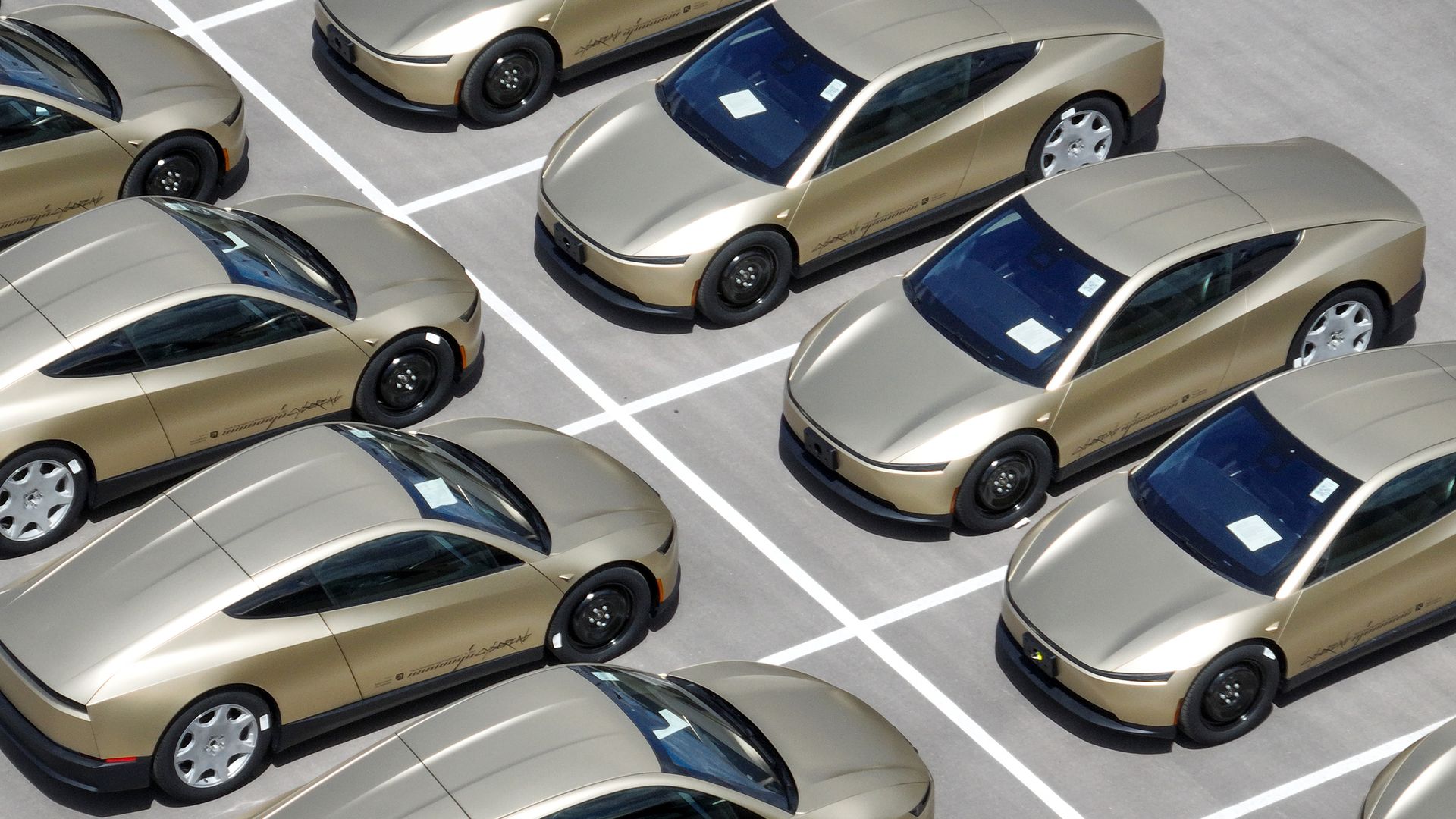
Tesla will launch its long-awaited Cybercab service tomorrow in Austin, putting its vision of a purpose-built robotaxi with no steering wheel or pedals to its first real-world test.
Why it matters: Tesla already operates a driverless robotaxi service using conventional Model Y cars. Cybercab will test whether it can mass-produce — and legally deploy — a vehicle designed exclusively for autonomy.
Driving the news: Tesla is holding an invitation-only Cybercab launch event tomorrow at its Austin factory, with plans to livestream the festivities.
- Tesla began Cybercab production this summer and has been testing production vehicles on public roads, while offering employee rides on its Texas factory campus.
- The company hasn't said how many Cybercabs will initially be available for ride-hailing; most industry watchers expect extremely few.
- "They've got to build trust with the public," says Grayson Brulte, co-founder of Autnmy AI, an AV research and advisory firm. "They cannot risk a NHTSA safety investigation or Cybercab service would be shut down."
Between the lines: The Cybercab launch will also test whether Tesla's camera-only, end-to-end approach can catch up to Waymo, which built its robotaxi lead with multi-modal sensing and high-definition maps.
- Last week, Waymo slammed the camera-only system, saying "safe, fully autonomous operations at scale require more." It listed the issue first among 10 AI lessons learned after 15 years and 200 million driverless miles.
What we're watching: Tesla's biggest hurdle may be regulatory, not technological.
- Federal safety standards were written for human-driven cars. The Trump administration is moving to strip away some of those requirements, but that could take years.
- Tesla, unlike Zoox, hasn't sought a federal exemption for Cybercab, betting instead that it can self-certify compliance as regulators modernize the rulebook.
4. Drive-thru
✂️ Uber is cutting 10% of its workforce to simplify its operations, cut management layers and invest more in ride-sharing and autonomy. (Axios)
📚 Gridlock Sam (aka Sam Schwartz, the renowned transportation planner who coined the term "gridlock") has co-written his first novel, Autokill, a techno-thriller about terrorists hijacking self-driving vehicles in a near-future America. (Bloomberg)
🚖 Zoox is adding Houston and San Diego to its robotaxi roadmap. It will begin mapping portions of the cities with its retrofitted test fleet later this month before autonomous testing begins.
🎙️ Nuro cofounder and co-CEO Dave Ferguson has a new YouTube podcast called "Unsupervised" that features conversations with leaders across technology, transportation and policy about the biggest questions in autonomy and physical AI. Check it out here.
⚡️ Thieves are stealing cables from EV chargers to harvest copper wiring as the price of copper climbs. (CBC)
5. 🚘 What I'm driving
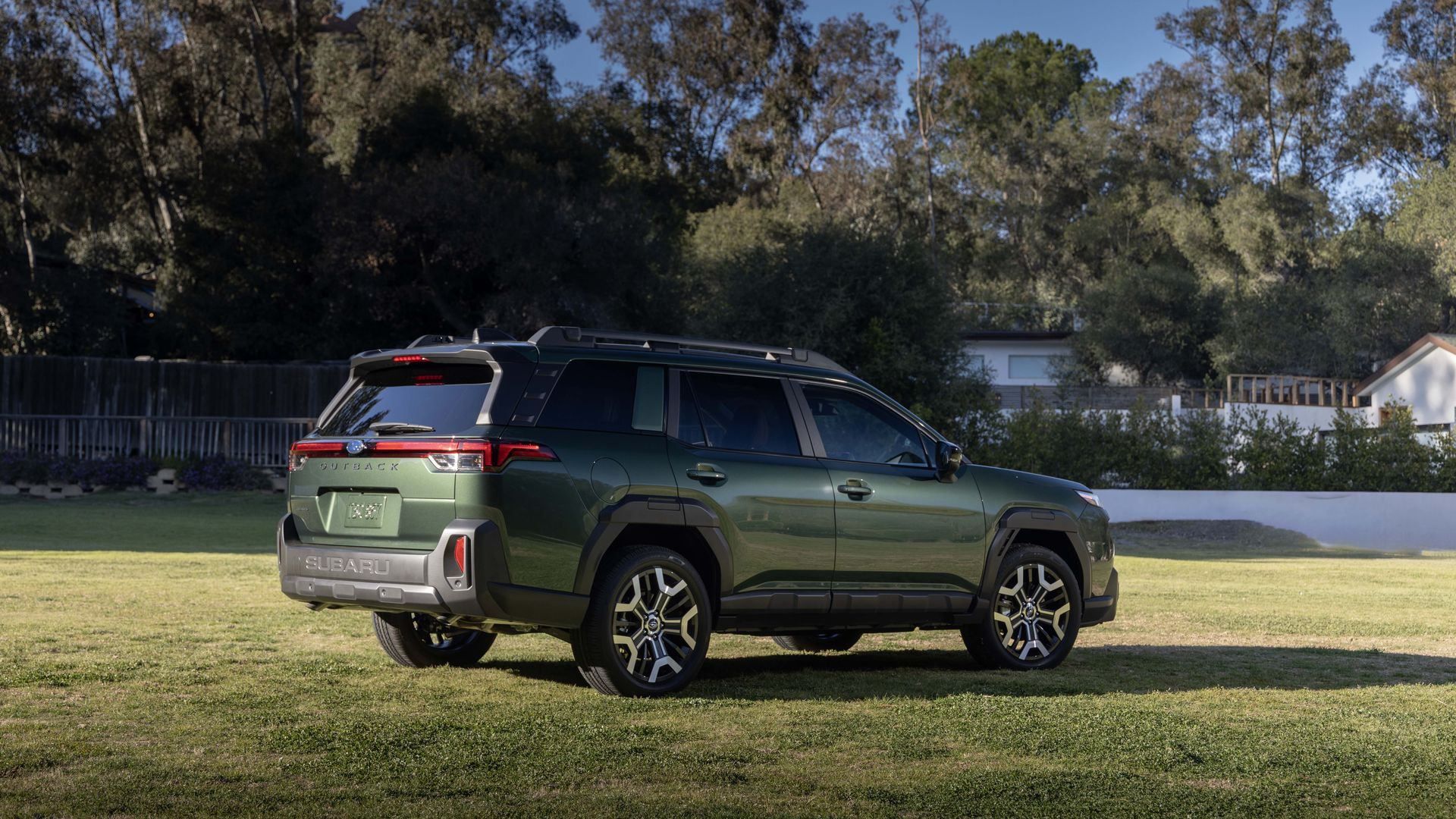
2026 Subaru Outback
- MSRP: $36,445 starting price, including delivery; As tested: $49,840 for Touring XT trim.
- Under the hood: 180-hp, 2.5-liter base engine or available 260-hp, 2.4-liter turbocharged engine; 24 mpg.
- Manufacturing site: Ota, Japan.
What's new: A boxier shape makes it look more like an SUV than a wagon — controversial for Outback diehards — but also provides more headroom and cargo space.
- A more contemporary interior, including a new infotainment system.
- New safeguards like Emergency Stop Assist, which pulls the car over and calls emergency services if a driver becomes unresponsive.
What I loved: Subaru finally ditched its old Starlink multimedia system and replaced it with a new 12.1-inch system that is faster and easier to use. And there are even real knobs to control the climate system!
- The hands-free highway driving system was easy to use and performed well, even in light rain at night.
What I didn't love: I'm still trying to warm up to the new styling direction.
I test-drive vehicles in my role as a juror for the North American Car and Truck of the Year awards. Opinions are my own.
Thanks to editors Pete Gannon and Bill Kole. If you're a fan of this newsletter, please ask your friends to sign up, too.
Sign up for Axios Future of Mobility