Axios Future of Mobility

August 13, 2025

🧳 There's a lot to unpack in Ford's decision to roll out a new family of affordable EVs, but we'll try to make sense of it all for you.
- ⚡️ Plus, it looks like the Trump administration has relented on its objection to government-funded EV chargers.
1,605 words, a 6-minute read ...
1 big thing: Making sense of Ford's EV strategy

I'm still peeling back the layers of Ford's new electric vehicle strategy, like a Bloomin' Onion at Outback.
The big picture: The headline is that Ford will introduce a new family of EVs priced under $40,000 and will use a new manufacturing process to try to make them profitably.
- The news — announced with fanfare Monday at a Ford plant in Louisville, Kentucky — was billed as Ford's next "Model T moment."
But there are so many subtexts ...
Betting on America: CEO Jim Farley's patriotic messaging no doubt was designed to resonate at the White House, where President Trump, eager to attract more U.S. manufacturing, is weighing his next moves on tariffs.
- "We could have followed [competitors] and packed up our bags and moved this kind of project to South Korea, Japan or somewhere else for lower cost labor, currency advantages, low cost suppliers. But that is not the way we do things at Ford," Farley said.
- "We took on the challenge many others have stopped doing. We're taking the fight to our competition, including the Chinese, with teams across the United States, designers from California, engineers from Michigan, American workers right here in Louisville."
- Farley also touted a new $3 billion factory in Michigan that will be the first to produce lithium-iron-phosphate battery cells in the U.S.
- He didn't mention that Ford licensed the battery tech from a Chinese company, and that the plant's cost is partially offset by Biden-era production tax credits opposed by many Republicans, which nevertheless survived Trump's $3.4 trillion budget bill.
It's bigger than Trump: Investing $5 billion in EVs might seem crazy at this point, given how much the political winds have shifted since Trump took office.
- Widen the lens, however, and Ford's big bet is the only natural choice in the face of existential threats.
- Affordability is a top concern — Ford vehicles sell for an average $56,000, out of reach for many mainstream buyers.
- Meanwhile, Chinese carmakers have figured out how to make world-class EVs at a fraction of the cost, and they're quickly taking over the world. It's only a matter of time before those Chinese cars arrive in the U.S.
- If Ford wants to compete, it has to match that efficiency. Failure to invest — even without the help of consumer tax credits and other EV-friendly policies killed by the Trump administration — means waving the white flag.
Swinging for the fences: After decades of failed attempts by legacy automakers to produce affordable cars in America, Ford tried a new approach.
- It created a skunkworks team in California, far from Ford's Midwest headquarters, led by former Tesla executive Alan Clarke.
- The team had a blank slate to create a new electric vehicle platform — and even Farley was kept away for a while.
- Their inspiration, said Doug Field, Ford's chief EV, digital and design officer, was Henry Ford himself: "The Model T was affordable, not because it was a thrifted version of other cars that were out there. It was the result of brilliant minds taking fundamentally new approaches to old problems."
- The Universal EV Platform they came up with is a simplified architecture, with far fewer parts, fewer fasteners, and 4,000 feet less wiring — all of which means less weight, a smaller battery and, ultimately, a lower price tag.
The outcome is uncertain: "There are no guarantees with this project," Farley said during the event in Louisville. "We're doing so many new things I can't tell you with 100% certainty that this will all go just right. It is a bet. There is risk."
- Later, in a candid moment, he joked to reporters, "I hope our friends in California know what they're doing."
🍿 What to watch: Ford isn't sharing much about the vehicles themselves — other than the first model will be a midsized electric pickup truck, on sale in 2027.
- But officials promise they'll offer breakthrough digital features the industry hasn't seen before.
2. Go deeper: Ford's assembly tree concept

Ford admits it can't compete with Chinese automakers' labor cost advantages or their vertically integrated supply chains. So to build affordable EVs in the U.S., it has to find other ways to lower the cost of manufacturing.
- That means throwing out the very concept that Henry Ford designed in 1913 to build the Model T, the product that launched the company's success.
- "We tore up the moving assembly line concept and designed a better one," says CEO Jim Farley, adding: "Henry Ford would be proud."
The big picture: Ford will build a vehicle in three separate pieces — the front, the rear, and the structural battery core — and then put them together.
- Instead of a single conveyor, Ford designed an "assembly tree" with three branches for its new EV production system to be introduced in 2027 in Louisville.
- On two of the branches, large single-piece aluminum castings will replace dozens of smaller parts, for the front and rear of the vehicle.
- The third branch is the battery, which serves as the vehicle's floor and will be pre-assembled with seats, consoles and carpeting — simplifying installation for employees with less twisting, reaching and straining.
- With fewer parts, more automation and 40% fewer work stations, Ford says it will be able to bring more of its supply chain in-house.
Yes, but: Even so, building EVs this way means it won't need as many workers, something the UAW has worried about for years.
- About 600 in Louisville will be offered buyouts or move to other Ford factories.
3. Federal government to pay for EV chargers after all

The Trump administration is reopening the spigot for federally funded EV chargers after freezing the Biden-era program for six months.
Why it matters: It's a rare concession from President Trump, who has long attacked the $5 billion National Electric Vehicle Infrastructure (NEVI) program as a waste of government dollars.
- The program, approved by Congress as part of the 2021 bipartisan infrastructure law, was slowed by permitting holdups and other bureaucratic delays, resulting in only about 150 NEVI stations in operation to date.
Faced with multiple legal challenges, the Trump administration opted to let funding flow again, albeit under new guidelines.
- "If Congress is requiring the federal government to support charging stations, let's cut the waste and do it right," Transportation Secretary Sean Duffy said in a statement Tuesday.
Driving the news: Duffy issued streamlined guidance from the Federal Highway Administration that he said cuts the "red tape" in Biden's plan.
- He removed a rule dictating that stations be built no more than 50 miles apart along highways, for example, providing states more flexibility.
- And he rescinded language ordering states to engage with disadvantaged communities when choosing where to install chargers.
What he's saying: "Our revised NEVI guidance slashes red tape and makes it easier for states to efficiently build out this infrastructure," Duffy said in a statement.
- "While I don't agree with subsidizing green energy, we will respect Congress's will and make sure this program uses federal resources efficiently."
What's next: The changes mean more than $2 billion in unallocated NEVI funds could start flowing to projects as soon as next month.
4. Drive-thru

ICYMI ...
💰 General Motors is trying to lure back some former employees of its defunct Cruise robotaxi unit as part of a renewed push to develop driverless cars for personal use. (Bloomberg)
⚡️ Revel has shut down its electric ride-hailing service in New York City to focus on expanding its EV charging network in major cities. The decision comes a year after striking a deal with Uber to steer its drivers to Revel's chargers. (TechCrunch)
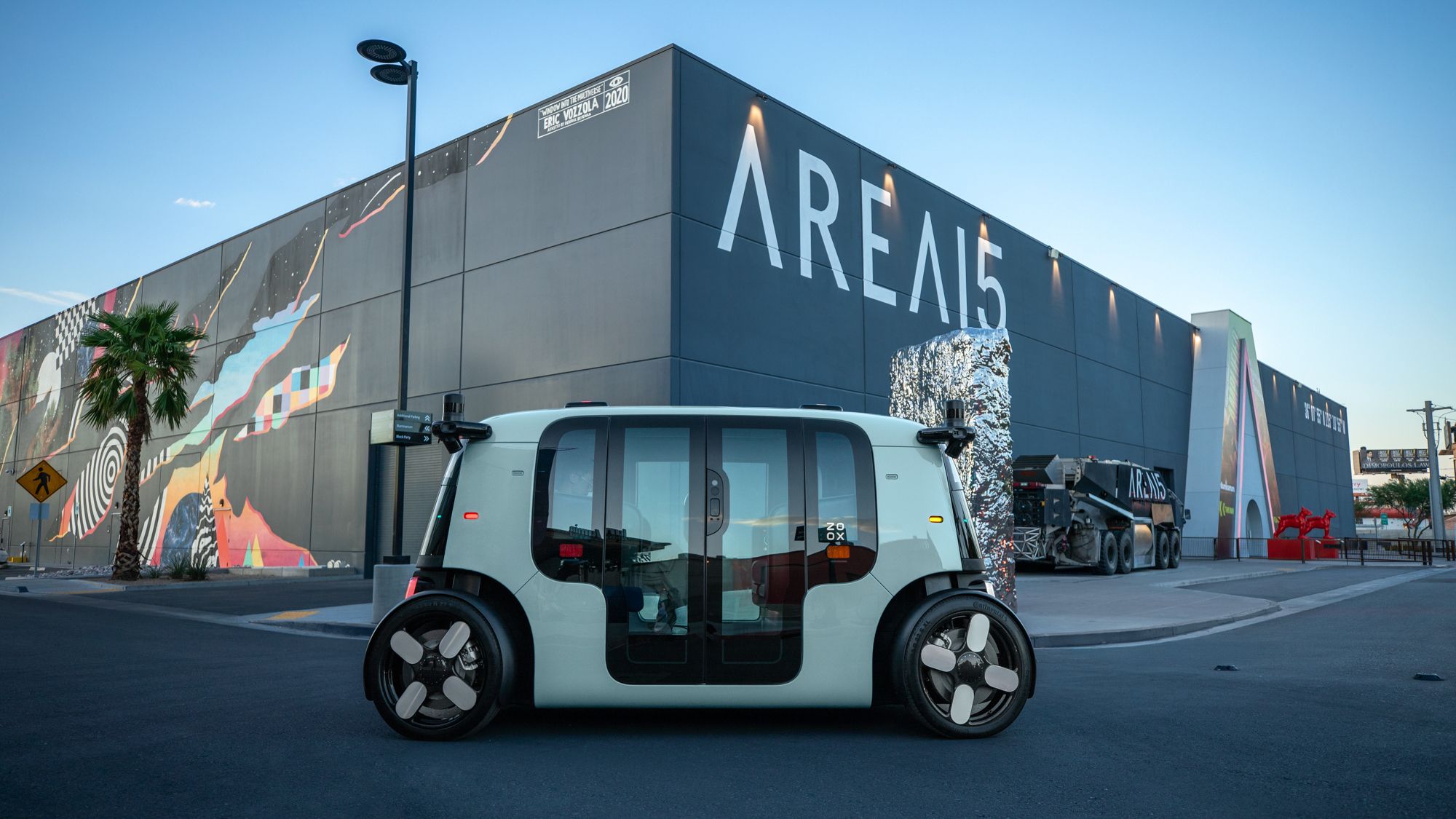
🚖 Amazon's Zoox has been granted an exemption by federal vehicle safety regulators to demonstrate its toaster-shaped robotaxis, which lack a steering wheel and traditional human controls. (CNBC)
- As part of the move, the National Highway Traffic Safety Administration closed a 2023 probe into Zoox's self-certification that its robotaxi met federal safety standards.
5. What I'm driving: 2026 Honda Passport
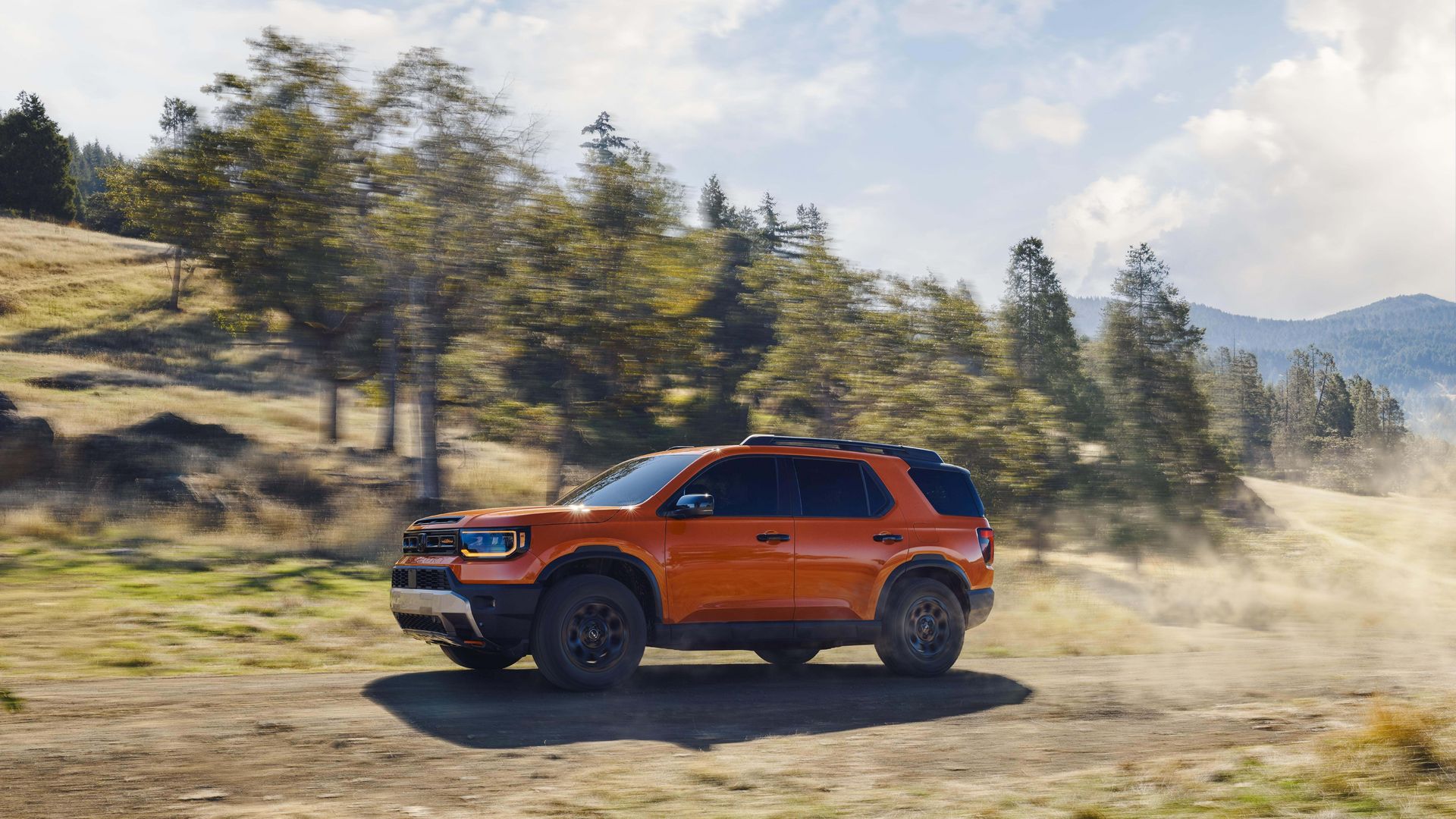
Honda has cranked up the brawniness of its redesigned Passport SUV.
Why it matters: The Passport needs off-road credibility to compete with tougher rivals like the Ford Bronco, Toyota 4Runner and Nissan Pathfinder.
What's new: Aside from a more rugged appearance, the 2026 Passport gets a stiffer chassis and a beefed-up suspension, along with a shorter overhang for crawling over rocks and things.
I drove the TrailSport Elite, the Passport's highest trim level at $52,450, and the most-equipped for off-road trails.
- Confession time: I never went off-roading, but around town it was quiet, smooth and comfortable, even on all-terrain tires.
- And it was packed with premium features including a multi-view camera system, heated leather seats (even for rear passengers) and a 12-speaker Bose audio system.
Specs: All Passports come with a 3.5-liter V-6 and a new 10-speed automatic transmission and upgraded all-wheel-drive system.
- Fuel economy is 20-21 mpg in combined city/highway driving, depending on the trim level.
Pricing ranges from $44,750 for the base RTL version to $53,650 (excluding a $1,450 destination charge).
1 fun thing: Among the long list of available accessories is a clever cargo shelf in the rear that converts into a sturdy picnic table, a throwback to the first-generation Honda CRV.
- I'm looking forward to using it at a University of Michigan tailgate this fall.
I test-drive vehicles in my role as a juror for the North American Car and Truck of the Year awards. Opinions are my own.
Thanks to Ben Berkowitz and Bill Kole for editing. Please tell your friends to sign up here!
Sign up for Axios Future of Mobility