Axios Future of Mobility

July 29, 2026

🙋 Hi, it's Nathan Bomey! I'm the author of Axios Closer and a former full-time autos reporter. Today, I'm taking the reins of this must-read newsletter while the esteemed Joann Muller is away on some well-earned R&R.
🧷 In today's edition, we dig into AV safety and drone delivery.
Today's newsletter is 1,168 words, a 4½-minute read.
1 big thing: AV safety blind spot

Everyone agrees the standard for self-driving cars is that they have to perform better than a human driver. Proving that is not so simple, however.
Why it matters: Inconsistent data reporting methods mean there's no common yardstick to compare safety claims, adding to the confusion and distrust surrounding autonomous vehicles.
State of play: Waymo says its robotaxis are already "more than 10 times safer than the average human driver."
- Its peer-reviewed research — based on more than 220 million miles without a human driver — shows a 94% reduction in crashes involving serious injuries or worse, and 93% fewer crashes involving pedestrian injuries.
- A recent independent study by the Insurance Institute for Highway Safety (IIHS) generally concurs, finding Waymo had 81% fewer injury crashes per mile than human drivers in four cities it studied.
Yes, but: IIHS highlighted a major blind spot in wider AV research and said current data collection isn't good enough to monitor safety on an ongoing basis.
The big picture: The National Highway Traffic Safety Administration has required companies to report incidents involving automated and assisted-driving systems since 2021, primarily to spot potential safety defects and enforce recalls.
- The database is the only national archive for tracking AV safety, but it's insufficient as a research tool because it lacks context — there's no correlation to the number of vehicle miles traveled.
- Waymo voluntarily shares that data, known as VMT, which allowed for the analysis by IIHS. But other companies do not.
- Without that critical denominator, researchers can't calculate meaningful crash rates or compare performance between companies or technologies.
Between the lines: Even with the mileage data that Waymo provides, it's difficult to compare AV crash rates to those involving human drivers.
- IIHS says about half of all crashes — and one-third of injury crashes — involving human drivers go unreported. That's in part because drivers involved in fender-benders want to avoid a hike in their insurance rate.
- Plus, human crash databases categorize injuries and crash severity differently, making apples-to-apples comparisons difficult.
Zoom in: When IIHS researchers analyzed Waymo's crash rates in San Francisco, Phoenix, Los Angeles and Austin, Texas, for example, they had to discard roughly 25% of reported AV crashes because they were duplicates, occurred off public roads or would not have been reported to police.
- Using this method, IIHS found Waymo vehicles were involved in 68% fewer "police-reportable crashes" per mile than human drivers in those cities.
What's next: Researchers say robotaxi crash data should mirror the standards in other federal crash databases, such as tracking airbag deployments and logging crashes according to established injury severity scales.
- NHTSA should also require all AV companies to disclose VMT in order to determine crash frequency rates, IIHS said.
What they're saying: Waymo supports the recommendations for more robust reporting requirements.
- "More high-quality data is fundamental for building public trust in this technology and ultimately making roads safer for everyone," the company said in a statement.
What to watch: The Autonomous Vehicle Industry Association has recommended a national data repository as part of its proposed AV policy framework, but congressional legislation remains stalled.
2. 🧑✈️ DoorDash launches in-house drone delivery

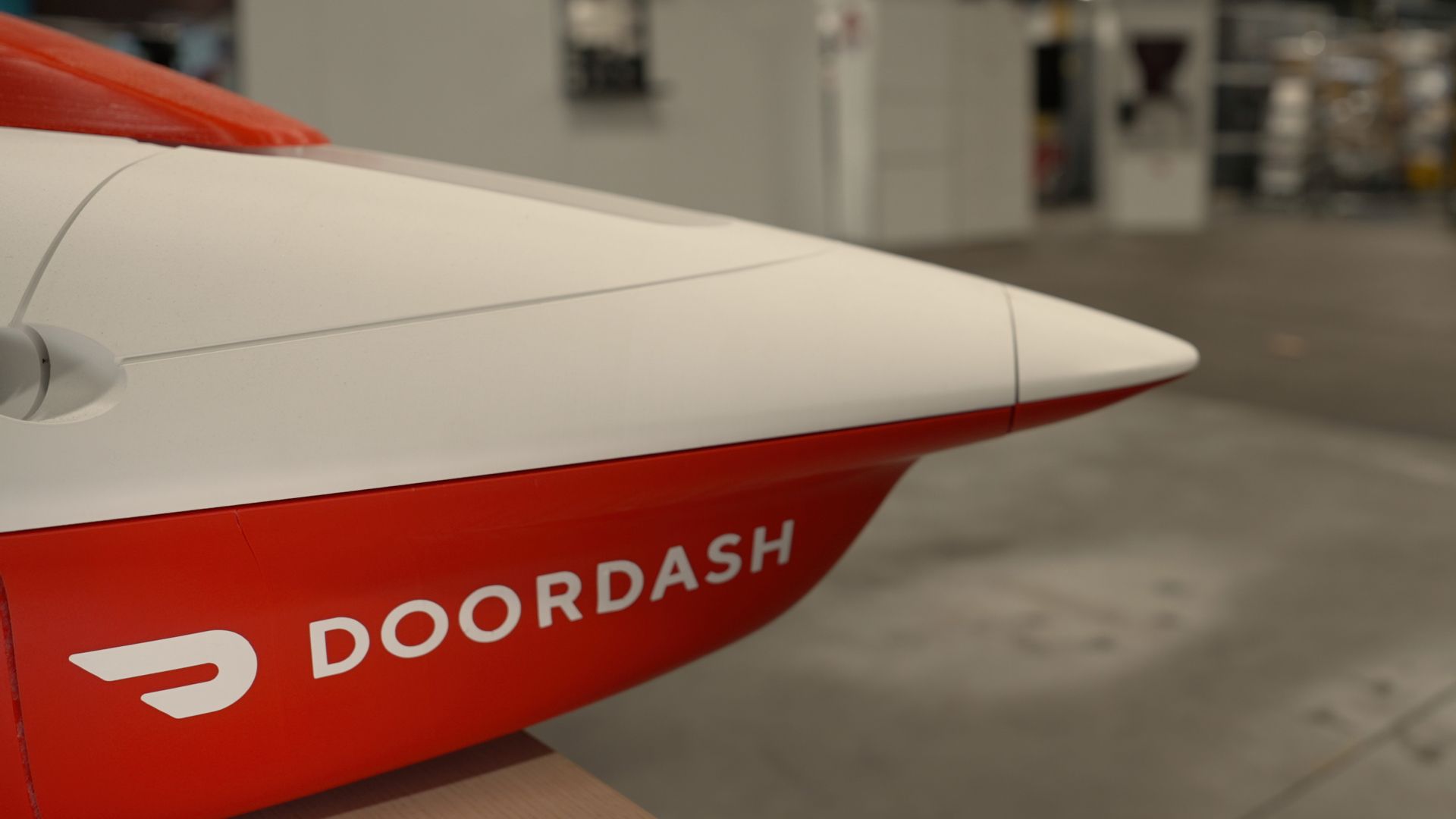
DoorDash secured authorization from the FAA to launch its own in-house drone delivery program.
Why it matters: The company has invested in a wide range of alternative forms of delivery, including ground bots and delivery via bicycle.
Driving the news: DoorDash announced today that it's starting DoorDash Air after becoming the eighth drone operator in the U.S. to obtain Part 135 air carrier certification.
- "We want drone delivery to work for any merchant, anywhere," Harrison Shih, head of DoorDash Air, said in a statement. "We're building the full stack to make that possible from the ground infrastructure to the drone itself, and the handoff systems that make it work together seamlessly."
State of play: DoorDash already has drone delivery partnerships with Alphabet's Wing and an Israeli company called Flytrex.
- Those deals will remain in place, but the company will now develop its own custom-made drone and manage many of its own air deliveries.
The bottom line: The company says drone deliveries under five miles average fewer than 25 minutes.
3. Drive-thru
🪖 Ford landed a Defense Department contract to make a tactical version of its Ford F-Series Super Duty pickup trucks for military use. GM, the company's archrival, was already working on a version of its own for the Pentagon. (WSJ)
🇩🇪 German automaker Mercedes-Benz vowed to protect its U.S. business amid growing concerns about a bipartisan bill in Congress that would ban automakers with Chinese shareholders from owning at least 15% of their shares. (Automotive News)
🇯🇵 Chinese automaker BYD launched an electric kei minicar in Japan, attempting to capture a share of a major vehicle segment there. It costs the equivalent of about $12,200 after taxes and subsidies. (Reuters)
🚗 The National Highway Traffic Safety Administration is developing new rules on door handles amid heightened scrutiny over the potential dangers of flush, electrically operated handles like those on Tesla EVs. (Bloomberg)
4. 🚘 What I'm driving
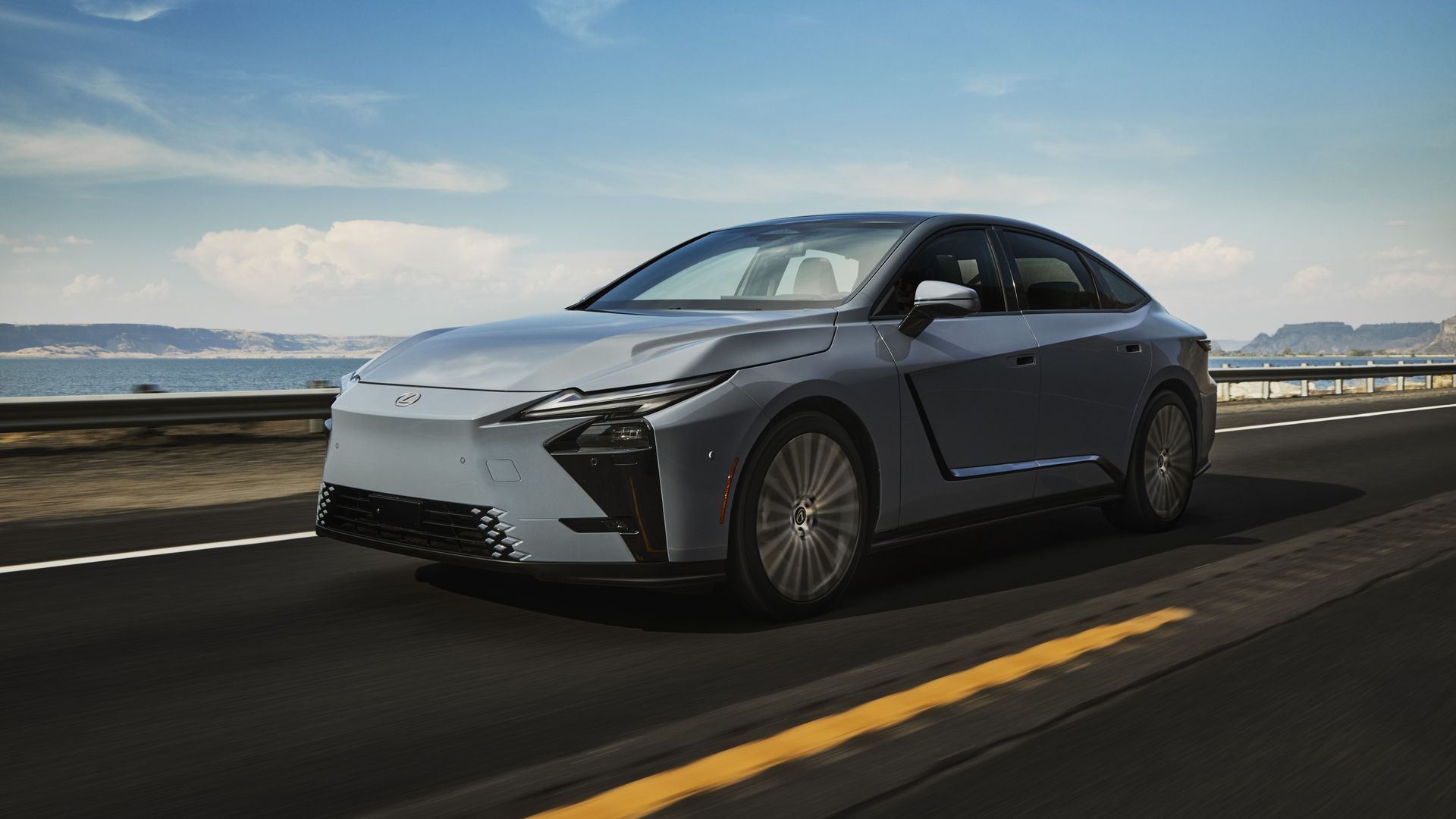
Lexus ES
- MSRP: Starts at $51,095 (including destination) for hybrid; $48,895 for electric.
- Under the hood: Choice of hybrid or electric powertrain. Hybrid, now available with all-wheel drive, gets 44 mpg. EV driving range is up to 307 miles.
Manufacturing site: Kyushu, Japan.
What's new: Besides the new EV option, the ES 350e is larger and more spacious, perhaps to make up for the elimination of Lexus' flagship LS sedan.
- There's a ton of legroom in the rear, and an optional Executive Package even adds reclining and massaging rear seats, with a passenger-side ottoman.
I got to drive both the hybrid and EV models last week. The cars look identical, which is the point. You can get an ES with whatever powertrain you prefer (except gas!).
What I loved: For an EV, the Lexus ES 350e is surprisingly affordable and offers more space and luxury than you'd find in a similarly priced Tesla Model 3.
What drove me crazy: Lexus' long list of safety and convenience technologies includes one annoying feature that chimed a warning every time I turned on my right blinker in my neighborhood.
- The so-called intersection turn assist is supposed to warn you if a pedestrian is in your blind spot, but the system seemed to detect everything — trees, shrubs, trash cans, curbs.
- I finally had to turn it off.
The bottom line: Lexus faithful will find the same quiet, comfortable ride they've come to expect in the ES, but in a somewhat larger package.
I test-drive vehicles in my role as a juror for the North American Car and Truck of the Year awards. Opinions are my own.
Thanks to editors George Moriarty and Bill Kole. If you're a fan of this newsletter, please ask your friends to sign up, too.
Sign up for Axios Future of Mobility