Axios Future of Mobility

January 28, 2026

Happy Wednesday! Investors are waiting to hear later today what Elon Musk has to say about Tesla's robotaxi progress.
- In the meantime, we're chock-full of autonomous vehicle news.
1,537 words, a 6-minute read.
1 big thing: One AI driver for everything

A robot trained to drive an 18-wheeler can now drive a taxi, too, says Waabi — a Canadian autonomous trucking startup that just secured up to $1 billion from investors, including Uber.
Why it matters: Waabi says it's the first company to develop a shared AI "brain" that can operate both trucks and robotaxis — and eventually, other types of physical AI such as drones, warehouse robotics and humanoids.
- "It's obvious that the physical AI moment is here," Waabi founder and CEO Raquel Urtasun tells Axios. "Autonomy is the first application where scale is going to happen."
Driving the news: The funding includes $750 million in a Series C round, plus a $250 million milestone-based commitment from Uber tied to a robotaxi partnership.
State of play: Uber's backing gives the new entrant instant weight in the race with Waymo, Tesla and overseas rivals to deploy driverless cabs.
- As part of the agreement, Waabi has agreed to deploy at least 25,000 robotaxis powered by its driver system exclusively on Uber's global ride-hailing network.
Yes, but: There are many unanswered questions about the Waabi/Uber robotaxi effort.
- Waabi will supply the robot "driver," but it's not clear what vehicles will be used.
In a similar deal with Nuro and Lucid for 20,000 robotaxis last summer, Uber agreed to buy 20,000 Lucid electric robotaxis over six years and pay Nuro a per-mile licensing fee for its robot driver.
- There is no such vehicle purchase agreement with Waabi yet.
- It's also not known where and when Waabi's robotaxis will be deployed, and what the performance milestones are in order to unlock Uber's funding.
The backstory: Uber has had a stake in Waabi since its founding in 2021 by Urtasun, an AI pioneer who was previously chief scientist for Uber's Advanced Technologies Group.
- Uber sold ATG in 2020 to Aurora Innovation, another AV company working on autonomous trucks.
- Uber now has a stake in both Aurora and Waabi, which has a 10-year deal to autonomously haul cargo on the Uber Freight network.
The intrigue: Waabi's early AV efforts in Texas focused on a hub-to-hub model, in which automated trucks would drive only on the highway and then hand off to a human driver for local delivery.
- But logistics companies complained that system just added costs and friction to their operations.
- So Waabi trained the trucks to master surface streets, too, so they could deliver cargo directly to the customer's final location.
That street-level training, using self-learning AI technology, is what opened the door to urban robotaxis, Urtasun tells Axios.
- "We've been pretty upfront for the last year and a half that our vision was to do more than self-driving trucks. We plan to do physical AI. Now it makes total sense for us to go to robotaxis next. Think about all the potential verticals you can do. This is ripe for scale."
The bottom line: After years of hype, autonomous trucks and robotaxis are leading the way to the next phase of artificial intelligence
2. Uber, Lyft race to stay ahead of robotaxis
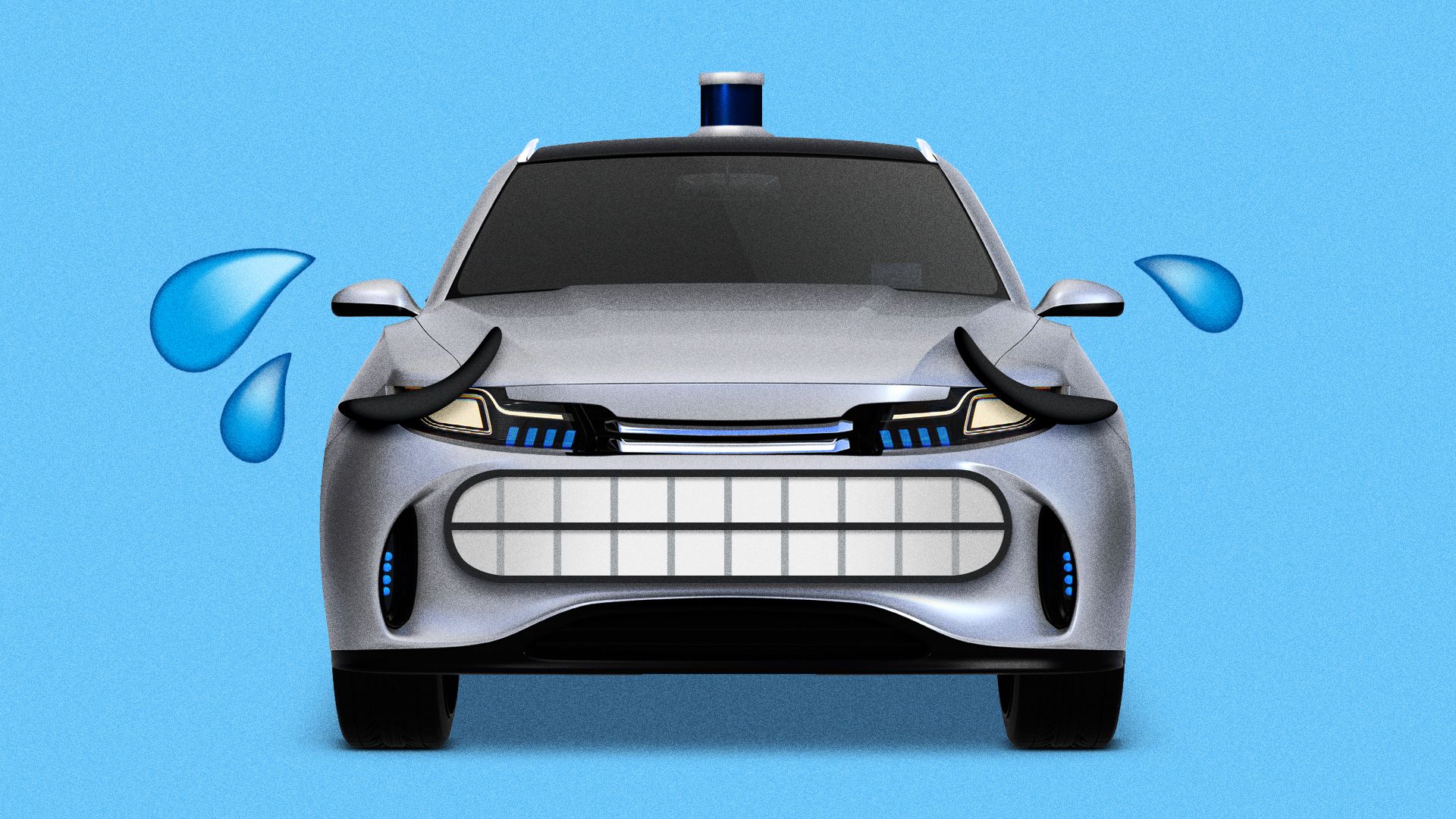
Lyft, like Uber, gave up on developing its own AV technology — but both companies still see themselves as essential partners in the autonomous vehicle ecosystem.
Why it matters: AVs are a potential threat to the ride-hailing giants.
The big picture: Uber and Lyft have adopted a partnership strategy to ensure they remain relevant.
- Their thinking: Why should AV companies reinvent the wheel when Uber and Lyft already have many of the missing pieces they need — the rider network, the operating platform and potentially, lots of data.
Case in point: Uber has opted to partner with more than 20 AV companies worldwide to deploy small AV fleets alongside human drivers on its network.
- The Waabi deal, and the Nuro/Lucid deal last summer, represent an escalation of that strategy, committing partners to deploy tens of thousands of robotaxis.
- Lyft, though on a smaller scale, has also teamed up with multiple AV companies and acquired FreeNow, a fleet management company, to bring self-driving vehicles into its network.
The latest: Uber has created a new division called AV Labs that will collect real-world driving data from its huge global network to help companies like Waymo, Waabi and Nuro accelerate development of their self-driving technology.
- The approach mirrors Tesla's long-running strategy of using real-world driving data to train its autonomous software.
- Tesla's advantage, though, is that it has millions of customer-owned cars on the road. It will take time for Uber to build that kind of data flywheel.
The intrigue: Uber, in particular, wants to prevent the robotaxi race from narrowing to just two players — Waymo and Tesla.
- That's why it's making so many deals to support other self-driving tech companies.
The bottom line: Both ride-hailing giants envision a vibrant marketplace with multiple robotaxi providers.
- "I think, collectively, everyone realizes that this is going to be an enormous market," Stephen Hayes, Lyft's vice president of autonomous and fleets, tells Axios.
3. Tesla robotaxis undercut rivals in SF
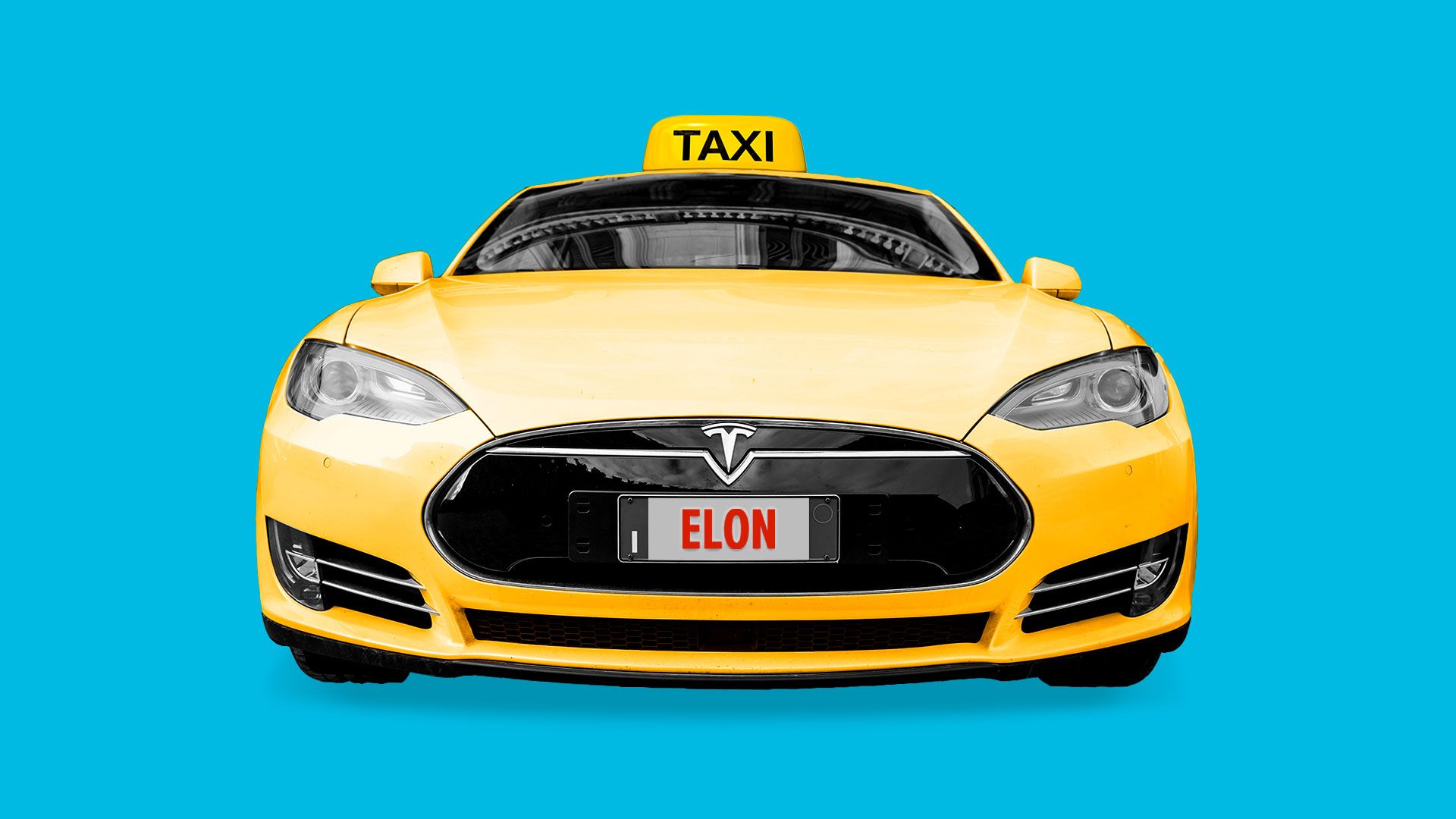
Tesla robotaxis are consistently cheaper than Uber, Lyft or Waymo in San Francisco, according to a fresh study of the rapidly evolving market.
Why it matters: The economics of ride-hailing are changing quickly as robotaxis hit the road — and over time, their high utilization and lower labor costs could make them the cheapest option.
Driving the news: Tesla, which began deploying robotaxis (with a safety monitor) last summer, consistently undercuts competitors' prices in San Francisco, according to Obi, an app that compares real-time pricing and pick-up times across multiple ride-hailing services.
- Yes, but: The tradeoff is that Tesla customers have a longer wait time, likely due to its much smaller fleet than Waymo, Uber or Lyft.
By the numbers: A Tesla robotaxi ride in San Francisco averages $8.17, Obi's research shows.
- The next cheapest option is Lyft, which averages $15.47.
- Uber averaged $17.47, while Waymo is the highest, averaging $19.69.
- Waymo's prices have come down since Obi first surveyed the market in June 2025 (before Tesla's entry), while Uber and Lyft have raised prices since then.
Zoom in: On a per-kilometer basis, "Tesla is in another class entirely in terms of pricing," averaging $1.99 per km, about one-third the cost of Waymo, Uber and Lyft, Obi found.
- And unlike other players, Tesla shows no patterns of demand-based price surges, the data shows.
Between the lines: Tesla is likely subsidizing rides as it seeks to establish itself in the ride-sharing business, much as Uber and Lyft did 15 years ago.
- It's still paying safety monitors to ride along, after all.
- It could also be possible that Tesla's cars, which have fewer sensors than Waymo's, are cheaper to operate, as CEO Elon Musk claims.
Reality check: Tesla can't operate a fully driverless robotaxi service in California until it clears key regulatory hurdles, limiting its growth there.
- That permit process could take until 2027, according to Barclays auto and mobility analyst Dan Levy.
The bottom line: Obi's study found growing enthusiasm and trust for driverless rideshare, and that consumers are willing to pay more for the novelty of riding in a robotaxi.
4. Gatik hits driverless trucking milestone
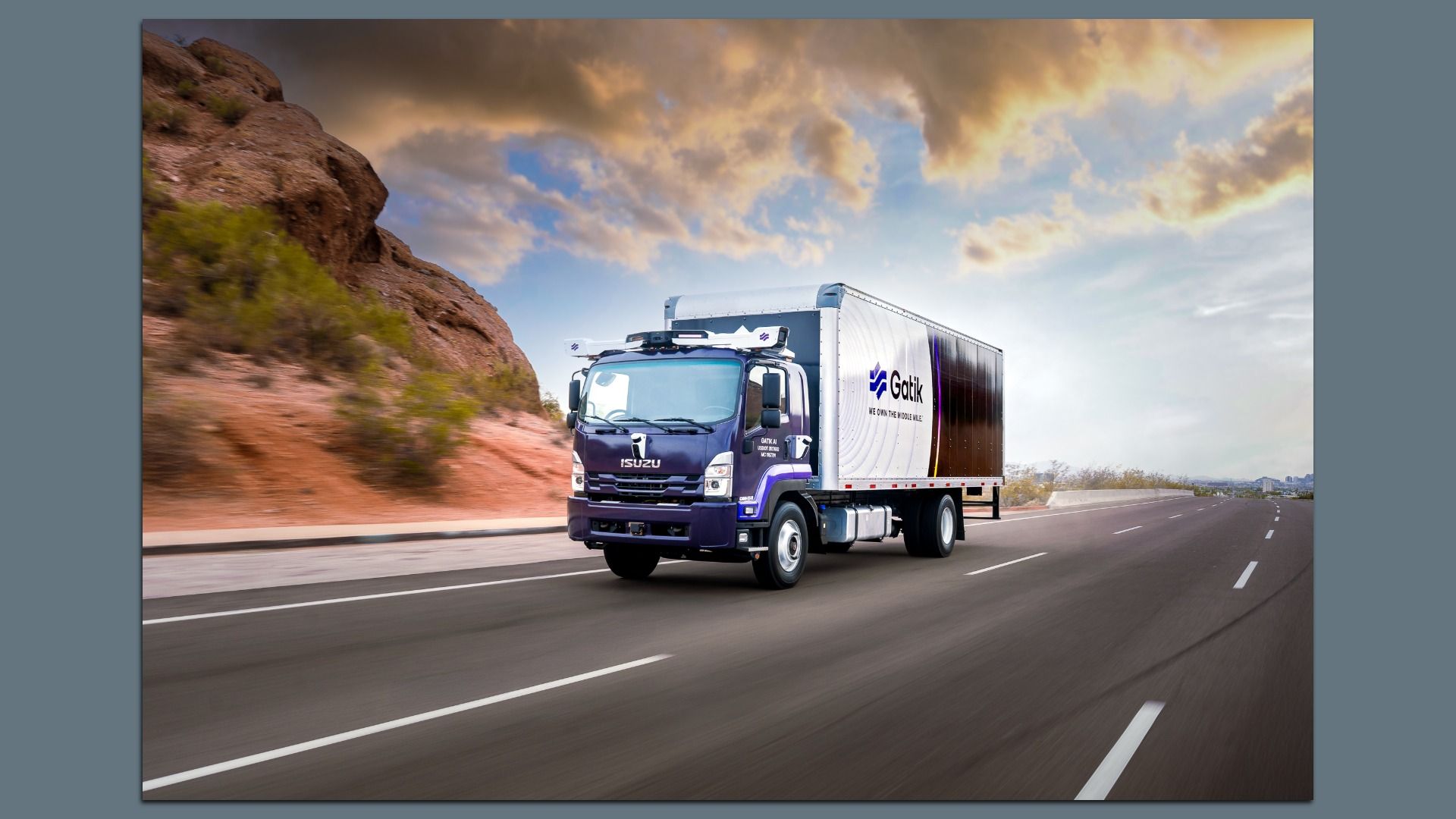
Autonomous trucking startup Gatik signed a deal with a major consumer-goods company that will double its contracted revenue to $600 million over five years, Bloomberg reported.
Why it matters: Gatik says it is the first company in North America to deploy fully driverless trucks at scale, a milestone that moves the industry past limited pilots to sustained, revenue-generating operations that will strengthen supply chains.
State of play: Gatik is one of many autonomous trucking companies testing their technology in Texas.
- It's different from most other AV trucking companies, however, because it focuses on the "middle mile" between warehouses and stores, rather than on long-haul highway driving.
Zoom in: Gatik's current driverless fleet consists of 10 revenue-generating trucks, with plans to increase to 60 trucks in the coming weeks and expand to hundreds of driverless trucks by the end of the year.
What they're saying: "Autonomous trucking is no longer a promise. It's a business. With more than $600 million in contracted revenue, Gatik has proved that autonomous trucking is not only possible but commercially viable," CEO and cofounder Gautam Narang said in a release.
5. Tesla's self-driving cars really are safer, insurer finds
Online insurance company Lemonade is offering a 50% rate cut for Tesla drivers when the company's Full Self-Driving (FSD) software is engaged because data shows the technology reduced accidents.
Why it matters: It's an endorsement of Tesla CEO Elon Musk's claims that the company's driver-assistance technology is safer than human drivers, despite concerns flagged by regulators and safety experts.
The intrigue: Industry experts have long maintained that safety claims made by self-driving car companies can't be trusted because they often rely on selective data and misleading comparisons.
- Lemonade is the first third-party insurance company to get direct access to Tesla FSD's safety statistics.
The bottom line: The insurer concluded FSD was so much safer than human driving that it warranted a 50% rate cut.
Go deeper: Insurers weigh who to blame when a self-driving car crashes
Thanks to Pete Gannon and Bill Kole for editing. See you next week! Tell your friends to sign up for Axios Future of Mobility.
Sign up for Axios Future of Mobility