Axios Future of Mobility
November 04, 2026

👋 Hi again — my phone is blissfully silent today after all those campaign texts finally stopped.
- Privacy is important, after all.
🚗 Now think about your car. The more information you share with it, the better it can help you manage your life. But can you trust it with your personal data?
- That's the question on my mind as carmakers rush to add AI assistants into their vehicles.
👀 What we're watching: Last night's blue wave, and the expected anti-tech backlash, are likely to cause a setback for robotaxis and the wider AV industry. Federal and state legislation is likely to come under pressure as blue states have already expressed concerns around safety and labor.
🪖 Programming note: We won't publish next week as Axios observes Veterans Day, but we'll be back in your inboxes on Nov. 18.
1,778 words, a 6½-minute read.
1 big thing: Is your car spying on you?
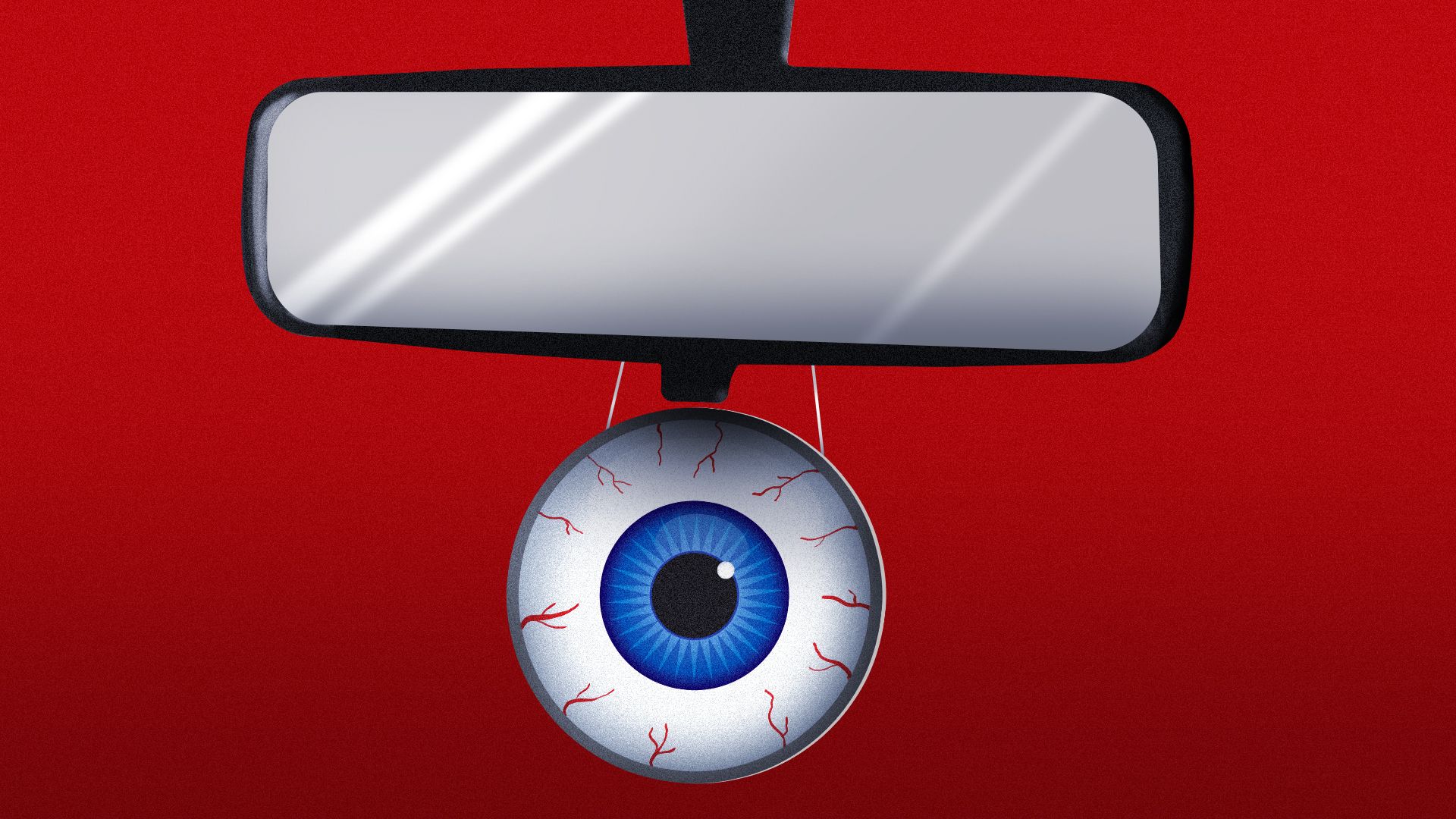
Your next car could know almost as much about your personal life as your spouse or best friend — thanks to new embedded AI assistants that promise to make driving easier and more convenient.
Why it matters: Automakers are racing to turn vehicles into intelligent personal assistants that can anticipate drivers' needs, manage their schedules and eventually handle errands on their behalf.
The big picture: Those capabilities don't work by magic — they require access to sensitive personal information, raising questions about who controls it, how it's protected and what happens when AI makes a mistake.
- Today's connected cars already collect data about where we go and how we drive. Tomorrow's AI-powered vehicles could know why we're going somewhere, whom we're meeting and what we're planning to do when we arrive.
- And as AI assistants become more autonomous, they could make decisions or share information on our behalf — potentially without us realizing the implications.
That privacy dilemma is already playing out away from the road. Meta's viral Muse AI assistant, for example, has raised concerns about how easily AI agents with access to personal information can reveal sensitive details users never intended to share.
State of play: GM, Ford, Rivian, Mercedes-Benz, BMW and other automakers are introducing increasingly sophisticated AI assistants.
- GM's new OnStar AI assistant will let drivers converse naturally with their cars to control functions, check vehicle health and even coordinate family activities like child pickups.
- Rivian is pushing further into personal productivity, with an AI assistant that can reschedule meetings and navigate to appointments. An optional memory function learns favorite destinations, restaurants and routines.
The more these systems know about drivers, the more helpful they can become — but also the more damaging an unintended disclosure could be.
Friction point: Automakers have already hit some potholes.
- GM recently agreed to pay $220 million to settle allegations that it improperly shared drivers' behavior and location data with brokers, which passed it along to insurers.
- Meanwhile, consumer class-action cases over GM's handling of driving data continue.
And it's not just GM. Researchers at Northeastern University, partnering with Consumer Reports, found that 19 of 21 vehicles tested connected to third-party servers over WiFi, although they couldn't determine exactly what was shared.
- The study also found that many companion apps for cars shared sensitive information — including vehicle IDs, email addresses, phone numbers or precise locations — with advertising and tracking companies.
What we're watching: Some carmakers are taking steps to reassure customers that their personal information is safe.
- GM has simplified its privacy disclosures, introduced new controls over data sharing and pledged not to sell identifiable vehicle data to third parties.
- Its new OnStar AI assistant will process most voice commands inside the vehicle, for example, rather than sending them to the cloud, Michael Wahlstrom, executive director of software product management, tells Axios.
- More complex requests will be handled by a GM-controlled version of Google's Gemini AI model.
Meanwhile, Ford this week unveiled a new "Privacy Promise," emphasizing transparency and customer control, and pledged never to sell customers' driving data to brokers.
- Ford says it tries to minimize what information it collects and shares, uses techniques such as anonymization, and sometimes audits vendors' privacy practices.
Yes, but: Automakers' privacy protections don't necessarily extend to the technology companies whose services and apps are integrated into their vehicles — like those mentioned in the Northeastern study.
- Ford chief privacy officer Kristin Jones acknowledged that the new pledge doesn't change the company's underlying data practices. "We're just telling people in a very straightforward way what our practices are," she told Axios.
The bottom line: AI promises to make our cars more helpful than ever. But the more intimate the information we entrust to them, the more consequential the privacy risks become.
2. Want more privacy? Go back to the '80s
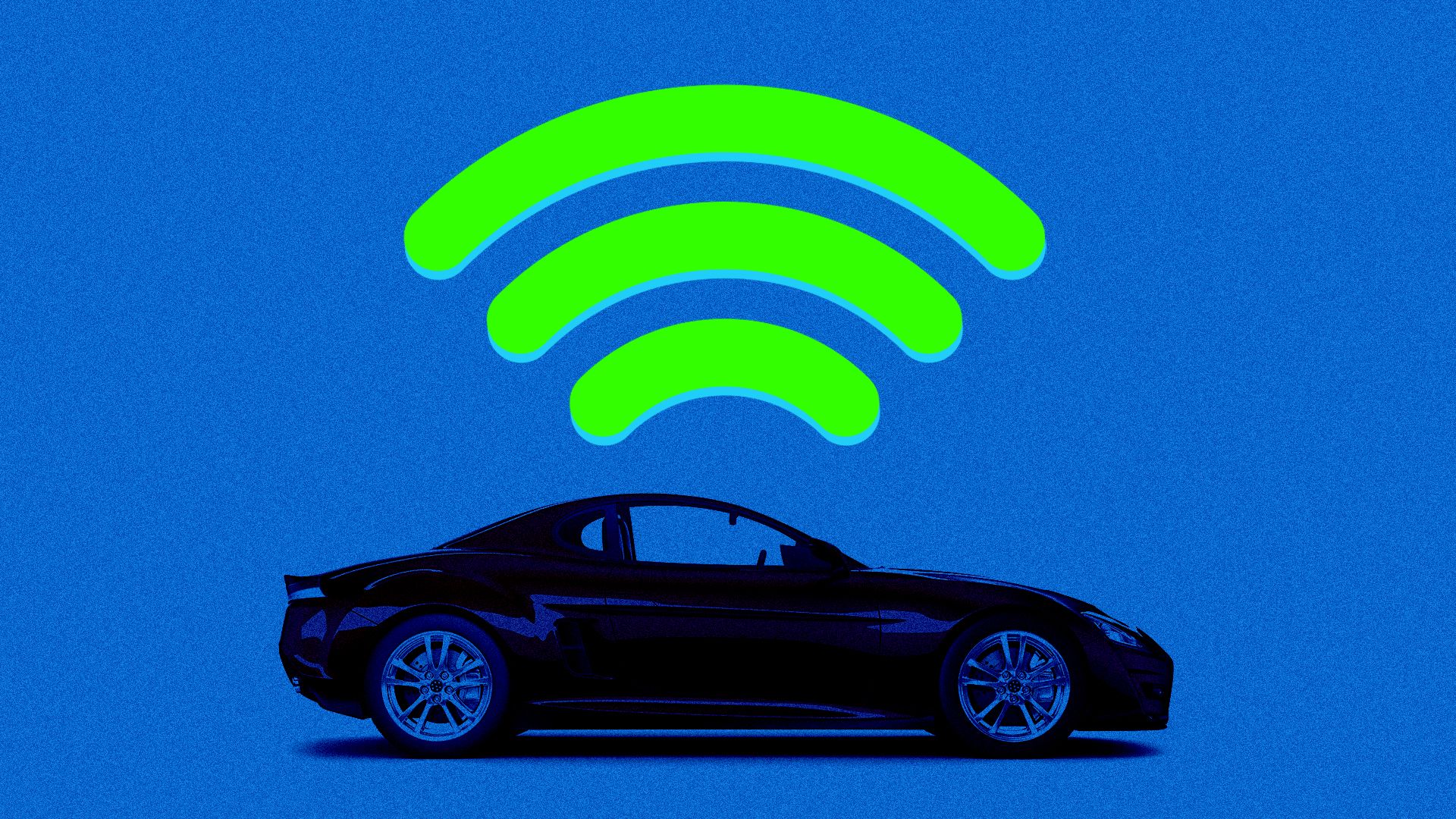
Ford says drivers who don't want their cars collecting and sharing personal information can go "full '80s mode" by turning off connectivity altogether.
Why it matters: You'll keep more of your personal life to yourself, but you'll also lose some of the high-tech features you paid for.
The big picture: Automakers are beginning to offer more granular privacy controls. But turning off connectivity is a trade-off — the trick is deciding which features are worth the exposure.
- At Ford, it could mean losing access to location-based features like its BlueCruise hands-free driving or the ability to find your car in a crowded parking lot.
- GM's forthcoming OnStar AI assistant could automatically navigate to your next appointment — but only if you give it access to your calendar.
- "If you don't want to share that data, that's fine as well, and we'll provide you the best experience that we can with the data that we have," GM's Wahlstrom tells me.
💭 My thought bubble: I tried adjusting the privacy settings in my husband's 2025 Ford Maverick — which doesn't even have advanced AI features or Blue Cruise — but then had second thoughts.
- "All services that need vehicle data will not work," the screen warned.
- Maybe it's important to share vehicle diagnostics with Ford in case the car needs maintenance, right?
Reality check: Most people aren't going to bother clicking through their vehicle settings to toggle switches on and off.
- If they're like me, they hit "accept" to whatever's on the screen and drive off because they're running late.
The bottom line: Privacy is a monster that's hard to control.
- The challenge is deciding how much of your personal life you're willing to share in exchange for modern conveniences.
3. Neighbors to drone companies: Keep it down

Drone delivery companies are scrambling to turn down the volume as neighborhood opposition threatens to ground their expansion plans.
Why it matters: Getting regulatory approval to fly is one thing. Convincing homeowners to tolerate buzzing drones overhead is another.
Driving the news: Amazon last week abandoned plans for a drone delivery hub in suburban Boston after residents and lawmakers raised concerns about noise, safety and privacy.
- The company withdrew its application in Westborough, Massachusetts, but left open the possibility of returning.
Meanwhile, rival Zipline says it has taught its drones to fly more quietly.
- Zipline's "dynamic flying" software lets each drone pick the quietest route in real time based on wind, speed and altitude, allowing drones to glide more efficiently, like a bird, instead of relying on noisy propellers.
- The upgrade reduces total sound exposure per flight by 68% and peak sound levels by 24%, according to Zipline's modeling.
⚙️ How it works: The drone uses gravity and wind to do some of the work its motorized propellers would otherwise do.
- It might dip its nose to pick up speed, like a bike coasting downhill, or tilt upwards to slow gently rather than braking with its motors.
- Zipline's unique design makes it possible. Unlike most drones, which have multiple propellers thumping the air to keep them aloft, its Zip drone has wings and glides like a plane.
- And the Zip hovers higher in the air than other drones, using a tethered droid to lower the package to the ground. After delivery, the droid returns to the belly of the Zip, which flies away.
Other drone operators are also trying to blend into the neighborhood.
- Alphabet's Wing uses low-pitch propellers and flies higher above homes, lowering packages on a tether.
- DoorDash's new delivery drone uses six slow-spinning propellers designed to produce less noise.
🔊 Reality check: Quieter doesn't necessarily mean quiet. As drone deliveries multiply, even relatively unobtrusive aircraft could become an unwelcome neighborhood nuisance.
🤫 The bottom line: The drone delivery race may ultimately be won by whoever makes the least noise.
4. Drive-thru

🚖 Toyota plans to manufacture electric robotaxis for Waymo in Japan under a previously announced partnership. The companies will begin testing in Japan in 2027, followed by deployment in the U.K. and other markets. (TechCrunch)
- 🤨 The real question: When will Waymo's self-driving technology find its way into personally owned Toyotas?
🏡 Homeowners were nearly twice as likely as renters to have an electric vehicle in 2025, Axios' Russell Contreras reports from new Census data. (Axios)
- 💭 My thought bubble: It's no surprise, really. Homeowners likely have higher incomes and can afford EVs. They also are more likely to have a private garage or driveway where they can install a home charger.
🚗 The gas-powered cars at Disneyland's storied Autopia attraction are set to be swapped out for electric versions, after a settlement between Disney and the state of California over the ride's emissions output. (The New York Times)
5. 🚘 What I'm driving
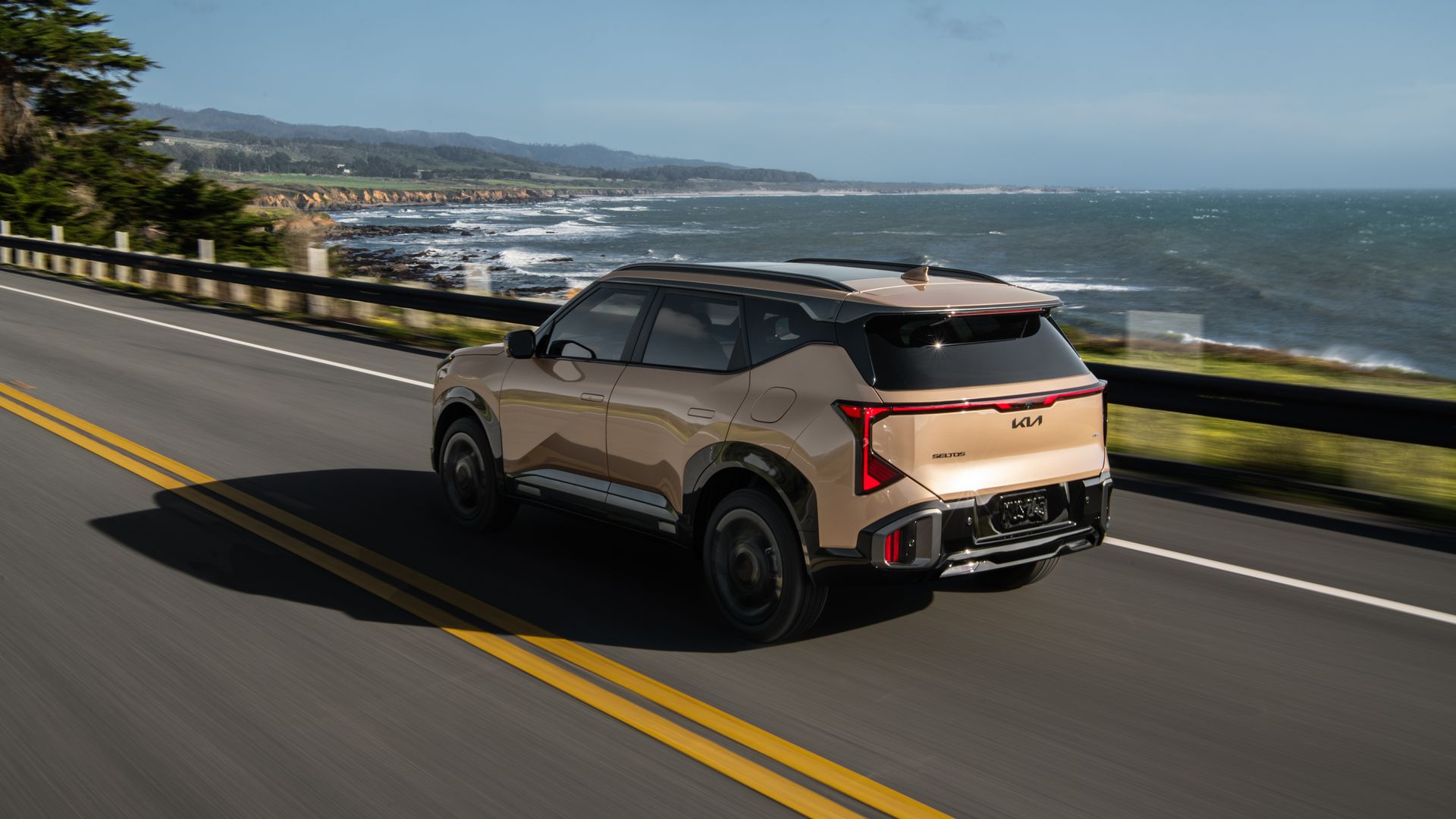
2027 Kia Seltos
- MSRP: Starts at $24,990; As tested: $35,755 (plus delivery) for the X-Line SX all-wheel-drive model, including a long list of optional equipment.
- Under the hood: choice of 147-hp base engine, 190-hp turbocharged engine or a new hybrid powertrain coming soon.
- Manufacturing site: Korea.
What's new: Kia took its popular family-sized Telluride and shrunk it for more price-conscious buyers.
- Besides the similar styling cues, lots of other features trickle down from Telluride, including more tech features, with optional streaming services, and extra crash-avoidance technologies.
- Premium features include larger touchscreens, an available panoramic sunroof and surround-view cameras.
What I loved: The baby Telluride, with its chiseled, boxy design, seems very of-the-moment. Inside, the interior is just as modern, lending a distinct upscale feel to what is basically a small, entry-level SUV.
What I didn't love: The only way to get the more powerful turbocharged engine is to buy the high-end X-Line SX trim, which sends the attractive starting price quite a bit higher.
The bottom line: $35,000 seems like a lot to pay for a small SUV, but when you consider all that Kia has packed into the Seltos, it's a pretty good value.
I test-drive vehicles in my role as a juror for the North American Car and Truck of the Year awards. Opinions are my own.
Thanks to editors Pete Gannon and Bill Kole. If you're a fan of this newsletter, please ask your friends to sign up, too.
Sign up for Axios Future of Mobility