Axios Future of Mobility

October 07, 2026

👋 Hi, it's your old friend Nathan Bomey — author of Axios Closer — filling in for Joann while she's away this week and next! Fun fact: Joann and I are both former auto reporters for the Detroit Free Press.
🇩🇪 In today's edition, we examine the German auto industry's tenuous place in the future of transportation.
- 💡 And we give you the latest on something automakers have been wanting for years: better headlight regulations.
Today's edition is 1,467 words, a 5½-minute read.
1 big thing: 🇩🇪 German automakers in crisis mode

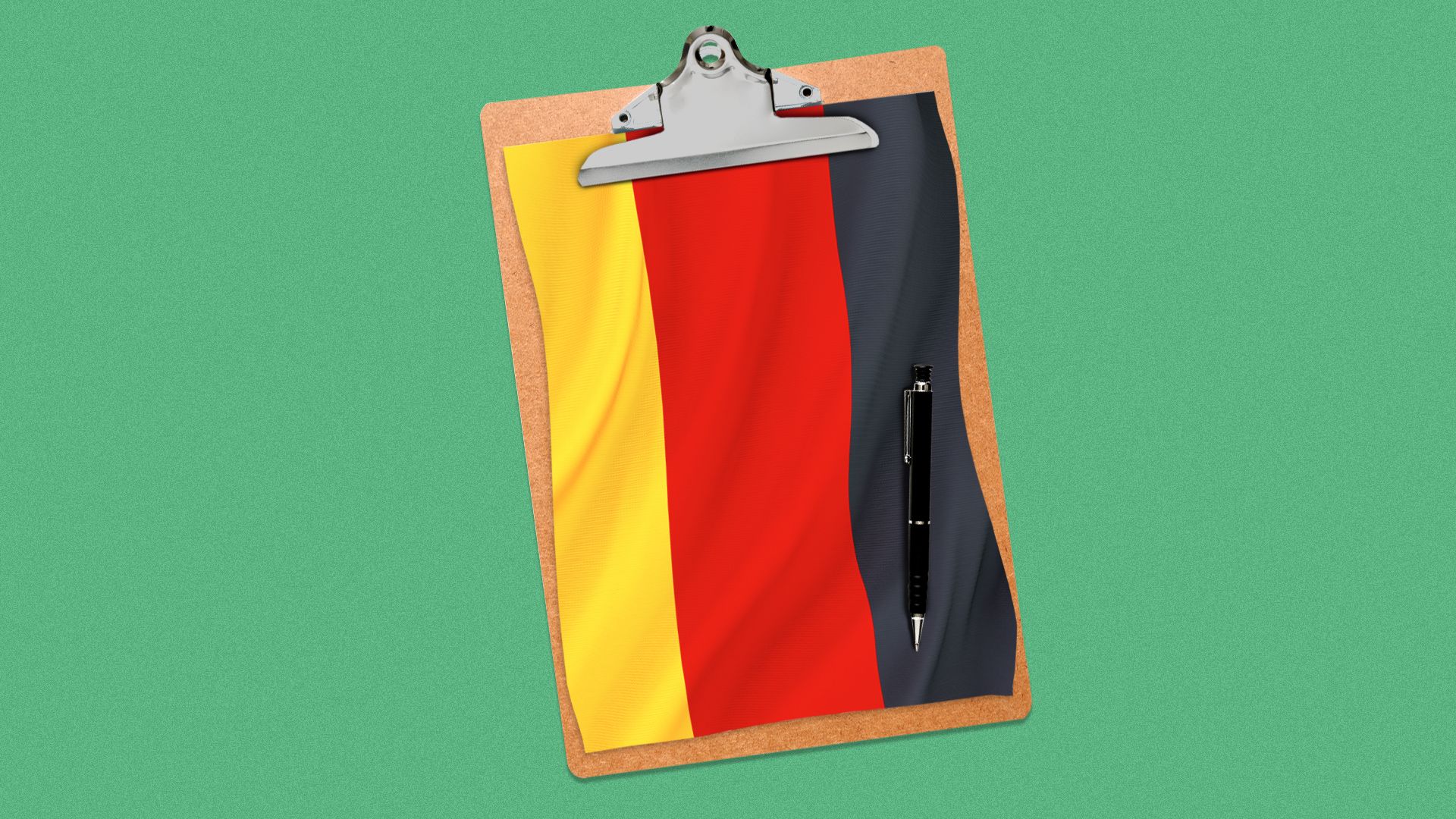
The German auto industry — long renowned for its engineering prowess and marketing genius — is reeling from stiffening competition, trade threats and shifting consumer tastes.
Why it matters: Volkswagen, Mercedes-Benz and BMW have been a powerful force on the global auto market for decades — but the market has shifted sharply.
The big picture: All three companies are facing major challenges in the form of Chinese EVs, both at home and abroad.
- Volkswagen is attempting to cut up to 100,000 employees from a total global staff of about 667,000 — a bureaucracy of staggering proportions by all accounts. And the company is bleeding market share in the critical Chinese market. "We're super concerned" about that, Citi analyst Harald Hendrikse said in September.
- BMW is wracked by bureaucracy of its own and recently pledged to cut 20% of its managers, vowing to use more AI. It's also losing significant ground in China.
- Mercedes-Benz is fretting about a bipartisan bill on Capitol Hill that would ban automakers with more than 15% Chinese ownership from selling vehicles in the U.S. Nearly 20% of Mercedes is owned by Chinese entities.
The challenges illustrate how the German auto industry's competitive position on the global stage is at serious risk of continuing to erode.
- "The changes in our industry require decisive action and they require a comprehensive transformation of our group," Volkswagen CEO Oliver Blume said on a conference call.
Zoom in: A spokesperson for the German Association of the Automotive Industry pointed Axios to a recent report in which the organization acknowledged a "lack of technological openness, excessive regulation, and uncompetitive business conditions" as serious threats for its members.
- The organization called for easing EU regulations that would effectively ban conventional engine vehicles, the bread and butter of the horsepower-fueled German automakers.
- The association estimated that the German auto industry could have 190,000 fewer jobs in 2035 than it had in 2019 as EVs usurp gas-powered cars.
In the U.S., the German automakers aren't faring particularly well, either.
- Volkswagen is particularly troubled here.
- U.S. market share for the Volkswagen brand was 2% in 2025, down from 2.5% in 2021, according to car research site Edmunds. U.S. market share for the company's luxury Audi brand declined from 1.4% to 1% during that span.
Between the lines: With vehicle prices soaring industrywide in the 2020s, consumers have become less interested in the intensive and costly engineering that the German automakers have long emphasized, says Edmunds analyst Ivan Drury.
- "These things they had done so well on for so long — they kind of had the rug pulled out from under them," Drury said.
- Plus, the luxury models that the Germans have long prioritized have lost their edge on mainstream models, which have added more features previously exclusive to premium brands.
By the numbers: Shoppers are 11.5% less likely to consider a luxury model now than they were in 2019, according to Cars.com.
- "Shoppers are prioritizing value and reliability to hedge against higher costs, leading shoppers to consider mainstream automakers over luxury automakers," Cars.com editor-in-chief Jenni Newman tells Axios in an email.
Threat level: Globally, the biggest challenge facing the German automakers is the arrival of cheap and well-engineered Chinese EVs, prompting growing chatter of European trade action.
- German Finance Minister Lars Klingbeil said in September during a visit to Volkswagen's headquarters in Wolfsburg that it's time for the EU to stand "up to unfair trade practices" in China.
- "We cannot, when all is said and done, be naive in our dealings with China," Klingbeil said, calling on "concrete measures" from the EU, according to AFP.
What we're watching: In the U.S., the legislative effort to ban auto sales from companies with 15%+ Chinese ownership is on hold until after the midterm elections.
- It has significant bipartisan support, but Republican Sen. Bernie Moreno vowed last week to make sure that the final bill doesn't ban Mercedes.
The bottom line: "For anybody who's competing on a global scale, every single one of them sees Chinese EVs as the largest threat to their existence," Drury says.
2. 💡 Let there be new headlight regulations
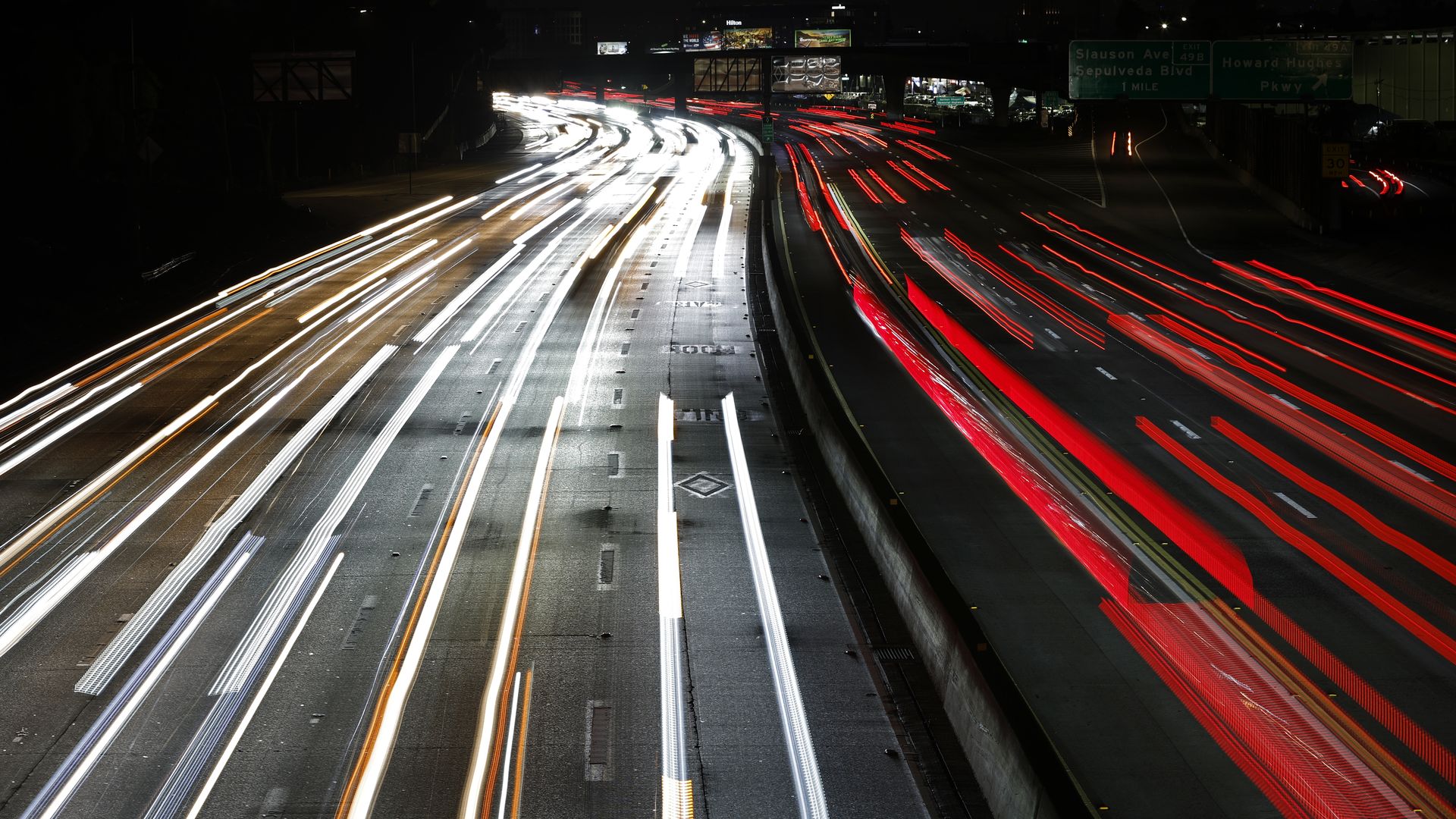
The Trump administration is pledging to modernize headlight standards, addressing a growing complaint among drivers about glare from powerful LED lights.
Why it matters: Industry experts say U.S. headlight regulations are severely outdated, creating dangerous driving conditions.
The latest: The National Highway Traffic Safety Administration announced yesterday that it will implement new rules to address issues like headlight glare and testing, vowing to align U.S. regulations with global standards.
- The agency will use the "negotiated rule-making" procedure to expedite the process of adopting new regulations, effectively bringing interested parties to the table to help draft the standards.
The big picture: The U.S. legalized "adaptive driving beam" (ADB) headlights in 2022, years after they became mainstream in other markets, Joann reported in August.
- But most existing headlight systems still can't be deployed here because U.S. standards are more restrictive, according to Matthew Brumbelow, principal research engineer at the Insurance Institute for Highway Safety.
- "Today's standards do not allow automakers to deploy the latest safety-improving lighting technologies, so we are bringing key experts and stakeholders together to modernize our standards and address potential causes of glare," NHTSA administrator Jonathan Morrison said in a statement yesterday.
- "This collaborative approach will allow us to update outdated regulations, foster innovation, and keep everyone on our roads safer," he added.
Some automakers have gone through the laborious process of creating new lighting technology from scratch — like Rivian, the first automaker to deploy ADB technology in the U.S. after the recent regulatory shift.
- Joann was wowed when she recently tested the system on the new R2 SUV while driving on dark roads in Wisconsin.
💭 Nathan's thought bubble: I remember writing in 2017 for USA Today about the headlight safety crisis — and somehow most cars still don't have advanced headlights. Maybe this rule-making process will change that.
What's next: NHTSA said public comments can be submitted until Nov. 9.
3. Quoted: GM says yes to hybrids
"We're not tone deaf to our customers. We know what they want, and we want to give that to them as quickly as we can."— Mike Anderson, GM's vice president of propulsion engineering, to CNBC on the company's plan to introduce hybrids, which are experiencing surging sales amid elevated gas prices.
4. Drive-thru
⚡️ Tesla and Rivian topped expectations on electric vehicle deliveries over the past three months, an early sign that elevated gas prices may be giving EV demand a lift. (Axios)
🤖 A new California bill signed into law by Gov. Gavin Newsom says remote operators of robotaxis must be based in the U.S. and hold an American driver's license. (TechCrunch)
🚂 Parallel, a Los Angeles-based autonomous electric freight rail startup, raised $100 million in new venture funding.
- Parallel's Panther rail vehicles allow railroads to handle shorter, lower-density routes without hooking up to traditional locomotives or other rail equipment. (Axios Pro)
5. 🚛 Volvo and Waabi hit the road

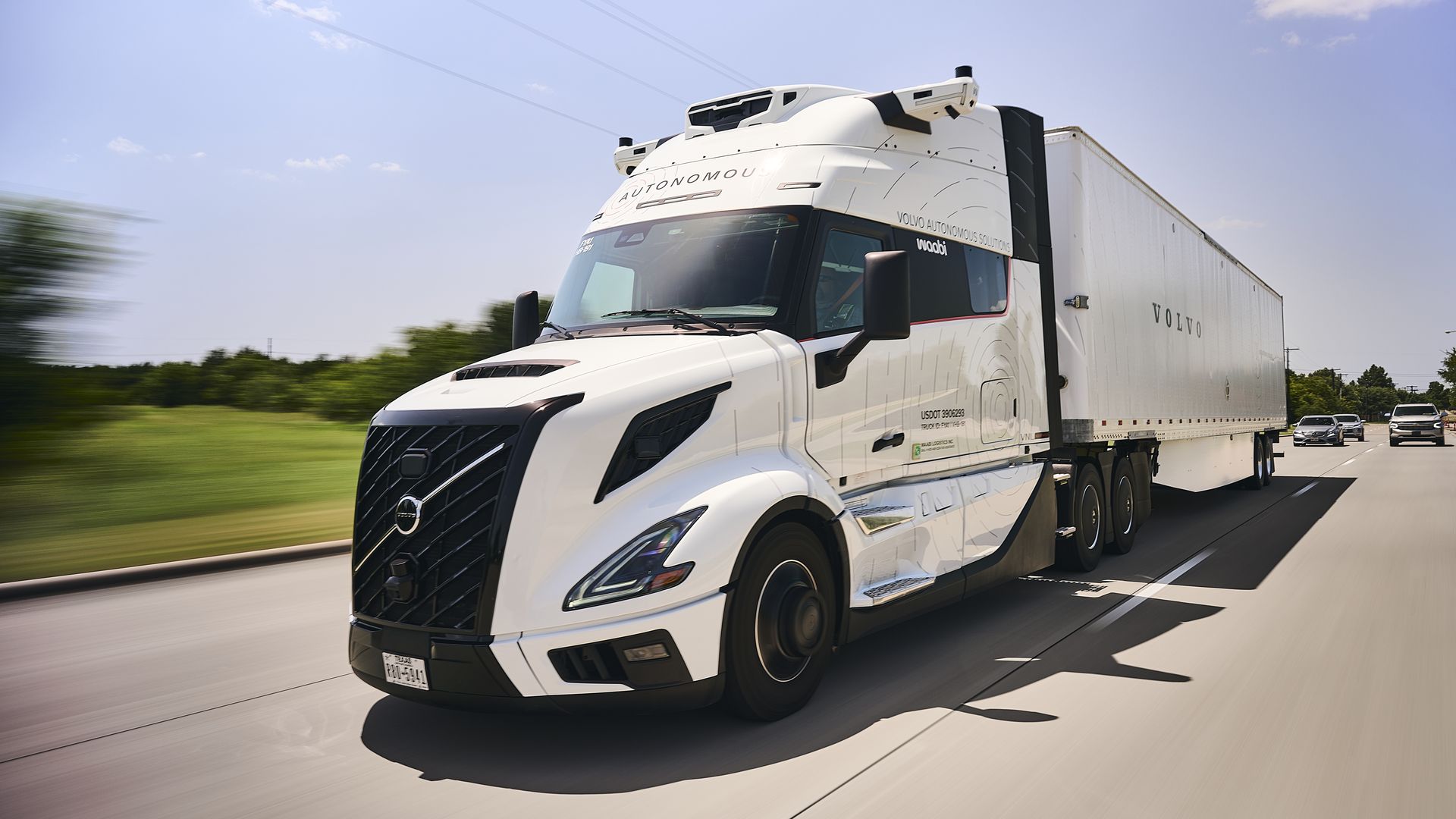
Another autonomous trucking endeavor is hauling commercial freight between Dallas and Houston.
Why it matters: That route continues to be a testing ground for self-driving trucks.
Driving the news: Volvo Autonomous Solutions and autonomous driving company Waabi announced Monday that its self-driving trucks are now transporting freight for logistics company Warp between the two Texas cities.
- The Volvo trucks, equipped with Waabi's autonomous driving system, are transporting shipments directly to third-party facilities.
- The trucks drive autonomously, though an observer remains in the driver's seat for now.
State of play: Other companies have been driving that route to test autonomous commercial trucks as well.
- Houston-based Bot Auto completed a fully driverless freight run from Houston to Dallas earlier this year.
- Aurora launched commercial driverless deliveries between Dallas and Houston last year and has continued expanding its driverless trucking network.
- Kodiak hauls freight between Dallas and Houston, with plans to go fully driverless by the end of the year.
- And Uber Freight is operating self-driving trucks between the cities, also in partnership with Waabi.
What they're saying: "What we learn on the Dallas–Houston corridor will help us strengthen our partnership and continuously improve the ecosystem as we scale," said Nils Jaeger, president of Volvo Autonomous Solutions, in the announcement.
What's next: The companies plan to eventually operate the trucks without a human in the driver's seat and expand to additional routes.
Thanks to editors Pete Gannon and Bill Kole. If you're a fan of this newsletter, please ask your friends to sign up, too.
Sign up for Axios Future of Mobility