Axios Future of Mobility

June 10, 2026

👋 Hi again! Happy Wednesday!
🚙 ⚡️The auto and energy industries are converging. Today, we're looking at how electric vehicles and batteries could help stabilize the grid as electricity demand soars.
1,267 words, a 5-minute read.
1 big thing: GM amps up energy strategy
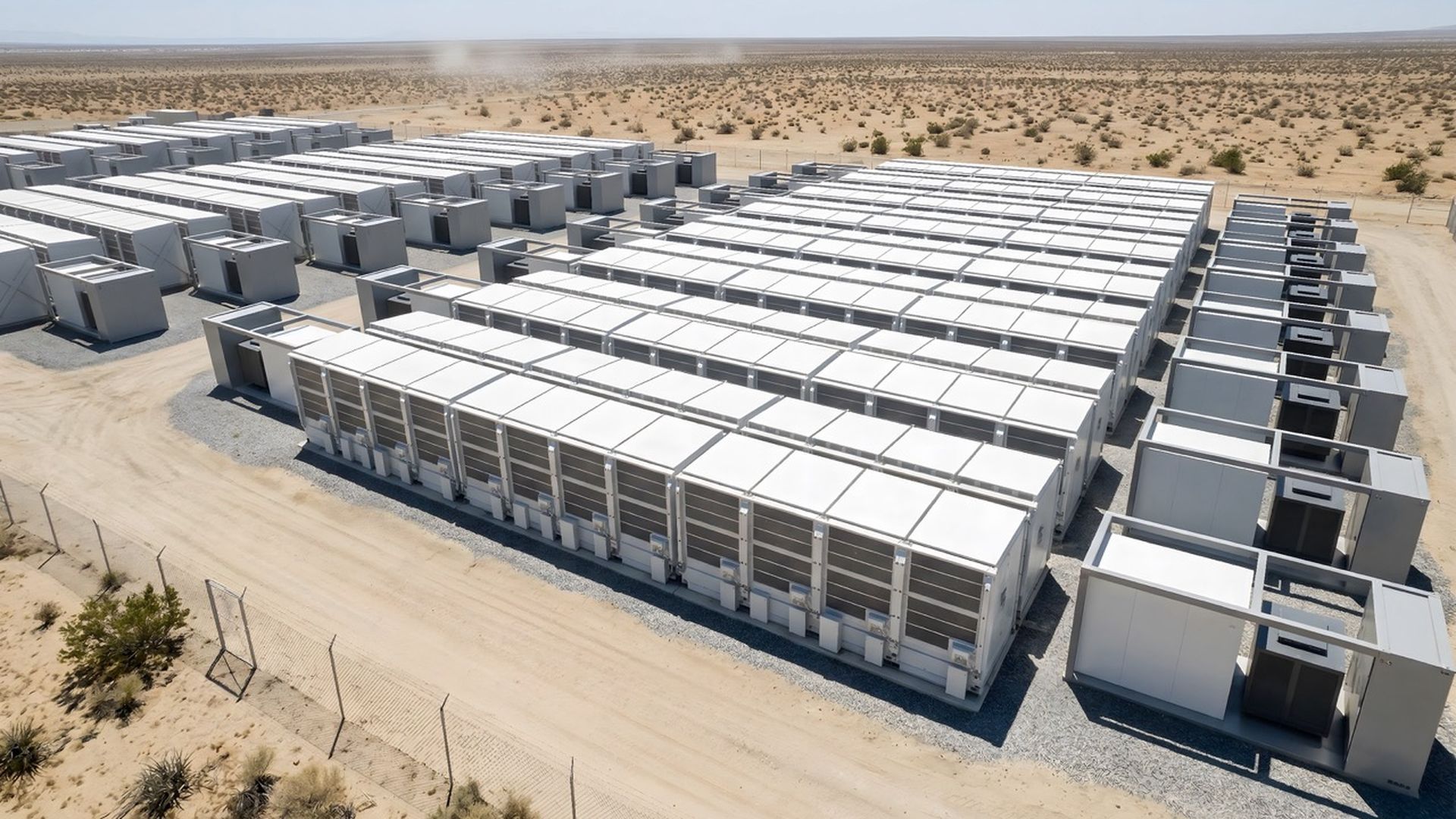
General Motors, the largest U.S. automaker, is seeking to become more of an energy company, turning electric vehicles into grid assets and batteries into fuel for AI data centers.
Why it matters: The moves are another sign of how automakers are investing in opportunities far beyond transportation, leveraging battery technology as EV growth has cooled.
Driving the news: GM said yesterday that it plans to expand its existing energy storage business through battery innovation.
- It's making a big bet on sodium-ion batteries — technology that isn't well-suited for cars but is ideal for stationary storage connected to utility grids and data center installations.
- Its venture arm is making a strategic investment in a startup called Peak Energy, and together the companies plan to develop next-generation sodium-ion battery cells purpose-built for grid-scale storage.
Between the lines: Sodium-ion batteries — as opposed to the lithium-based batteries used commonly in EVs — use abundant, inexpensive materials and can be engineered for longevity and low cost.
- That makes them better suited for stationary storage where weight and size don't matter.
The big picture: As the AI boom drives a surge in electricity demand, automakers are seeing an opening to create new revenue streams.
- It's a diversification play for many, including Ford, whose stock is up 20% since announcing the launch of its Ford Energy subsidiary on May 11.
- Morgan Stanley estimated Ford Energy could eventually generate $500 million-$600 million in annual earnings (before interest and taxes) at scale.
- Across the industry, at least eight underutilized EV battery factories in the U.S. are being repurposed for electricity storage.
What they're saying: GM says its technology, which is purpose-built for storage, will be 20% to 25% cheaper than other systems that use repurposed EV batteries.
- "We are not licensing somebody else's technology from China," said GM battery chief Kurt Kelty, in a pointed dig at rival Ford, whose Michigan-made batteries are based on technology from China's CATL.
- "We're building on GM battery know-how in America for a great market that needs durable, cost-effective storage at scale."
2. EVs might one day shore up the ailing grid
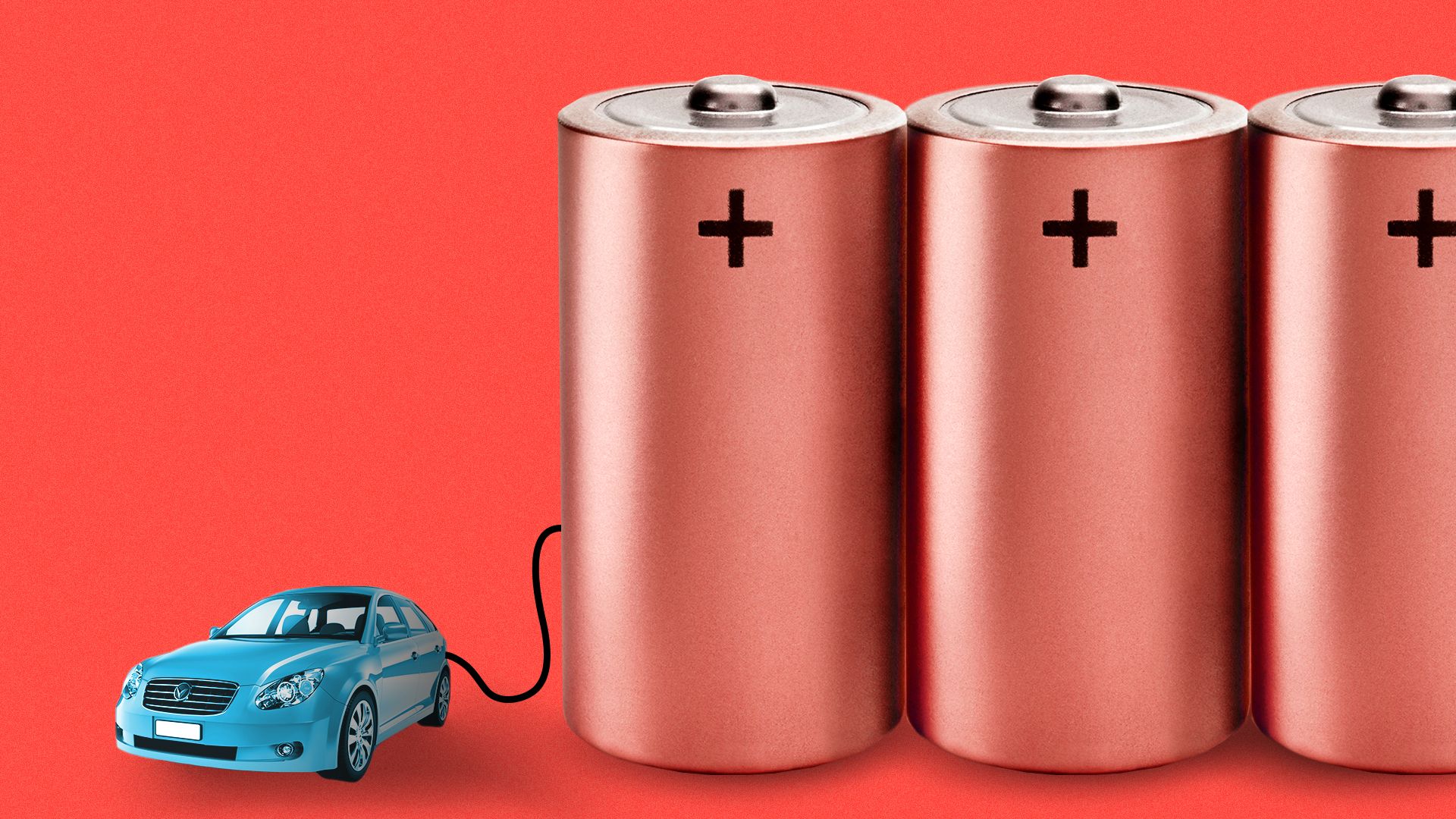
Most people worry that electric vehicles are going to further strain America's aging power grid, but the opposite is true, says the head of California's largest utility.
- "Our grid desperately needs EVs," says Patricia Poppe, CEO of PG&E.
Why it matters: A parked EV can be an extension of the grid, a distributed energy storage asset that can send power back when it's needed most.
Driving the news: General Motors is trying to prod the idea along as part of the broader energy storage strategy it introduced this week.
- GM already has more than 250,000 bidirectional EVs on the road, meaning they're capable of both drawing and distributing power.
- Some of those EV owners have installed GM's vehicle-to-home energy system, which lets them use their car to power their home during a blackout.
- Now GM is releasing a software update that allows those home energy customers to feed electricity to the power grid as well.
Yes, but: This so-called vehicle-to-grid (V2G) technology only works if consumers can be convinced to sign up — and it's unclear whether the idea will be popular with drivers.
- Most EV owners aren't aware their car can power their home, much less the grid.
- Those who are aware might prefer to keep their car fully charged at all times, even though it's parked all day, regardless of how much they could save on their energy bill.
Between the lines: That's where cooperation from utilities becomes important. For the program to scale, they'll likely need to educate customers about V2G access and provide the right incentives to get them to enroll.
- One specific challenge is the fragmented nature of the energy business. The U.S. has roughly 3,000 regional electric utilities, so there's no unified effort behind V2G.
- GM released an "open letter" to utilities and regulators, urging them to get on board with V2G and to provide meaningful incentives to EV owners.
State of play: The two-way capability is still mostly in the pilot phase, with utilities in California, Texas and Michigan leading the way.
- In Michigan, GM is partnering with utility DTE Energy on a vehicle-to-grid pilot with 30 GM employees.
- In California, which faces ongoing concerns about wildfires along with soaring demand for electricity, PG&E is leaning heavily into V2G through pilots with multiple automakers.
- "It's the first flexible demand there ever has been," says Poppe.
What we're watching: GM says it has "thousands" of vehicle-to-home customers today who are now also eligible for V2G, but declined to provide a specific figure.
- By 2030, the company expects to have 52,000 bidirectional EVs contributing to the grid in PG&E's northern California service area.
- Beyond cutting-edge California, the slog will be slower.
3. Detroit's latest models: boxy design, loads of power
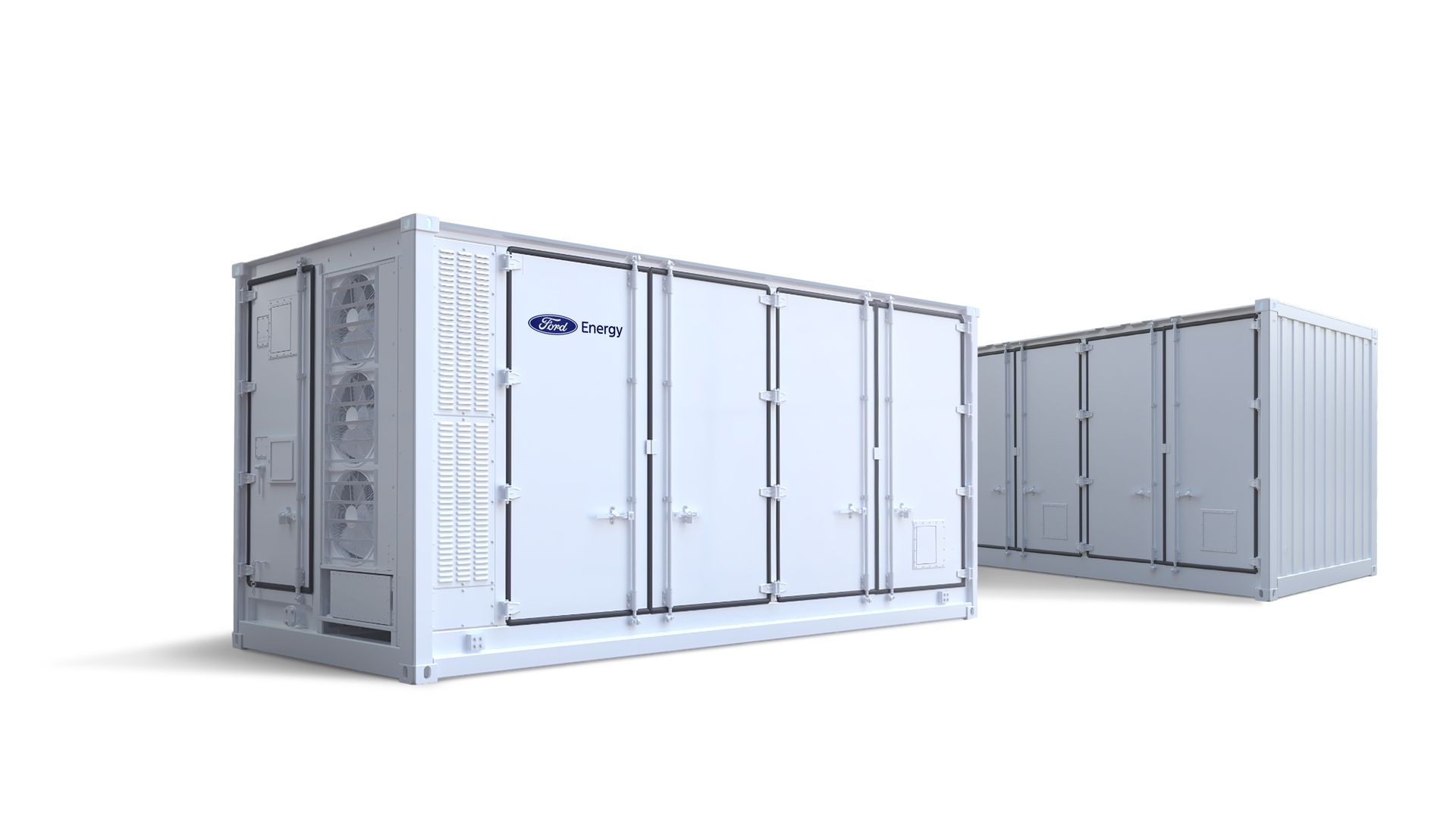
They are decidedly unsexy, but battery energy storage systems could generate big profits for automakers.
Take a peek under the hood of Ford Energy's DC Block, pictured above.
- It's a 20-foot energy storage container with a capacity of 5.45 MWh per unit.
- Park a bunch of these babies side-by-side and you've got yourself a reserve power plant.
The specs: Each DC Block contains 512 Ah liquid-cooled lithium iron phosphate (LFP) prismatic battery cells.
- It's available in 2-hour and 4-hour discharge configurations, with an operating voltage range of 1,040–1,500 VDC and integrated liquid-cooled thermal management.
Ford expects to produce about 3,700 units — 20 GWh of power — per year and sell them to utilities and other commercial customers.
4. Drive-thru
🚛 Driverless trucks are here — and they're delivering bags of Doritos. (WSJ)
- PepsiCo has signed a multiyear deal with Gatik to deploy driverless trucks in PepsiCo's supply chain across the United States — the largest commercial deployment of this kind to date in the U.S.
🚁 Wing and Walmart are expanding drone delivery service to seven new metro areas as part of a plan to reach more than 40 million customers by 2027. They are: Memphis, New Orleans, Philadelphia, Phoenix, San Diego, the San Francisco Bay Area and Salt Lake City. (Axios)
↪️ Stellantis is recalling more than a million Jeep vehicles in the U.S. due to a fire risk after dozens of owners reported problems. (Axios)
🤖 A burglar used a Waymo to steal yoga clothes in San Francisco — and got away with it. (TechCrunch)
5. 🚘 What I'm driving
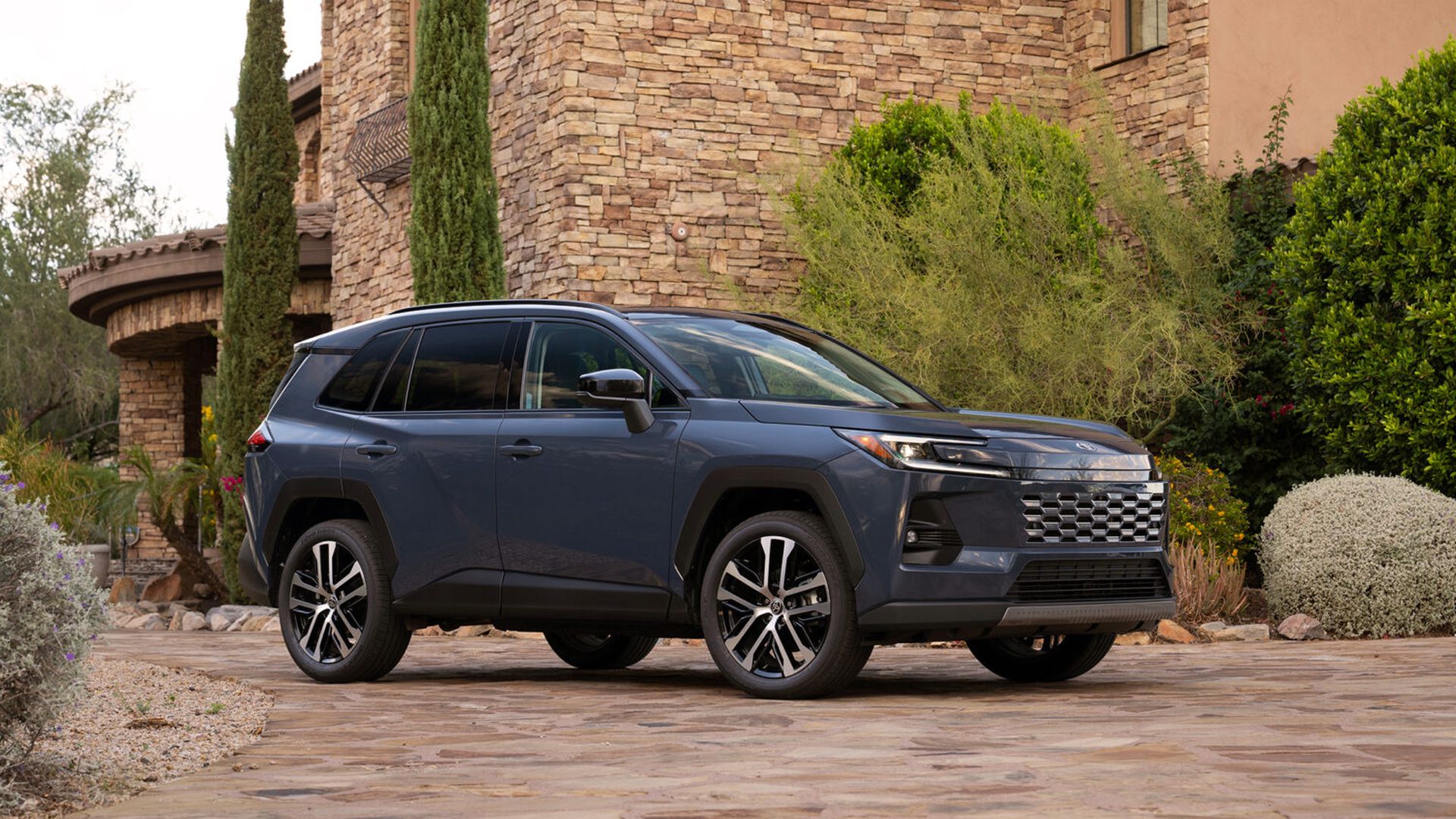
2026 Toyota RAV4
- MSRP: $31,900 starting price; as tested: $46,883 for hybrid Limited trim with all-wheel-drive, including delivery charge.
- Under the hood: 236-hp hybrid or 324-hp plug-in hybrid.
- Fuel economy: 41 mpg in hybrid; 40 mpg in plug-in hybrid (including 52 miles on electricity alone).
- Manufacturing location: Ontario, Canada; Kentucky; Japan.
What's new: Gasoline RAV4 is gone; redesigned inside and out. Larger digital display, updated infotainment, enhanced safety features. New rugged and sport trim levels available.
What I loved: Great fuel economy; comfortable ride.
What I didn't love: Interior design is cold and jarring; too many angles and layers.
The big picture: Demand for used RAV4 hybrids is through the roof, Bloomberg reports.
- "In some cases, they cost more than a new 2026 model fresh from the Toyota factory."
💭 Thought bubble: A day after Bloomberg's story ran, my daughter got an email from her Toyota dealer offering to buy her used RAV4. She's not parting with it.
I test-drive vehicles in my role as a juror for the North American Car and Truck of the Year awards. Opinions are my own.
Thanks to editors Pete Gannon and Bill Kole. If you're a fan of this newsletter, please ask your friends to sign up, too.
Sign up for Axios Future of Mobility