Axios Future of Mobility

December 10, 2025

Hi again ... It's πͺ day!
- π€ Today we're diving into the controversial A-word: affordability. Can't have a future of mobility if people can't afford to be mobile ...
- π Plus, a look at how President Trump's auto policies could change what's parked in America's driveways.
All in 1,862 words, a 7-minute read.
1 big thing: Trump's auto policies vs. consumer reality
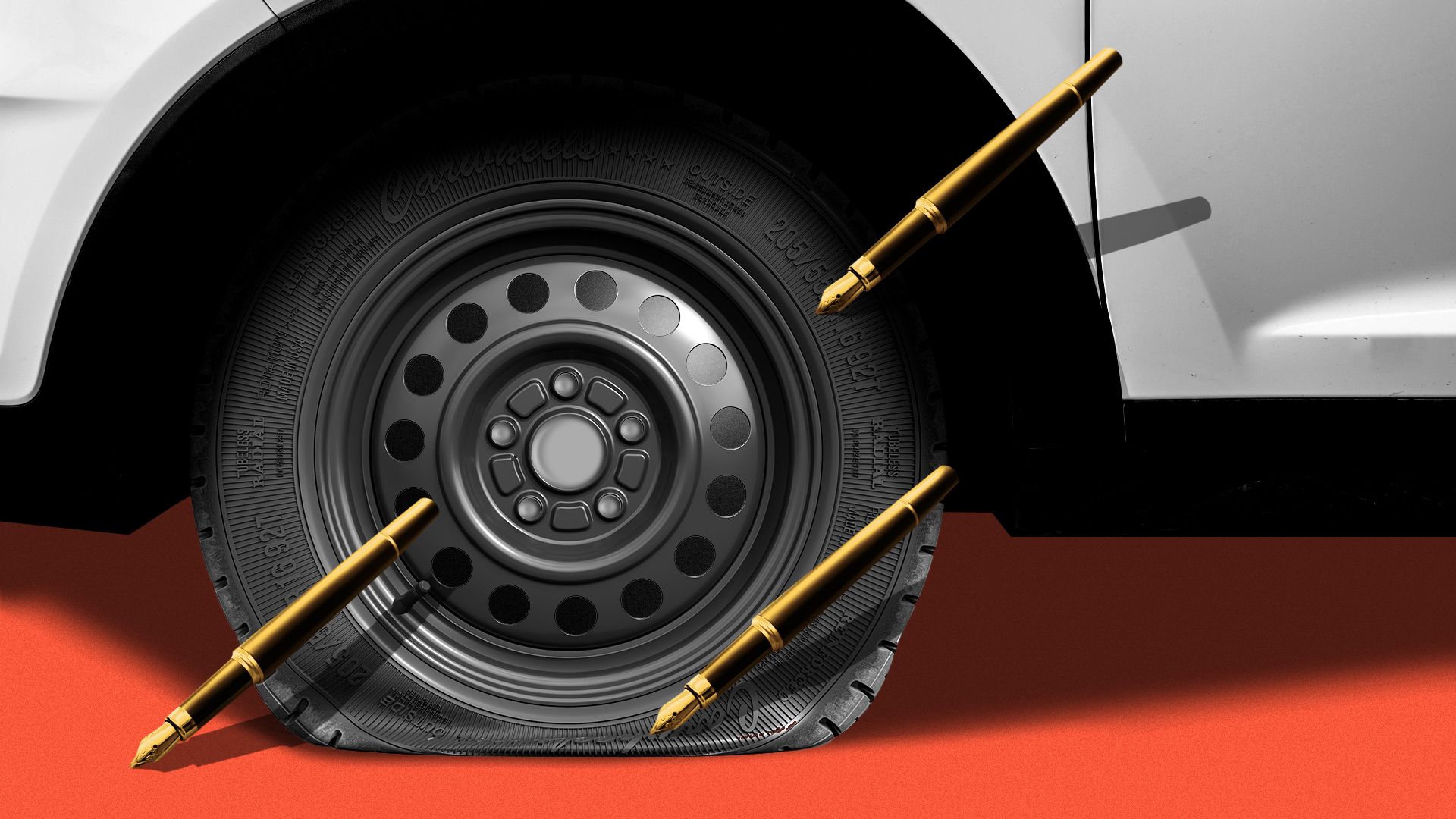
President Trump's seismic policy changes have, on balance, helped automakers, who say their future looks brighter.
- Whether any of that will help Americans afford to buy a new car remains to be seen, though.
Why it matters: Trump dismisses affordability issues as a "Democratic hoax," but is also intent on getting cheaper cars into American driveways.
The big picture: More Americans are late on their car payments than at any point in the last 15 years, according to research by Federal Reserve economists.
- Surging sticker prices coupled with high interest rates mean buyers have been borrowing more and taking out longer loans to finance their car purchases.
- The result is that car payments are eating up a larger share of household budgets, particularly for lower-income families also feeling the squeeze on housing, grocery and utility bills.
By the numbers: At an average price of just under $50,000, a car is typically Americans' second-largest purchase, after buying a home.
- The typical monthly payment on a six-year car loan has soared to $766, per Cox Automotive.
- Insurance, fuel and car maintenance add another $965 a month, according to AAA.
Trump's solution is to relieve carmakers from having to build electric vehicles or to equip their vehicles with costly fuel-saving gadgets.
- He's even proposing that carmakers build tiny microcars popular in other parts of the world. (More on this belowπ)
- He's scuttled Biden-era policies that favored higher-priced EVs and scrapped other rules that he says drove up car prices.
Trump's logic: Fewer regulations mean more choices and cheaper cars.
- "Counterproductive and burdensome auto regulations have limited options for American consumers, forcing them to purchase higher-priced models for the features and preferences they're looking for in a new car, truck or SUV," Kush Desai, a White House spokesman, tells Axios.
- "The Trump administration is committed to slashing regulations that limit choices and raise prices so Americans can choose β and afford β the autos they actually want and need."
- A new tax deduction for interest paid on certain car loans will also help, Trump says, though the number of car buyers who qualify is limited, analysts say.
Yes, but: Like many other parts of the economy, the vehicle market is K-shaped, and that $50,000 average transaction price reflects what consumers choose to buy, not what's available, notes Cox Automotive executive analyst Erin Keating.
- "Many new-car buyers today are in their peak earning years and are less price-sensitive, opting for vehicles at the higher end of the market to get the features and experiences they value most," she said.
Lower-priced cars, meanwhile, are struggling in the U.S. market.
- Cars priced below $30,000 accounted for 7.5% of total sales in November (down from 10.3% a year ago), according to Cox.
- Pickup trucks, with an average selling price of more than $70,000, accounted for more than 14%.
Taken together, Trump's policy actions allow automakers to produce more of those high-margin, gas-powered trucks and SUVs consumers want β offsetting, at least for them, the higher cost of tariffs or moving production back to the U.S.
- "It's hard to even go back 12 months and understand the type of uncertainty and anxiety that was out there," General Motors' CFO Paul Jacobson said during a UBS conference last week.
- Now, GM is forecasting an even stronger 2026.
The bottom line: Car companies are better off under Trump, but as long as inflation continues to stretch household budgets, affording a car is a struggle for many buyers.


Disclosure: Cox Automotive, like Axios, is owned by Cox Enterprises.
2. The big problems with tiny cars in America
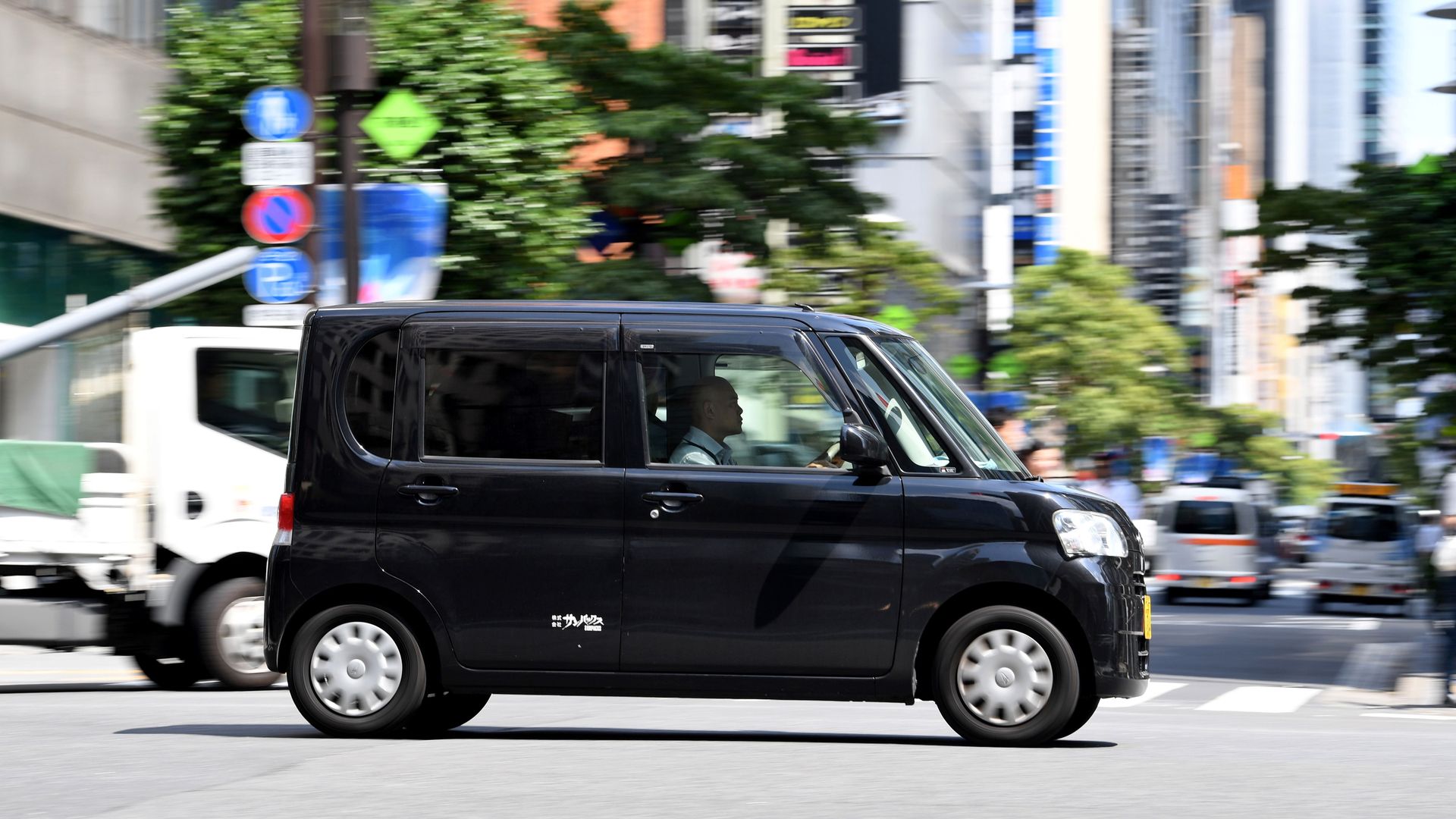
One way President Trump thinks more Americans could afford a new car is if automakers built tiny fuel-efficient models like the ones he fell in love with in Japan.
The big picture: Even if the U.S. finds a way to legalize them, as Trump has instructed Transportation Secretary Sean Duffy to do, the laws of economics and physics will almost certainly ensure it never happens.
- They don't meet U.S. safety regulations, and automakers can't build them profitably here.
Driving the news: At a White House event last week to announce his proposed rollback of fuel economy standards, Trump went off script to extol the tiny cars known as "kei" cars.
- "They're really cute," the president said.
- "They're really nice and they're less expensive," Trump continued. "And it really gives people the chance to have a car, have a brand new car, as opposed to a car that maybe isn't so great."
The Transportation Department is "clearing the decks" to remove regulatory roadblocks, Duffy told CNBC.
- "Listen, if there's a market for those vehicles, I want to give our manufacturers the opportunity to build those cars," he said.
- "Are they going to work on the freeways? Probably not. But again, vehicles that work in cities and if that's where you drive, it could be a great solution for you."
Between the lines: Duffy highlighted one reason microcars are problematic for the U.S. market.
- They're really small β about two feet shorter and a foot narrower than a Honda Fit β and the pint-sized engine puts out less than 70 horsepower.
- In a collision with an American SUV, they don't stand a chance.
Friction point: To be sold here, they'd have to be redesigned to meet U.S. standards β investments that would defeat their cost and efficiency advantages.
- And previous efforts to push small cars on American buyers were unsuccessful.
- GM and Ford already moved their small-car production overseas because they can't do it profitably in the U.S.
What to watch: Congress or NHTSA could create a new microcar category with lower crash requirements (similar to rules for street-legal golf carts that have a top speed of 40 mph).
- Federal rulemaking can take years, however. Plus, states might have to rewrite their own laws to allow such cars.
One consolation: Enthusiasts can import and drive older microcars here under a classic-vehicle exemption.
3. The return of the Woody station wagon?
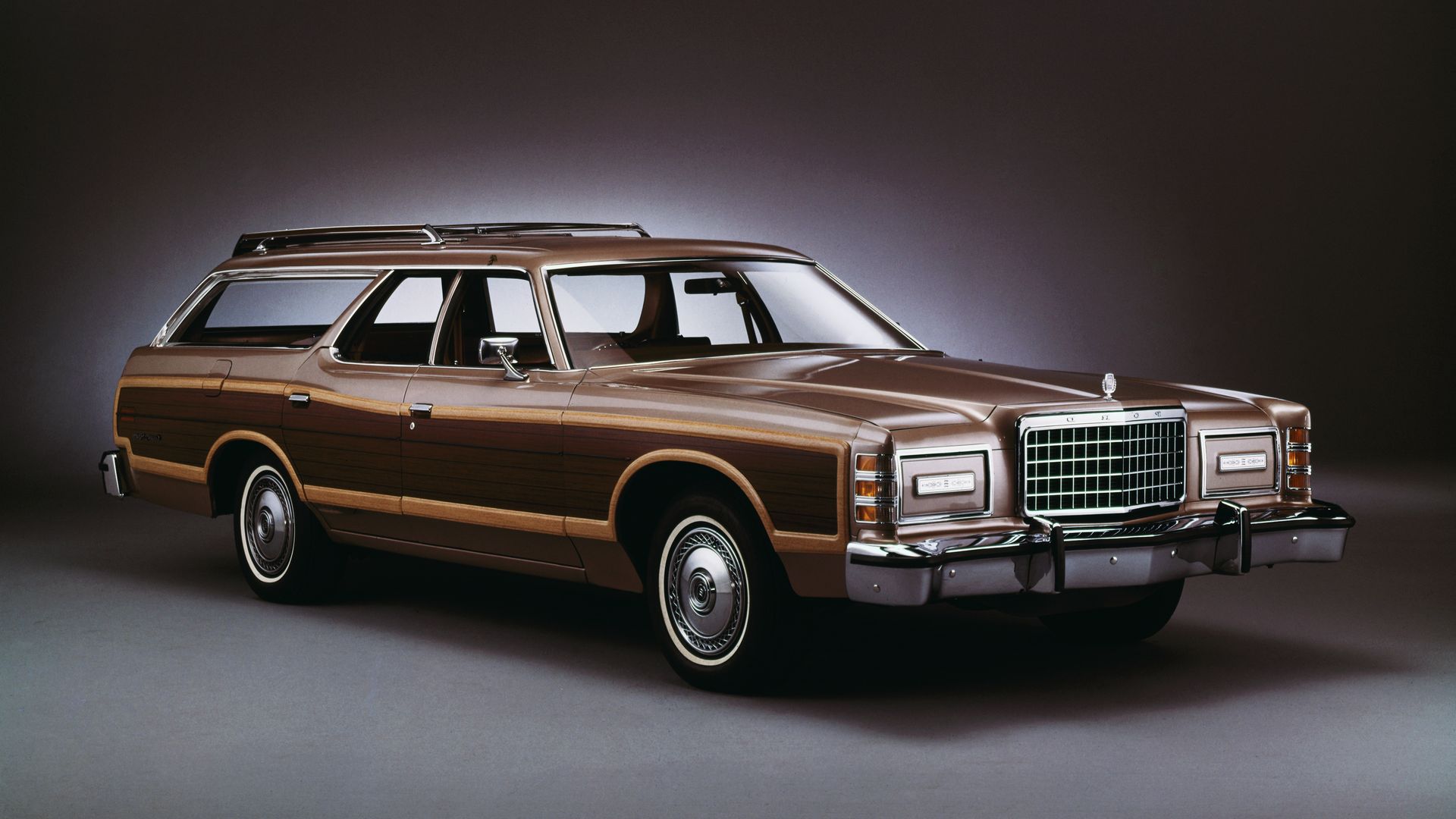
Besides the headlines about Trump's effort to make cars affordable again β or his surprising tiny car infatuation βΒ the administration's rollback of mileage standards could also change the mix of cars on dealer lots.
Why it matters: Reclassifying what constitutes a "car" or a "truck" for fuel economy purposes could mean the return of the traditional station wagon, Duffy recently mused.
Between the lines: The administration's new fuel economy rules would close a regulatory loophole that allowed automakers to pass off car-based utility vehicles or minivans as "light trucks."
- Under the original rules established in the 1970s, trucks had easier fuel economy standards to meet than passenger cars.
- Automakers took advantage of the distinction by crafting models with fold-down or removable seats for more flexible "cargo" space so that they qualified as trucks.
- Over time, this manipulation of the market led to the growth of SUVs and the disappearance of traditional station wagons.
The new rules put stricter criteria on vehicle classifications, including whether they're used for work purposes or meet specific off-road requirements.
What they're saying: "This rule will actually allow you to bring back the 1970s station wagon β maybe a little wood paneling on the side," Duffy told CNBC.
- "We can bring back choice to consumers, so yeah, the minivan is awesome, but maybe the station wagon is cool, too."
The intrigue: While Trump is slashing the fleet-wide mpg targets companies must meet, the vehicle reclassification may make compliance tougher for both sectors, S&P Global Mobility analyst Stephanie Brinley said during an Automotive Press Association event Monday.
- Passenger car fleets will now include larger, thirstier utility models.
- Truck fleets will include fewer utilities, which are relatively more efficient and helped bring up the average mpg for trucks.
4. Drive-thru
π Ford is partnering with Renault in Europe to build small EVs and commercial vehicles. The linkup is seen as a way for both brands to combat the rise of Chinese competitors in Europe. (Car & Driver)
π Rapidly expanding Waymo, which completed 14 million robotaxi trips in 2025, has been getting some bad press lately, including incidents involving a dead cat, a dead dog and a police standoff.
- This week, the company issued a voluntary software recall in response to a federal safety probe of its robotaxis illegally passing school buses. (Axios)
π Highland Electric Fleets raised a $150 million equity round to deploy more electric bus and truck fleets in cities across the U.S., CEO Duncan McIntyre told Axios Pro exclusively this morning. (Subscribe to Axios Pro Deals)
β‘οΈ Boom Supersonic, which aims to resurrect high-speed air travel similar to the transatlantic Concorde, has modified its jet engines into gas turbines for AI data centers.
- The company closed a $300 million round and announced AI infrastructure company Crusoe as the first customer for its 42βmegawatt Superpower unit. (TechCrunch)
5. What they're driving: Fiat's "little mouse"
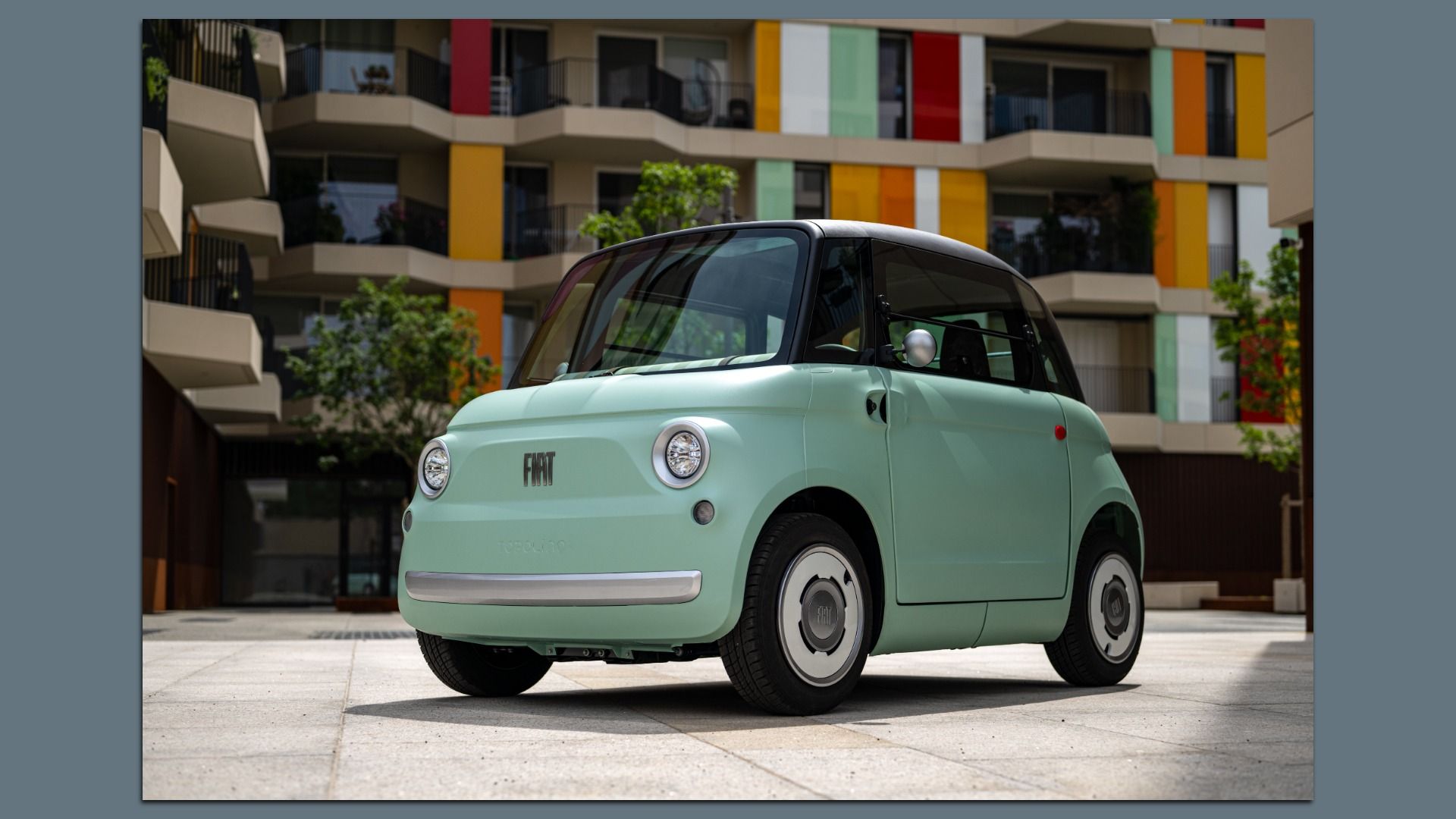
Just days after President Trump raved about tiny cars, Stellantis said it will bring its Fiat Topolino, an all-electric two-seater, to the U.S. market.
Why it matters: Enthusiasts love these nimble, stylish cars that can zip through crowded streets in cities like Paris, Milan or Rome. They're not street legal in the U.S., but Trump wants to change that.
Driving the news: Fiat CEO Olivier Francois on Monday confirmed the 2026 arrival of the Topolino in America, following the reveal of a special edition Romero Brito-designed iteration at Art Week Miami.
- A U.S. spokesperson for Fiat said the Topolino won't be "fully road legal" and that U.S. specs like speed, class and features will be announced later.
- For the record, the European version has a top speed of roughly 28 miles per hour and a driving range of less than 50 miles.
- The Topolino, which translates to "little mouse" in Italian, is a two-seater that's classified as an electric quadricycle in Europe, where anyone over 14 can drive one without a license.
I've never driven one, but those who have say it's impossible not to love.
Here's what Jerry Perez, deputy editor of The Drive, an enthusiasts' car blog, wrote after renting one recently in the south of France.
- "It may be small, but the Topolino is big on design. Curvy in some areas, sharp in others, and with a face that everyone can love."
- At barely seven feet long and three feet wide, it's a lot more spacious inside than you'd imagine, he wrote.
- It weighs just 1,060 pounds, about the same as your average golf cart, but is easier and more fun to steer.
- "The narrow, hilly, and oftentimes maze-like streets of Nice are the Topolino's specialty β it runs circles around average-sized cars and manages to make Fiat 500s and Renault Twingos look big and cumbersome."
- Read Jerry's entire review here.
Reality check: The Fiat brand has historically struggled in the U.S., and sells only the Fiat 500e, an EV that it practically gave away in order to earn regulatory credits under a now-discontinued trading system.
π Thought bubble: Maybe Trump envisions tooling around the golf course in a Topolino someday.
Thanks to Ben Berkowitz and Bill Kole for editing. Please ask your friends to sign up!
Sign up for Axios Future of Mobility