Axios Future of Mobility

March 04, 2026

👋 Ah, Wednesday! Glad to see you again.
Today, we're digging into the challenges of remote supervision for robotaxis.
- 🤔 Here's a question worth pondering: If a driverless vehicle needs a remote supervisor, is it truly autonomous?
🎧 Some good news: United Airlines can now boot passengers who refuse to wear headphones with their personal devices.
🚨 This just in: Axios announces 'AI+DC Takeover Week' — a three-day AI event series culminating in our annual AI+DC Summit on Wed., March 25. Hear from Meta President Dina Powell McCormick, Virginia Sen. Mark Warner, Constellation CEO Joe Dominguez & more. Interested in joining? Request an invite here.
1,786 words ... a 6½-minute read.
1 big thing: Which way, Waymo?
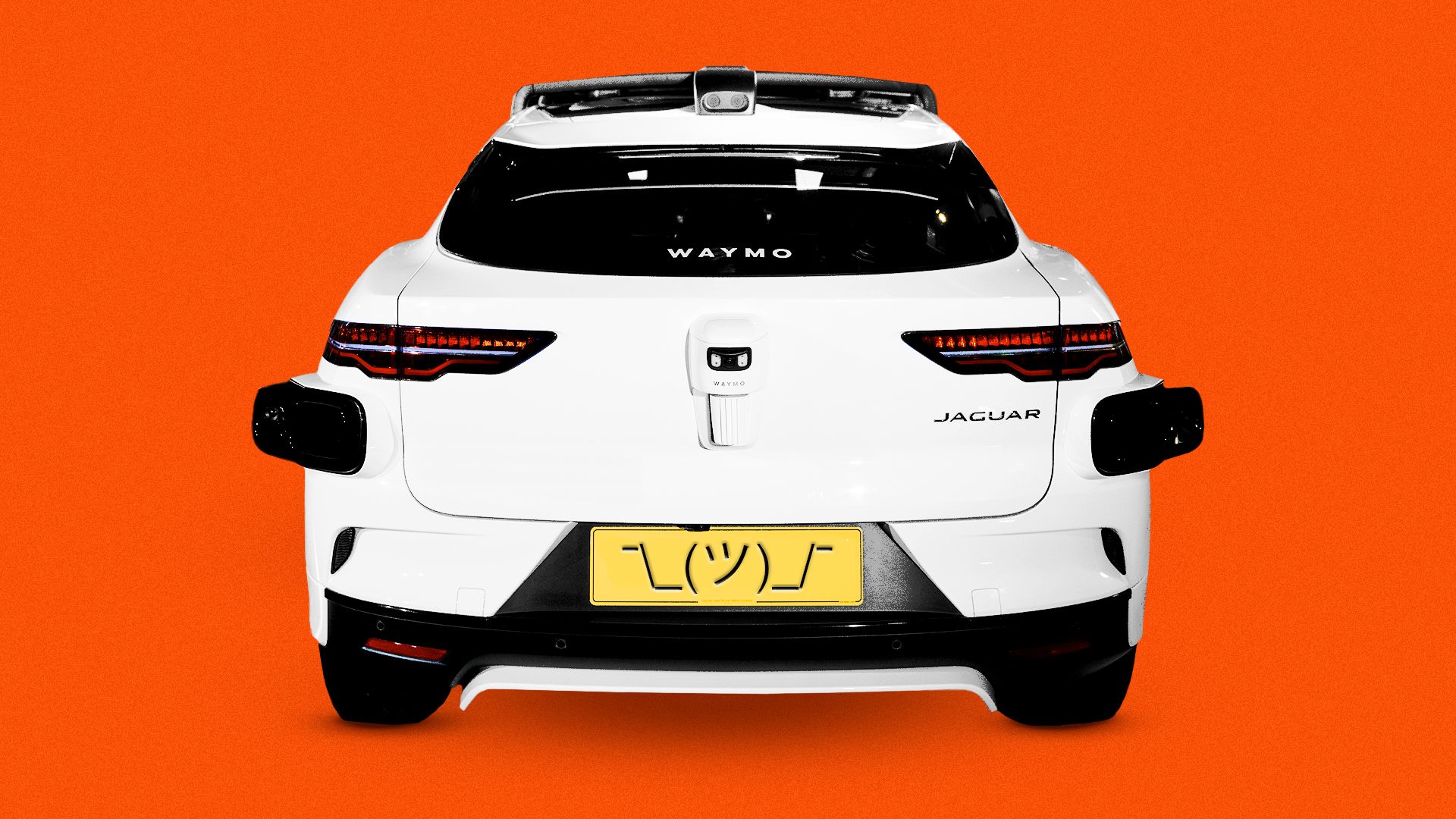
When a confused Waymo robotaxi blocked an ambulance from reaching the scene of last weekend's mass shooting in Austin, Texas, it wasn't a remote Waymo agent coming to the rescue.
- Instead, it was a local police officer who got in and manually drove the car out of the way.
Why it matters: The incident exposes the limits of remote supervision systems in AV networks when vehicles — or the public — need urgent intervention.
Driving the news: There can be perhaps no more complex scenario than a mass shooting as occurred early Sunday morning in Austin.
- A Waymo robotaxi picking up a passenger near the site blocked an ambulance from reaching the scene, according to a bystander video circulating on social media and confirmed by Waymo and Austin police.
- The nearly two-minute video shows the Waymo stopped sideways in the road, as it attempted to make a U-turn amid the chaos, with an ambulance behind it trying to get by.
"Waymo! Come on! Go!" a woman can be heard pleading at the unresponsive car. "Yo, we just need to get into it, I think," a man answers.
- A police officer arrived about 30 seconds into video of the standoff, scanned a QR code on the vehicle to contact Waymo, entered the car and — after nearly a minute — manually drove it away.
- The incident lasted under three minutes, Waymo says, and police say the incident didn't have serious consequences.
The big picture: Congress has started asking questions about how remote assistance works in autonomous vehicles. Much of that concern has focused on how supervisors located far away — in Waymo's case, some of them 8,500 miles away in the Philippines — could pose risks to passengers, other drivers or even national security.
How it works: Waymo's remote assistants don't directly control the cars, the company explained in a blog post and a letter to U.S. Sen. Edward Markey (D-Mass.) after a recent committee hearing.
- They respond to specific requests from the robotaxi when its driving system determines it needs help, providing digital guidance to help the vehicle navigate tricky situations, like construction zones.
Between the lines: Waymo's most experienced remote assistance agents are part of a U.S.-based "Event Response Team" whose primary purpose is to resolve field events like interactions with police, collisions or towing, the company says.
- At any given time, approximately 70 remote assistance agents are on duty worldwide, overseeing a fleet of more than 3,000 vehicles across six U.S. cities, the company says.
- Half are located in Arizona or Michigan; the other half are in two cities in the Philippines.
Yes, but: Safety advocates raised concerns after the Austin incident about the ability of AVs to handle emergencies, pointing to similar episodes in San Francisco, a major AV testing hub.
Zoom out: Waymo's car in Austin got stuck thinking, balancing two things it was trying to do at once in a dynamic situation.
- "While humans are not perfect drivers, they have an amazing ability to muddle through a novel situation with high uncertainty, which is precisely where machine learning is at its worst," Carnegie Mellon Emeritus Prof. Philip Koopman, an expert in embodied AI safety, said.
The bottom line: As AV fleets grow worldwide, companies will need to improve remote oversight capabilities to ensure cars drive safely and can move quickly out of dangerous situations.
2. What AVs can learn from combat drones
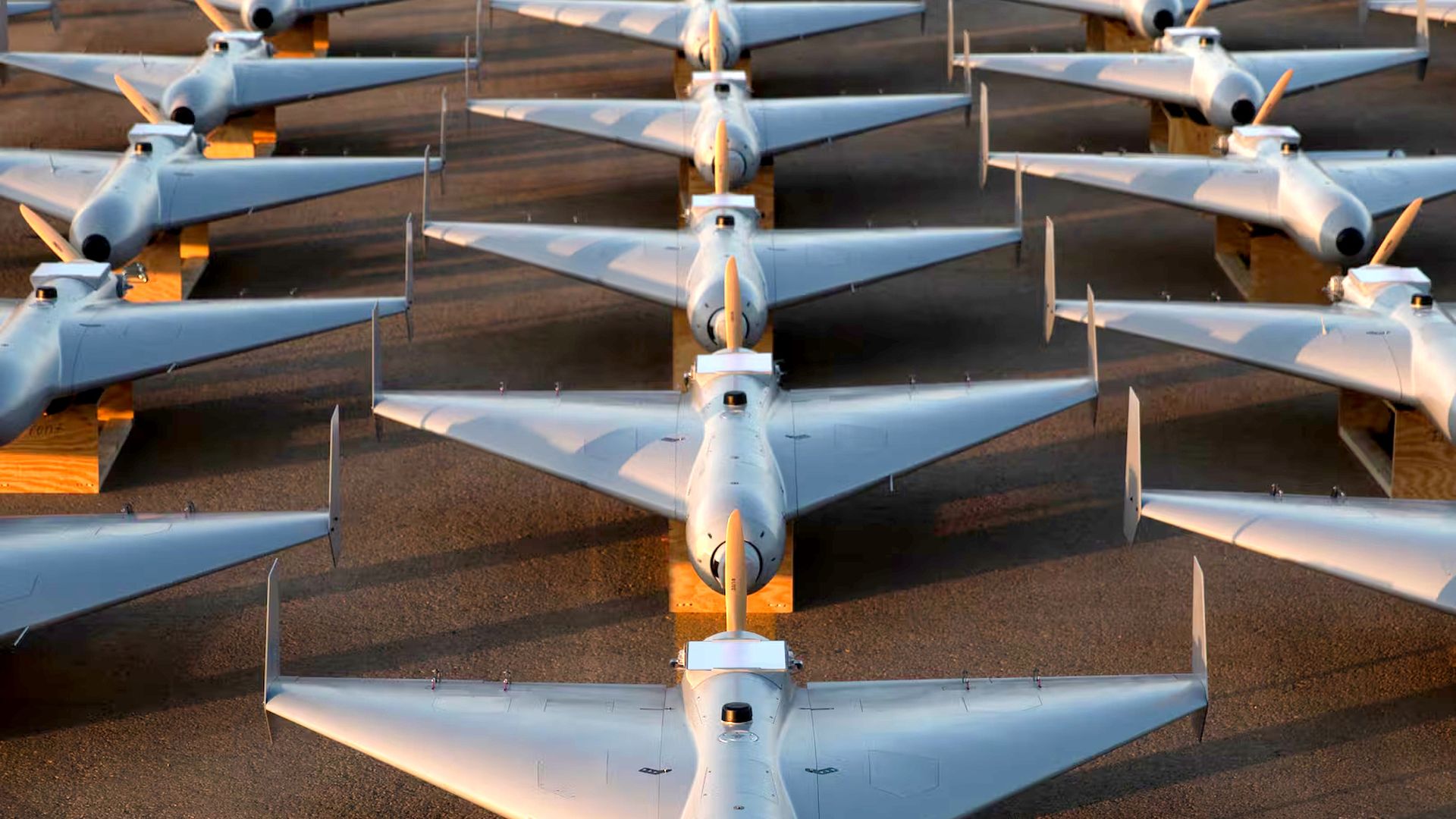
Self-driving car companies can learn from the early failures of military combat drones.
- Communication delays, or a stressed remote operator, could risk human lives, says Missy Cummings, a former Navy fighter pilot who later became an expert in autonomous vehicles.
Inside the room: Cummings, now a George Mason University robotics professor, worked Navy flight operations in the early 1990s during the Gulf War.
- Later, as a PhD student, she was one of the first researchers to examine how to improve remote supervision of unmanned aerial vehicles (UAVs).
- Sitting "shoulder-to-shoulder in tiny trailers" with drone operators, she looked for ways to improve remote supervision of UAVs, including those flying halfway around the world.
Threat level: Now, as robotaxis hit the road with remote agents monitoring them in the background, she's seeing many of the same mistakes made by the U.S. military in the early days of UAVs, she writes in the tech engineering magazine IEEE Spectrum.
She outlines five lessons for AV companies:
Low latency: Delayed communication makes remote vehicle control difficult, the military learned.
- Self-driving car companies rely on sometimes spotty cellphone networks to deliver commands, which could lead to time lags.
- In one incident, a Waymo operator instructed a car to turn left when a traffic light appeared yellow in the remote video feed but had already turned red in the real world.
- Having Waymo's remote assistants closer, not overseas, would help, says Cummings.
Poor design: In the military, human errors led to many drone crashes because of confusing controls. In one case, remote operators inadvertently shut the engine down instead of launching a missile.
- Some companies use off-the-shelf video game controllers to operate autonomous shuttle buses. That can lead to mode confusion, which was a factor in a recent crash in Orlando, says Cummings.
Operator workload: Monitoring many military drones at once can be overwhelming. But when things are quiet, supervisors can get bored and become less alert.
- The same is true of robotaxi monitors, who can become overwhelmed in an emergency.
Training: The military changed its training program for drone operators once it better understood the knowledge and skills needed to remotely control UAVs.
- For self-driving cars, there are no regulations governing the qualifications for remote operators.
- Waymo says its remote assistance agents are required to have a driver's license in the Philippines, and they're retrained every six months.
Contingency planning: In the military, drones may fly themselves to safe areas or land autonomously if contact is lost.
- A recent power outage in San Francisco suggests robotaxis are not well prepared for emergency.
3. Flying taxi update: War, Olympics and layoffs
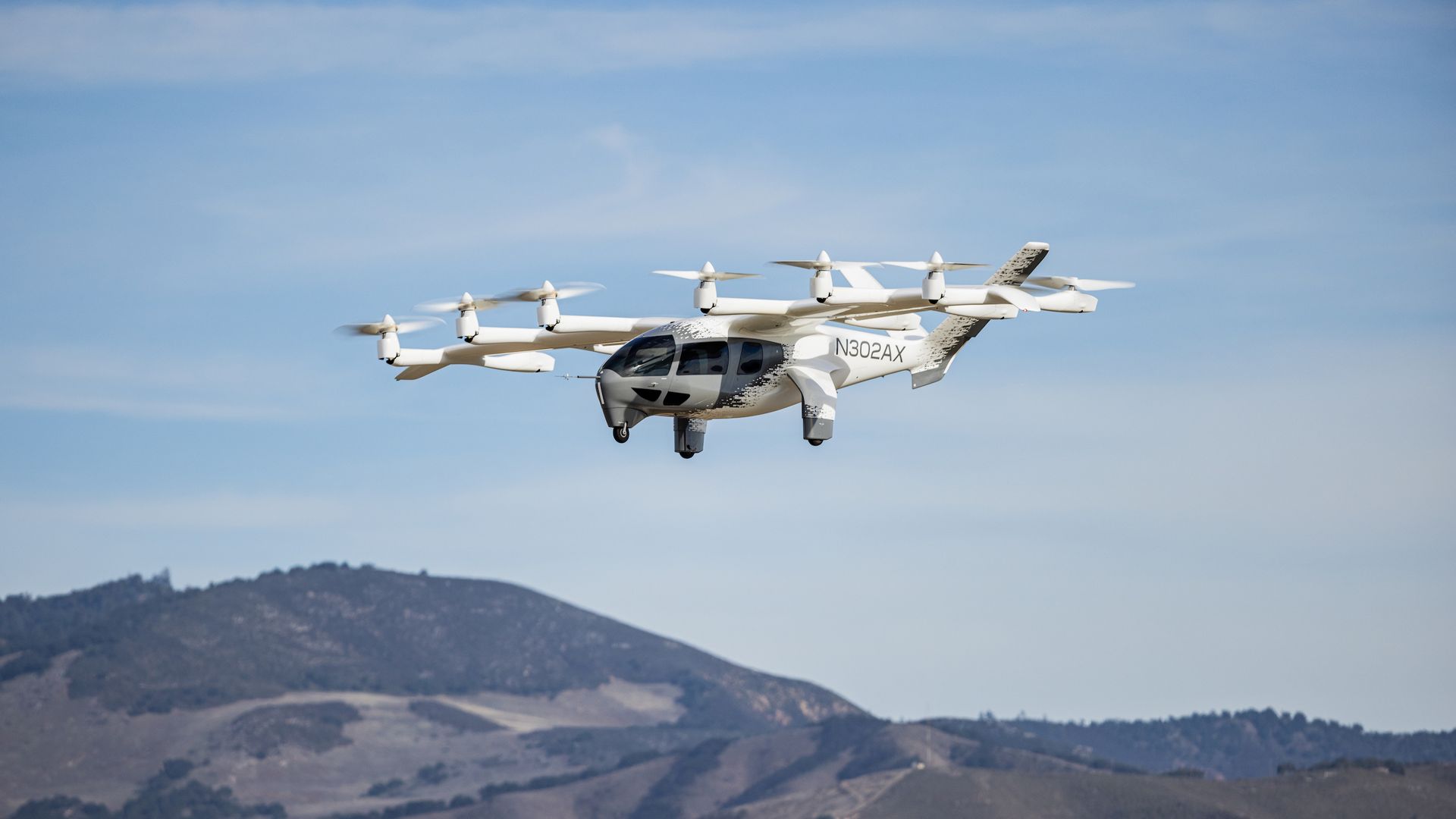
War in the Middle East could disrupt this year's planned launch of electric air taxis in the United Arab Emirates.
- Just a week ago, Uber and Joby were previewing Uber Air, a new option for passengers to get quickly around Dubai.
- Now, with the city being hit by Iranian missiles and drones, the UAE is considering striking back.
What they're saying: "We remain fully committed to launching electric air taxi service in Dubai," Joby said in a statement to Axios.
- "The safety of our people, our partners, and the communities we serve is our highest priority, and that will guide every decision we make. We're in close contact with local partners and authorities and are monitoring the situation carefully."
- Archer CEO Adam Goldstein had a similar "wait and see" message during an investor call this week.
In the U.S., there's more promising news.
- The Department of Transportation is expected any day to select the first cities where electric vertical takeoff and landing (eVTOL) aircraft will be authorized to fly in the U.S.
- The FAA's eVTOL Integration Pilot Program (eIPP) is designed to accelerate advanced air mobility through public-private partnerships between state and local governments and a number of private aviation companies.
Zoom in: As many as five pilot cities will be selected from more than a dozen applicants.
- Los Angeles, host of the 2028 Summer Olympics, is likely to be among them, a boost for Archer, which says it is the "official air taxi partner" of the Games.
What they're saying: Goldstein called the 2028 L.A. Olympics "an unslippable date for us" and said: "It's driving the regulators and it's really driving us towards making decisions and ultimately making progress."
- The Trump administration "heavily leaned into the Olympics, wanting to show all the great things America has done, the re-industrialization of America, America's leadership in aviation," he said.
- "This is a very important event for the administration, and so we are coordinating at the highest levels to make sure that this goes off smoothly."
What to watch: Both Archer and Joby are awaiting FAA certification of their innovative electric aircraft.
Meanwhile, a shakeout continues among eVTOL manufacturers.
- Hyundai Motor Group subsidiary Supernal laid off 80% of its workforce last week, an acknowledgement that its flying taxi ambitions won't come to fruition any time soon.
4. Drive-thru
🚖 Tesla has done nothing to secure approval for robotaxi services in California, despite Elon Musk's promises that the company will soon go after rival Waymo there. (Reuters)
- Why it matters: Much of Tesla's $1.5 trillion market value is tied to investors' belief that it will soon operate a vast fleet of robotaxis, with California — the largest U.S. auto market — as a linchpin of those ambitions.
😲 Sticker shock: Automakers are hiking obscure "destination charges" on new vehicles to cover fuel and shipping fees — and now higher tariffs as well. (The Wall Street Journal)
⚡️ The chart below highlights the giant swing in U.S. EV sales after consumers rushed to use federal tax credits before they phased out under the GOP budget law.


5. Music & driving: a deadly combination?

On days when popular musicians like Taylor Swift, Bad Bunny or Drake released new albums, the U.S. saw a spike in traffic fatalities, according to a study published in the National Bureau of Economic Research.
Why it matters: The findings by Harvard Medical School researchers suggest new music downloads could be an increased source of driver distraction.
What they did: Researchers wanted to investigate the real-world impact of smartphones on road safety by examining traffic fatalities on days when smartphone use likely surges — the release of major music albums.
- They compared the federal government's official database on traffic fatalities (known as Fatality Analysis Reporting System, or FARS) with data from Spotify charts for the period from 2017 to 2022.
What they found: On the release days of the 10 most popular albums, streaming numbers increased by 43 percent, and fatal traffic accidents increased by 15.1 percent.
Reality check: Correlation is not causation, the researchers point out.
- 💭 Thought bubble: Still, it makes a lot of sense, doesn't it?
Stay safe out there, and thanks for reading! Thanks to Pete Gannon and Bill Kole for editing. Invite your friends to sign up here!
Sign up for Axios Future of Mobility