Axios Future of Health Care

November 09, 2026


Welcome back. Here's a look at how some Democrats hope to win over MAHA voters without embracing Robert F. Kennedy Jr.
Today's newsletter is 916 words, a 3.5-minute read.
📢 Just announced: Our AI+SF lineup on Dec. 3 will feature Gates Foundation chair Bill Gates, OpenAI CFO Sarah Friar, Blackstone president Jon Gray, Luffu co-founder James Park and more. Request an invite here.
1 big thing: Dems face a tough sell with MAHA base
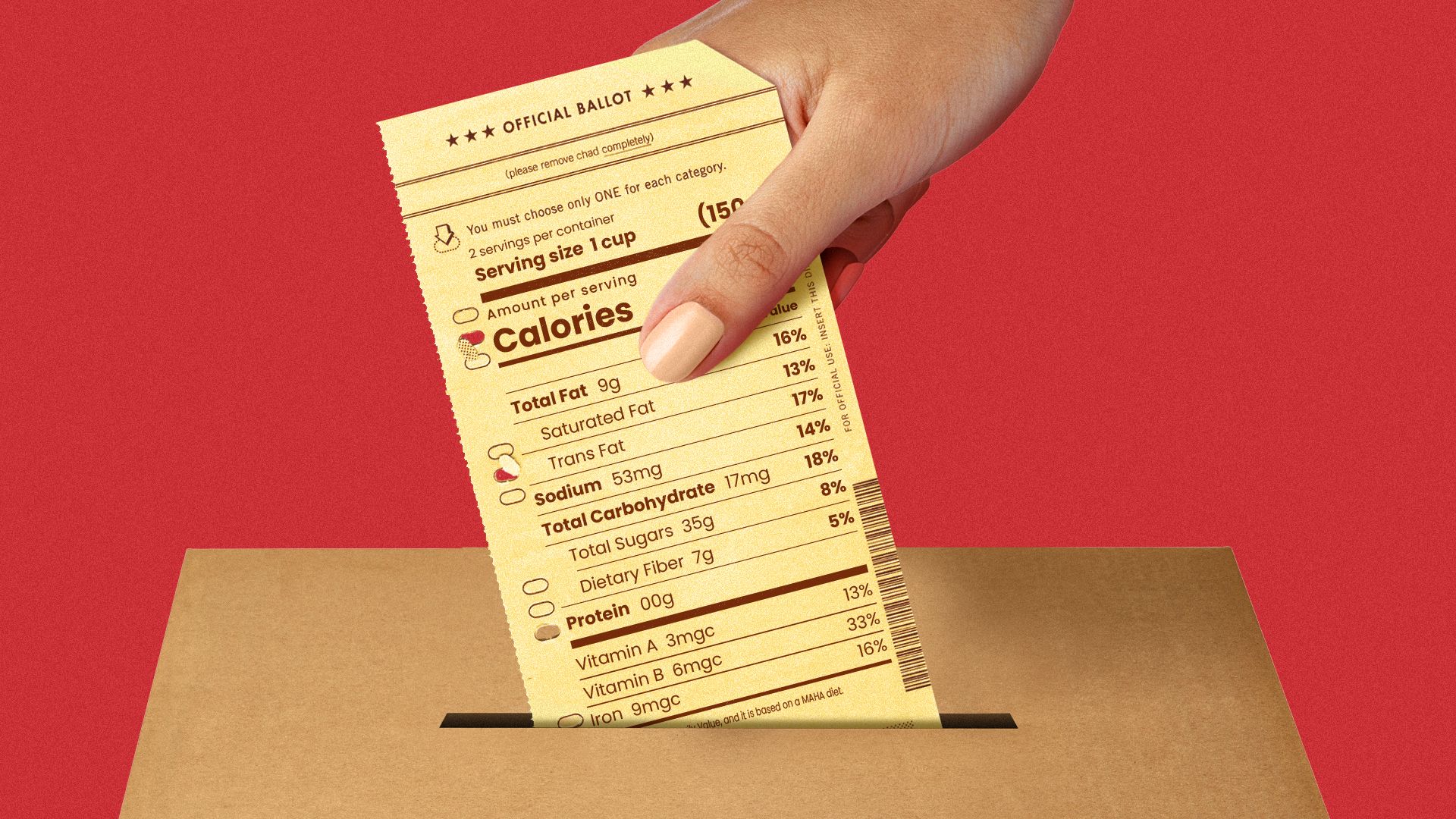
The potential for partnership between newly ascendant Democrats and the "Make America Healthy Again" movement is already threatened by their deep disagreements over Health Secretary Robert F. Kennedy Jr.
Why it matters: Democrats want to convince health-conscious voters that they're the party that can deliver on food and pesticide use, but many view an alliance with Kennedy as a nonstarter.
- They're already threatening to investigate Kennedy, and they're clashing bitterly with him over vaccines and other issues — so any common ground with MAHA over nutrition and pesticides could take a back seat to those fights.
State of play: Most MAHA-backed candidates lost at the polls last week.
- Some of the movement's leaders blame low turnout for the GOP's terrible election night, saying MAHA faithful stayed home because they were disappointed with the Trump administration and a lack of progress on food and environmental issues.
- Whatever they may think of the White House and federal health officials, the base remains intensely loyal to Kennedy, who created the movement during his 2024 presidential bid.
"The voters sent a clear message to this administration and to all political parties, that we are not motivated to vote for people who have a lack of integrity. Promises were made, and promises were broken," said Zen Honeycutt, founder of Moms Across America.
- While she's open to working with Democrats going forward, "We want them to work with Kennedy, not against him," she added.
- "That's the red line for almost all of us. You cross that line and you go after Kennedy, you are never getting our vote," she said. "I'm not interested in working with people who are trying to get rid of our champion."
The big picture: Some Democrats were making overtures to MAHA voters on key issues ahead of the midterms.
- Lawmakers like Sen. Cory Booker (D-N.J.) have already said they're willing to work with Kennedy on issues like cleaning up the food supply, school lunches and banning the use of certain pesticides.
- Now, the movement's leaders are responding to those overtures.
Driving the news: "There are good people across the political spectrum who want to be part of this, and we're going to find every last one of them and fight with them," MAHA Action president Tony Lyons said last week on the organization's weekly call.
- Lyons also rejected suggestions that the movement is dead, saying "we've won the hearts and minds of the American people."
Yes, but: Democrats have drawn the line on vaccine issues, refusing to adopt Kennedy's medical freedom agenda or greater scrutiny of vaccine safety.
- Few seem willing to accommodate Kennedy, who's likely to be a top target for oversight and investigations once Democrats take power.
- And Kennedy remains committed to relitigating vaccine safety claims that mainstream scientists say have been thoroughly debunked.
That's likely to kill any bridge-building before it starts.
- After Maryland Democratic Sen. Angela Alsobrooks called for Kennedy to resign or be fired, MAHA influencer Kelly Ryerson — known as "Glyphosate Girl" — said she didn't understand the strategy and warned it "will lose many future voters."
2. New angst over discount drug overhaul
Another legal fight over the federal discount drug program appears on the way after the Trump administration finalized a plan that's projected to slash $5.45 billion in pharmaceutical spending next year.
Why it matters: The administration argues Medicare is reimbursing hospitals and outpatient clinics far more than their cost of buying drugs under the 340B program.
- But past bids to revamp the program have been stalled by legal challenges. The American Hospital Association responded to the latest move by decrying what it said was a "continued assault" by CMS on 340B.
Context: The program is designed to provide discounted drugs to safety-net providers and has been a perennial source of friction between hospitals and Big Pharma.
- Costs are ballooning, and providers covered by the program bought $100 billion in outpatient drugs last year.
Driving the news: CMS last week finalized a policy that reduces the Medicare reimbursement for 340B drugs from the average sales price of a medicine plus 6% to the average sales price minus 28% starting on Jan. 1.
- Officials cited a survey that found hospitals acquire 340B drugs at an average cost significantly below the average sales prices — consistent with findings from MedPAC that show that Medicare payments have exceeded 340B acquisition costs.
- To offset the cuts, CMS also finalized a 7.5% increase in payments for non-drug items and services across acute-care hospitals.
- It also expanded adjusted payment policies for certain bone density scans, X-rays, ultrasounds and other imaging services, to better align reimbursements across different care settings.
What they're saying: "The key question now is the timing and trajectory of litigation," Evercore ISI analysts wrote in a note, adding the American Hospital Association had characterized the 340B cuts as unlawful when they were originally proposed.
- Analysts said any legal challenge would take time to work its way through courts, meaning it's likely the reductions will take effect at the start of 2027.
Thanks for reading Axios Future of Health Care, and to editor David Nather and copy editor Matt Piper. Please ask your friends and colleagues to sign up.
Sign up for Axios Future of Health Care