Axios Future of Health Care

December 13, 2024

Good morning. I'm trying something new today — I think of it as kind of a book review. Send me your thoughts, especially if you've read the book we're talking about!
- If you just can't get enough of my newsletters, there's a special edition of the Axios Hill Leaders newsletter coming out tomorrow that focuses on the future of health care under the next Congress. Sign up for Hill Leaders here!
Today's word count is 1,004, or a 4-minute read.
1 big thing: How Trump's pick to lead the FDA thinks
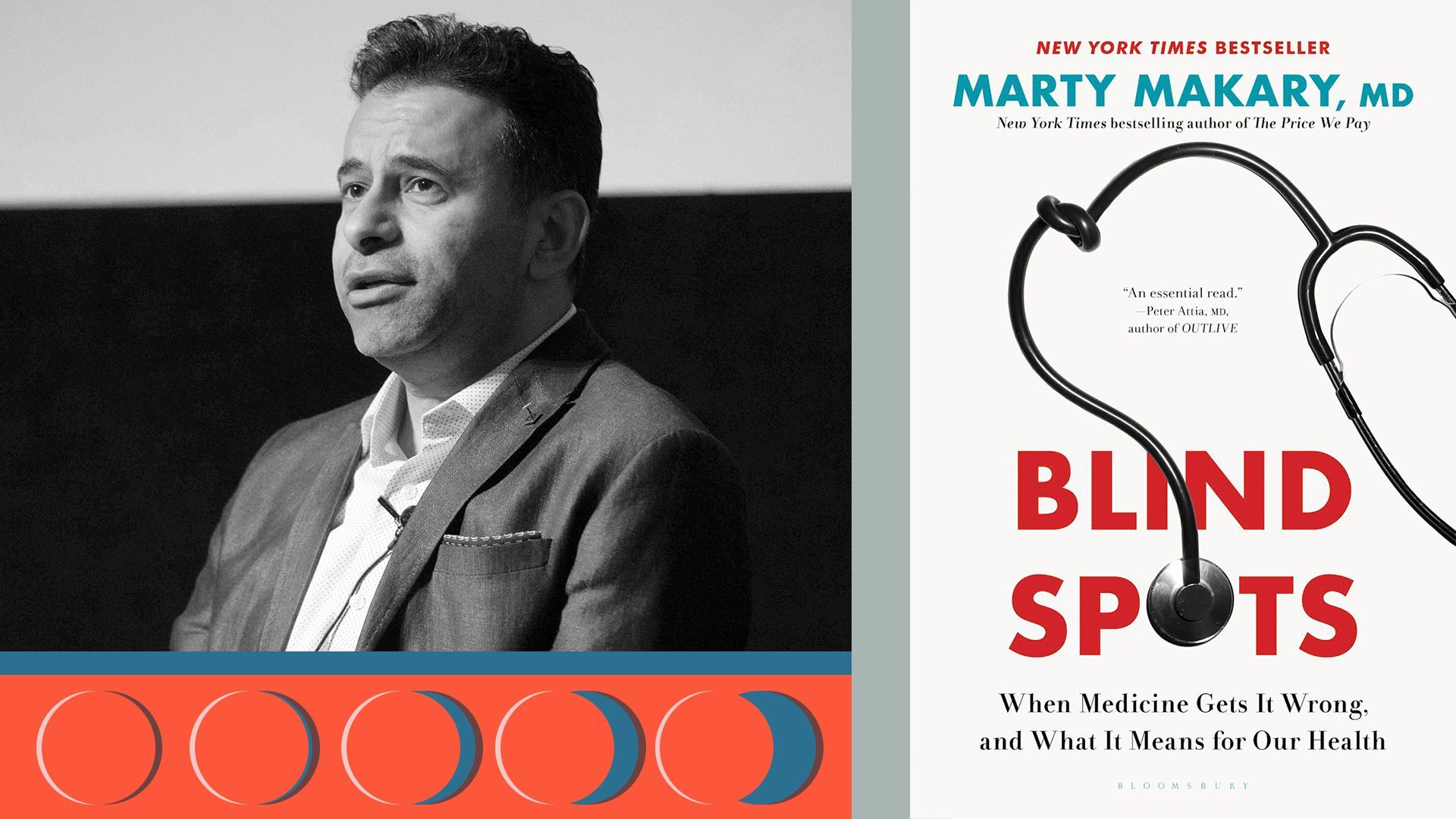
Marty Makary, a Johns Hopkins professor nominated by President-elect Trump to lead the FDA, is probably most publicly known for his criticism of pandemic policies. But his new book makes clear that his contrarian bent extends much further than COVID.
Why it matters: In "Blind Spots," Makary calls into question the reliability of government agencies, major health associations, the media and even prominent academic journals.
- He does so by pointing out concrete examples of where he says they got medical recommendations wrong.
- His North Star, he suggests in his writing, is scientific evidence, which can either be botched or ignored even by these mainstream institutions.
Details: Makary's book, subtitled "When Medicine Gets It Wrong, and What It Means for Our Health," tells the story of how medical establishment actors got it wrong on topics ranging from peanut allergies and cholesterol to antibiotic overuse, breast implants and hormone replacement therapy.
Disclaimer: The goal of this newsletter isn't to fact-check Makary's numerous conclusions, because I genuinely don't know much about the topics he presents and it would take way too long to address them all. I'll save the fact-checking for if and when he's installed at the FDA.
- But for reference, his positions on COVID vaccine policy got a lot of pushback from other scientists and health experts and were not universally viewed as adhering to science.
- On the other hand, his general criticism in the book of the widespread acceptance of OxyContin — including by the FDA — is pretty hard to argue with, given everything we know now.
- Former FDA commissioner Scott Gottlieb, who hasn't been shy about criticizing Robert F. Kennedy Jr., wrote on X in September that he "highly recommend[s]" the book.
Between the lines: I now have a much better understanding of why Makary has aligned with Kennedy and the MAHA movement, despite his general embrace of vaccines and lack of conspiratorial insinuation.
- Like Kennedy, he questions the medical establishments' true commitment to promoting good health, and accuses them of taking a leading role in making some health problems worse.
- He also questions the use of medication in lieu of addressing root drivers of disease.
- "Can we treat Type 2 diabetes with cooking classes instead of just prescribing insulin? Can we talk about school lunch programs, not just giving children Ozempic? Can we treat the epidemic of loneliness by fostering communities, instead of simply prescribing endless antidepressants?" he writes.
- He even includes ideas about population-level chronic disease drivers. For example, in the chapter about antibiotic overuse and the microbiome, he says that there's "an epidemiological suggestion that taking antibiotics early in life may be associated with chronic diseases."
My thought bubble: While reading Makary's book, I've made some mental notes. When the time comes, I'll make sure to have looked into (reminder, I'm not adjudicating any of his conclusions right now!) hormone replacement therapy as a treatment for menopause symptoms and the removal of my fallopian tubes to prevent ovarian cancer — both ideas he makes the case for in his book.
- But my big question while reading was who Makary would say is trustworthy, and more importantly, how he thinks average people should go about making important health decisions if every voice of authority may lead them astray.
- "Modern medicine's track record of getting big health recommendations wrong begs the question: What else are we doing today that could be wrong?" he writes in the book's intro.
- "Simply accepting medical dogma — such as 'opioids are nonaddictive' — because experts say so has proven catastrophic," he adds. "Could it be that many of our modern-day health crises are caused by the hubris of the medical establishment?"
2. The critic is about to become an insider
To me, one of the most interesting chapters of Makary's book was the last one, which is titled "Imagine: What else are we getting wrong?"
Why it matters: Makary is (probably, pending confirmation) about to become one of the very health authorities he criticizes, and will have to navigate this authority at a time of low societal trust in public health entities.
- He shares that skepticism, writing in the chapter's opening that "medical dogma may be more prevalent today than in the past because intolerance for different opinions is on the rise, and medical authority is more centralized."
- As a top national authority, he will potentially be tasked with navigating some of the 10 hot-button topics he raises in the final chapter as "medical practices that are based on assumptions that have not yet been fully or properly studied."
- Some of the skepticism he's stoked could end up directed at him.
The topics or practices he calls into question:
- Fluoride in drinking water (sound familiar?)
- The idea that "marijuana is harmless"
- Tylenol for fevers
- The use of blood tests for early cancer detection
- The use of annual flu shots vs. investing more in a universal flu vaccine
- Testosterone replacement for men
- Gender-affirming care for children
- "Tongue-tying" infants
- The long-term health impacts of GLP-1s
- Mammogram screenings for low-risk women in their 40s
What he's saying: "The pandemic was not a one-off in how the medical establishment works. In fact, it was more the norm than the exception," Makary concludes.
The bottom line: Writing books is one thing, but FDA commissioners and other public health authorities have a vested interest in the public trusting them. And when you're riding a wave of sentiment that government and corporate health care shouldn't be trusted, you may run into some problems down the line.
3. What I'm reading
💉 RFK Jr.'s views on addiction, shaped by personal experience, include having a "tough love" approach and a system of "healing farms," Stat reports.
🏥 "Eastern Kentucky is one of the places where you're most likely to die of a drug addiction but also the place where you're most likely to receive treatment for it," the New York Times writes in a deeply reported piece on the area's addiction recovery industry.
😠 Doctors' frustration with insurance companies is only increasing, particularly when it comes to getting paid for patients' treatments, the Wall Street Journal reports.
Thanks to Nicholas Johnston and Adriel Bettelheim for editing and Matt Piper for copy editing.
Sign up for Axios Future of Health Care