Axios Future of Health Care

October 18, 2024

Good morning. Today's newsletter is inspired by a little field trip I took last month. Tell me where else I should go once you're done reading!
Today's word count is 1,767, or a 6.5-minute read.
1 big thing: Cancer diagnostics' rapid evolution

A few weeks ago, I toured Tempus AI's labs in Chicago, and my biggest takeaway was that this was the most integration of cutting-edge technology I've ever personally seen in a health care setting.
- A close second — which is related — was that I had no idea how sophisticated cancer diagnostics have become, thanks to new and emerging tech.
Why it matters: The holy grail of cancer treatment is precision medicine, or care tailored to a specific patient's unique manifestation of the disease. Thanks to biological and computing advancements over the last decade or so, reams of data about patients' cancer is now available to clinicians, down to the specific mutation driving it.
- But precise diagnostics are only half of the equation. Patients have to be matched to treatments that correspond with their diagnosis, and those don't always exist.
- "Cancer precision medicine does not benefit every patient. It's not for every patient a match of a mutation and a therapy that can be given, and there's a lot of exploratory science underway," said Viktor Adalsteinsson, director of the Gerstner Center for Cancer Diagnostics at the Broad Institute.
Where it stands: Testing patients' blood or tissue samples can yield information about the genetic underpinnings of their cancer. And as genetic sequencing has become quicker and cheaper, it's become more widely accessible.
- "Something that used to cost so much money is so inexpensive now, we're building tests at scale with very low marginal costs," said Peter Bach, chief medical officer at Delfi Diagnostics.
- "So there's no question all the targeted therapies that are related to specific mutational changes are the most obvious of the use cases, and it's so common now we take it for granted."
But other advances outside of genetic sequencing have also led to more sophisticated diagnostics, including among traditional imaging techniques like CT scans.
- Hardware and software improvements have been enhanced by AI and computing advancements, Bach said.
- "If you think about it, it's kind of a perfect application of computers and AI, because when I look at a CT on a monitor, the amount of information I can see with my eye is a very small fraction of the amount of information that's actually underlying it," he said. "The computer doesn't need it condensed."
All of this data — not to mention a patient's clinical information — is increasingly made navigable with the assistance of additional technologies.
- "That level of detail is getting much richer, and then the ability to analyze that at scale," said Amy Abernethy, cofounder of Highlander Health and a former senior FDA official. "And what's becoming remarkable is the ability to put it all together."
- "The landscape right now in terms of computational sophistication, the ability to compute at scale, cloud-based technologies — that's just totally exploded," she added.
What we're watching: AI tools are going to "start generating much more patient-specific insights from genomic data once you can correlate that information better with other streams of data, including clinical information," said former FDA commissioner Scott Gottlieb, who's on the Tempus board. "And that's really the future."
- For what it's worth, FDA officials including current commissioner Robert Califf published a piece in JAMA this week discussing AI regulation in health care. One snippet from that:
- "The evolution of AI illustrates a major quality and regulatory dilemma. Since the safety and effectiveness of many AI models depends on recurrent evaluation of their operating characteristics, the scale of effort needed could be beyond any current regulatory scheme."
More below ...
2. The bigger picture
Better diagnostics that make use of genomic profiling have wider applications than just precision medicine, the Broad Institute's Adalsteinsson said.
- It's now technically possible to screen for cancer through a simple blood draw, although there's a lot of work to be done in making those tests more sensitive for earlier-stage cancers, he said.
- That means eventually, patients could be screened for cancers via a blood test as part of their annual physicals, for example.
Blood tests can also help check the effectiveness of a treatment by essentially seeing how much residual cancer remains after a surgery, and whether further treatment is needed.
- That's in contrast to simply treating a patient based on their risk profile for cancer reoccurrence.
- The tests may cost upward of $1,000, but "when you think about the potential benefit to the patient in knowing whether more precisely this therapy is needed or not, and in some cases avoiding treatment with highly toxic and expensive agents — [that is] a huge factor to consider," Adalsteinsson said.
Yes, but: Although the cost of genomic profiling has steadily decreased, it's still relatively expensive, and not all patients have access to it. That could further contribute to health disparities.
- Even those who do have access may not get matched with a treatment specific to their mutation.
- "The majority of cancer therapies delivered today are not personalized at the level of genetic mutations," Delfi Diagnostics' Bach said, although "if you go back 10 years, nearly all treatments were non-personalized."
- "Nothing ever paces perfectly, but finding mutations that are not yet druggable isn't a bad thing," he added. "It's frustrating in the moment, it's frustrating for a patient and for taking care of that patient, but it's a good thing to know there's a potential opportunity that can then be worked on scientifically."
By the numbers: About a third of cancer patients have a genetic mutation that is predictive of their response to standard-of-care therapies, said David Solit, director of the Marie-Josée and Henry R. Kravis Center for Molecular Oncology at Memorial Sloan Kettering Cancer Center.
- Drugs have been developed for use against only about a third of those mutations.
- "I think we've identified both the common and even the rare genetic drivers in the vast majority of patients," Solit said. "We're going to need to come up with newer diagnostic platforms to move the field forward."
- "We need complementary information and we need better drugs," he added.
The bottom line: "If you're a cancer patient, you should be looking to seek this out and get sequencing done. I think it helps inform treatment decisions and can improve clinical outcomes," former FDA commissioner Gottlieb said.
3. The growing cancer care ecosystem
PitchBook coincidentally put out a report this week looking at the oncology healthtech market.
- "New innovations in cancer screening with liquid biopsy blood tests and image-based detection are likely to result in rising demand for new cancer detection products, and longer-term, regular multicancer detection is set to become part of the standard of care in health screening," the report predicted.
By the numbers: Oncology healthtech startups have raised over $16 billion in venture capital funding since 2020, per the report.
- PitchBook estimates the global oncology healthtech market to be about $250 billion, with cancer screening making up the largest part. That market alone is an estimated $100 billion globally and $40 billion in the U.S.
My thought bubble: Innovation is expensive — and, for some, lucrative.
- As PitchBook points out: "Though there is broad willingness among payers and providers to improve the rate of cancer screening and a need for more effective diagnostics, adding every new screening test that comes to market is not a viable solution."
4. Axios interview: Bringing AI to health care
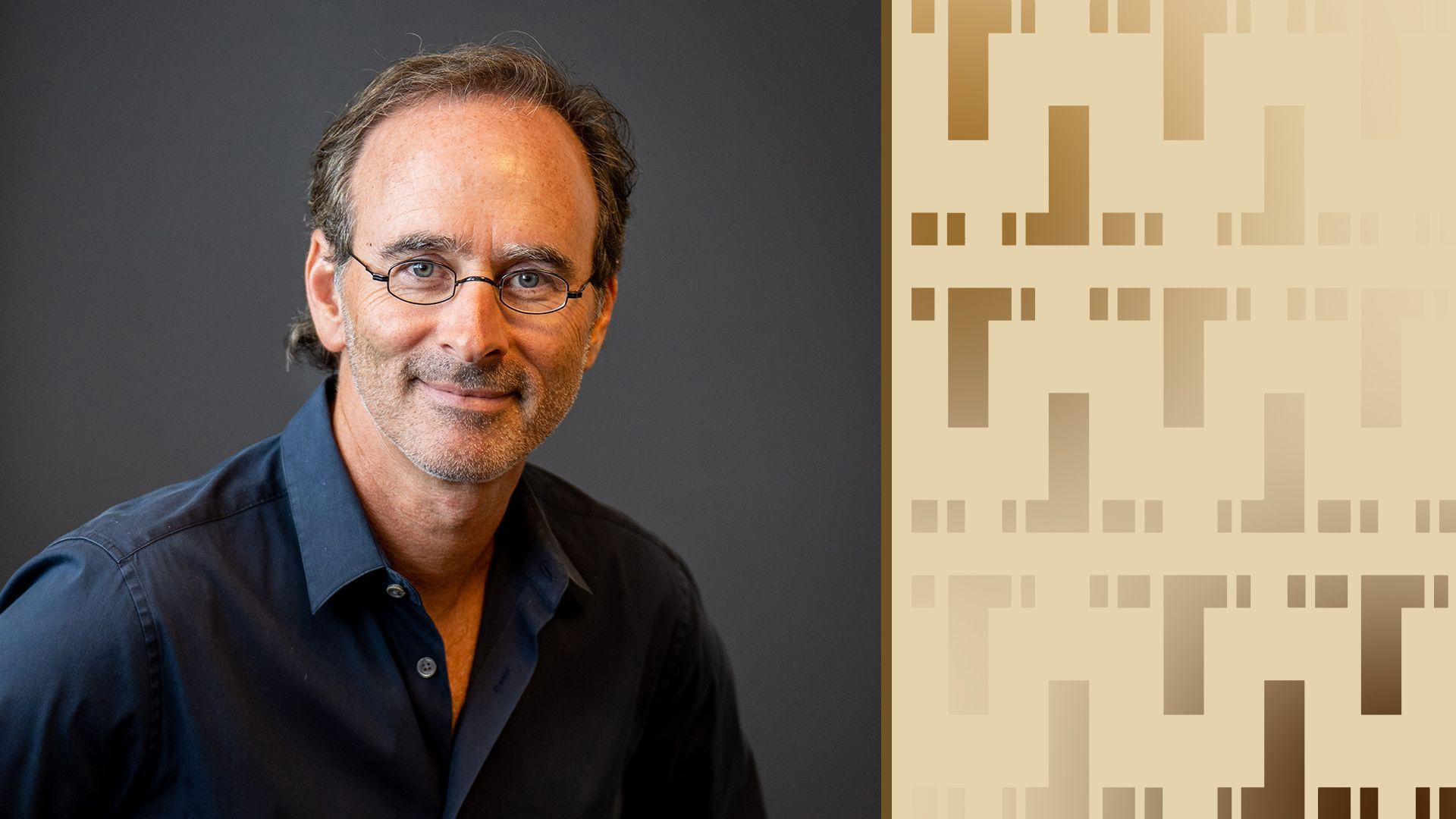
Tempus has come up a lot in this newsletter, and that's both because of my field trip and my subsequent interview with founder and CEO Eric Lefkofsky (who also cofounded Groupon). Let's just jump right into our Q&A:
Q: One trend transforming health care that we're not paying enough attention to?
A: One is certainly, I think, we are behind in bringing the benefits of technology and AI to health care relative to other industries. So Tempus is a leader in an area that we as a country are behind in to begin with.
- The second would be, we're also not good at understanding the cost implications of the decisions we make. We run a highly inefficient health care system in this country.
Q: Biggest challenge health care faces?
A: The current system is unsustainable. We're spending something like $4.5 trillion a year to produce outcomes that are subpar relative to the rest of the world.
Q: Biggest opportunity?
A: To bring technology and AI in particular to health care, to remove that inefficiency so that we can route patients to the right therapeutic, we can avoid mistakes and errors, we can make sure that physicians are making data-driven decisions.
Q: Biggest wild card?
A: Any novel technology is a wild card, so AI in particular would be considered by many to be the biggest wild card. Tempus' business model is to advance the thing many view as a wild card, a wild card defined as "this new thing could be disruptive and we don't quite know how it will be disruptive."
Q: What's your go-to piece of advice?
A: Stay problem- and solution-oriented, meaning don't worry about making money, don't worry about building a great business, worry about solving a problem that needs to be solved.
Q: What is your morning routine?
A: I'm highly regimented. I get up pretty early, like around 5am. Then if I'm coming into the office, I drive down and then I work out and then start my day. If I'm at home, I have an indoor Jacuzzi and I actually sit in my indoor Jacuzzi and drink coffee. It's kind of weird, but I think best in water. I take a lot of baths, I'm in a Jacuzzi a lot.
Q: What's the best job you've ever had?
A: I only worked for somebody for about six weeks when I was about 17. So I've had one job for about a month, and I was horrible at it and it was horrible. So in that regard, I've had no good job ever. After that I've always worked for myself starting companies.
- I was a stockboy at a tennis retail store for about a month. ... I don't mind following rules, but I don't do well when I'm in a very regimented situation. And so I found working in that capacity to be really regimented.
Q: 1 fun prediction: Tell us something about what health care is going to be like in 5-10 years that's different from today.
A: AI will be pervasive in health care. We tend to think that's going to start in diagnostics, which is where Tempus is focused, but there's no doubt in my mind in five or 10 years the vast majority of decisions and interactions will be significantly influenced by AI, because it's just too efficient a technology and it's kind of perfectly designed for health care.
Thanks to Nicholas Johnston for editing and Matt Piper for copy editing.
Sign up for Axios Future of Health Care