Axios Future of Health Care

October 19, 2026


1 big thing: Why health care stocks are rallying
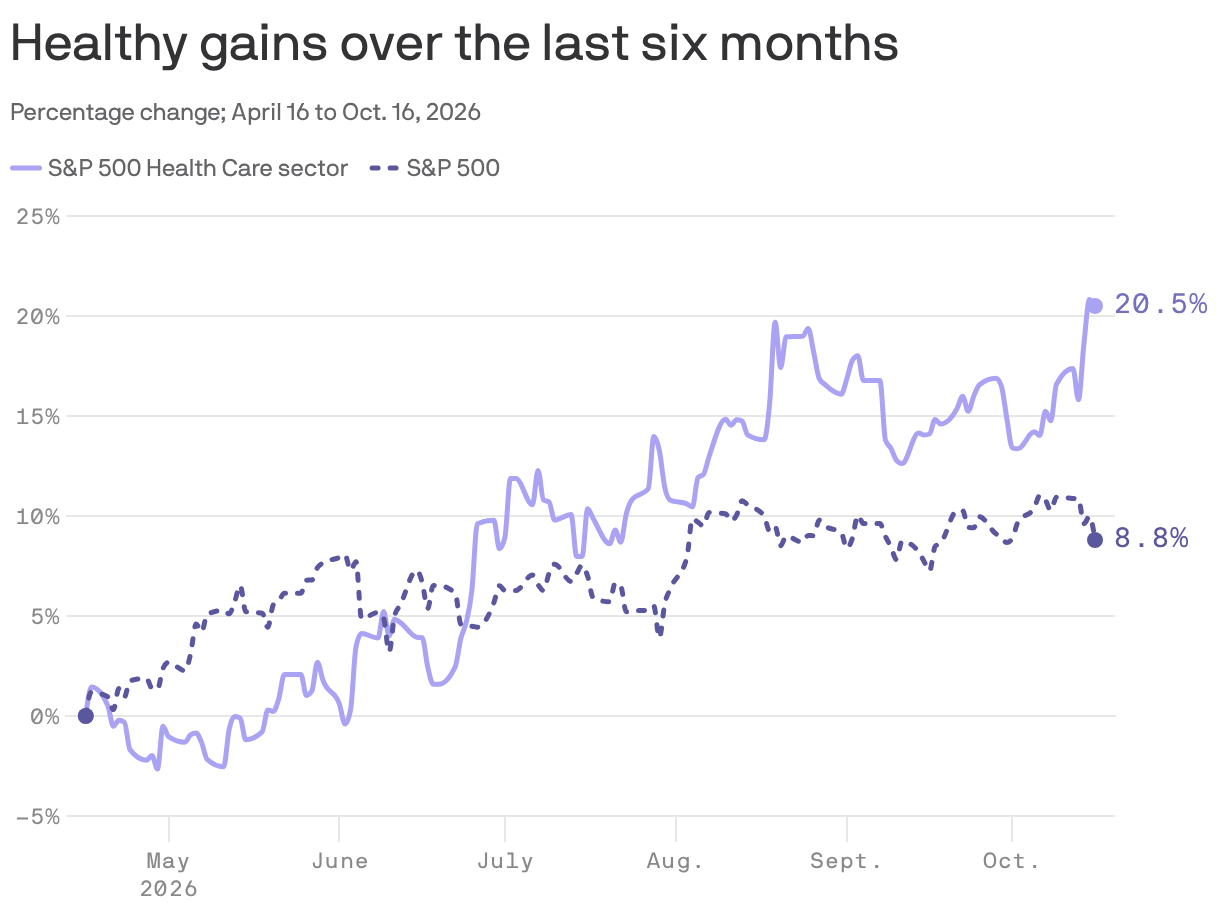
Health care stocks have done well in recent months as investors turn toward "defensive" shares and appear to have priced in increasing odds of Democrats gaining power in the midterm elections, Axios' Matt Phillips reports.
Why it matters: The price moves suggest that traders and investors see increasing odds that some cuts to federal health spending imposed by President Trump's big 2025 spending bill could be undone, analysts say.
The latest: The S&P 500's health care sector is up more than 9% over the last three months, the second-best performer of the blue chip index's 11 sectors. (Energy was the best.)
- Pharmaceutical shares like Eli Lilly, Merck and AbbVie were some of the strong contributors over that period.
- Hospital chains such as HCA and Universal Health Services (+21%) as well as insurers like Elevance Health (formerly Anthem, +15%) have also posted gains.
Zoom in: Wall Street analysts suggest that some of the peppiness in health care reflects expectations that costly cuts imposed under unified Republican control in Washington last year could be reversed, delayed or moderated if Democrats win one or both houses of Congress on Nov. 3.
What they're saying: Democratic control of the House and the Senate would open "the door for delays in scheduled cuts to reimbursement for hospital services from the Medicaid program" that were part of the One Big Beautiful Bill Act enacted last year, wrote Brian Tanquilut, an analyst with Jefferies.
- "Investor sentiment has turned notably bullish for hospitals," he added.
- "A Dem sweep could see increased health care subsidies and delayed health care cuts," Citi analysts wrote earlier this month.
The intrigue: The strong showing for drug stocks such as Merck (up 14.4% over the last three months) and AbbVie (up about 12%) is hard to square with the expectations of Democrats taking control of Congress, as they are often seen as more open to policies that curtail the industry's pricing power.
- One answer could be that the drug pricing debate has been a relatively low-profile part of campaigning this year.
Reality check: Analysts say that the health care sector stands to benefit the most if Democrats retake both houses of Congress.
- If they just capture the House, "we do not expect meaningful health care reform to pass in this scenario," analysts at TD Securities wrote.
- Moreover, these analysts said, even if the House and the Senate go blue, it could still be difficult for Democrats to deliver policies they're pushing.
- "The better Democrats do in the midterms, the more progressives will be sent to Capitol Hill, which will push the health care agenda even further left, decreasing the likelihood for bipartisan middle ground," the TD Securities analysts wrote.
- An emboldened left, they said, would "increase the calls for partisan oversight efforts that will inflame President Trump" and make any health care legislation difficult.
Caveat: It's difficult to attribute all of the recent move higher in health care stocks to the looming elections.
- There has been a simultaneous move by investors into other defensive areas of the market, such as consumer staples, amid a cooling off of the previously booming AI trade.
- Some of the uptick for health care might be driven by similar dynamics.
2. Limited mental health access in private plans
Axios Future of Health Care