Axios Future of Health Care

August 09, 2024

Good morning! Today we're talking about GLP-1s again, and specifically what role competition may play in solving the giant math problem they present to the U.S.
Today's word count is 1,913, or a 7-minute read.
1 big thing: Price competition's society-altering test
Two facts about GLP-1s tend to dominate conversations: Their effectiveness is almost too good to be true, and if everyone who could benefit from them received them — at least at current prices — the cost would be prohibitively expensive.
Why it matters: With the development pipeline chock-full of drug candidates attempting to break into the enormous obesity market, the questions of whether, when and to what extent competition will solve today's access problems have never been more relevant.
- For the most part, the U.S. generic drug market is extremely competitive and allows once-expensive drugs to be sold for pennies once their market exclusivity expires.
- But for some diseases and classes of drugs, that's not what happens, and/or those drugs can remain out of reach for patients long after they cease to be novel.
- And in still other cases, ongoing innovation stalls true competition and keeps prices high.
Between the lines: I've heard experts compare the future of the GLP-1 anti-obesity market to three different classes of drugs: statins, cancer drugs and insulin. Here is a very oversimplified summary of how competition has worked in each market:
- Statins were, at one point, new drugs with the potential to benefit a very large population, and subsequently spending on the branded versions was very high. But eventually generic statins came to market, and both prices and costs plummeted.
- Cancer drugs are usually approved for specific types and even subtypes of cancer, and manufacturers are constantly bringing new products to market that are better than existing ones, for one reason or another. That means competition generally doesn't do much for cancer drug prices.
- Insulin is the poster child for what happens when old drugs maintain high list prices but are given big rebates, and patients often still have to pay large amounts out-of-pocket.
The intrigue: Drug pricing experts have laid out smart cases for why anti-obesity drugs will eventually resemble each of these three markets.
- A huge factor here is how similar or dissimilar new products will be to existing ones, and how willing patients will be to use them all interchangeably.
Future anti-obesity drugs are probably going to have improvements over the existing ones, meaning patients may not want to just default to the cheapest option.
- "It's hard for people to not move on to the newer drug if they perceive it has benefits," said Stacie Dusetzina, a professor at Vanderbilt University School of Medicine. "Wegovy seems to be the go-to, everybody knows it, everybody's talking about it. But once that drug has a generic option, has the field moved on to, OK, everyone wants this new one?"
- "In the U.S. market, I don't think the products that people are investing in are meant to be me-too products," said Craig Garthwaite, a professor at Northwestern's Kellogg School of Management.
- "I think what you're going to get to is going to be better products," he said. "While these drugs have had amazing effects so far, we shouldn't pretend they don't have some side effects that we're concerned about."
Where it stands: The first-ever GLP-1 generic drug launched this summer. The original product, Victoza, is made by Novo Nordisk and isn't approved for weight loss.
- But Saxenda, which has the same active ingredient as Victoza but is approved for weight loss, has no generic.
Even under the best-case scenario, it can take a long time for generics — and enough of them to drive prices way down — to come to market. That timeline gets stretched out even longer if the product that eventually gets copied is a pill, because that doesn't yet exist.
- On the other hand, pills are generally more conducive to a competitive market than injections.
- Drug companies can also be pretty good at delaying generic competition.
- "Just thinking about how long those companies have kept patent protection for insulin, I would imagine they have pretty substantial legal effort going into preventing generic entry for those drugs," Dusetzina said.
2. Competition's limits among branded drugs
All of this means that, at least for the medium-term future, the kind of competition the anti-obesity market is most likely to face is brand-to-brand.
Why it matters: Even at its best, research has shown brand competition to have a much less substantial impact on prices than generic competition.
- When it comes to obesity, that matters not just to individual patients, but to society writ large when you're talking about a potential patient population numbering more than 100 million.
State of play: This kind of competition is already happening to some extent, as Novo Nordisk and Eli Lilly compete against one another for patients.
- GLP-1s approved for weight loss already receive rebates and discounts estimated to be worth between 40% and 50% of the list price.
- Even so, that puts their monthly net costs somewhere around $700, which would put their annual cost around $8,400.
- If you multiply $8,400 by 100 million, that's $840 billion, which would much more than double what the U.S. currently spends on prescription drugs every year.
- So far, the evidence suggests that the drugs must be taken long-term for their benefits — e.g. weight loss — to be maintained.
Yes, but: It's not reasonable to think that everyone with obesity will want to take these drugs, at least not in their current form. And there's already a big problem getting people who initiate use of the drugs to continue using them.
- So using 100 million as the multiplier is unrealistic, especially until there are products with fewer side effects or which don't require injections. But you get the point: Even the cost of the drugs after rebates is extremely high if a certain number of people are taking them, and that's why so many insurers don't cover them.
- However, even if everyone eligible did want to take them indefinitely, price isn't the current limiter; it's supply.
- "We're so far from having this be our problem that by the time we get to that point, it'll be a combination of prices going down by competition and or generics," Northwestern's Garthwaite said.
What they're saying: "The most innovative medicines often face significant competition, which drives down costs, increases choice and access for patients, and leads to low-cost generics and biosimilars," said Nick McGee, deputy vice president at PhRMA.
- "This is already happening with new diabetes and anti-obesity medicines where rebates and discounts can lower costs by up to nearly 80%."
What we're watching: The big unknown is what happens to prices when more brand competitors come onto the market, and that's where the cancer drug market may be illuminating.
- Cancer can be sliced and diced many more ways than obesity, and cancer drugs don't get very big rebates because many insurers are required to cover them. But on the other hand, cancer drugs are continuously improving and evolving, diluting the effect of brand-to-brand price competition.
- "The cancer market is a good parallel here," Vanderbilt's Dusetzina said. "There are new therapies that come out. They might be attractive even if they're not that different from the generic, but there are enough differences that you can totally understand why someone would want to use the latest option."
There is conveniently a paper that examined the impact of brand-to-brand competition on net prices among diabetes drugs, including GLP-1s. It found that, for GLP-1s specifically, list prices went up more than net prices after competition entered the market, but both still increased.
- When it comes to the anti-obesity market, "at this stage in the game, every little bit helps, and if some competition is going to have a modest impact, then by all means we shouldn't be holding them up at the gates to enter," said Ameet Sarpatwari, an assistant professor at Harvard Medical School and one of the authors of the diabetes paper.
- "This competition is going to have an impact," he added. "It will decrease the net price of products, but only to a certain degree, and definitely not to a degree that's what policymakers need and what patients need."
The bottom line: The limitations of competition are partially why no one should be surprised if calls for the federal government to step in continue to get louder.
- And if there is a road to a statin-like market, it's going to be a long one without some kind of government intervention.
3. Axios interview: GLP-1s via subscription model
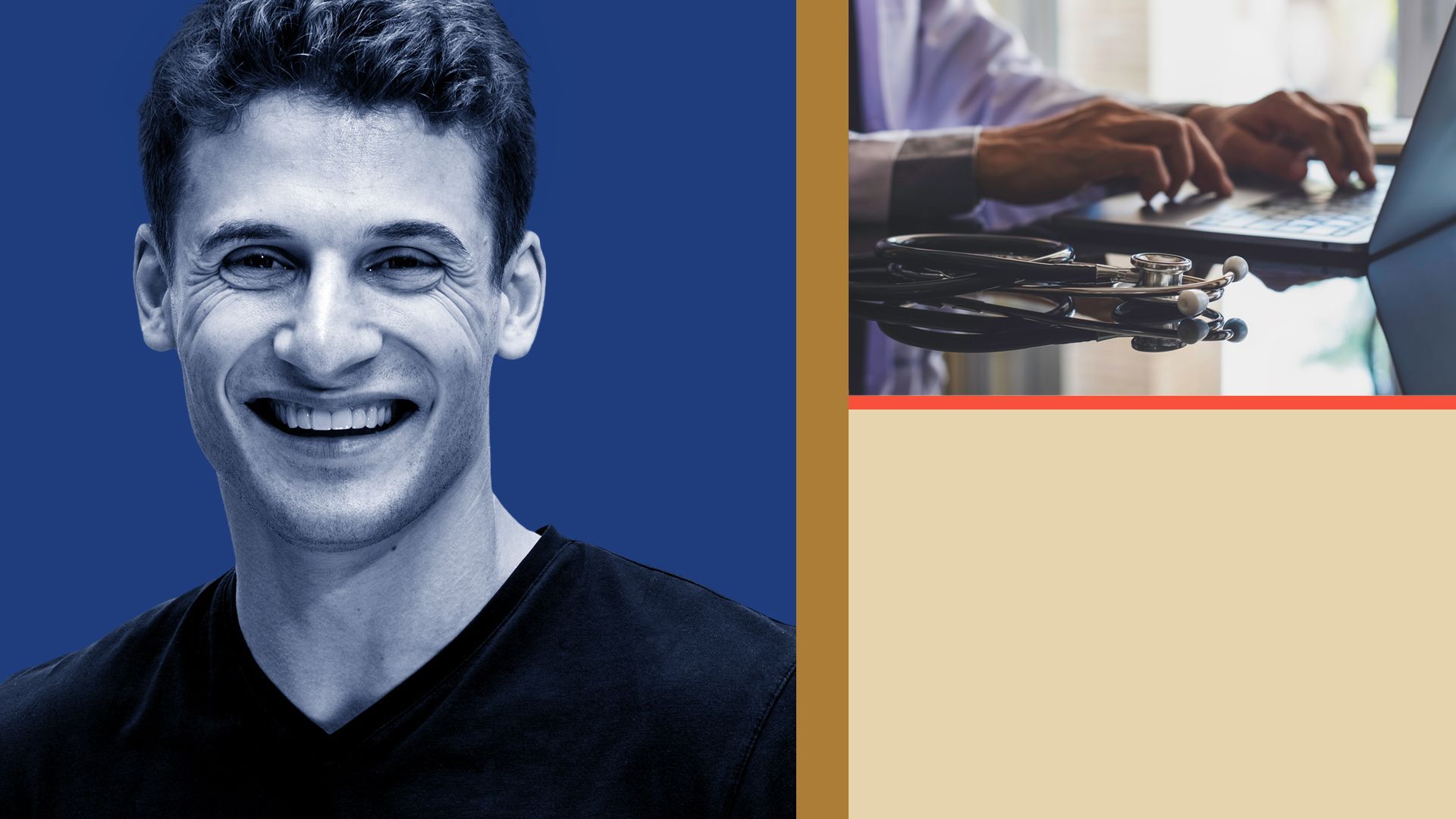
This past week, I grabbed dinner with Zach Reitano, co-founder and CEO of Ro, in New York City. We talked a lot about GLP-1s, as Ro has a weight loss program centered on use of the drugs prescribed via telehealth.
- The program is available through a $145 monthly subscription, which doesn't include the drugs themselves but does help patients navigate their insurance coverage of them, if they have it.
- But as I wrote above, insurance coverage of GLP-1s for obesity is pretty limited, and Reitano thinks that's wrong.
- "I think that GLP-1s could be so effective in terms of bridging the health inequity gap that I think there should be almost the equivalent of an Operation Warp Speed for equal access to GLP-1s," he told me.
Without further ado, here's a lightly edited transcript of our Q&A!
Q: What is transformative about what you are working on?
A: Right now, great health care is a handmade luxury good, and we are trying to turn it into a product that anyone can access by leveraging technology and trying to give providers leverage so that more people can access great health care.
Q: One trend transforming health care that we're not paying enough attention to?
A: I don't think we're paying enough attention to the reasons behind the U.S.'s decline in life expectancy. When you tease it apart you see regions and groups of people whose life expectancy continues to rise, and you see others fall precipitously because of obesity, addiction and suicide.
Q: Biggest challenge health care faces?
A: The incentive structure. Every single industry naturally follows the incentives that have been set up, and the U.S. health care system is not incentivized to fight for patients and to continuously increase the quality while decreasing the cost for patients — because they are not the customer.
Q: Biggest opportunity?
A: I think it's a toss-up between increasing access to GLP-1s and leveraging AI.
Q: Biggest wild card?
A: The coverage of and the shortage of GLP-1s.
Q: Speaking from experience, what would you tell a 25-year-old founding a company as CEO?
A: Two things: Feedback is data and the person who suffers the most by not being great at receiving it is you. The second is the best cultures are strong attract, strong repel.
Q: What about your career so far would most surprise your 18-year-old self?
A: My mom and dad always said that the most important decision of your life is who you marry. I didn't believe them when I was 18, and I do now. I don't think I'd be where I am or be able to do any of the things I do without my wife.
Q: Favorite piece of technology that you own?
A: My Eight Sleep. It's a mattress cover. And it ended the longest argument of my marriage, which was the temperature of the bedroom, because it can be temperature controlled by sides. So mine is freezing and hers is warm.
1 fun prediction: Tell us something about what health care is going to be like in 5-10 years that's different from today.
A: I think in 10 years you'll have more people on GLP-1s than statins.
Thanks to Nicholas Johnston for editing and Matt Piper for copy editing.