Axios Future of Health Care

August 14, 2026

If you're looking for a light read heading into the weekend, this isn't it.
- But talking about the future of health means talking about the risks that accompany biotech advances.
- Hit reply with your thoughts.
Today's newsletter is 1,346 words, a 5-minute read.
1 big thing: A convergence of risk
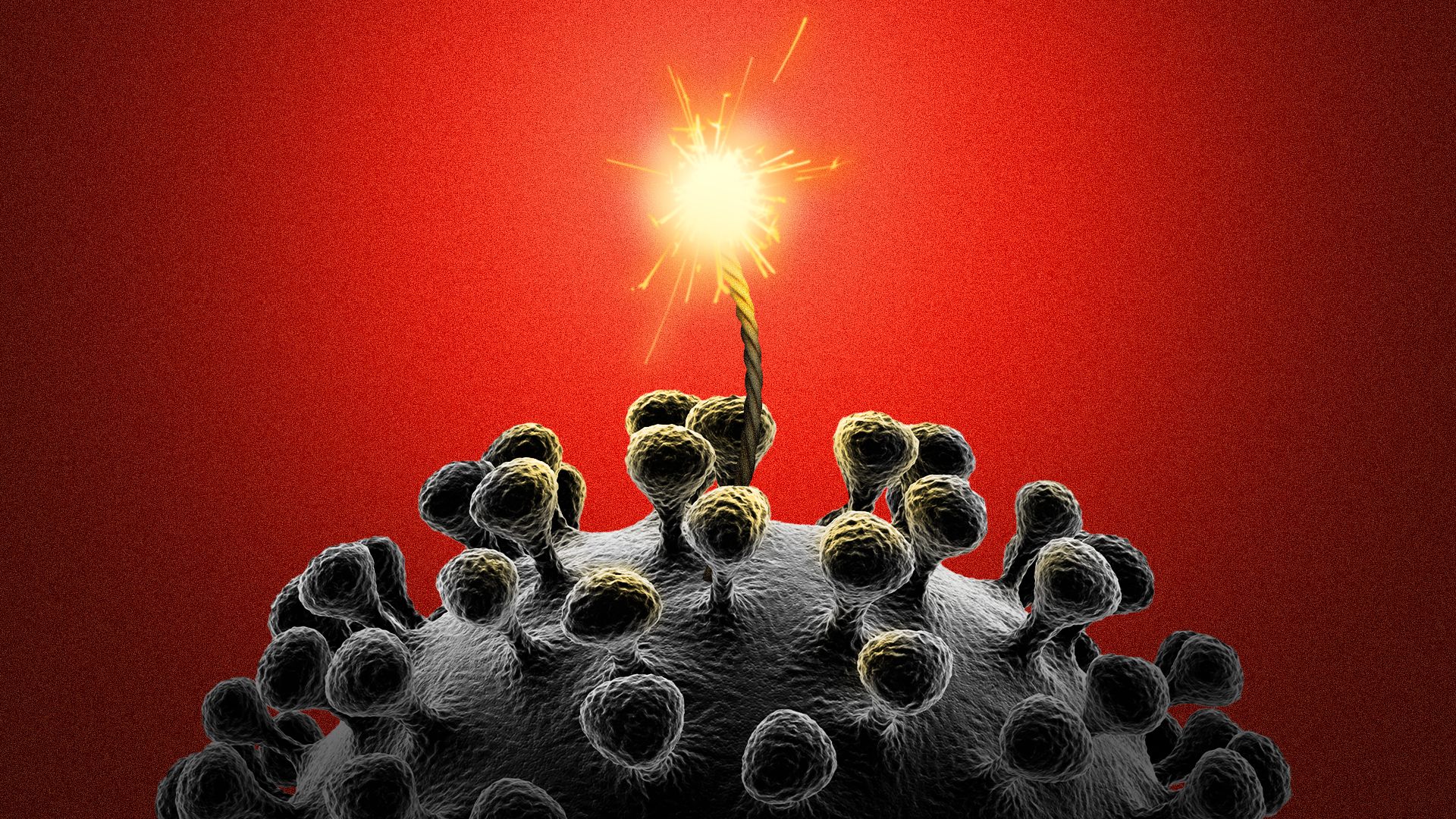
What's the common thread connecting AI advances, biological breakthroughs, a preponderance of high-risk-high-reward research, escalating geopolitical tensions and a hollowed-out U.S. public health sector?
- They all heighten the risk that one day a lethal human-made pathogen will emerge, either accidentally or intentionally, and we won't be ready for it.
Why it matters: The same advances that make this a pivotal moment for medical innovation are intensifying the risk of catastrophic lab mishaps, though how significant a risk is hotly debated by experts.
- "It is a very small tweak from trying to target a disease, and making gene therapies to try to target a disease, to turning a virus into something that can be much more detrimental," said Ashish Jha, the Biden administration's COVID response coordinator.
- He has since founded a company that aims to detect emerging biological threats.
The big picture: There are plenty of grim scenarios. A bad actor could use an AI-enabled bioweapon to cause mass casualties around the world.
- The world's largest AI companies have highlighted that risk themselves and called for more guardrails.
But the ways in which the world has become more dangerous since the pandemic may be underappreciated, Jha told me.
- "The scenario I worry most about is not a nation state deciding to use a biological weapon. The scenario I worry most about is an accidental release from a deliberate program," he told me.
- And, in fact, scientific advances may have only made a lab leak more likely, despite fierce political blowback to "gain of function" research.
- "Regardless of the science and AI and all that, the number of labs that are out there ... doing this kind of research has gone up, not down," one former senior Trump HHS official told me.
- And the rise of AI "takes people with some limited experience and allows them to navigate or do experiments with a greater potential for success," the former official said.
Driving the news: Last week's news that Stanford researchers used AI to create new synthetic viruses from scratch ratcheted up concerns that nefarious actors around the world could be attempting similar feats with more complex organisms.
- The novel viruses were found to be able to infect and kill the microbe E. coli — a medical advancement with huge upside.
- But recent reporting has highlighted how chatbots have been manipulated into telling users how to make deadly biological weapons.
Reality check: This AI-enabled biology still involves a huge amount of manual lab work — a barrier to any weaponization plans.
- "AI can't get around the fact that there are some pieces there that require physical checking," said David Manheim, founder of the Association for Long Term Existence and Resilience. "Hopefully the physical labs are not willing to let AI systems do arbitrary things that nobody understands."
- And creating a virus that targets bacteria is still many steps behind creating a virus that targets humans.
Yes, but: AI is constantly evolving, and last week's groundbreaking news was first revealed in a preprint manuscript nearly a year ago, so who knows what advancements in synthetic biology have been made since.
- Though Jha agrees there are many barriers to making a biological weapon, he says his question is: "Given the number of people now working on these things, what are the chances that no one will succeed in the next five years?"
Where it stands: "China, North Korea, and Russia probably maintain the knowledge and capability to produce and employ traditional biological pathogens and toxins, and historically have pursued ... pathogens that cause highly infectious or contagious diseases," this year's annual threat assessment from the U.S. intelligence community states.
- Advances in areas like nanotechnology and genomic editing "could lead to novel biological threats or raise the potential for biological safety events resulting in the unintentional release of pathogens," the report adds.
The other side: AI can also be used to bolster biodefense, and Google DeepMind last month announced its own bioresilience program that aims to prevent, detect and respond to biological threats.
- "The good news is AI and advanced biology, and biotechnology give us a better chance today than in 2020" to respond to a pandemic, the former senior HHS official told me.
2. Different kinds of catastrophe
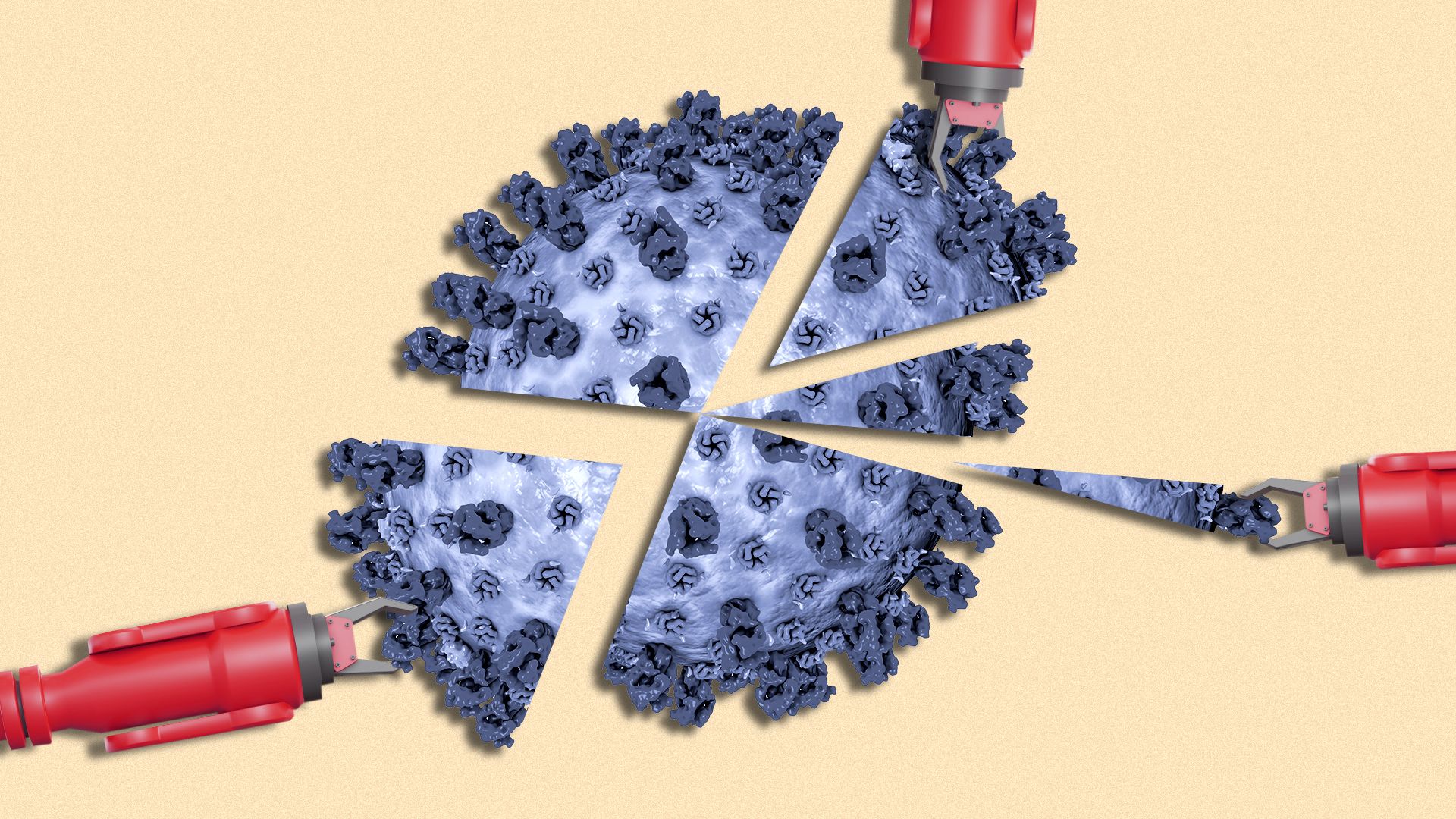
There are a handful of major big-picture scenarios that came up in my conversations with experts:
1. Bad actors using AI to help engineer new pathogens and intentionally releasing them.
- The good news: The pool of people or groups capable of doing this is very, very small. Plus, bioweapons have always been very unpopular and rarely used.
2. Bad actors — previously incapable of making bioweapons — using AI to help engineer known pathogens (think anthrax or smallpox) and intentionally releasing them.
- The good news: The frontier AI models, at least, have safeguards built in that will refuse to answer questions about this. If they accidentally do, turning those instructions into a biological weapon still requires physical laboratory work and some level of expertise.
3. Bad actors accidentally releasing a bioweapon they're working on.
4. Ordinary scientists doing high-risk research without adequate safety protocols and accidentally releasing pathogens.
- "People should not play with things that would kill millions of people if they make mistakes," Manheim told me.
What we're watching: Advancements in gene editing have created more troubling scenarios, including more targeted bioweapons in the future.
- "I worry a lot about customized weapons," Jha told me. "You can start doing things that are highly targeted. Is that available today? No. Do I think it's going to be available in the next five to 10 years? Absolutely."
- But other experts said that capability is still extremely far off, if it ever arrives.
3. Time to prepare
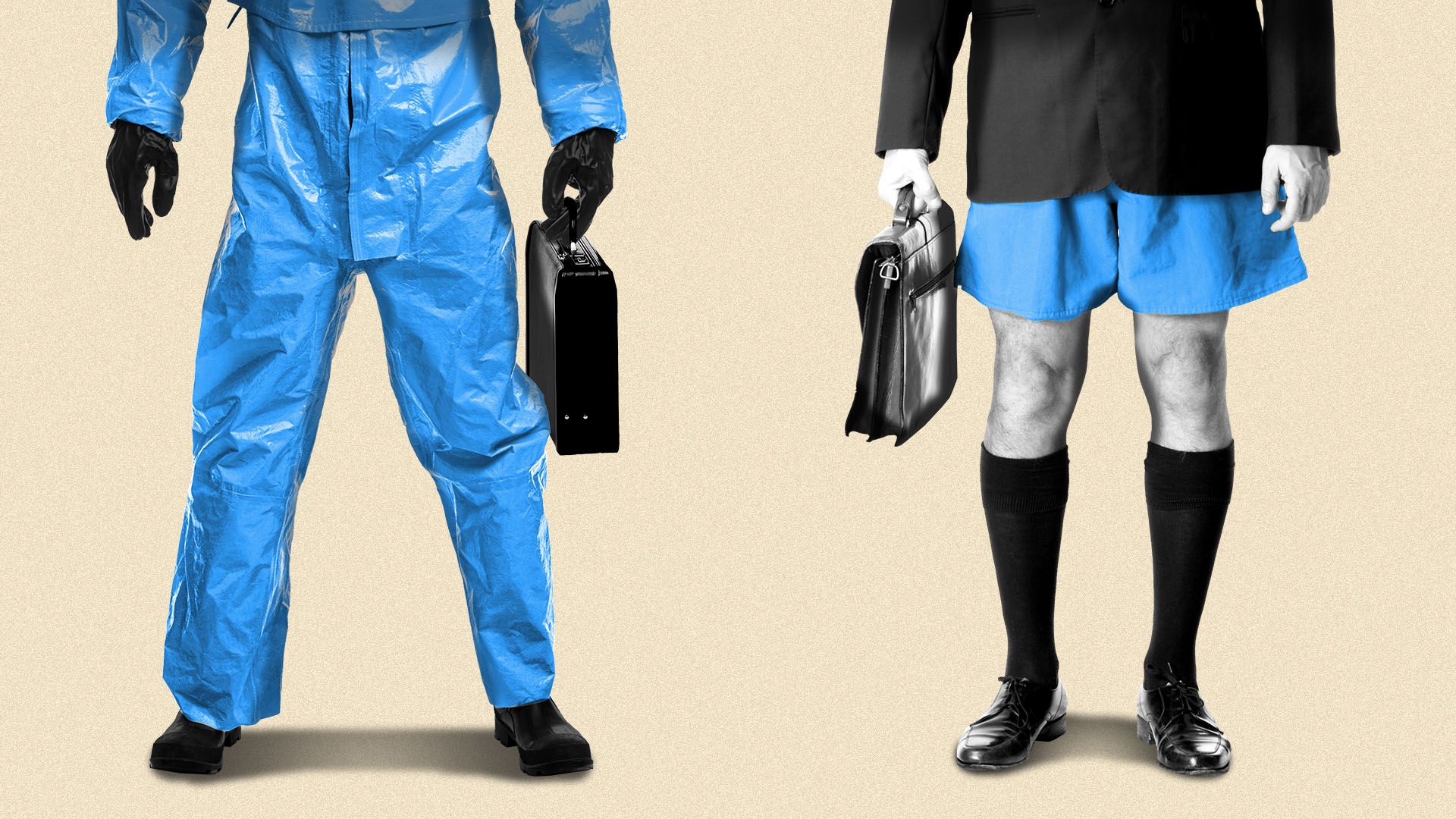
There's much disagreement about just how at risk we are today, but every expert I spoke with brought up how important it is to build up defensive capabilities ahead of time — and how underprepared the U.S. is.
Where it stands: Policymakers still are locked in bitter partisan battles over the origins of and response to COVID — a bad sign for anyone hoping the lessons learned could be applied to a new human-made threat.
- The second Trump administration has also taken a hatchet to large swaths of the federal health bureaucracy, including those dedicated to infectious disease and next-generation vaccine research.
- The CDC just got a full-time political leader after almost a year without one, and there's still no head of the Administration for Strategic Preparedness and Response, though a nomination's pending in the Senate.
Yes, but: The administration has cracked down on gain-of-function research, a controversial move among scientists but one intended to reduce biological risks.
What they're saying: "It's a risk we live with today, whether it's a bioweapon or an accidental release as a consequence of gain of function research," the former senior HHS official told me.
- "So we're not helping ourselves if we undervalue the risk or the role of making reasoned preparations for this."
Between the lines: The response to recent infectious disease outbreaks and foodborne illnesses hasn't been reassuring.
The other side: HHS said in a statement that the U.S. "remains fully equipped to respond to emerging public health threats" and protect the public, citing its response to the hantavirus cruise outbreak and the Ebola health emergency in Africa.
The bottom line: "We're pretty vulnerable to biological threats writ large, regardless of whether AI was involved in the production and design," said Steph Batalis, a research fellow at Georgetown's Center for Security and Emerging Technology.
- With the measles outbreak, "AI was not involved, also not intentional, not deliberate or anything like that, and we showed a lot of problems responding to that one," she added.
- "If we can't even keep a handle on measles, that's a pretty big problem."
Thanks for reading Axios Vitals, and to editor David Nather and copy editor Matt Piper. Please ask your friends and colleagues to sign up.
Sign up for Axios Future of Health Care