Axios Future of Health Care

February 13, 2026


Good morning! Caitlin here. Today's newsletter is a real team effort with my colleagues Adriel Bettelheim and Peter Sullivan.
- Hit reply if you have a burning desire to share your MAHA political punditry after reading!
- Also ... this puts day care germs in perspective.
Today's newsletter is 1,364 words, a 5-minute read.
1 big thing: MAHA's midterms test
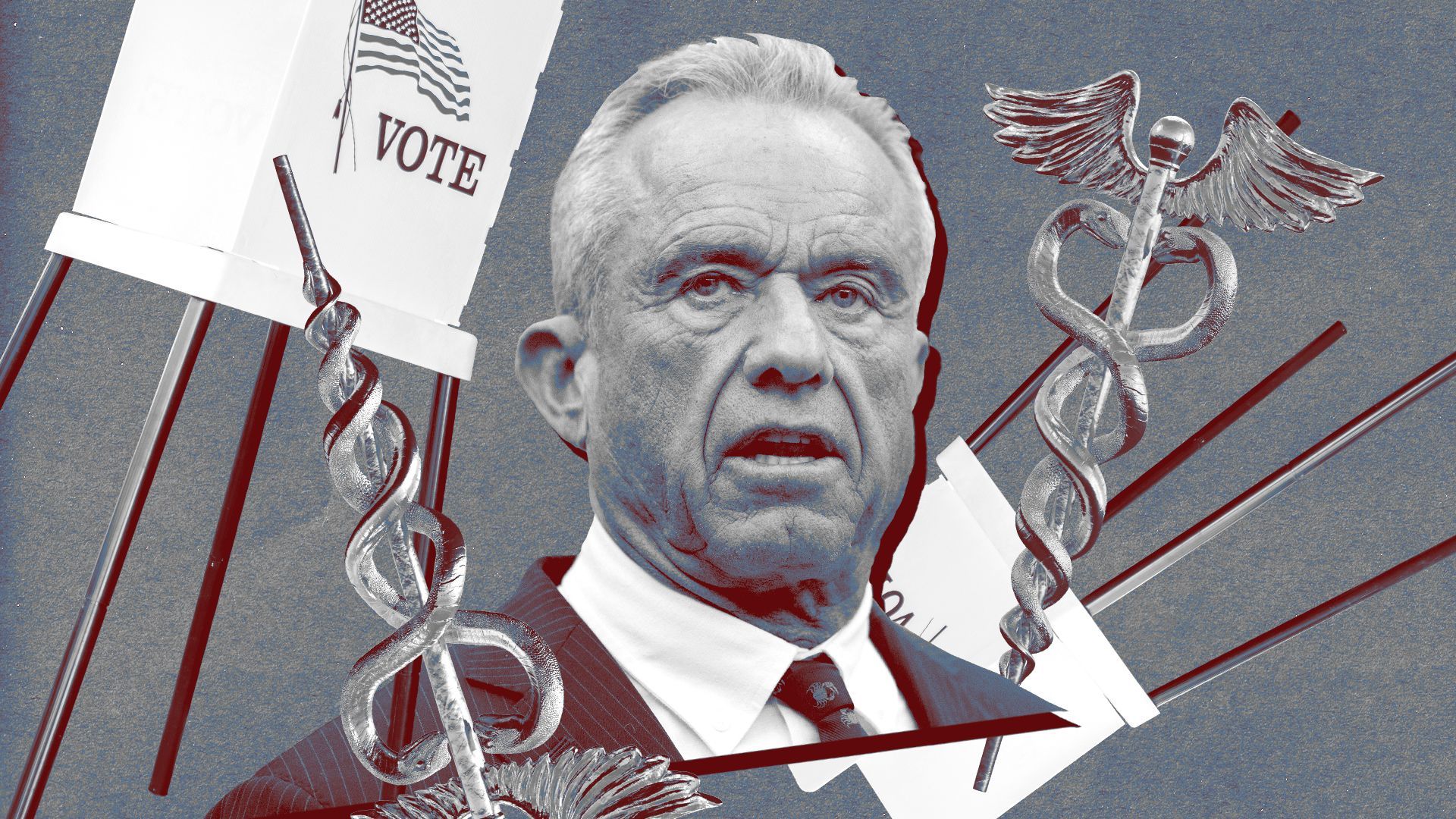
The "Make America Healthy Again" movement has the potential to boost Republicans in the midterms — as long as it avoids politically toxic vaccine rhetoric, which could be tough for Health Secretary Robert F. Kennedy Jr.
Why it matters: Embracing Kennedy on the campaign trail could either boost Republicans' chances of keeping one or both chambers of Congress in November, or further alienate voters increasingly wary of President Trump's tenure.
The big picture: While Democrats are ahead in the generic polls, Kennedy allies think there's a "winnable middle" of swing voters.
- In their view, these voters prioritize health issues and are drawn to efforts to promote price transparency, crack down on ultra-processed foods and expose what they contend is the overmedication of children.
- Democrats, however, view Kennedy's vaccine positions as a political gift and have signaled they'll relentlessly warn voters of the danger they say he poses to American children.
Driving the news: In a memo yesterday, the Kennedy-aligned political advocacy group MAHA Action warned the chairs of the Republican Senate and House campaign committees and House and Senate leaders that the GOP "is renting MAHA voters. They haven't decided to purchase them yet."
- The group says Republicans could still close the polling gap with appeals to this segment, which it said could represent 10% of the electorate.
- A survey MAHA Action commissioned from Trump pollster Tony Fabrizio found candidates could tap into frustration with the health system, including with pledges to crack down on conflicts of interest between government health agencies and pharmaceutical companies.
The memo cautioned candidates have to approach vaccines "carefully and with nuance," acknowledging that a slim majority of voters think vaccines are safe. (In fact, polling has consistently found broad support for vaccines.)
- It urged framing the issue as one of personal choice instead of vaccine requirements, noting that when asked whether families should have a choice to vaccinate their children, a plurality believe families should be given a say.
- The one policy solution it said candidates should be comfortable promoting is removing vaccine manufacturers' federal liability shield — a move it believes would promote vaccine safety.
- Experts have warned that doing so could spark a wave of lawsuits and drive vaccine makers away from the U.S. market.
What they're saying: Members of Congress tend to like Kennedy's food and fitness agendas, a senior HHS official told Caitlin.
- "MAHA tends to be pretty universally popular especially [with] moms," the official said. "So he tends to be a big draw."
- "I don't see the vaccine issue as being a big deal among Republican voters — I think it's a rally cry for Democrats and people who hate Trump," the official added.
White House spokesman Kush Desai said: "President Trump's agenda to Make America Healthy Again isn't just a policy platform, but a movement uniting parents, farmers, educators, physicians, and researchers across the country.
- "Secretary Kennedy is an invaluable asset for the Trump administration who will continue to deliver on the topmost priorities of America's burgeoning MAHA coalition, from lowering drug prices to cleaning up our food supply."
The other side: "They won these voters by claiming they stood for health, not just health care. But then they've governed in a way that makes people sicker," said Democratic consultant Jesse Ferguson in response to MAHA Action's memo.
- Their pitch might have worked in theory in 2024, Ferguson said, but it "doesn't land in reality after two years in control."
Keep reading ...
2. How MAHA's pitch could backfire

Earlier polling of voters in competitive House districts by the same Trump pollster found that "Republicans or Democrats adopting positions that remove long standing vaccine recommendations would negatively impact their party's performance."
- "While the MAHA agenda is broadly popular in the area [of] food and agriculture, vaccine skepticism stands as an outlier, rejected by most voters even within the MAHA movement," a memo detailing the poll results concluded.
Where it stands: Since that poll was published, HHS has slashed the number of childhood vaccines recommended by the federal government.
- The agency has signaled that it will continue to study the safety of various vaccines and their ingredients, setting up future controversies over other popular childhood vaccines and their link to diseases like autism.
- Experts contend that vaccine safety has been extremely well established through data.
- Some Kennedy allies are calling for COVID vaccines to be removed from the market altogether, which would violate Kennedy's promise that anyone who wants vaccines will still be able to get them.
Between the lines: Some Republicans aren't convinced that vaccine policy poses any real risk, whether Kennedy talks about it or not.
- "I think normal people don't mind the way he is talking about vaccines," one source close to HHS told Caitlin. "He has this beauty of an impenetrable wall of bulls**t pseudoscience language where people are like, 'He's just asking questions.'"
Zoom in: Kennedy himself tested the strategy last month at a campaign-style appearance in Harrisburg, Pennsylvania, where he touted the administration's moves to eliminate certain food dyes and other additives and overhaul dietary guidelines.
- There was no mention of his narrowing of the childhood vaccine schedule or other moves that limited access to COVID-19 shots. Instead, he referenced President Trump's drug pricing deals and moves to bring more transparency to health plans.
- Kennedy made a similar stop earlier this month at the Tennessee state Capitol in Nashville.
The other side: Protect Our Care, a Democrat-aligned health advocacy organization, recently put out a report declaring Kennedy "Public Health Enemy #1" and detailing his impact on public health.
- And some Democrats are previewing additional lines of attack on the health secretary.
- "This is a guy who's up to his eyeballs in conflicts of interest," Sen. Ron Wyden told Axios. "I don't think that's going to go over too well on the campaign trail."
3. Don't count on a quiet year
Here's a provocative question for Washington types: How much does the Trump administration really care about the midterms?
Maybe not enough to exercise much restraint, one analyst wrote in a note on the HHS regulatory agenda for the year.
- "In some areas, the White House may see more political benefit in being bold, and we expect HHS and its subagencies to focus more on implementing Trump and RFK's agendas quickly and aggressively than on avoiding election fallout," Capital Alpha's Rob Smith argued.
- "Further, Trump isn't running again and doesn't appear to need much from Congressional Republicans to advance his priorities, particularly now that he's acknowledged that a second reconciliation bill is unlikely to materialize."
The big picture: As Smith points out, administrations typically do things during midterm years that aim to benefit their own political party, and avoid taking actions that are likely to hurt it.
- In this case, that would probably mean leaving vaccines alone, with maybe the exception of targeting vaccine mandates.
- But it would also probably mean attempting to clamp down on drama at the FDA, of which there was plenty this week.
- "At FDA, we think we'll continue to see the same sort of recklessness and unpredictability that have defined the agency for much of the past year," Smith predicted.
The latest: The FDA's rejection of Moderna's new mRNA flu vaccine candidate has drawn another round of negative attention focused on the agency.
- "This is arbitrary government at its worst," the WSJ editorial board wrote in response.
- "Americans didn't like the Biden COVID vaccine mandates," they added. "But they also won't appreciate a Trump regulator denying them access to new vaccines and treatments because he thinks he knows best."
What we're watching: There are a lot more political boat-rocking risks ahead of the midterms than just vaccines.
- CMS kicked off the year with a gut punch to insurers, who are arguing that the minuscule Medicare Advantage payment rate bump proposed for 2027 last month will have a disastrous effect on the program.
Thanks to Adriel Bettelheim and David Nather for editing and Matt Piper for copy editing.