Axios Future of Health Care
January 23, 2026

Good morning. I hope that by now you've made it to the grocery store if you're one of the millions in the path of this weekend's massive snowstorm.
- Send tips on how to play with a baby in the snow!
Today's newsletter is 1,044 words, a 4-minute read.
1 big thing: Going around health insurance

Ditching health insurers and other intermediaries certainly has become a populist rallying cry among Republicans, but a subtler twist on the idea is already playing out.
The big picture: The surge of weight loss drug sales not covered by traditional health insurance has proven the viability of direct-to-consumer health care that bypasses gatekeepers and coverage restrictions.
State of play: There's an election year fight underway over health care "affordability," with Democrats seizing early momentum over the expiration of enhanced Affordable Care Act subsidies.
- Republicans are responding with President Trump's release of "The Great Healthcare Plan" and a series of House hearings, including two with insurance company CEOs yesterday.
- One prominent GOP theme is to give more money directly to patients instead of using subsidies to lower their premiums.
- That would, in Trump's words, "allow them to buy the health insurance of their choice."
It isn't the first time Trump has called for circumventing insurers and other middlemen.
- The series of deals he's made with pharmaceutical companies all require sales through TrumpRx, a platform through which patients will be able to directly purchase discounted prescription drugs.
The big picture: With or without Trump's help, the direct-to-consumer health care market is growing and is likely to continue doing so.
- This is one of the biggest anticipated trends of 2026, according to Trilliant Health's literature review of more than two dozen "prediction articles" about the health sector.
- "Rising uninsurance and affordability pressures will lead consumers toward cash-pay services and DTC platforms care that bypass traditional reimbursement structures but increase fragmentation," the Trilliant analysis concludes.
Many drug companies began offering DTC payment options even before striking deals with the White House, and the biggest proof of concept is with anti-obesity drugs.
- That's because insurance often doesn't cover products like Ozempic or Zepbound, leaving patients to shell out hundreds of dollars a month out of pocket.
- Other drugs commonly left out of insurance coverage are also sold directly to consumers, including fertility drugs, hormones or wellness treatments.
- Direct primary care services in which patients pay a subscription for access to care — for example, One Medical — are also on the rise.
Keep reading ...
2. It's not cheaper

Going around insurers may not do much to address the U.S. health care system's core affordability issues, because the most expensive services — like inpatient hospital care — have no attractive self-pay option.
- "I think it's nice that there are folks out there who tend to be squarely in the middle classes and up, who can buy GLP-1s directly from a third party by bypassing insurance," said Yale associate professor Zack Cooper.
- "I don't think that is ultimately a solution to the health care challenges we face," he added.
Yes, but: There are some products and services for which it makes sense to create a market outside of regular insurance, said American Enterprise Institute economist Ben Ippolito.
- "There are versions of this where the concept is sound, the idea being that you reserve true health insurance for the larger, more unexpected bills," Ippolito said.
- Leaving pricey products like GLP-1s out of insurance networks may not lower premiums, but it certainly keeps them from going up even more, he added.
The bottom line: The most basic point of having health insurance is to protect you from the unexpected costs of, say, getting cancer. Put another way, you need coverage to take that risk off the table.
- That means, at least in today's world, everything offered directly to patients is paid for on top of health insurance.
3. Infants' measles vulnerability
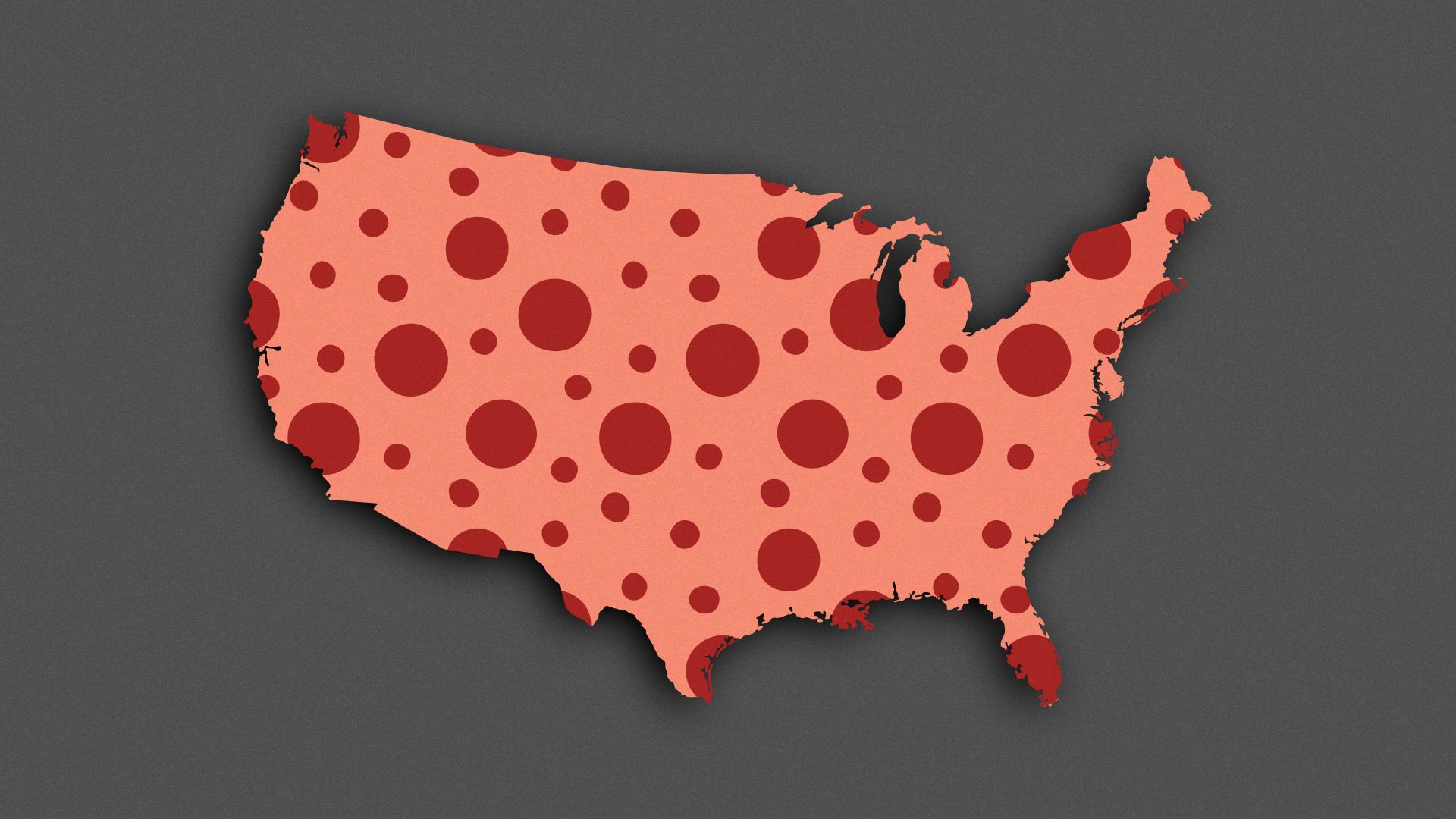
The rising measles caseload is bad news for one particularly vulnerable group of people: infants, who typically aren't vaccinated against the disease until they're a year old.
Why it matters: Even parents who want to protect their babies against the disease have few options for the first 12 months of their children's lives.
My son is 8 months old and hasn't received any doses of the MMR vaccine. This week, I clicked on a story about a child in Virginia coming down with the disease.
- I figured it was unlikely this child lived near me, or would have had any chance of interacting with my baby.
- Lo and behold, the child was treated in the same emergency room that we took my son to the week before.
My son had a run-of-the-mill cold that ended up causing him to breathe faster than normal.
- Our pediatrician suggested we go to the ER if his breathing exceeded a certain rate — while acknowledging the risk of him picking up something else while he's there.
- He was fine after a "hospital-grade snot suck." But it was a reminder of how all kinds of weird little things can qualify as emergencies when you have a baby.
- The problem is that hospitals can be mixing bowls, and as measles continues to spread around the U.S., it becomes likelier to join flu, COVID and colds as a constant threat.
Between the lines: Of course, most babies don't get sick from hospital visits. They get sick from day care, which is its own Petri dish for germs.
- The measles vaccine is extremely effective, so most parents of vaccinated children don't have much to worry about when they send their kids to school or day care. That's true even if they live in states like South Carolina, where the virus is currently spreading.
- But for parents of immunocompromised children, infants, or kids that haven't received the vaccine for some other reason, the idea of measles ping-ponging around the place where your child spends 8+ hours a day is scary.
- 1 out of every 5 children who gets measles is sick enough to require hospitalization, and 1 in 20 gets pneumonia.
The bottom line: Parents can spare themselves worry by giving their children the MMR vaccine.
- The big exception is the parents of infants, and I can't be alone in my anxiety when I see news reports about local cases.
Thanks to Adriel Bettelheim and David Nather for editing and Matt Piper for copy editing.
Sign up for Axios Future of Health Care